.webp)
Why product registration software earns its place in 2026
Product registration is the moment a buyer becomes a known owner. The data captured at that point feeds warranty validation, recall reach, supplier analytics, and the next marketing motion. Brands without a registration system run those flows on guesswork.
This piece covers what product registration software does, the features that actually matter, the buyer's checklist, common pitfalls, and the link between registration and claim volume. For broader context, the warranty registration primer covers the basics, and warranty registration why brands need it covers the strategic case.
- Product registration software turns anonymous buyers into owner records, with serial, purchase date, and channel attached to every unit.
- The features that decide an evaluation are QR or serial capture, dynamic warranty terms per SKU, and integrations into Shopify, ERP, CRM, and the claims layer.
- Registered owners file faster, cleaner claims, and the brand picks up post-purchase signals for retention and supplier scoring.
- Brands using Claimlane register, validate, and route claims on one stack, so the registration data shows up in warranty analytics, supplier scorecards, and the customer-facing portal without extra integration work.
What product registration software actually does
At its base, product registration software captures a buyer, a product, and the unit they bought, then attaches a warranty period and a record of channel and date. That single record powers four downstream flows.
Owner identity
Email, phone, and address per registered unit. Cleaner than the order record alone because gifts, resale, and B2B distribution all break the order-to-owner link.
Unit-level coverage
Serial or batch number tied to the SKU, with the warranty period locked at registration. This is what makes serialized product defect tracking possible at the case level.
Claim shortcut
A registered serial lets the claims portal auto-fill the case at intake. The customer skips the receipt step and the agent skips the validation step.
Marketing surface
Registration is the only post-purchase data point most brands capture cleanly. The post-purchase experience customer loyalty and post-purchase behavior pieces cover how brands turn that record into retention.
Who buys product registration software
Three buyer profiles drive the category.
Direct-to-consumer brands
Electronics, appliances, cookware, sporting goods, baby and nursery, and outdoor brands sell through their own site plus retail. Registration closes the channel gap. The brand sees the unit-level record even when the unit came from a partner shop.
Multi-retailer brands
Brands selling through 50+ retailers rarely receive end-customer data from their resellers. Registration is the legal route to the owner record, with consent at the point of registration.
High-warranty categories
Products with long warranty windows (5, 10, or lifetime) need registration to make the claim flow workable. Without it, every claim turns into a receipt scavenger hunt. The warranty tracking software piece covers the tracking side, and extended warranty platforms covers the long-tail warranty model.
Core features that matter in 2026
Nine features separate a working platform from a registration form with a database.
QR and serial capture at the point of registration
The customer scans a QR on the packaging or the unit, the platform reads the serial, and the registration completes in three taps. Manual entry is the fallback.
Dynamic warranty terms per SKU
Different SKUs carry different warranty lengths and conditions. The platform should encode that per product family, with versioned terms.
Integrations with Shopify, WooCommerce, BigCommerce, ERP, and CRM
Registration data has to flow to the order system, the warehouse, the supplier scorecard, and the marketing stack. Without integration, the record sits in a silo. The best Shopify tools and best WooCommerce integrations pieces cover the integration surface.
Multi-language and multi-region support
Brands selling in the EU need GDPR-compliant consent flows in the buyer's language. The GPSR retailers EU law warranty claims piece covers the regulatory frame.
Recall-ready owner lookup
When a recall lands, the brand should pull all units affected by serial range and notify the registered owners within hours. The product recall management and product recalls in retail and ecommerce pieces cover that flow.
Connection to the claims layer
Registration data has to feed the claims portal so the case auto-validates. Disconnected systems lose the value of registration at the first claim.
Marketing consent and segmentation
The platform should respect opt-in granularity (transactional vs marketing) and let the brand segment registered owners by SKU, region, and purchase date. The consumer buying behavior and returns piece covers the behavioural angle.
Audit log and versioning
Warranty terms change. The platform has to keep the version the customer registered under, not the current version. This matters in disputes.
API-first architecture
The brand will swap CRM, ERP, and marketing systems over time. The registration data has to outlive the surrounding tools.
How registration cuts claim volume
Registration looks like a data capture tool. It works as a claim deflection tool too. Three patterns drive that effect.
Better intake means cleaner claims
Registered owners file with serial, purchase date, and SKU pre-filled. The case team skips three back-and-forth steps. The warranty claims processing piece covers the case flow, and optimize your warranty claim process covers the operational lift.
Onboarding reduces avoidable claims
A registration flow can ship onboarding content, install help, and care instructions. Brands report 10 to 25% lower defect-class claims when registration includes a setup walkthrough. The 4 changes that save hours piece covers the time savings.
Fraud signal at registration
Fraudulent claims often lack registration history. Registration becomes a soft authentication layer at intake. Brands fighting warranty fraud lean on registration as a first filter.
Buyer's checklist
Use this list during an evaluation. Each line should map to a demo step, not a slide.
- QR code generation built in, with batch printing for packaging.
- Serial format validation per SKU at entry.
- Conditional fields per product family (size, install method, retailer, etc.).
- Versioned warranty terms with date-locked storage.
- Native integrations to Shopify, WooCommerce, BigCommerce, Klaviyo, HubSpot, Microsoft Dynamics, SAP.
- API access for the systems not in that list.
- Multi-language consent flows that meet GDPR and the EU Digital Markets Act.
- Recall lookup by serial range, with notification flows ready.
- Direct hand-off to the claims layer (not a CSV export).
- Owner-facing portal where the customer sees registered units and warranty status.
- Analytics view on registration rate per SKU, retailer, and region.
- SOC 2 and ISO 27001 controls for the data layer.
Common pitfalls in product registration software rollouts
Four pitfalls show up in almost every audit.
Pitfall 1: registration is treated as a marketing form
The form lives on the marketing site. Customers fill it for the coupon. The data never reaches the claims layer. Months later, the brand wonders why claim volume did not drop. The fix is to wire registration into the claims stack from day one. The 16 most frequent questions about Claimlane piece covers the related setup questions.
Pitfall 2: no QR codes on packaging
Without a code on the unit, registration rates stay under 10%. With a code, brands routinely hit 30 to 50%. The packaging change is the cheapest lever in the category.
Pitfall 3: missing serial validation
The form accepts any string. Serials reach the database malformed. At claim time, the brand cannot match unit to record. The serialized product defect tracking piece covers the validation pattern.
Pitfall 4: warranty version not stored
The brand updates warranty terms in year two. Old customers register units under the new terms by mistake. The platform should always lock the version current at the purchase date. The implied warranty for ecommerce piece covers the legal frame.
How registration connects to the claims layer
A product registration record is most valuable when it pre-fills a claim. The pattern works in four steps.
Step 1: a registered owner files a claim
The customer enters a serial. The portal already knows the SKU, the warranty period, and the purchase date.
Step 2: AI applies the warranty rule
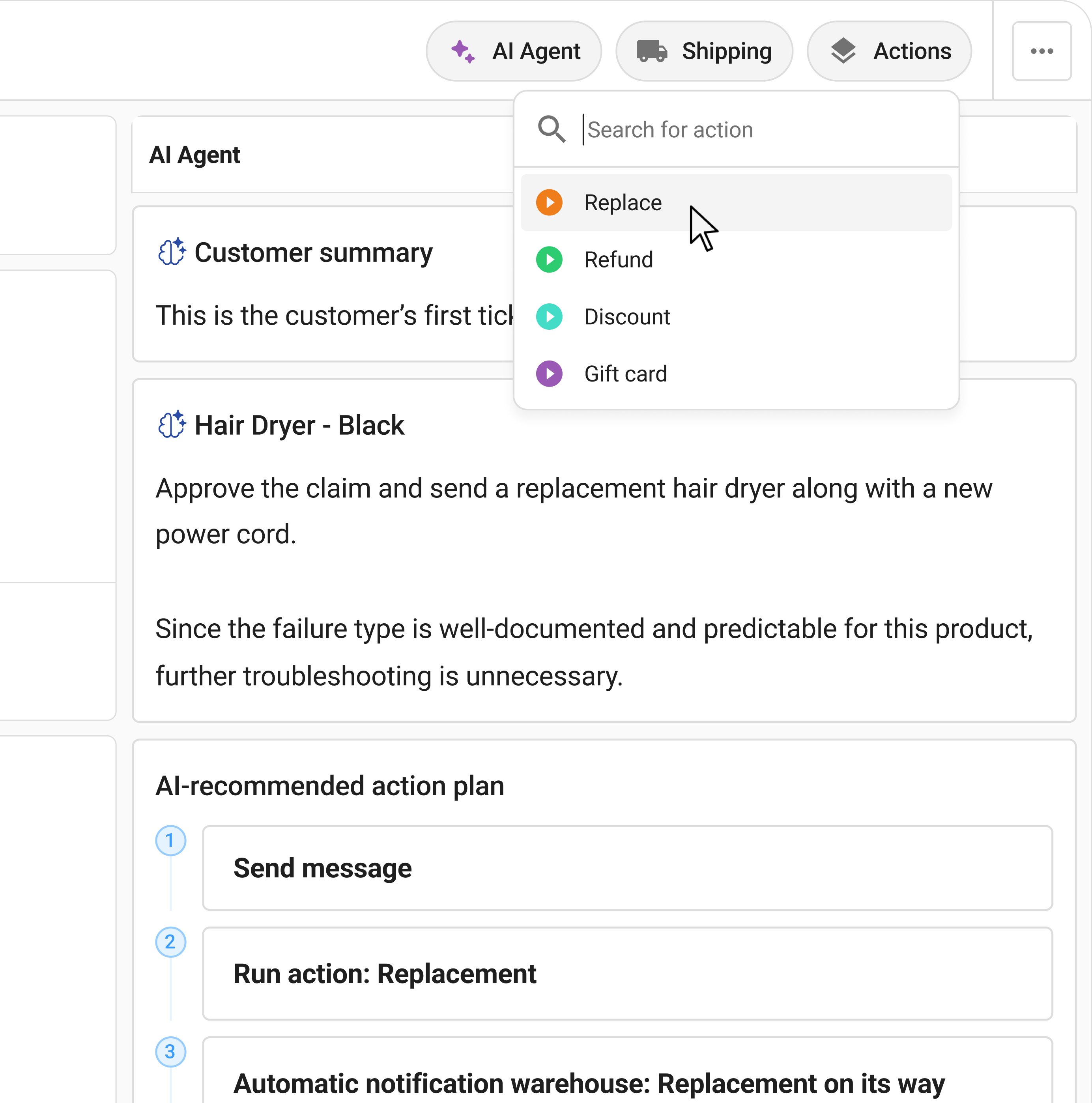
Claimlane's AI Agent, the first AI agent purpose-built for warranty claims and returns, checks the SKU rule, the purchase date, and the issue type, then recommends a resolution.
Step 3: routing based on registration data
If the owner registered with a Shopify direct order, the case routes to the brand. If the registration shows a retailer purchase, the case can route to retailer-led resolution per the hybrid B2C B2B claims management pattern.
Step 4: data closes back to analytics
The resolved case feeds warranty analytics for product quality and the customer-centric warranty analytics pieces cover the metrics side.
“Tying registration into the same record as the claim was the change that mattered. The owner record finally pays for itself the moment the first warranty case comes through, and the case team works from clean data on day one.— ONYX COOKWARE · PREMIUM COOKWARE BRAND · case study
Product registration vs warranty registration
Most vendors use the terms together. There is a useful distinction.
Product registration
Captures the buyer, the unit, and the SKU. The brand owns the record. Marketing and analytics flow from it.
Warranty registration
A subset of product registration, focused on the warranty period and terms. The owner record might already exist from a non-warranty channel.
The when does warranty registration make sense to offer piece covers the strategic call. Most brands in 2026 run both as a single flow.
Pricing patterns in the category
Three pricing shapes appear across vendors.
Per-registration fee
Brands pay a small fee per registered unit. Works for low-volume premium categories. Breaks at scale.
Tiered SaaS
Monthly or annual fee with registration volume tiers. Most common shape across best warranty management software and best claims management software vendors.
Platform fee with claims included
The brand pays for a connected platform that covers registration, claims, and analytics. This is the shape that pays back at any scale above 100 claims a month.
Integrations that decide an evaluation
Registration data has to land in the right systems on day one.
The Business Central Shopify integration how it works piece covers the most common ERP-storefront pairing. The ERP returns integrations and ERP finance system integration returns pieces cover the back-office shape. See also Dynamics 365 warranty management and NetSuite warranty and repairs management for ERP-specific patterns.
Owner experience matters more than vendors admit
A registration flow that takes two minutes converts. One that takes seven does not. The flow has to feel like a benefit, not a chore.
Three signals owners react to
Clear warranty length displayed at registration. A confirmation email with a one-tap link back into the owner portal. A reminder before the warranty expires with the option to extend. The post-purchase ticketing system and post-purchase dissonance pieces cover the post-purchase trust frame.
What kills the flow
More than four fields without a clear payoff. Receipt upload as a hard requirement when the brand can validate the serial against the order. Marketing copy in place of warranty information. The post-purchase evaluation piece covers the buyer's mental model at this point.
How Claimlane handles product registration
Claimlane runs registration, claims, repairs, replacements, and supplier handoff on one platform. Registration captures the owner and the unit. The warranty registration product page covers the registration side. The self-service portal covers the customer-facing flow. The analytics page covers reporting on registration rate, claim rate, and supplier performance. The workflows page covers routing, and forward-to-supplier covers recovery.
Brands running the connected stack save the integration work that comes with stitching a standalone registration vendor to a separate claims tool. The Skechers warranty claims and Mads Nørgaard strategy case studies show the connected pattern in apparel and outdoor.
Frequently asked questions
Conclusion
Product registration software is the front door to the owner record. Brands that take registration seriously pick up cleaner claims, faster recall reach, sharper supplier scoring, and a marketing surface they did not have before. The features that matter are QR or serial capture, dynamic warranty terms per SKU, integrations into the rest of the stack, and a direct line into the claims layer.
To see how Claimlane runs registration, claims, repairs, and supplier handoff on one platform, book a demo or walk the live setup on the interactive demo.