.webp)
A product recall is the worst kind of operational test. You find out within hours whether your customer database is clean, whether your return workflows actually work, and whether your team can move fast under pressure. Most brands fail the test the first time because they've never built the muscle for it.
This guide is for retailers, ecommerce brands, and consumer-product manufacturers who want to handle recalls properly. Not the regulatory side (the FDA, CPSC, and EU safety authority guidance covers that). The execution side: how to find every affected customer, contact them fast, get the product back, and document everything for the audit that's coming next.
What is a product recall?
A product recall is the process of removing a product from the market because it poses a safety risk, fails to meet quality standards, or violates compliance regulations. Recalls can be voluntary (the brand initiates) or mandatory (issued by a regulator).
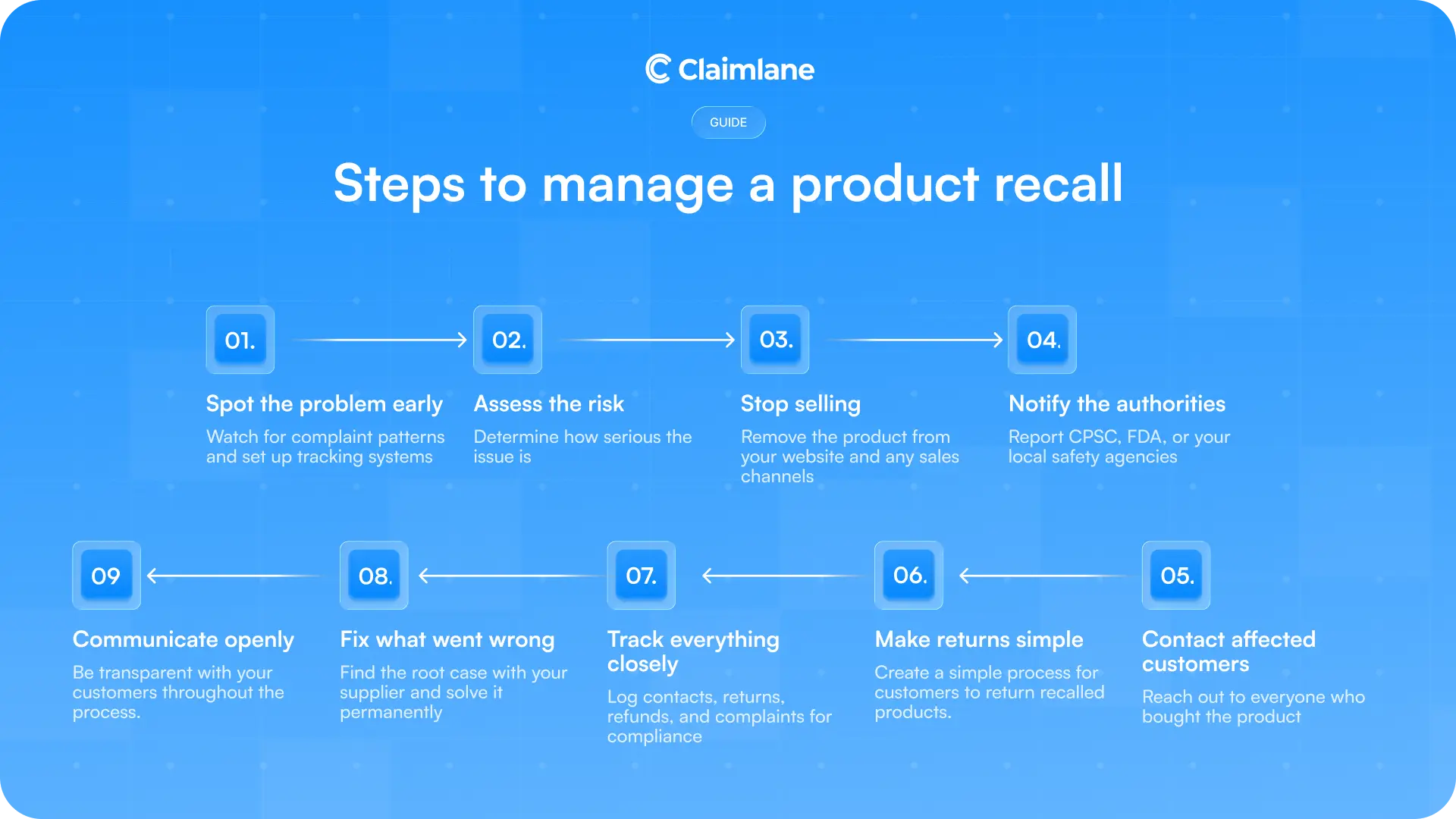
The recall process spans:
- Detection of the issue (customer complaints, internal QA, regulator notice)
- Risk assessment and classification
- Sales stop and inventory hold
- Regulatory notification
- Customer notification across every affected unit
- Product return, refund, or replacement
- Root-cause investigation and prevention
Most articles stop at the first three steps. The hard part is steps 4 onward, where the real operational pain lives.
The three things that determine whether a recall goes well
Most brands think the deciding factor is speed of detection. It matters, but it's not the most important. After watching how recalls actually unfold, three things separate the brands that handle recalls well from the ones that don't:
Can you find every customer who bought a specific batch within an hour? Most brands can't. Order data is scattered across the storefront, ERP, customer support, and warehouse systems.
Can you trigger a high-volume, prepaid, traceable return process for thousands of units in one day? If your normal return flow is built around individual customer requests, scaling it to a recall means rebuilding it on the fly.
Every customer contact, every returned unit, every refund, every status update. The audit comes weeks or months later. If you don't have the records, the regulator assumes you didn't do the work.
Why product recalls happen
Common reasons for recalls include:
- Safety hazards like fire risks or choking dangers
- Manufacturing defects that affect how the product works
- Incorrect labeling or missing safety warnings
- Contamination in food or health products
- Non-compliance with safety regulations
The recall execution process, step by step
Here's how an effective recall actually unfolds, in the order it has to happen.
Internal QA confirms the defect and classifies severity. Most jurisdictions use three classes: serious safety risk (Class I), moderate risk (Class II), low risk (Class III). The class drives notification timing and method.
Pull the product from every channel: storefront, marketplaces, retail partners, distributor inventory. Hold any in-transit shipments. This needs to happen within hours of confirmation, not days.
CPSC for US consumer products. FDA for food, drugs, cosmetics. EU GPSR notification through the Safety Gate portal. Country-specific safety authorities elsewhere. Notification windows are tight, often 24 hours for serious risk.
Pull every order containing the affected SKU and batch numbers. Cross-reference with current contact info. This is where most recalls slow down, because the data lives in too many places.
Email is the baseline. SMS for urgent recalls. Phone calls for unreached customers. Social media post for reach. Public website notice. The bigger the risk class, the more channels you need to use.
Recall returns are not normal returns. Customers need clear instructions, prepaid labels, fast refunds or replacements, and a way to confirm they've sent the product back. Build a separate workflow specifically for the recall.
Customers contacted, contact attempts per customer, returned units, units still unaccounted for, refunds processed, replacements shipped, customer complaints, any reported injuries. The audit needs all of it.
Work with manufacturer or supplier on root cause. Update QA processes, supplier audits, or product design. Document the corrective and preventive action (CAPA). Regulators will ask.
What a recall communication actually needs to say
Most brands write the customer notification badly. They lead with apologies, hide the action, or use legal-speak that nobody reads. The format that works:
"We're recalling [Product Name, batch numbers X-Y]. Stop using it immediately."
"This product can [specific risk]. We've received [X] reports of [outcome]. We're acting before anyone is seriously hurt."
"Click here to start your return. We'll send a prepaid label. You'll get a full refund within 7 days, or a free replacement once production resumes."
"The issue came from [supplier or component]. We've stopped production and are working with [supplier] to fix it before any new units ship."
"Questions? Email [direct address] or call [direct number]. We have a dedicated team handling recall questions only."
How to prevent future recalls
.webp)
Why recalls expose the gaps in your data infrastructure
Most retailers and ecommerce brands don't have a single customer database. They have:
- An ecommerce platform (Shopify, WooCommerce) with customer records and order history
- A help desk (Zendesk, Intercom) with support history
- A marketing tool (Klaviyo, Mailchimp) with email contacts and consent
- An ERP with batch and SKU data
- A warehouse system with shipping records
- Maybe a 3PL with separate fulfilment data
- Possibly multiple of each, by region or brand
In normal operation, this is fine. In a recall, it's a disaster. You need to find every customer who received a specific batch, in any region, across any storefront, in under 24 hours.
The brands that handle recalls well don't necessarily have one perfect system. They have a process for joining the data fast, and they've practised it. The brands that handle recalls badly find out which systems can talk to each other on day one of the recall.
How Claimlane helps with product recalls
Claimlane isn't a recall management platform in the regulatory sense. It doesn't handle FDA filings or CPSC notifications. What it does is the part most brands struggle with: the customer-facing execution.
Pulls every customer who bought affected SKUs and batches from your connected order data
Sends targeted emails and SMS to every affected customer at once, with tracking on opens and click-throughs
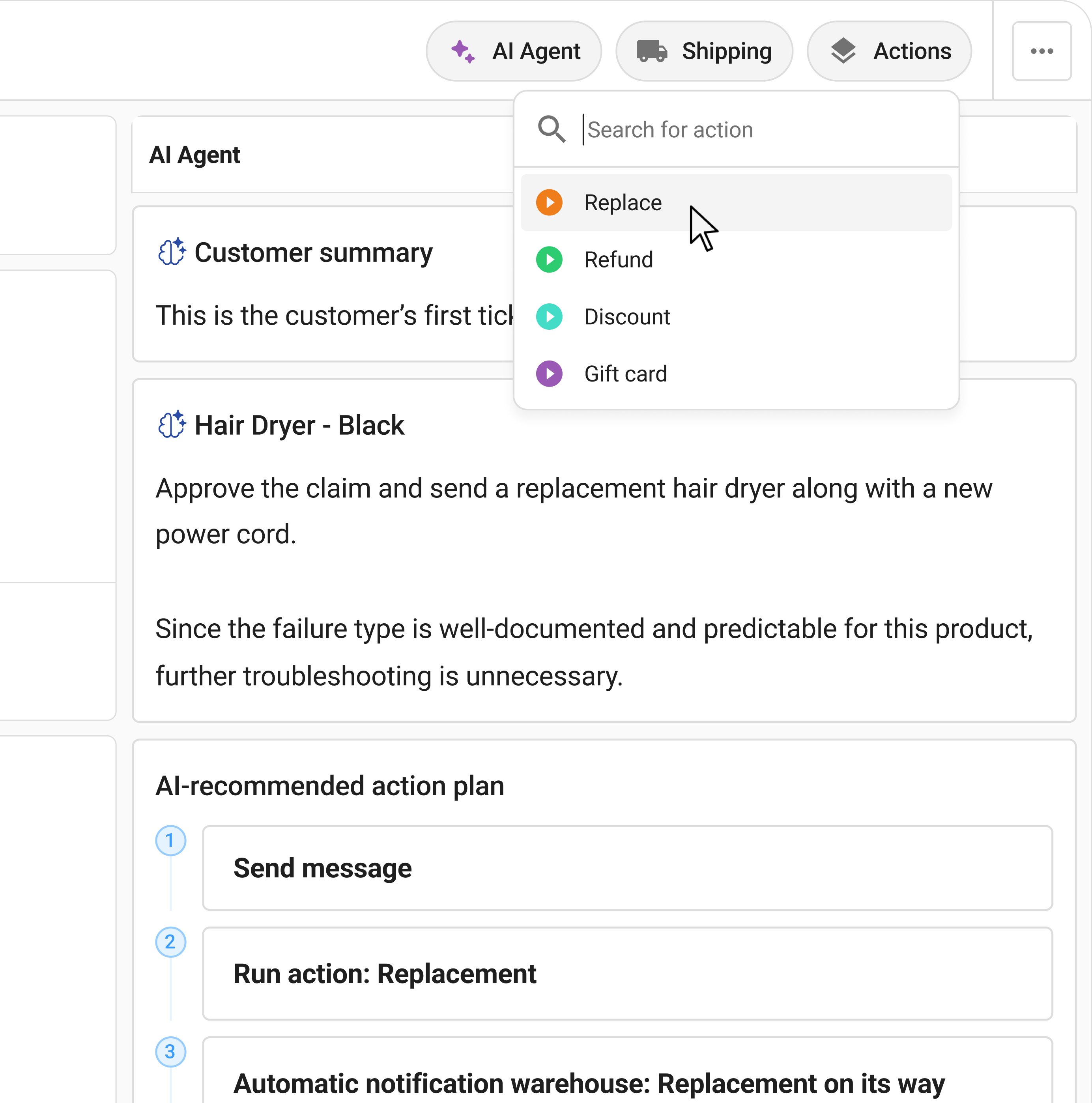
Separate recall workflow with prepaid labels, automated refunds, and replacement triggers
Live view of how many customers contacted, how many products returned, how many refunded
Every contact, return, and refund logged automatically for the post-recall audit
Manage reimbursement workflows with the supplier or manufacturer responsible for the defect
Most brands don't think about recall execution until they're in one. By then it's too late to set up the workflow. The advantage of running normal warranty and returns through Claimlane is that the recall workflow is already in place, just dormant. When something goes wrong, the team flips a switch instead of building from scratch.
Recall prevention: the work that pays back tenfold
Every recall is also a signal about what to fix going forward. The brands that don't repeat recalls share a few habits:
- Batch tracking on every product. Without batch numbers, you can't isolate a problem to a specific production run. Every recall becomes an "all units" recall.
- Supplier audits and scorecards. A specific supplier is usually responsible for a disproportionate share of defects. Track it. Use the data in renegotiations.
- Customer registration on warranty-eligible products. Direct contact with the end customer means faster recall execution. It also means you can reach customers who bought through retailers.
- Trend analysis on warranty claims. A spike in claims on a specific SKU is often the early warning of a recall-worthy issue. Catch it from claim data before it becomes a regulator notice.
The tools that catch these signals early are the same ones that execute the recall when it happens. That overlap is what makes claims platforms valuable here, not as recall tools per se, but as the infrastructure that makes recalls survivable when they come.
The takeaway
Product recalls aren't preventable in absolute terms. Even the most careful brands have them eventually. The difference between a recall that ends in regulatory action and one that strengthens customer trust comes down to execution.
Three things matter most: a customer database you can query in an hour, a return workflow that scales to thousands of units overnight, and documentation discipline that holds up six months later in an audit.
If you're handling normal warranties and returns through email and spreadsheets, a recall will break you. If you're running them through a structured platform, the recall workflow is one configuration away from ready.
If you want to know what your recall execution would actually look like today, book a Claimlane demo and we'll walk through it.