.webp)

RMA definition: Return Merchandise Authorization (RMA) is the formal approval a seller issues when a customer wants to return, exchange, repair, or get a refund on a product. RMA is an abbreviation used across retail, ecommerce, electronics, and manufacturing to describe both the approval step and the wider returns process.
The RMA process begins when a customer initiates a return request and ends when the product is inspected, disposition is decided, and the customer is refunded, replaced, or repaired. Retailers and manufacturers use RMA to track returned items, prevent fraud, and capture data on why products come back.
When a customer wants to return a product, they must obtain an RMA number from the seller or manufacturer. This RMA number allows the business to track the return merchandise authorization and monitor the item through the entire return process, whether it’s being repaired, replaced, or refunded.
In this guide, we will explore:
- Why companies need an efficient RMA
- Difference between RMA and RMS
- How different industries handle returns
- What a RMA process looks like
- What is a RMA number
- The benefits of a RMA software
What is RMA?
RMA stands for Return Merchandise Authorization. It's the formal process a business follows when a customer wants to return an item for a refund, repair, exchange, or replacement. The same abbreviation is used in PC and electronics retail, where customers regularly hear about "RMA" when sending faulty hardware back to a manufacturer or retailer.
The term is used interchangeably with Return Authorization (RA) and Return Goods Authorization (RGA). Some industries also use Return Material Authorization, all four describe the same thing: the step where a seller approves a return and assigns a tracking number to it.
An RMA is more than just permission to return. It's the record that lets a business match an incoming package to the right order, validate warranty coverage, route the product to the correct team, and close the loop with the customer.
RMA number vs RMA form, what's the difference?
The RMA number and the RMA form are two different things that sit either side of the same process.
An RMA form is the document a customer fills in to request a return. It captures the order number, the reason for return, product condition, and the preferred outcome (refund, exchange, or repair). It can live in a Google Form, an email thread, or a proper self-service returns portal.
An RMA number is the unique identifier issued once the form is approved. It tracks the specific return through its full lifecycle — from request to warehouse receipt to final resolution. It lives in the seller's system and appears on shipping labels, emails, and status pages.
A typical RMA form asks for:
- Order number or invoice reference
- Product SKU and quantity
- Reason for return (with predefined categories: damaged, wrong size, changed mind, faulty, etc.)
- Images or video of the product condition
- Preferred resolution (refund, exchange, repair, store credit)
- Delivery address for replacement, if applicable
Dealing with returns by email slows the process, loses information, and makes reporting almost impossible. A structured form, whether DIY or via software, is the foundation of a functioning RMA process.
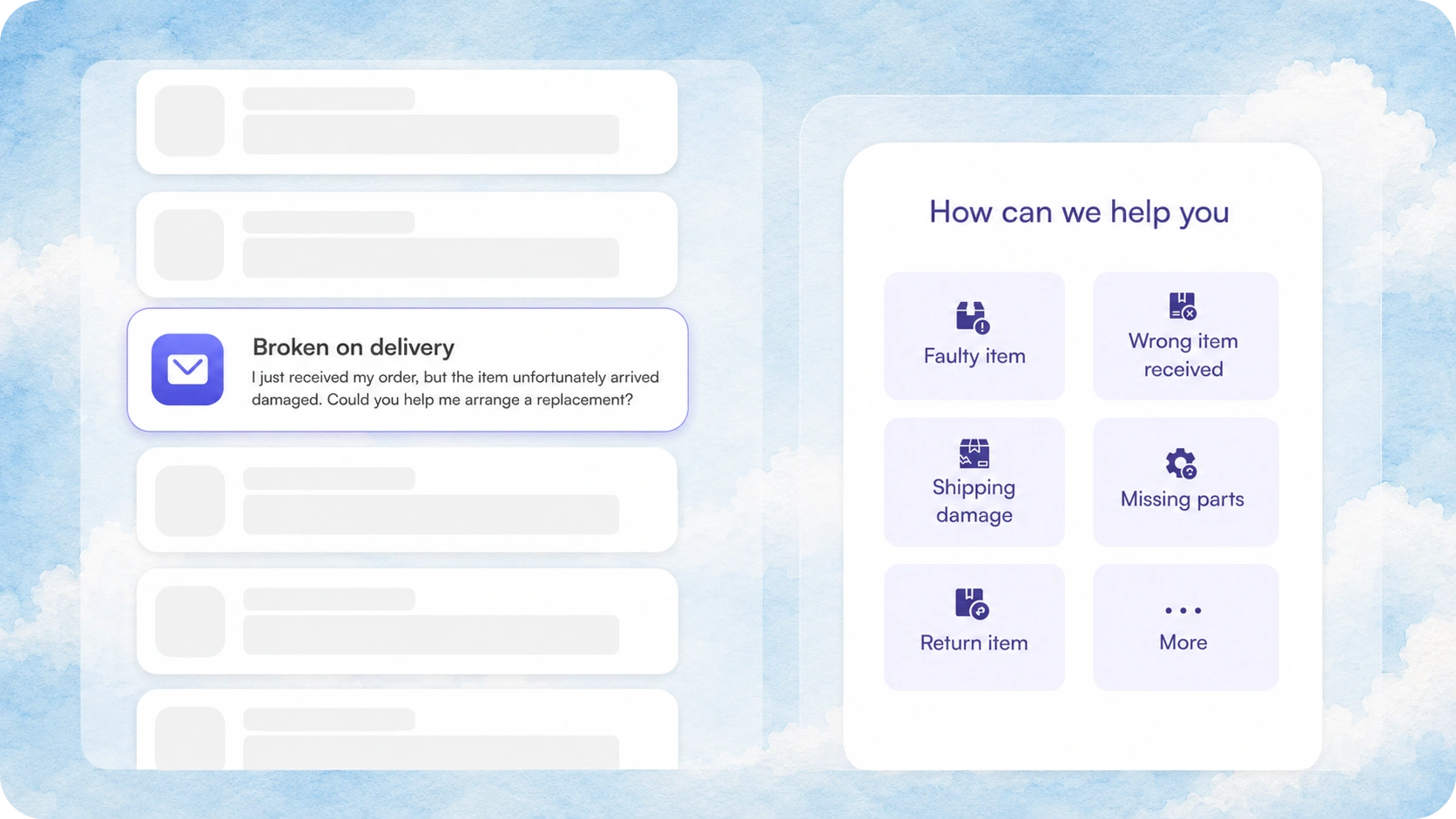
Why companies need an efficient RMA process (Return Merchandise Authorization)
For any company where they sell products, whether it is DTC, B2C or B2B, managing product returns, warranty claims, and repairs is a crucial aspect of maintaining strong relationships with clients and ensuring smooth operations.
A robust Return Merchandise Authorization (RMA) process is crucial to keep cost down, customer satisfaction high and internal operations smooth. For example Coolshop, a leading Danish ecommerce, removed manual tasks from their RMA process using Claimlane, reducing processing time across their SAP, FocalScope, and Homerunner integrations.
RMA vs RMS: What's the Difference?
RMA (Return Merchandise Authorization) and RMS, also known as return authorization software are related but serve different roles. RMA is the process a business uses to handle product returns, including issuing an RMA number and deciding how to resolve the issue, like a refund or replacement.
In contrast, a Return Management System (sometimes called an RMA system) is a software that helps businesses automate and manage the entire RMA process more efficiently.
An RMA number is a unique identifier (e.g. RMA-2026-04532) that tracks a specific return from request through resolution. It lives in your system and on shipping labels.
An RMA form is the document the customer fills in to request a return. It captures the order number, the reason for return, the product condition, and the preferred outcome (refund, exchange, or repair).
The form generates the number. Both are part of the same process but serve different functions, the form collects the information, the number tracks the workflow.
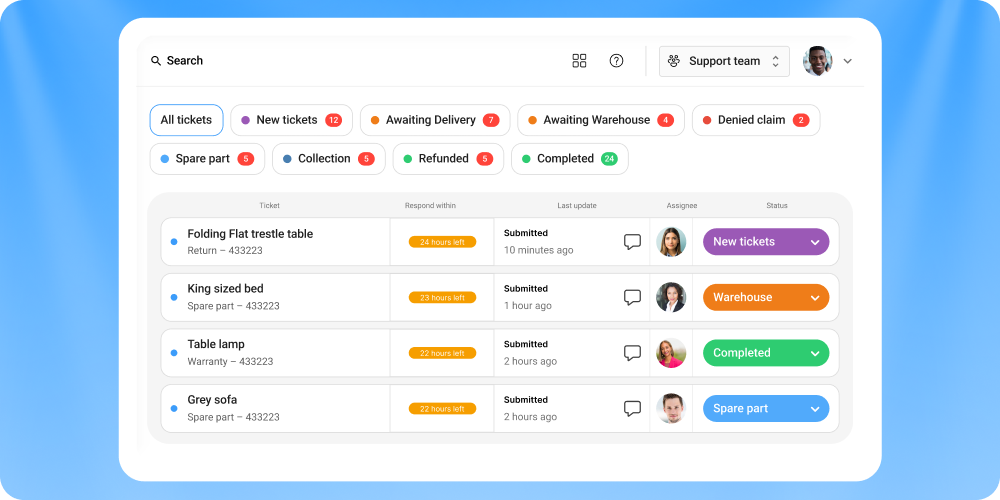
How RMA Management is used in different industries
Every industry sells products, but how returns flow through an RMA process differs dramatically depending on what's being returned. A 40-euro t-shirt and a 3000-euro sofa can't be handled the same way. Here's how RMA breaks down across the four major verticals Claimlane sees.
Each industry needs a different RMA flow. See how Claimlane handles these specific verticals: furniture returns, electronics warranty claims, or B2B returns.

RMA example: Handling a sofa product return
Think of this example: A customer has bought a sofa from your online interior store. The customer that a sofa leg is missing.
This is where a good return merchandise authorization process is absolutely necessary.
In an ideal situation how would you handle this? For some their RMA process might be very simple: return the product and we refund you. But that is not really good business acumen. There is a lot of costs involved shipping the sofa back and you lose the sale (and more importantly lose the customer).
Instead a good process would be using RMA software (such as Claimlane) and being able to create a specific process for missing parts. The flow would look like this:
- A customer needs a missing part
- The customer goes to the business return portal, selects their order and that they are missing a part.
- The customer selects the missing part.
- The business’ warehouse gets notified, accepts the claim and ships the sofa leg
- The customer can now enjoy the full product
- The business just achieved a happy customer and gets to keep the profit.
As you can see a return merchandise authorization software can be very crucial in creating a good process.
Suppliers and manufacturers (B2B)
For businesses selling products to other businesses, having a well-structured RMA process is essential. B2B returns often involve large quantities of products, making it crucial to define your RMA terms clearly in your contracts, also known as your B2B returns policy.
Examples of B2B Returns:
- Unsold Inventory Returns: Your retailer doesn’t sell all the products, and per your contract, they can return the remaining stock, often at a negotiated price.
- Defective Product Replacements: A customer experiences a faulty product, and your retail partner needs compensation or a replacement from you.
- Damaged Goods in Transit: A shipment arrives with damaged products due to shipping issues, and your distributor requests replacements or a credit.
All these examples require a clear b2b returns policy for how you handle product returns and warranty claims.
RMA software, such as Claimlane can also help B2B businesses.
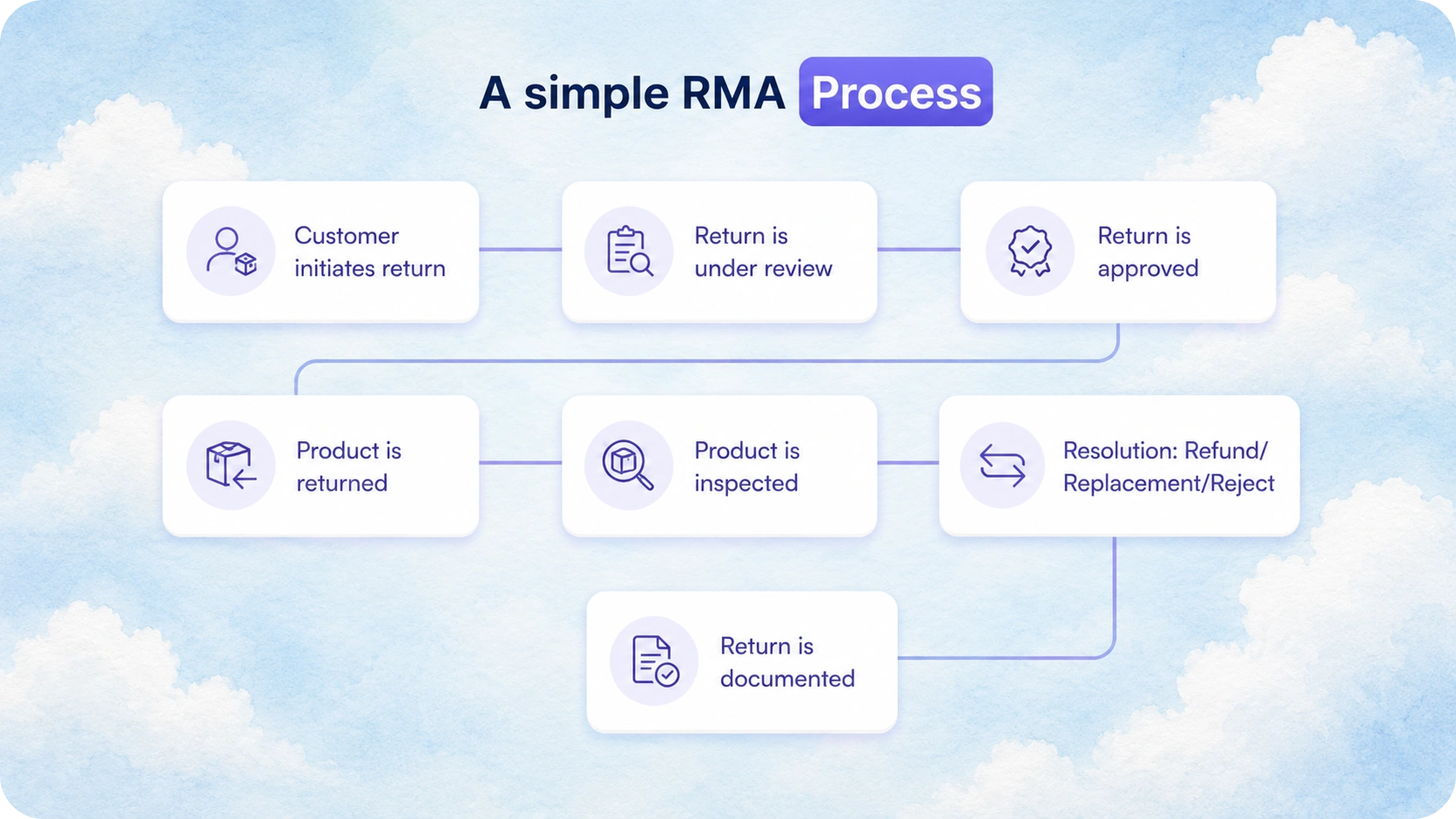
How Does the RMA (Return Merchandise Authorization) Process Work?
A well-defined RMA process ensures smooth handling of product returns, whether in B2B or B2C settings. Here’s a step-by-step breakdown of how it typically works:
1. Customer Initiates the Return
The customer (either an end consumer or a business partner) requests a return by providing details such as the order number, product issue, and reason for return. This is usually done through an online portal, email, or customer service.
2. RMA Request Review & Approval
The seller or manufacturer reviews the request to determine if the return is valid based on warranty, return policy, or contract terms. If approved, an RMA number is issued, along with return instructions.
3. Product is Returned
The customer ships the product back, often following specific guidelines like using original packaging. In some cases, prepaid shipping labels are provided.
4. Inspection & Verification
Upon receiving the returned item, the seller inspects it to verify the claim. They check for defects and damages.
5. Resolution Process
Depending on the return reason and policy, the seller may:
- Issue a refund (full or partial)
- Provide a replacement or repair
- Offer a credit toward future purchases
- Reject the return if it doesn’t meet the conditions
6. Closure & Documentation
Once resolved, the case is closed, and records are updated for tracking purposes. The full RMA process meaning comes down to this final step: every return leaves behind data the business can use to fix recurring issues.
By identifying product you can then fix them, to lower the amount of warranty claims you get.
As you can see a strong RMA process minimizes disputes, improves customer satisfaction, and ensures efficient inventory management.
What is a RMA number?
An RMA number, sometimes written as a return merchandise authorization number, is a unique code issued by a seller or manufacturer when approving a product return. It helps track and process returns efficiently, ensuring the item meets return policy conditions. Customers must include this number when shipping the product back, usually on the RMA label or return form.
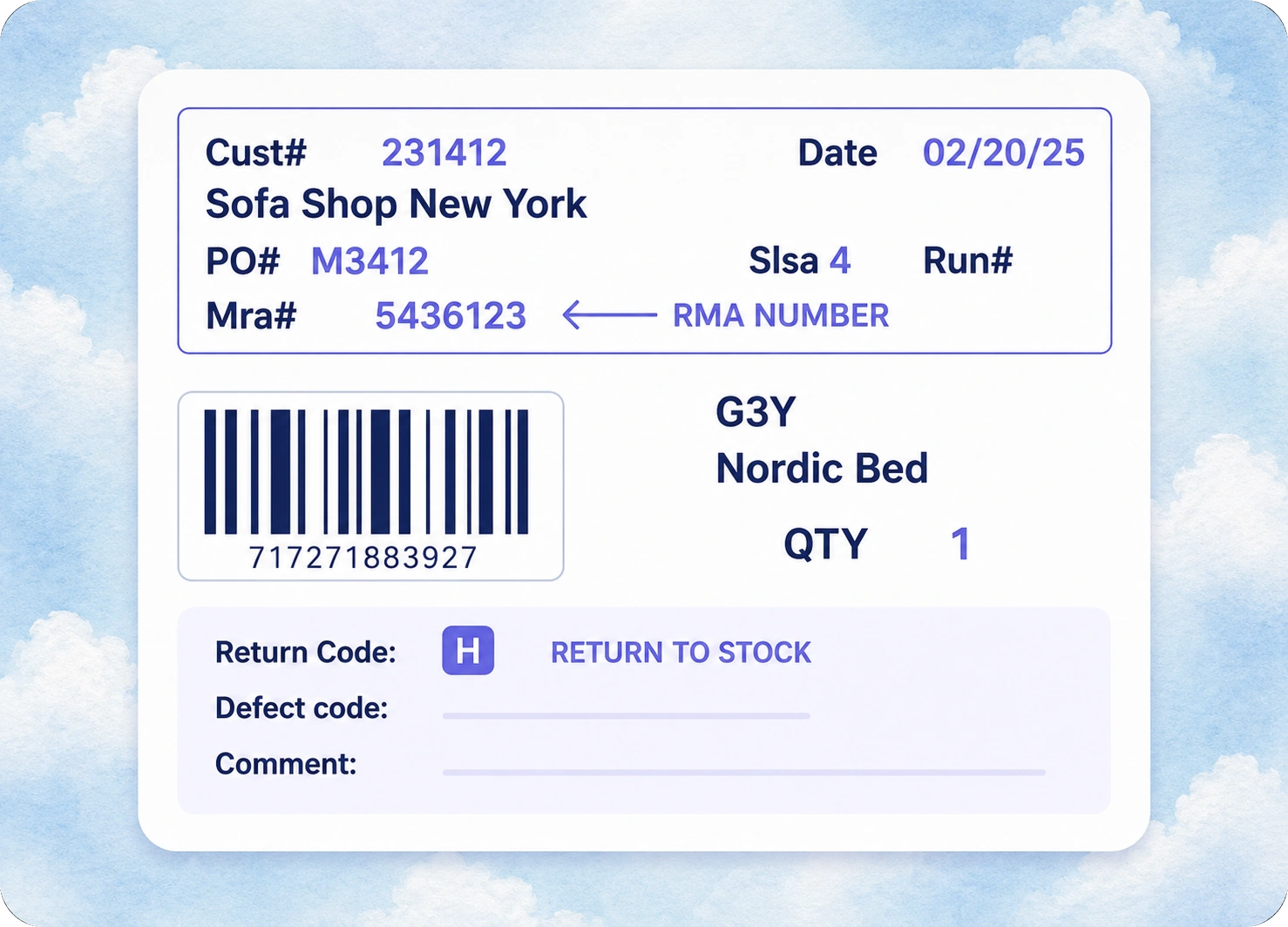
What is an RMA label?
An RMA label is the shipping label used to send an approved return back to the seller. It includes the RMA number, return address, and any handling instructions for the warehouse. Most return management systems generate the label automatically once the RMA is approved, so the customer just prints, attaches, and ships.
A proper RMA label keeps the warehouse team from having to manually match incoming packages to open returns, which is one of the slowest steps in a manual RMA process.
What is an RMA tracking system?
An RMA tracking system is the combination of the RMA number and RMA label that lets a business and a customer follow a return from request to resolution. The number identifies the case, the label routes the physical package, and together they remove the need to manually match incoming returns to open requests.
The Benefits of Using RMA Software
Managing returns manually is for most businesses not feasible. Investing in a RMA software not only automates the return merchandise authorization process but also integrates it with inventory management and customer relationship management (CRM) tools.
Here’s how RMA software can benefit your business:
- Automation of RMA Requests: Software can automate the generation of RMA numbers, saving time and reducing human error.
- End-to-End Tracking: RMA software allows businesses to track returns from initiation to resolution, offering full visibility into the return process.
- Integration with Inventory Systems: Integrate RMA systems with your inventory management software to automatically adjust stock levels when products are returned, repaired, or replaced.
- Warranty Management: Use Warranty Management Software to manage warranty claims and ensure that returns related to warranties are handled quickly and in compliance with terms.
- Fraud Prevention: By managing and automating your returns handling, businesses can better track which items are returned, preventing fraudulent returns.
If you're actively looking for an RMA software, we suggest taking a look at review sites such as G2.
How can RMA optimize reverse logistics
If Return Merchandise Authorization is the entire process surrounding how you handle returns, reverse logistics is all about how the returning product goes from customer back up the supply chain. RMA and reverse logistics is therefore incredibly connected.
A good RMA process will naturally optimize your reverse logistics and vice versa. We recommend the best way is through a RMA Software.
Learn more about the 5 R's of Reverse Logistics here.
Not sure if you need a RMA software?
If you want to optimize your product returns but don't want to invest in either a RMS or Warranty Management System, there are still things you can implement to make the process smother:
- Use a form (Google Form, Typeform) to collect returns and warranty claims instead of emails.
- Build your form to fit your return policy (request images, order number, etc).
- Connect form directly to a spreadsheet using Zapier.
- Do monthly or quarterly data review of your spreadsheet.
How Claimlane can help you with your return merchandise authorization process
Claimlane offers a comprehensive RMA software, also sometimes referred to as a Return Management System or Warranty Claim software, specifically designed for both B2C and B2B companies. Claimlane automates the entire returns and claims journey, from collecting the return, managing and solving the issue.
%201.webp)
Claimlane’s Features Include:
- RMA Processing: Automatically issue RMA numbers, track returns, and manage the status of each return.
- Warranty Claims Management: Use Warranty Claim Software to track warranties, ensuring all claims are processed efficiently.
- Integration with Your Systems: Integrate with your inventory management system, ERP, and CRM for a fully unified experience.
- Advanced Analytics: Leverage reporting and analytics to track return trends and identify areas for improvement in your return processes.
If you want to hear more about RMA and how you can automate your return process, book a personalized demo.
Return Merchandise Authorization FAQ