



Resolve warranty claimswithoutemail threadsspreadsheetsswitching tabscopy-pasting
- Train it on your policies and processes
- Resolves complex tickets automatically
- Knows when to hand a case to your team

- Build flows for any type of claim
- Collect photos, videos and details upfront
- Customize fields down to each SKU
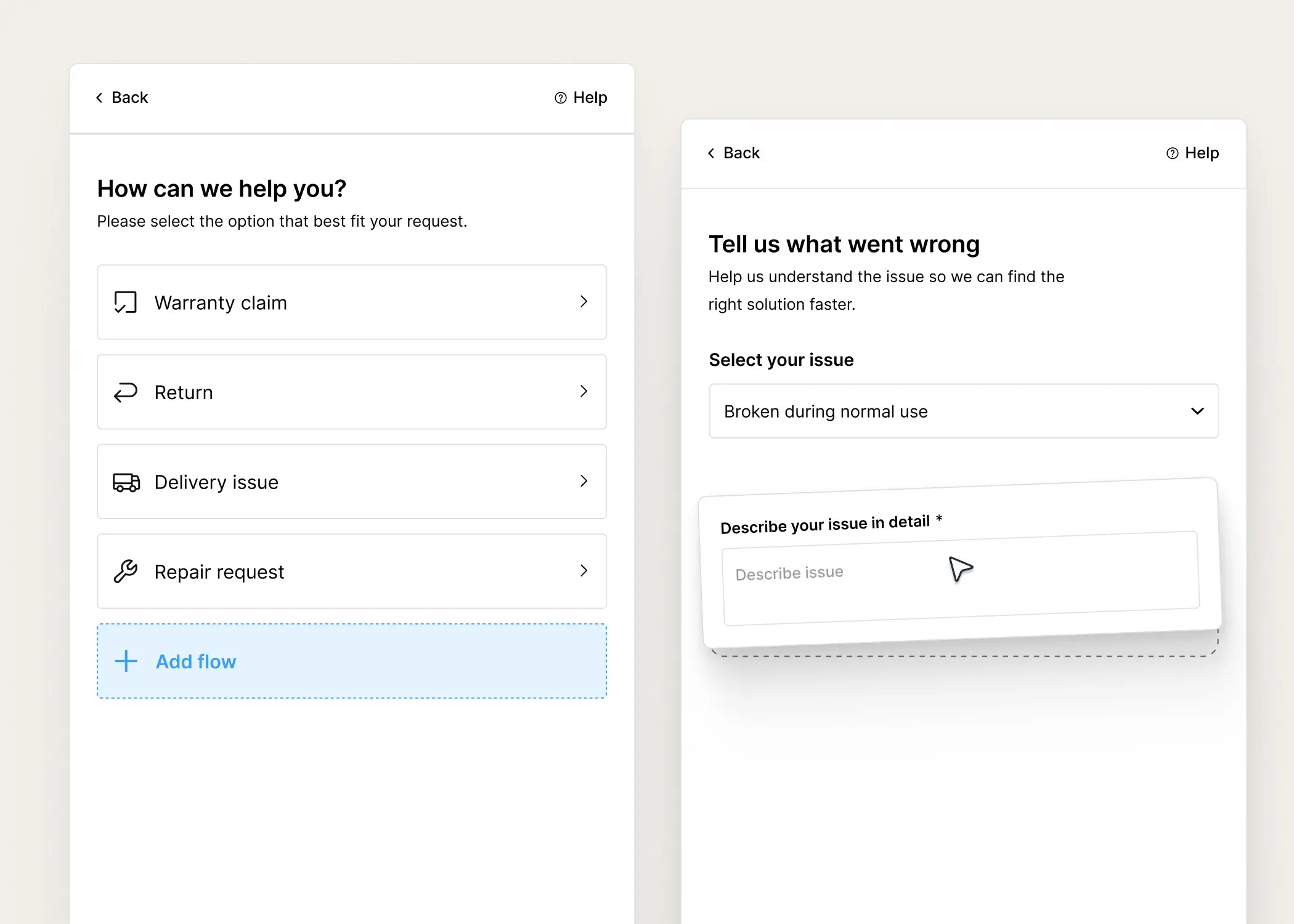
- Build flows around how your team works
- Route cases to the right team, person or supplier
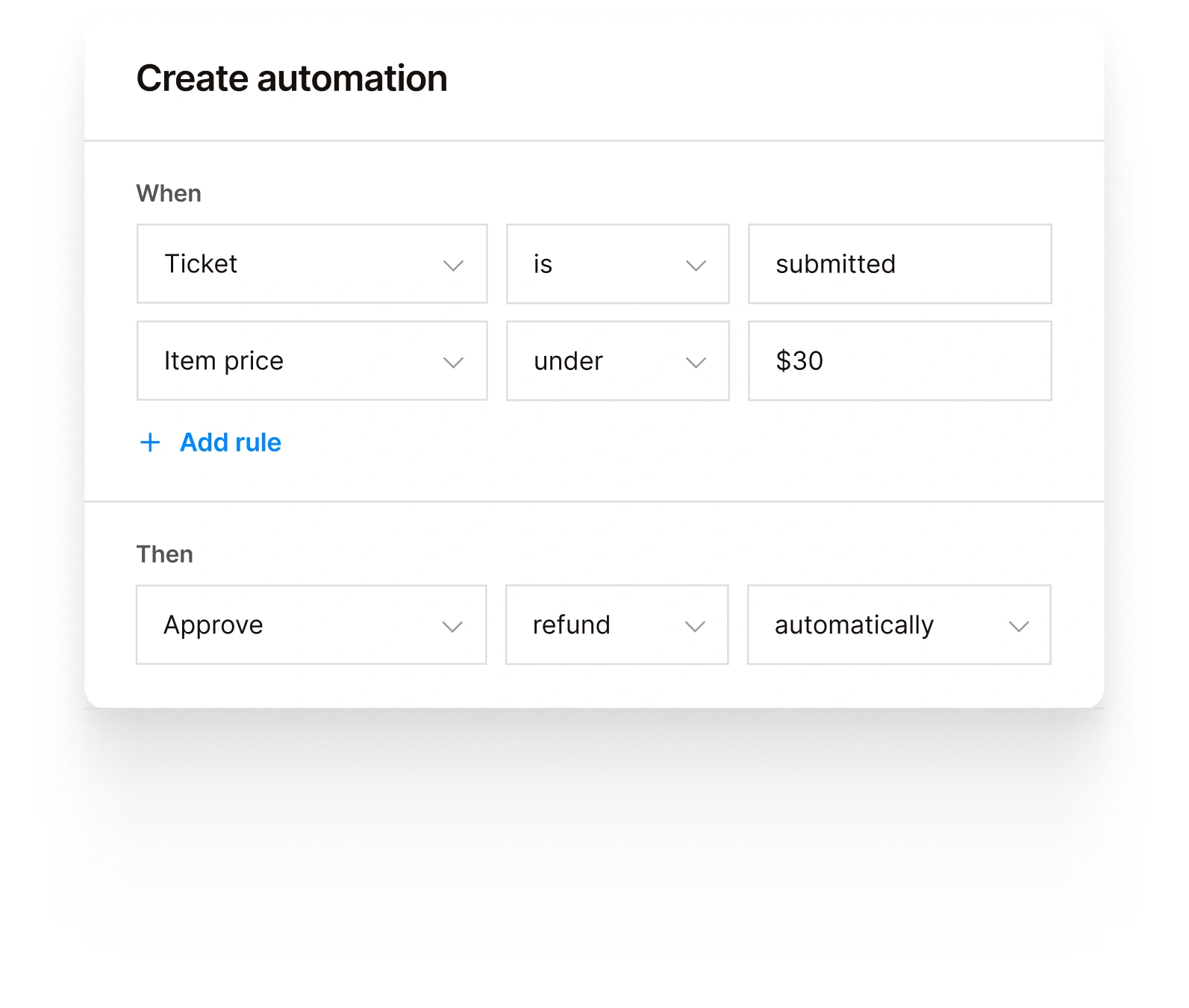
- Run ERP, e-commerce and warehouse actions in one place
.webp)
- See which products are claimed and returned most
- Spot recurring faults before volumes grow
- Share detailed reports with suppliers for credit notes

- Let customers register in under a minute
- Capture proof of purchase from the start
- Turn registrations into useful customer data
.webp)


















Receive fully documented claims
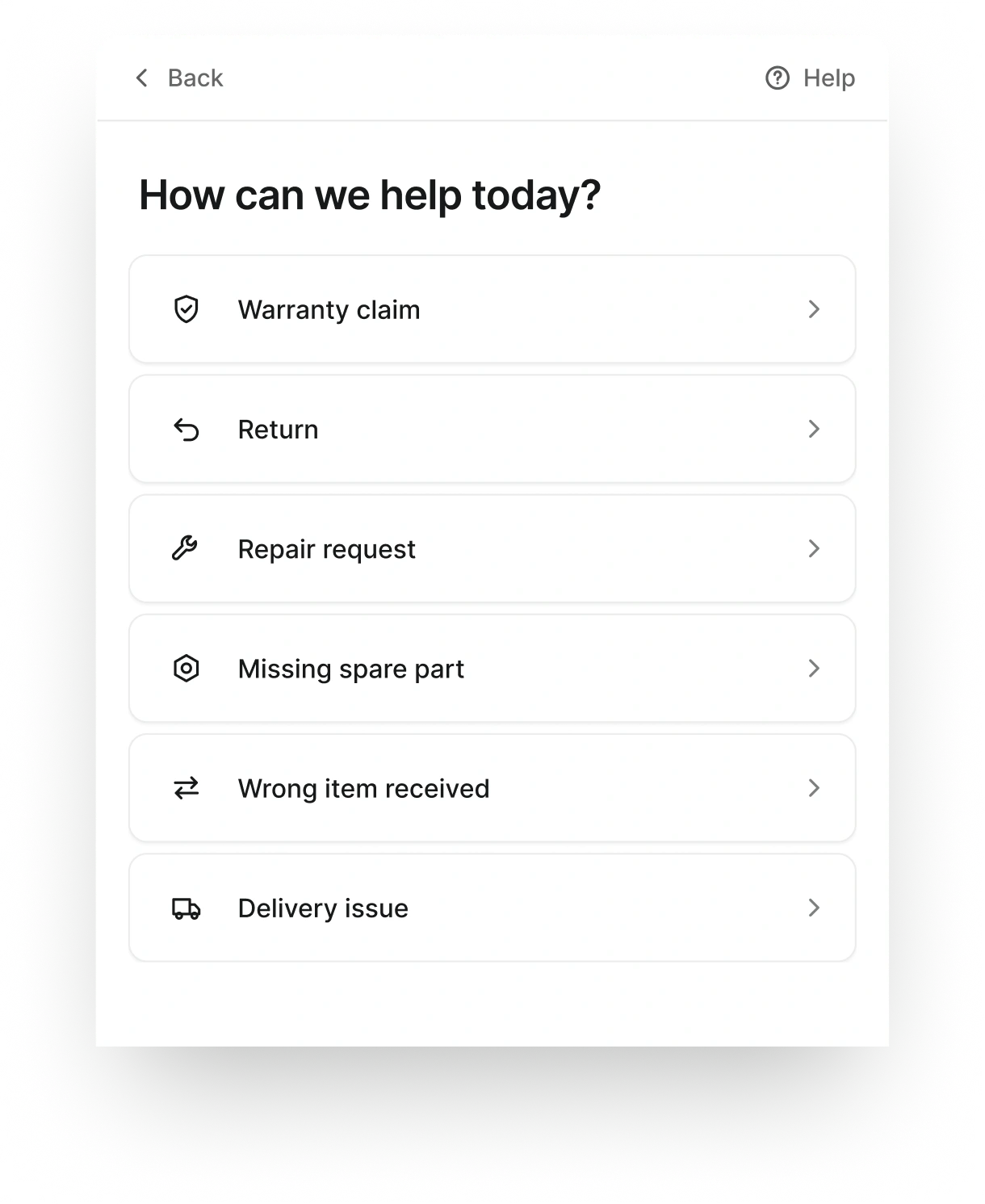
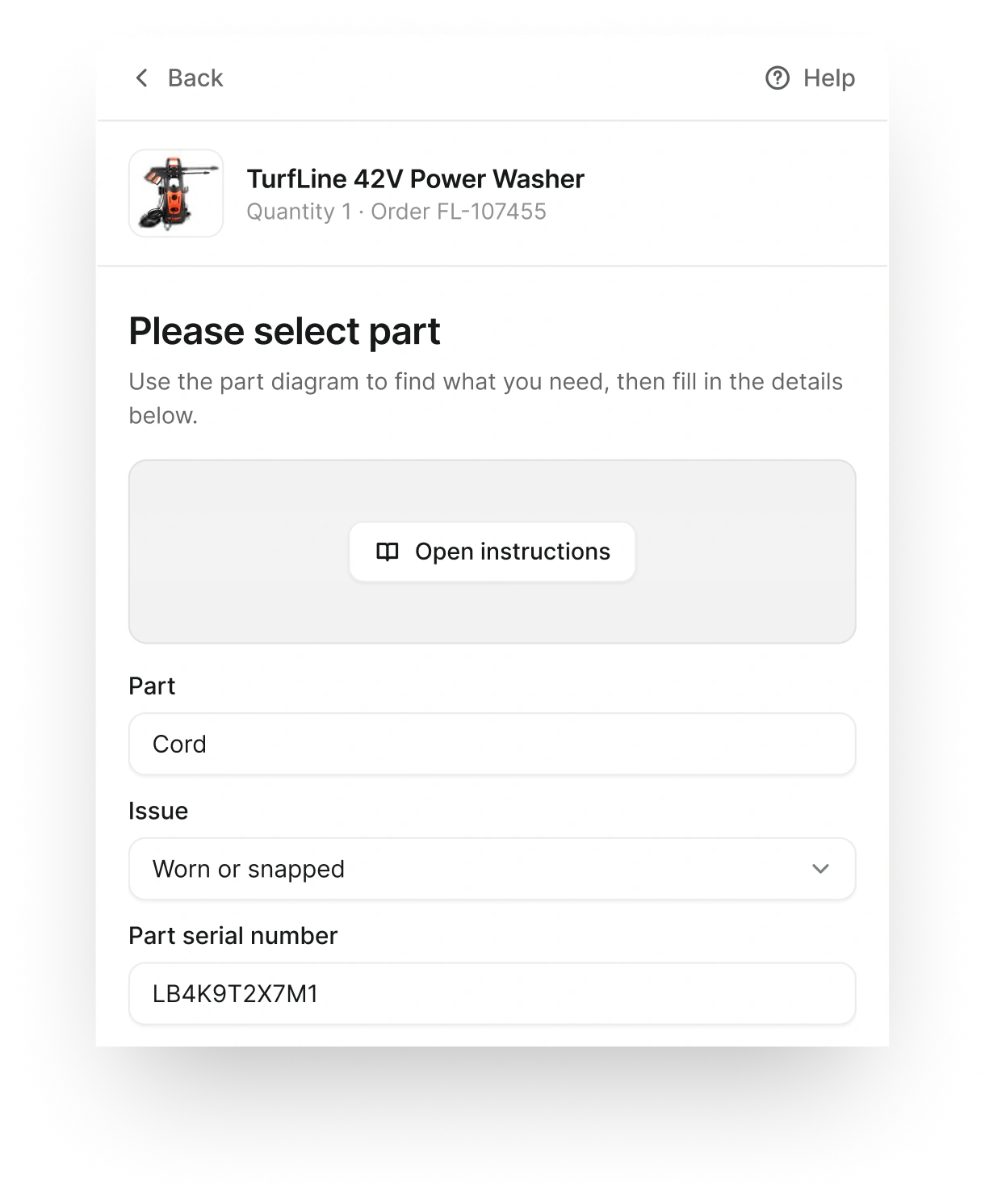
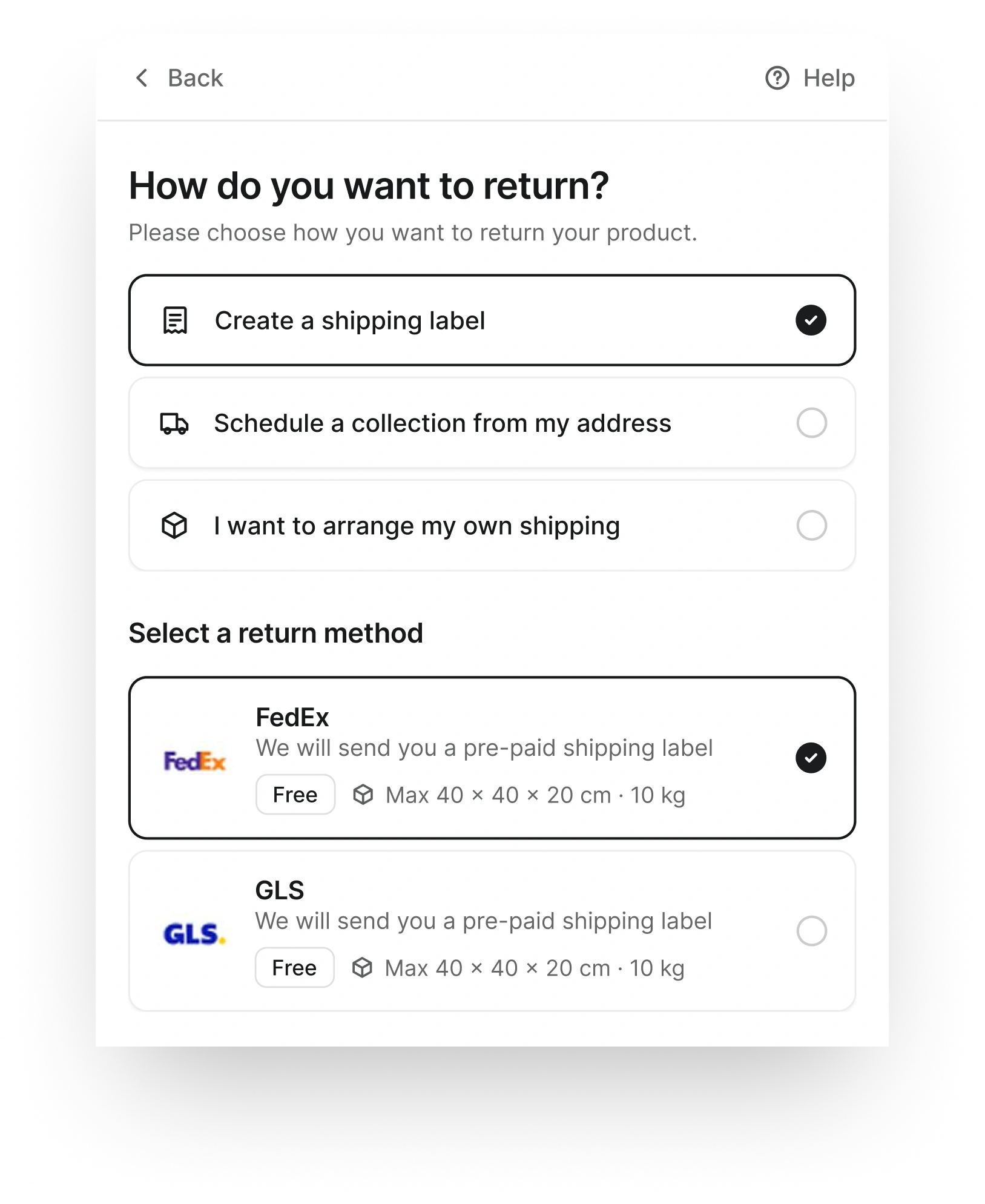
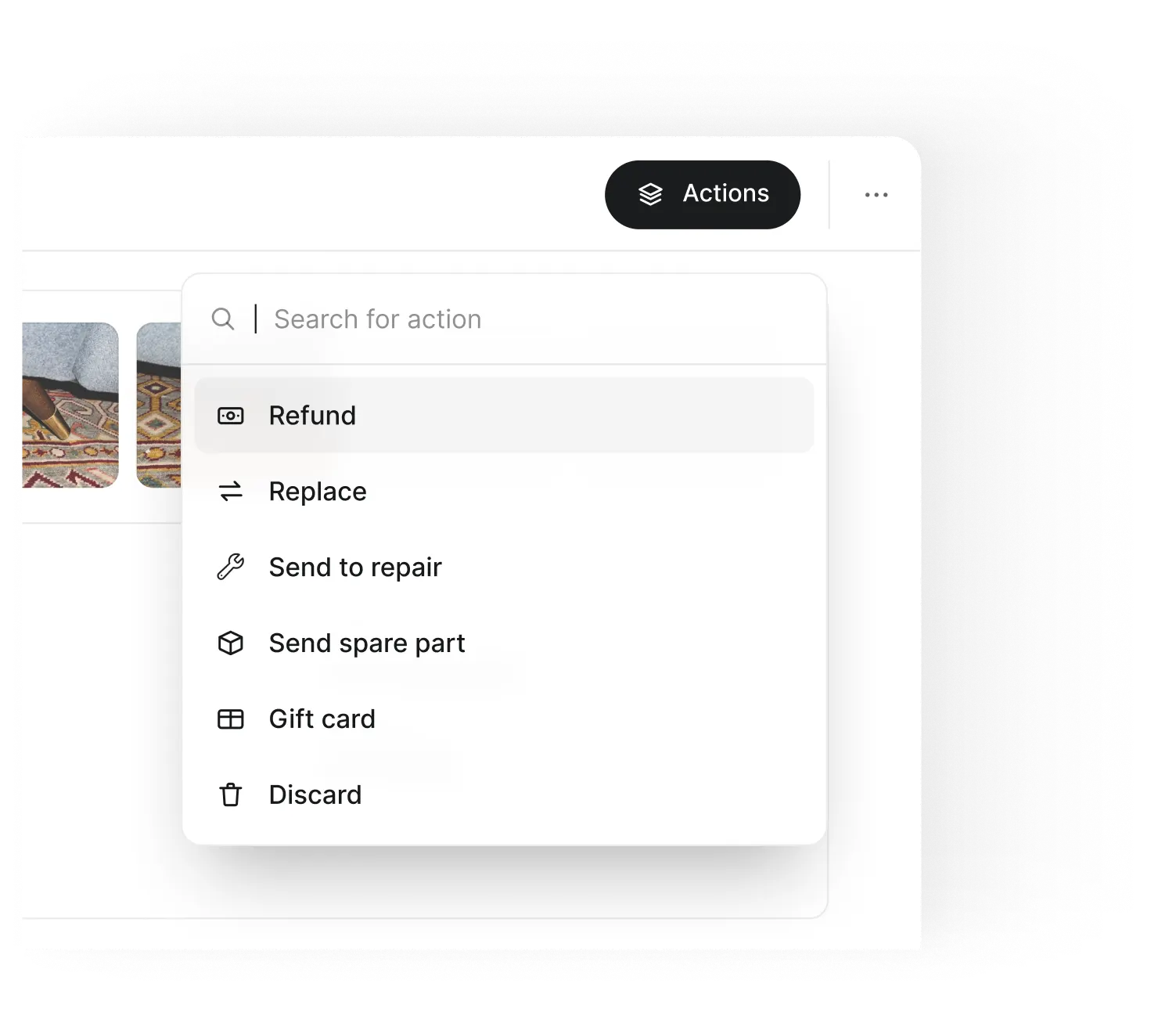
Run outcomes to any system from one place

.webp)








Connect all your systems
Explore integrations





Clear skies ahead for every warranty claim
Frequently asked questions
Claimlane lets you collect all customer requests: returns, warranty claims, repairs, and more - in one self-service portal. From here you can build dedicated workflows that helps you manage and solve aftersales cases.
Claimlane also connects B2B aftersales, allowing you to communicate and build workflows connecting you to your business partners.
This significantly reduces time spent on these types of tickets.
No problem. We’re constantly adding new integrations, so the list on our site might not always be fully up to date. Let’s talk, we can review your setup, scope out what’s needed, and see how Claimlane can connect with your systems.
Absolutely. Claimlane is built to manage even the most complex products - including small parts of products, so your returns and claims process stays simple and efficient.
For simple setups, such as a Shopify store with a straightforward product catalog, implementation typically takes 2–4 weeks. For more complex or enterprise setups, it usually takes between 4–8 weeks, depending on the number of features, integrations, and workflows required.
Claimlane works in every country. The platform is translated into all major languages, and the self-service portal includes auto translation so customers can submit tickets in their own language.
This makes it easy to collect and manage cases globally, no matter where you operate. Currently, Claimlane is used by customers in more than 50 countries.