.webp)
The purchase isn't the end of the customer journey. It's closer to the middle.
What a customer does, thinks, and feels after clicking "buy" determines whether they become a repeat buyer, a one-time transaction, or a vocal critic. Post-purchase behavior is the set of actions, emotions, and decisions that follow a purchase. And for ecommerce brands, it's the phase where loyalty is either built or lost.
Most marketing budgets focus on acquisition: getting people to the site, into the funnel, and through checkout. But the post-purchase window is where the real money is. Repeat customers spend 67% more than first-time buyers on average. The post-purchase experience decides whether that repeat purchase ever happens.
What Is Post-Purchase Behavior?
Post-purchase behavior refers to everything a customer does after completing a transaction. It includes both internal psychological processes (evaluating the decision, comparing expectations to reality) and external actions (using the product, contacting support, leaving a review, making a return).
In marketing and consumer psychology, post-purchase behavior is one of the five stages of the consumer decision process:
- Need recognition (I need something)
- Information search (What are my options?)
- Evaluation of alternatives (Which one is best?)
- Purchase decision (I'll buy this one)
- Post-purchase behavior (Did I make the right choice?)
Stage 5 is where customer lifetime value is determined. It's also the stage most brands invest in the least.
The Five Stages of Post-Purchase Behavior
Post-purchase behavior isn't a single moment. It unfolds across several distinct stages, each with its own risks and opportunities for ecommerce brands.

Stage 1: Confirmation seeking
Timeframe: Minutes to hours after purchase
Immediately after buying, customers look for signals that they made the right decision. They check the order confirmation email. They look at the product page again. They might search for reviews of the product they just bought.
This is when post-purchase dissonance is strongest. The customer hasn't received the product yet but is already questioning the decision. Brands that send immediate, reassuring order confirmations with clear delivery timelines address this stage directly.
Stage 2: Anticipation
Timeframe: Hours to days (during shipping)
The waiting period between purchase and delivery is emotionally charged. Excitement mixed with impatience. Every day without a shipping update increases anxiety.
This is where proactive shipping notifications and status emails matter most. Brands that go silent during this phase lose trust. Brands that send "your order shipped," "out for delivery," and "delivered" updates reduce anxiety and build anticipation.
WISMO ("Where Is My Order?") queries spike when brands don't communicate proactively during this stage. These support tickets are preventable with proper customer notification systems.
Stage 3: Evaluation
Timeframe: First use through first week
The product arrives. The customer opens it, uses it, and compares reality to expectations. This is the make-or-break moment.
Three outcomes are possible:
- Satisfaction: Product meets or exceeds expectations. The customer is happy.
- Dissatisfaction: Product falls short. The customer considers a return.
- Neutral: Product is "fine" but doesn't generate enthusiasm or loyalty.
For brands handling products with complex setup or usage requirements, post-delivery content (setup guides, tips, video tutorials) can shift neutral experiences toward satisfaction.
When products arrive damaged in transit, the evaluation stage collapses into immediate dissatisfaction. Having a fast claims process through a self-service portal turns that negative into a recovery opportunity.
Stage 4: Response
Timeframe: Days to weeks after delivery
Based on their evaluation, customers take action. Satisfied customers might:
- Leave a positive review
- Share the product on social media
- Recommend the brand to friends
- Browse for complementary products
- Sign up for the loyalty program
Dissatisfied customers might:
- Initiate a return or warranty claim
- Contact customer support
- Leave a negative review
- File a chargeback
- Never purchase again
The response stage is where brands either capture value (repeat purchases, referrals, reviews) or incur costs (returns, support tickets, negative word-of-mouth).
A structured returns management system ensures that even dissatisfied customers have a smooth path to resolution. And smooth resolutions often turn detractors into promoters.
Stage 5: Long-term relationship
Timeframe: Weeks to months
Post-purchase behavior doesn't end with the first use or the first review. The long-term relationship is shaped by cumulative experiences: did the product last? Was the warranty honored? Did the brand follow up?
Brands that offer warranty registration extend the relationship timeline. A customer who registers their warranty has committed to a longer-term connection with the brand. If a warranty claim arises months later, the way it's handled reinforces or breaks that relationship.
What Influences Post-Purchase Behavior
Several factors shape how customers behave after buying.
Expectation vs. reality gap
The single biggest driver of post-purchase behavior is the gap between what the customer expected and what they got. Accurate product descriptions, honest photos, and realistic delivery estimates keep this gap small. When it's small, satisfaction follows. When it's large, returns and complaints follow.
Ease of communication
Customers who can easily reach the brand (through chat, email, a self-service portal, or phone) are more forgiving of minor issues. Customers who feel ignored escalate faster. Accessibility is a buffer against dissatisfaction.
Return and warranty experience
The return experience is a moment of truth. A customer returning a product is vulnerable. They've already had a negative experience (the product didn't work out). How the brand handles the return determines the post-purchase narrative.
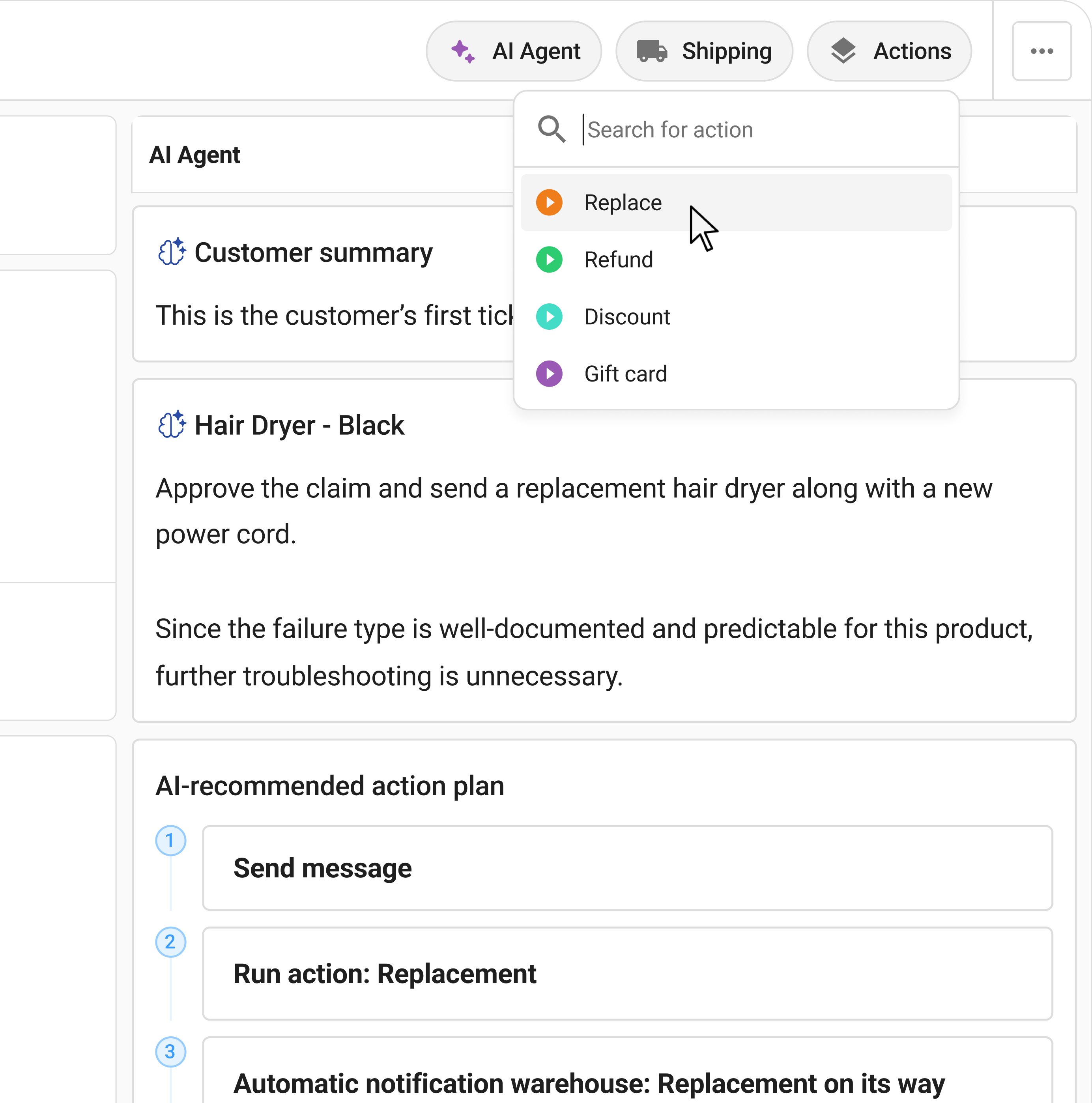
Claimlane's AI Agent, the first AI agent purpose-built for warranty claims and returns, processes claims in seconds rather than days. When a customer submits photos of a defective product and gets a resolution within hours, the brand has turned a negative into a memorable positive. MaxGaming resolved complex RMA cases 77% faster using this approach.
Social validation
Customers look to others to validate their purchase decision. Reviews, social media posts, unboxing videos, and community discussions all influence post-purchase feelings. A customer who sees others enjoying the same product feels reinforced. A customer who sees complaints feels concerned.
Price sensitivity
Higher-priced purchases trigger more intense post-purchase behavior. The stakes are higher, so the evaluation is more rigorous. Customers spending $500 on furniture or $300 on outdoor gear scrutinize the product more carefully than someone buying a $20 accessory.
How Post-Purchase Behavior Differs by Channel
Online purchases
Online buyers have higher uncertainty because they can't inspect the product beforehand. This leads to:
- Higher return rates (20%+ vs. 8-10% for in-store)
- More active post-purchase information seeking
- Greater reliance on reviews and social proof
- Stronger reaction to shipping speed and packaging quality
In-store purchases
In-store buyers have lower dissonance because they've touched, tried, or seen the product. Post-purchase behavior tends to be less anxious. Returns are lower, and the evaluation phase starts at the point of purchase rather than at delivery.
Omnichannel purchases
Buy-online-return-in-store (BORIS) and buy-in-store-return-online create complex post-purchase flows. Brands with omnichannel returns capabilities need systems that track claims and returns across channels seamlessly.
Mapping Post-Purchase Behavior to Business Outcomes
Post-purchase behavior connects directly to business metrics.
How to Shape Post-Purchase Behavior

Build a post-purchase communication sequence
The brands that win at post-purchase don't leave it to chance. They build structured communication sequences:
- Immediately: Order confirmation with reassurance
- Day 1-2: Product care tips, setup guides, or "what to expect"
- Day 3-5: Shipping update with tracking
- Delivery day: "Your order has arrived" with getting-started content
- Day 5-7 post-delivery: Satisfaction check-in
- Day 10-14: Review request
- Day 21-30: Cross-sell or loyalty invitation
Each touchpoint shapes the post-purchase narrative. Silence lets anxiety and dissonance fill the gap.
Make returns and claims painless
When post-purchase behavior turns negative (the product doesn't work, arrives damaged, or doesn't fit), the return and claims process becomes the brand's last chance to save the relationship.
After-sales service isn't a cost center. It's a loyalty engine. Brands that handle returns well retain customers at higher rates than brands that never had a return issue.
Claimlane's workflows automate the claims process so customers get fast resolutions. The analytics track which products generate the most claims, letting brands fix root causes rather than just processing symptoms.
Collect and act on feedback
Post-purchase surveys, NPS scores, and review analysis all provide data on how customers feel after buying. The brands that close the feedback loop (acting on the data, not just collecting it) see measurable improvements in retention.
Returns analytics reveal patterns that surveys might miss. If 30% of returns for a specific product cite "smaller than expected," the product page needs updated sizing information, not a longer return window.
Personalize based on behavior signals
A customer who opens every post-purchase email, leaves a review, and browses complementary products is signaling high engagement. Send them loyalty offers and new product previews.
A customer who hasn't opened an email since the order confirmation and hasn't visited the site is at risk of churning. Send them a check-in, a satisfaction survey, or a win-back offer.
Post-Purchase Behavior in B2B
Post-purchase behavior in B2B follows the same stages but with different dynamics:
- Longer evaluation periods. B2B products are used over months, not days. The evaluation stage extends accordingly.
- Multiple stakeholders. The buyer, end users, and decision-makers all have different post-purchase experiences.
- Higher stakes. A failed B2B purchase affects the buyer's professional reputation, not just their personal satisfaction.
- Formal review processes. B2B relationships include QBRs, vendor reviews, and contract renewals. Post-purchase behavior culminates in formal business decisions.
For B2B brands handling warranty claims and returns, structured documentation through platforms like Claimlane provides the evidence trail that B2B relationships require. Supplier claims need data: defect photos, serial numbers, order history. Supplier forwarding automates this documentation.
Measuring Post-Purchase Behavior
Key metrics to track:
- Repeat purchase rate: Percentage of first-time buyers who purchase again within 90 days
- Time to second purchase: Average days between first and second order
- Return rate by reason: Breakdown of why products come back
- NPS: Net Promoter Score from post-delivery surveys
- Review rate: Percentage of buyers who leave a review
- Support ticket rate: Tickets per 100 orders
- CLV (Customer Lifetime Value): Revenue per customer over their full relationship
- Warranty claim rate: Claims per 100 units sold
Tracking these metrics over time reveals whether post-purchase initiatives are working. Analytics tools that connect claim data with customer behavior give a complete picture.