.webp)
Best Live Chat Software for Ecommerce in 2026
Live chat is the fastest route from customer question to customer answer. For ecommerce brands, it handles WISMO queries, product questions, checkout friction, and first-line support across the buyer journey.
Where it gets complicated is the post-purchase layer. When a live chat conversation turns into a warranty claim, a damaged-in-transit report, or a defective product return, the chat tool handed the conversation off to a process that most live chat platforms weren't built to support.
This guide compares six leading live chat platforms for ecommerce (Intercom, Tidio, Gorgias Chat, LiveChat, Drift, and Olark) and covers where each fits. It also covers the claims execution layer that determines what happens after the chat ends.
TL;DR
- Gorgias Chat is the strongest choice for Shopify-centric DTC brands who want helpdesk and live chat in one tool with native order data.
- Intercom is best for brands who want messaging, product tours, and multi-channel engagement in a single platform.
- Tidio suits small-to-mid brands looking for affordable live chat with chatbot automation and fast Shopify deployment.
- LiveChat, Drift, and Olark serve specific needs: standalone chat, B2B conversational sales, and simple accessible chat respectively.
- None of these platforms handle warranty claims, returns decisions, or supplier recovery. Claimlane sits behind the chat as the claims execution layer, resolving the hard post-purchase questions the chat opens.
What Live Chat Software Should Do for Ecommerce
For an ecommerce brand, live chat has two distinct jobs. Before the sale: answer product questions, handle checkout confusion, and convert hesitant visitors. After the sale: handle WISMO queries, return requests, complaints, and first-line claims intake.
The pre-sale job is what most live chat platforms were built for. The post-sale job is where the differences between platforms become significant.
Brands with a high volume of post-purchase support need a chat tool that integrates with their ecommerce platform, has order context available to agents, and connects to whatever system handles claims and returns downstream. A chat tool that's fast at handling queries but disconnected from post-purchase operations creates a support handoff problem that agents absorb manually.
The ecommerce customer experience guide covers the full post-purchase support stack in context. For teams assessing how live chat fits within a broader customer service tool stack, the best ecommerce customer service software comparison covers the full category.
Key Evaluation Criteria for Live Chat
Shopify and platform integration, does the tool surface order data, product information, and customer history inside the agent window without requiring manual lookup?
Chatbot and automation capability, can the platform deflect WISMO and FAQ queries automatically before routing to a live agent? What triggers are available?
Helpdesk functionality, does the platform include ticketing and a shared inbox, or is it purely a chat widget that needs a separate helpdesk?
Multi-channel support, email, SMS, social, and chat in one workspace reduces agent context-switching and speeds up response times.
Pricing model, most live chat tools charge per agent seat or per conversation. High-volume brands should model the total cost at their actual ticket volume before committing.
The 6 Best Live Chat Tools for Ecommerce
| Platform | Best for | Key strength | Starting price |
|---|---|---|---|
| Gorgias Chat | Shopify DTC brands, high ticket volume | Native Shopify order data in agent view | From $60/mo |
| Intercom | Brands wanting full messaging platform | In-app messaging, product tours, surveys | From ~$74/mo |
| Tidio | SMB and early-stage ecommerce brands | Fast setup, affordable, chatbot included | Free tier; paid from $29/mo |
| LiveChat | Brands wanting standalone chat with integrations | Wide integration library, clean interface | From $20/agent/mo |
| Drift | B2B ecommerce, conversational sales | Sales-led conversations, ABM support | Custom pricing |
| Olark | Small businesses, accessibility focus | Accessible, simple, transparent pricing | From $29/mo |
1. Gorgias Chat
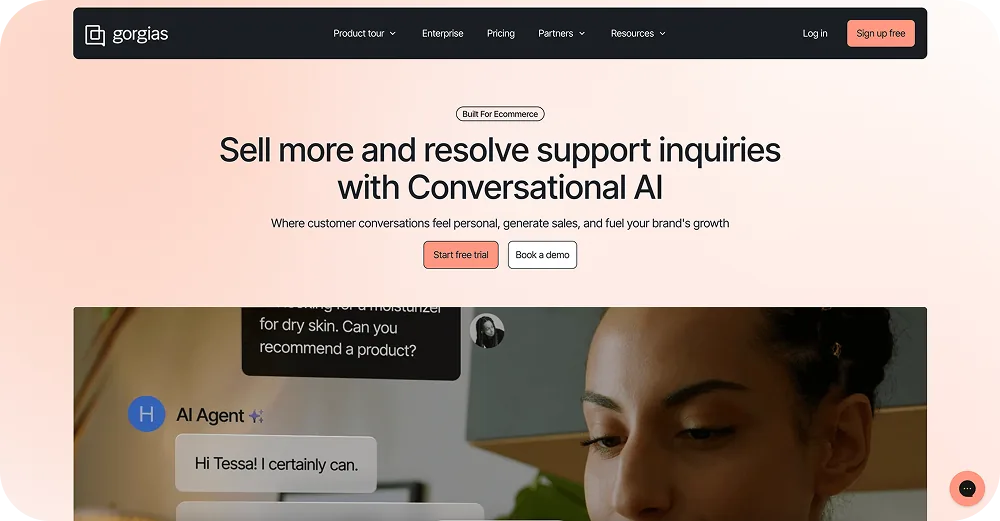
Gorgias is the strongest choice for Shopify-centric DTC brands managing high ticket volumes. Its native Shopify integration puts order history, product details, and customer data directly inside the agent view, letting agents handle returns, refunds, and shipping queries without switching between tools.
Gorgias bundles live chat with a full helpdesk, email, social, and SMS inbox. For brands that want everything in one workspace rather than a chat widget plus a separate ticketing system, this is one of the more complete out-of-the-box options.
The AI automation layer deflects FAQ queries and handles basic flows before routing to agents. For brands with high volumes of WISMO and return policy questions, the deflection rate alone often justifies the platform cost.
For a deeper comparison of alternatives, the gorgias alternatives article covers the helpdesk category in more detail.
Best fit: Shopify-centric DTC brands with high customer service volume who want helpdesk and live chat in one tool.
2. Intercom
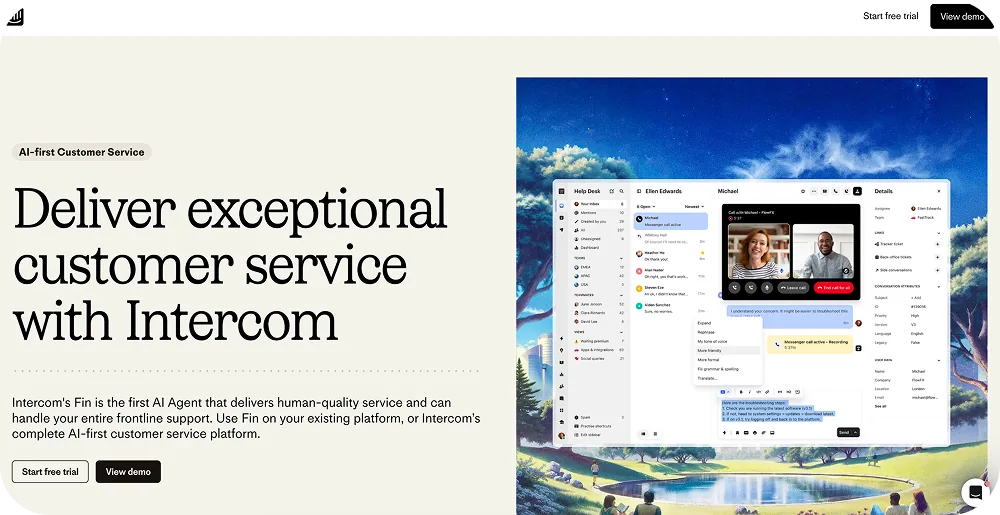
Intercom is a full customer messaging platform. Beyond live chat, it includes in-app messaging, product tours, surveys, and an outbound messaging suite. For ecommerce brands who want to engage customers proactively (onboarding, retention messaging, post-purchase nudges), Intercom covers more of the customer communication lifecycle than any pure-chat tool.
Its Fin AI agent handles first-line support across chat, email, and other channels. The Shopify integration exists but doesn't match Gorgias's native order context depth for ecommerce-specific queries.
Pricing starts at approximately $74 per month and scales with usage. For brands who need live chat functionality alone, Intercom's full platform may be more than required. For brands who want messaging + AI deflection + product tours in one system, the additional capability justifies the cost.
Best fit: Growth-stage ecommerce brands wanting a full customer messaging platform beyond live chat.
3. Tidio
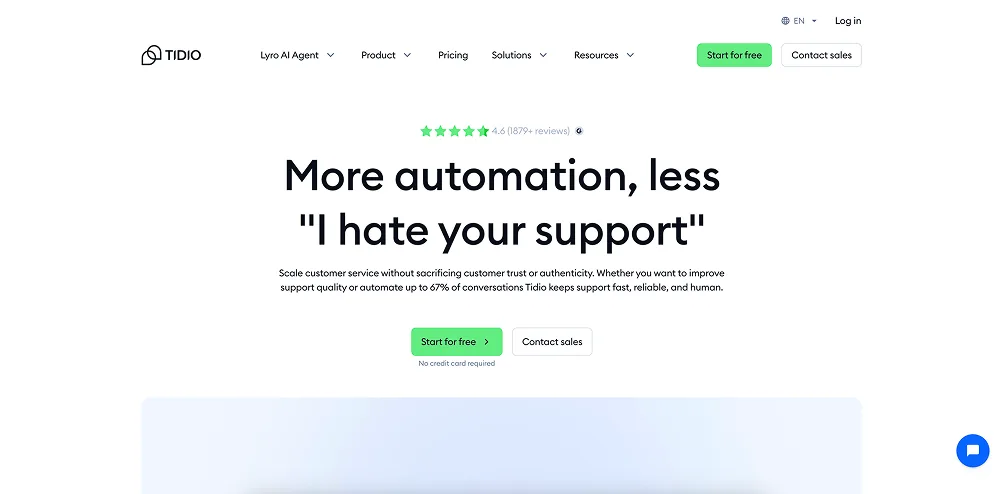
Tidio is one of the most accessible entry points to live chat for ecommerce. Free plan available, paid plans start at $29 per month, setup is straightforward on Shopify and WooCommerce, and the built-in chatbot automation covers FAQ deflection without engineering work.
For small-to-mid-market brands building their first customer support function, Tidio's combination of ease, cost, and automation makes it a strong starting point. As support volume grows and query complexity increases, the platform's limitations in analytics, CRM integration depth, and helpdesk functionality tend to surface.
Best fit: Small and early-stage ecommerce brands wanting affordable live chat with basic chatbot automation.
4. LiveChat
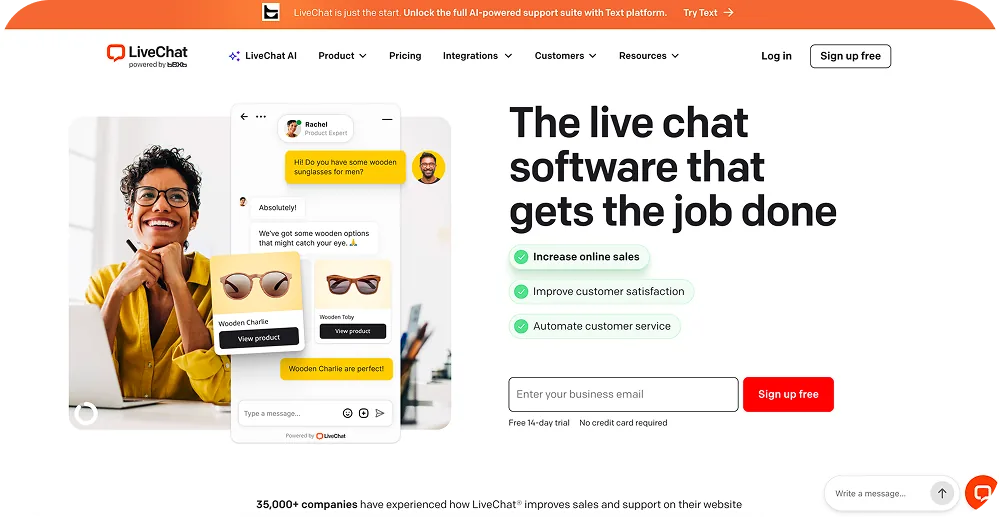
LiveChat is a standalone live chat tool with a wide integration library and a clean, agent-friendly interface. It connects to over 200 tools including CRM, helpdesk, and ecommerce platforms. For brands that already have a separate helpdesk (Zendesk, Freshdesk) and want a dedicated chat widget on top, LiveChat fits without forcing a platform switch.
Reporting is solid at the team and individual agent level. The pricing model (per agent per month) is transparent and predictable. For high-volume teams, the cost scales linearly, which is straightforward to budget.
Best fit: Brands with an existing helpdesk who want a dedicated, integrations-rich live chat widget.
5. Drift
Drift (now part of Salesloft) is built for B2B conversational sales rather than DTC support. It excels at account-based marketing plays, routing high-intent website visitors to the right sales rep, and running multi-channel sequences for target accounts.
For B2B ecommerce brands selling to business accounts, wholesale buyers, or distributors, Drift's ABM and conversation routing capabilities are relevant. For DTC consumer brands focused on support, it's the wrong tool category.
Best fit: B2B ecommerce brands with an outbound sales motion targeting business accounts.
6. Olark
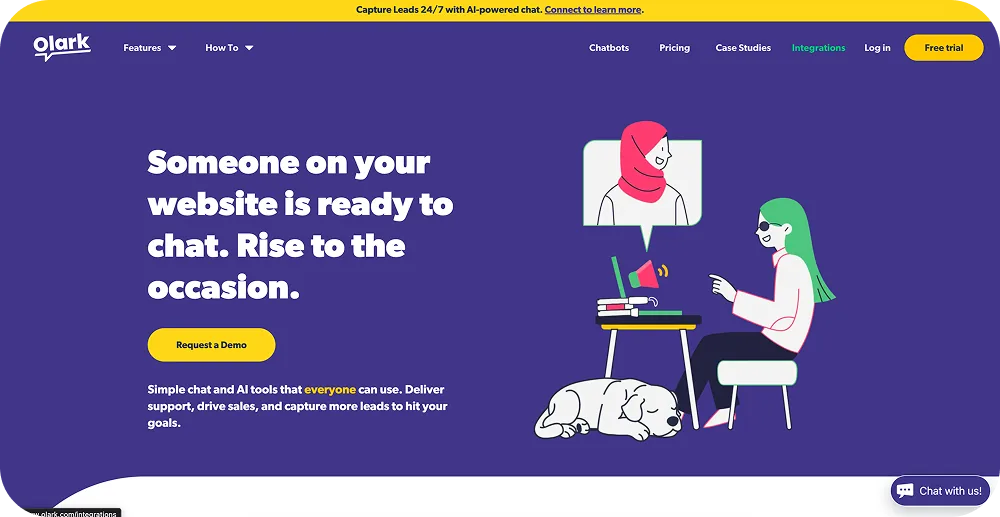
Olark is a simple, accessible live chat tool with a transparent pricing model and a strong focus on WCAG accessibility compliance. For brands with specific accessibility requirements or smaller support teams that don't need chatbot automation and CRM integration depth, Olark covers the basics reliably.
Its simplicity is both its strength and its limitation. Teams that need automation, AI deflection, and multi-channel support will quickly find the platform's feature ceiling. Teams that need a compliant, simple chat widget find it delivers without complexity.
Best fit: Small brands with accessibility requirements and simple live chat needs.
How to Choose Live Chat Software for Ecommerce
Four questions to guide the decision:
1. Is your primary platform Shopify? If yes, Gorgias Chat's native order context makes it the strongest starting point. Most other platforms connect via API with less depth.
2. Do you need helpdesk functionality included? Gorgias and Intercom bundle helpdesk with chat. LiveChat, Tidio, and Olark are chat-first and require a separate ticketing solution for full support operations.
3. What is your support volume? High-volume teams benefit most from AI deflection and automation. Gorgias and Intercom have stronger automation layers. Tidio covers the basics at lower cost.
4. Is this B2C or B2B? B2C DTC brands typically lead with Gorgias or Tidio. B2B ecommerce teams selling to business accounts should evaluate Drift or Intercom's B2B features.
For teams assessing how to build the full post-purchase support stack, the customer service automation software platforms for modern support teams overview and the omnichannel customer service platforms guide cover adjacent tooling decisions.
Where Claimlane Fits in Your Live Chat Stack
The Chat + Claims Stack Pattern
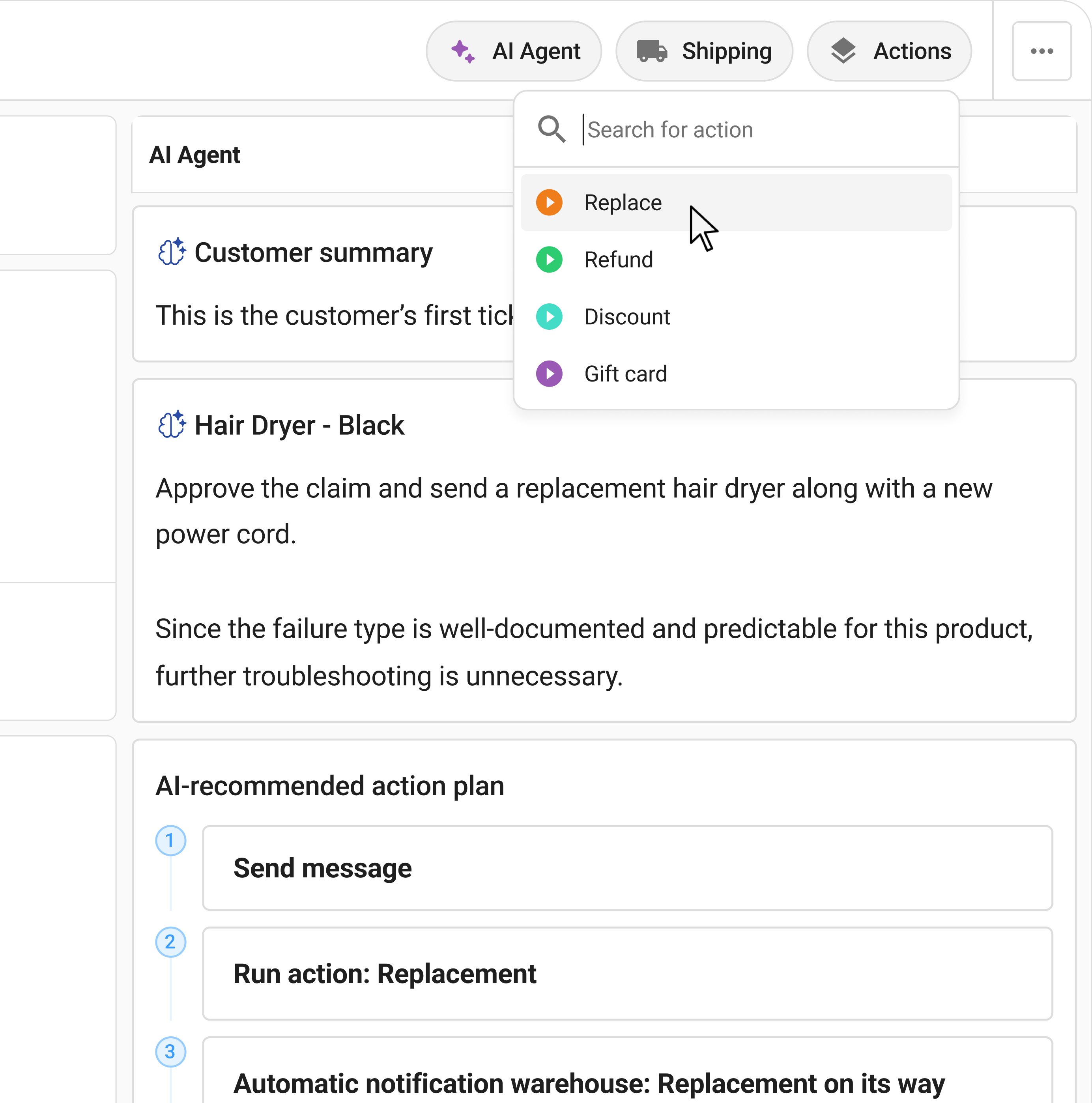
Live chat handles the conversation. Claimlane handles the claim decision. Both are visible to the agent in one workflow.
- Customer contacts support via Intercom, Gorgias, or Tidio chat
- Agent identifies a warranty claim, return, or defect report
- Agent opens or routes a claim in Claimlane from the same workspace
- Claimlane reviews evidence, applies warranty rules, surfaces a resolution recommendation
- Agent confirms resolution in Claimlane, closes ticket in the chat tool
Claimlane is not a live chat platform. It doesn't handle conversations, product tours, or pre-sale messaging. But it handles what happens after the chat opens a warranty or returns case: the claim decision that determines whether the customer's issue actually gets resolved.
Black Diamond, the outdoor equipment brand, uses Claimlane to run automated warranty and repair workflows behind its customer support operation. The chat conversation captures the customer's report. Claimlane processes the claim, applies brand-specific warranty rules, and routes the resolution. The two layers work together without overlap. The Black Diamond case study covers how they built this workflow.
For high-SKU brands where agents can't hold deep product knowledge on every warranty condition, the claims execution layer matters as much as the chat tool that opens the conversation. The GrejFreak case study shows how 85% faster claim resolution changes the support experience for customers at scale.
For a full view of how live chat integrates with the Claimlane claims workflow, the Claimlane integrations page covers the available connectors. The how to reduce claim resolution time in customer service guide covers what drives resolution speed at the process level.
G2 Rating
Claimlane holds a G2 rating of 4.8 out of 5. The Onyx Cookware case study gives a practical example of how a clean self-service claim portal changes the post-chat resolution experience for customers.
FAQ
Conclusion
See chat + Claimlane resolve a claim end-to-end
See how Claimlane's claims execution layer sits behind your live chat tool and turns warranty and return conversations into resolved cases.
Book a 30-min walkthroughGorgias, Intercom, Tidio, LiveChat, Drift, and Olark all cover the conversation layer of live chat well. The right choice depends on ecommerce platform, support volume, team size, and whether you need a standalone chat widget or a full messaging platform.
What none of them control is what happens after the chat opens a warranty claim or return case. The claims execution layer (the evidence review, eligibility check, supplier routing, and resolution decision) lives in a different part of the stack. Getting that right is what turns a customer complaint into a resolved claim rather than a churned account.
For more on how live chat fits within the broader customer service operation, the ai customer service automation overview and the reduce customer effort claims and returns guide cover the adjacent layers. For the self-service alternative to live chat for post-purchase queries, the Claimlane self-service portal handles claim intake without requiring a live agent.