.webp)
What this list covers
Tidio is a chat and helpdesk tool, not an operations platform. The bot answers, the inbox sorts, but the actions still live in other systems. The integrations decide how much real work gets done from inside a chat window.
This list ranks 10 Tidio integrations ecommerce brands use in 2026, picked against one question: does pairing Tidio with this tool actually close cases faster? Each section covers the use case, the data direction, pricing, and where it falls short. For a wider view of the chat layer, see the AI chatbots for ecommerce companion piece.
At-a-glance comparison
| Integration | Best for | Connects via | Starting price |
|---|---|---|---|
| Claimlane | Returns and warranty status inside chat | Native API + webhooks | Custom |
| Shopify | Order and customer context | Native | Free |
| WooCommerce | WordPress stores | Plugin | Free |
| Mailchimp | Lifecycle email handoff | Native | Free tier |
| Klaviyo | Ecommerce flows from chat events | Native | Free tier |
| Zendesk | Ticket escalation from chat | Native | $25/mo |
| HubSpot | CRM context for chat | Native | Free tier |
| Gorgias | Helpdesk for Shopify brands | Native | $10/mo |
| Zapier | Custom connections to anything | Native | Free tier |
| Google Analytics | Chat event tracking | Native | Free |
Why trust this list
The team behind this list runs aftersales operations for more than 200 brands. They sit in the place where chat meets the actual case work: a warranty claim filed, photos uploaded, a refund triggered, a replacement shipped. That makes the difference between an integration that looks good in a directory and one that earns its place in the stack.
1. Claimlane: returns and warranty data inside the chat
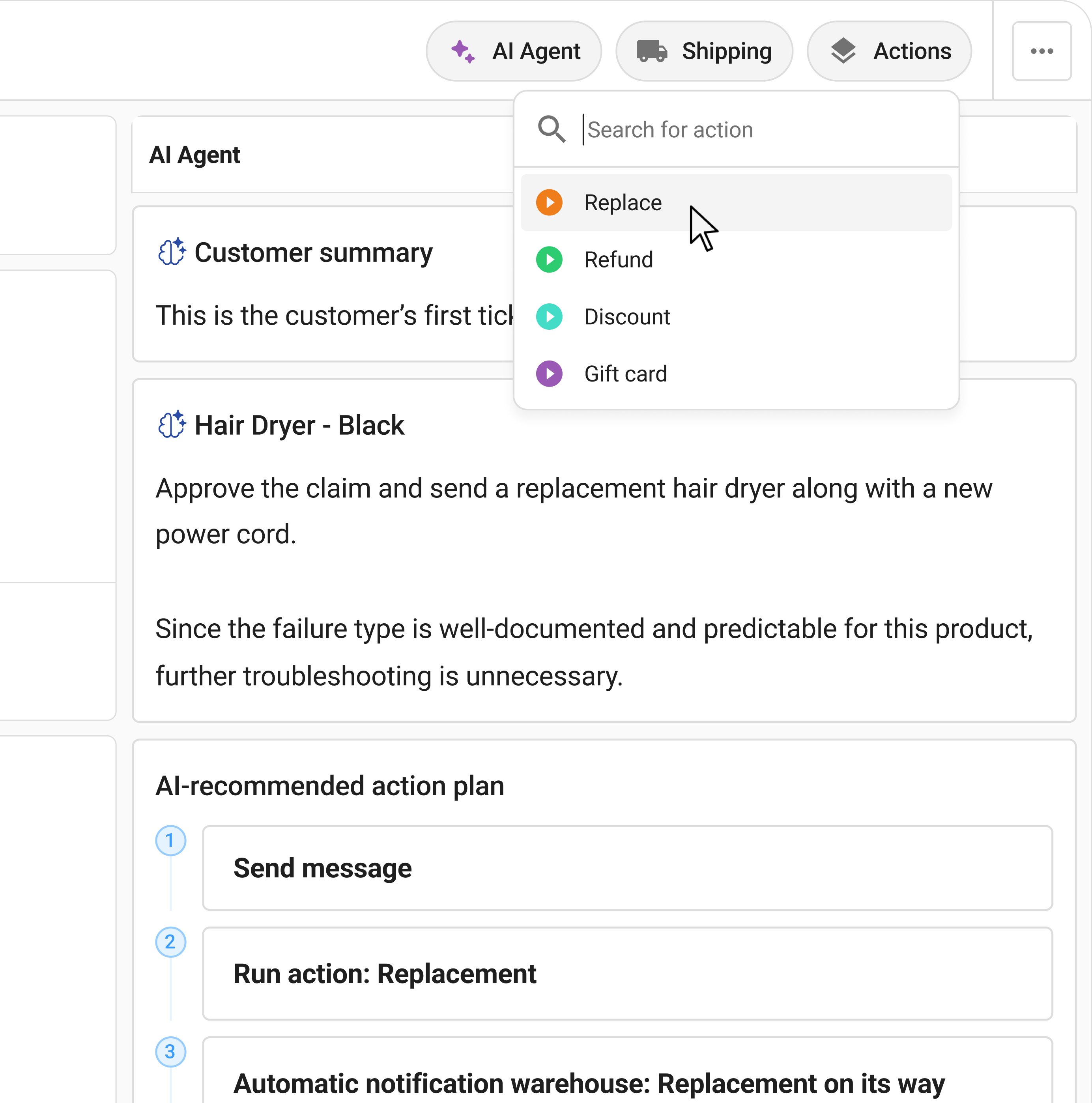
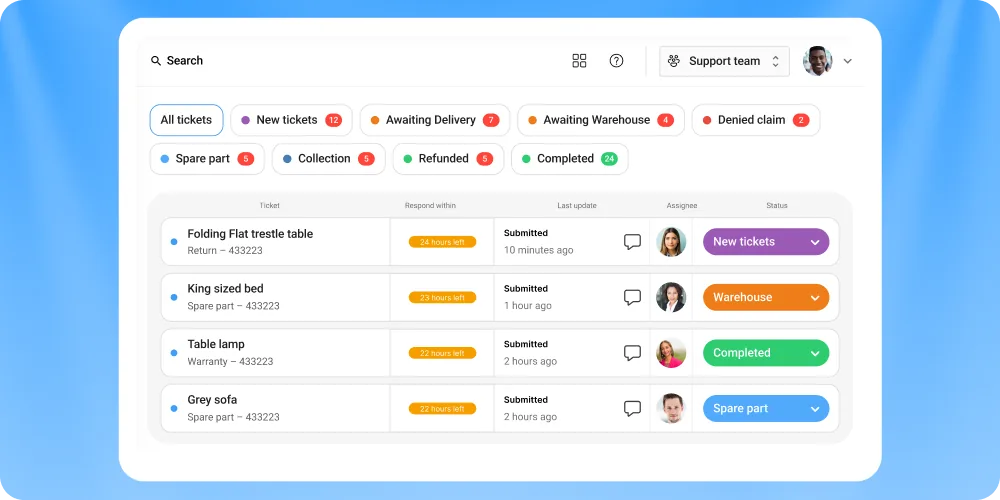
Tidio is good at answering. It is less good at knowing what is happening with the customer's specific warranty case. Claimlane fixes that by pushing case status, photos uploaded, and the next step into Tidio so the agent or bot answers from real data, not from memory.
A customer messages "is my replacement coming?" and the chat reads the live case timeline from Claimlane. No tab switching, no manual lookup. The same flow handles warranty claim updates, repair status, and supplier handoff messages.
Why people choose Claimlane
Brands stop running two systems for the same customer issue. The chat shows what the case shows. Customers do not get told one thing by a bot and a different thing two days later by an agent. Operations teams report fewer second-touch tickets and shorter time to close.
Pros and cons
- Native API and webhooks for two-way sync
- One case across chat, email, and portal
- Built-in analytics for chat-to-resolution
- Supports B2B and B2C claims in one platform
- Not built for brands with under 100 cases a month
- Setup is API-led, not drag and drop
Core features
Claimlane covers warranty registration, claims, repairs, replacements, returns, and spare parts in one platform. The self-service portal handles customer submissions. The workflow engine routes cases by product, supplier, and rule. The forward-to-supplier module handles credit recovery. All of it feeds Tidio with structured case data.
For the AI side, Claimlane's AI Agent, the first AI agent purpose-built for warranty claims and returns, reviews images and recommends outcomes that the chat can communicate back to the customer.
Pricing
Custom, based on claim volume and integrations. Brands typically see payback inside the first quarter. The pattern is consistent with GrejFreak's ROI and other Claimlane customers running aftersales operations at scale.
Product in action
See how Coolshop runs returns and warranty on Claimlane in this Coolshop case study. For a live walkthrough of the chat-to-case flow, request the interactive demo.
"The agent used to flip between three tools to answer one question. Now the chat shows the case and the answer in the same view."— Coolshop, Nordic ecommerce retailer

2. Shopify
Shopify is the most common Tidio pairing. The native connector brings order, customer, and product data into the chat. Agents see what the customer bought, when, and where it shipped, without asking.
Where it falls short
Shopify sync stops at the order. It does not push return requests, warranty registrations, or repair status. Brands running Shopify returns on Claimlane bridge that gap, so the chat reads both order and case data. For other Shopify-side tools, see the best Shopify tools roundup.
3. WooCommerce
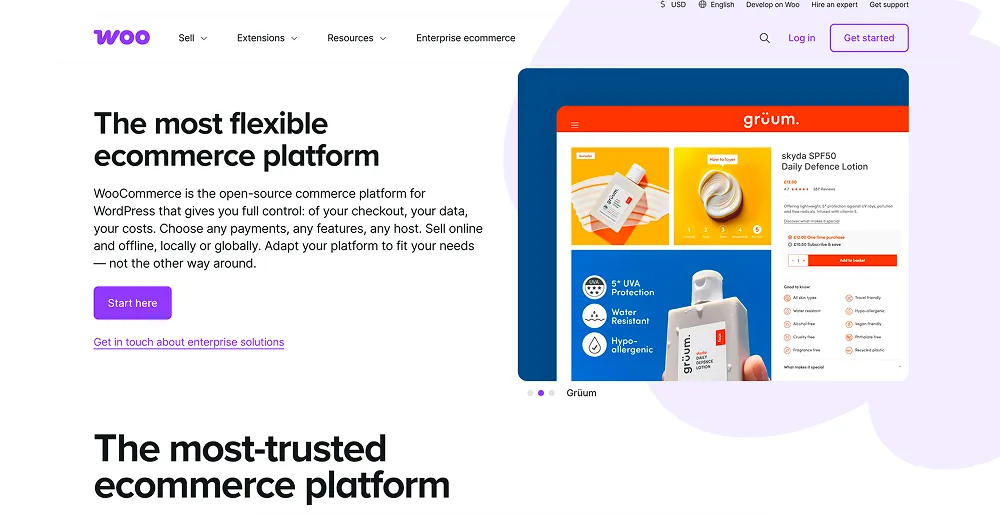
For WordPress stores, the WooCommerce add-on covers the same ground Shopify does on the order side. Customers in chat are matched to their order history and product catalogue. Pair with the best WooCommerce integrations for the wider stack.
Returns and warranty stay separate unless a dedicated platform handles them. Brands without that layer fall back on email between agents and the back office.

4. Mailchimp
Mailchimp catches the messages a chat cannot send. After the conversation, the customer enters a lifecycle email flow with the right tone: status update, replacement confirmation, or win-back if the case ended poorly. Pair with the in-batch piece on best Mailchimp integrations for the email side.
The handoff works when both tools see the same event. Without that, chat says one thing and the email says another. The pattern shows up in notify customers during returns process.

5. Klaviyo
Klaviyo is ecommerce-first email and SMS. The Tidio integration pushes chat events into Klaviyo flows. "Customer asked about warranty" triggers a follow-up sequence. "Refund requested in chat" tags the customer for re-engagement after resolution. For broader Klaviyo pairings, see the best Klaviyo integrations guide.

6. Zendesk
When Tidio cannot resolve, Zendesk picks up. The escalation passes the chat transcript, the customer record, and the order into a ticket. Agents see context without re-asking. For brands picking between platforms, see Zendesk vs Claimlane difference and the best Zendesk integrations.
Where Zendesk falls short: it is a ticketing tool, not a returns operation. Brands using it for warranty cases pile up custom fields and lose data quality, the pattern covered in retail returns data silos.
7. HubSpot
For brands running HubSpot as the CRM, the Tidio integration brings the customer record into chat. Lifetime value, segment, and previous tickets in one view. The best HubSpot integrations guide covers the wider stack.
The gap is again the post-purchase side. CRM tracks the relationship. It does not track the case. Brands plug that hole with a returns and warranty platform that feeds both tools.

8. Gorgias
Gorgias is the helpdesk most Shopify brands run. Tidio escalates to Gorgias when the chat hits a wall. For alternatives, see Gorgias alternatives and the Gorgias integrations guide.
The pairing is solid for support volume but does not close warranty cases on its own. Brands looking for case closure across both add a returns platform underneath. Compare against best ecommerce customer service software.
9. Zapier
When there is no native connector, Zapier covers the gap. Brands use it to push chat events into ERPs, supplier portals, and bespoke databases. It is slower than a webhook and breaks more often, but it covers edge cases that direct integrations miss.
10. Google Analytics
Tidio's GA4 integration pushes chat events into the analytics stack. Brands track which chat interactions led to a sale, a refund, or a churned customer. The pattern lives next to best ecommerce analytics platforms.
The weakness is attribution. Chat is a touch in a multi-touch journey. GA4 does not solve that, but it shows where chat sits in the funnel.
How to choose a Tidio integration
Three filters tighten the list fast.
1. Match the integration to the case type
Generic support questions need commerce and CRM context. Warranty and returns cases need a dedicated returns layer. Lifecycle email and SMS sit downstream of both. Start with the case type that drives the most volume.
2. Check data direction
Some integrations only push data into Tidio. Others pull events out. The valuable ones do both. Two-way sync is what makes the chat actually act on what the rest of the stack knows.
3. Plan for the post-purchase window
The biggest Tidio integration gap most brands run with is the returns and warranty feed. Without it, chat is guessing. With it, chat answers what the case shows. The point is covered in the customer effort score for returns sister piece.
How chat integrations affect operations
The value of a chat integration shows up in three metrics: time to first response, time to resolution, and second-touch rate. The right pairings move all three. The returns and warranty KPIs piece covers the dashboard layout.
For brands serving warranty cases specifically, the supporting work in AI image recognition for warranty claims and the in-batch AI reverse logistics article explains where vision models fit into the chat-to-case workflow.
"We connected the chat to the case system and second-touch tickets dropped. The customer asks once and the answer is right."— Matas, Nordic beauty and health retailer (case study)
Frequently asked questions
Conclusion
Tidio is the chat. The integrations are what make the chat useful. For ecommerce brands in 2026, the highest-leverage pairings are commerce platform, helpdesk, email, and returns and warranty data. The last one is the integration most teams skip, and the one that costs the most when a customer asks a chat "where is my replacement" and gets a generic answer.
To see how Claimlane feeds Tidio with case status, book a demo or watch the live setup on the interactive demo.