
The best-of-breed versus all-in-one debate is usually framed as one big choice: pick a suite, or assemble parts. That framing is wrong for post-purchase, because no serious brand does either in its pure form.
Every brand already runs a mix. A commerce platform, a helpdesk, an ERP, a shipping layer. The real question is never suite versus parts. It is which specific layer is complex enough to justify a specialist, and which layers are fine inside a broader suite.
For most brands, size-and-fit returns are the fine-inside-a-suite part. Complex warranty, repairs, and supplier claims are the part that quietly breaks every all-in-one that tries to cover it. This guide is about telling those two apart before signing anything.
An all-in-one post-purchase suite covers tracking, returns, and communications from one vendor. A best-of-breed stack picks the strongest specialist for each job and connects them. Most real stacks are hybrid: a broad platform for common flows plus a specialist execution layer for the complex cases a suite handles poorly.
The two-tier reality of post-purchase
Post-purchase is not one problem. It is two, and they have different economics.
Tier one is the high-volume, low-complexity flow. A dress does not fit, the customer wants a different size, and the whole thing should resolve in a few clicks. This is where an all-in-one or a focused returns tool shines. Simple size and fit, exchange-first, Shopify DTC, points to a tool like Loop Returns. Branded tracking and post-purchase messaging points to Narvar or AfterShip.
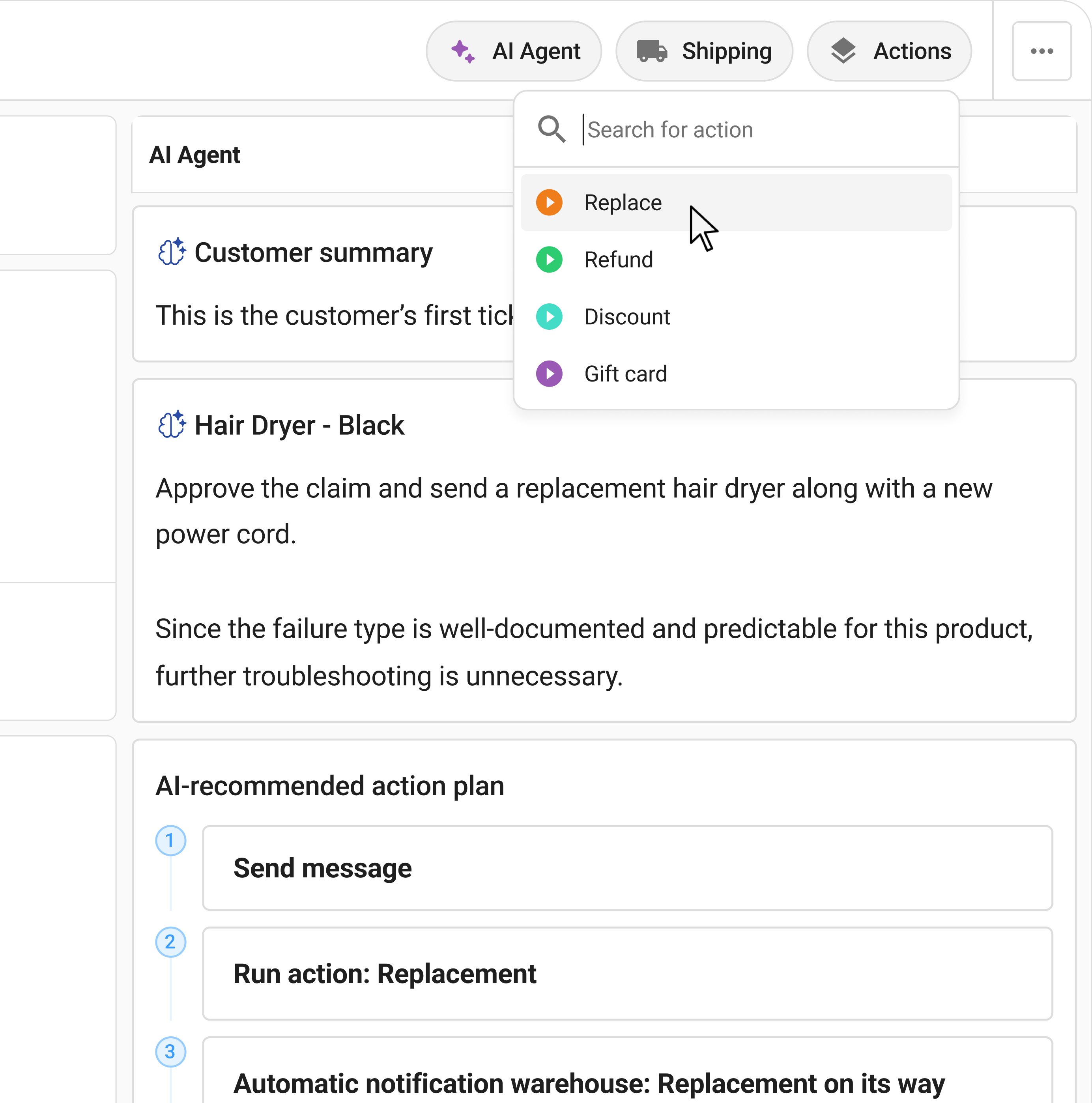
Tier two is the low-volume, high-complexity flow. A fault, a photo, a serial number, a supplier who owes for the defect, a repair path, a B2B dealer in the middle. This is where suites stall, because the work is decisioning and evidence, not a return label. This tier is Claimlane's ground, and the wider map sits in the post-purchase platform guide.
A brand that buys one tool for both tiers overpays on one and underserves the other. That is the whole trap.
When all-in-one is the right call
All-in-one wins when the flows are uniform and the integration burden is real. A smaller catalog, mostly apparel or accessories, few suppliers, and a single sales channel means the complexity that justifies a specialist is not there yet.
The ecommerce technology stack gets heavier with every vendor added, and a brand should not carry that weight for cases it barely has. In this situation, best post-purchase software in a single package is the honest answer, and there is no shame in it.
When a specialist layer is the right call
Best-of-breed wins the moment one layer becomes materially harder than the rest. In post-purchase, that layer is almost always complex claims.
The signals are specific. Photo-required claims, three or more suppliers driving real claim volume, a repair-or-replace decision on many cases, and a dealer or B2B channel alongside DTC. When those appear, an all-in-one's returns module stops fitting, and brands start bolting spreadsheets onto it. The comparison against a general suite is laid out in ERP versus returns management software and what a returns management system actually is.
| If the brand needs | Best fit |
|---|---|
| Simple size/fit returns, exchange-first, Shopify DTC | Loop Returns |
| Branded tracking and post-purchase CX | Narvar or ParcelLab |
| Global multi-carrier tracking | AfterShip |
| Enterprise reverse logistics with deep ERP | ReverseLogix |
| Enterprise resale recovery | Optoro |
| Complex warranty, repairs, supplier claims, B2B + D2C | Claimlane |
The integration question that decides it
The argument against best-of-breed is integration debt, the recurring cost of making separate systems talk. It is a real cost, and it is the thing brands underprice. But it only counts against a specialist if the specialist is hard to connect.
This is where the framing flips. A specialist post-purchase layer that reads live order data from Shopify or BigCommerce, writes credit memos back to NetSuite or Business Central, and sits beside Zendesk or Gorgias is not adding integration debt. It is the layer that makes the complex flow work across all of them. Claimlane runs as a post-purchase execution layer through those integrations, not as another island. The ERP and finance system integration for returns is the part suites tend to fake and specialists tend to do properly.
Position it plainly: Claimlane is the specialist execution and intelligence backbone within a broader post-purchase stack, not a second suite competing with the first.
The finance-readable version of the choice
The cost that hides in an all-in-one is not the license. It is the fully-loaded cost per warranty claim when the tool cannot decision the case, route the repair, or recover from the supplier. Each of those gaps is manual work priced in agent minutes and lost supplier credit.
Brands running structured supplier recovery commonly claw back close to 30% of defect cost, money an all-in-one returns module simply does not chase. That recovered credit often covers the specialist layer several times over, which is why the best-of-breed math looks different once complex claims enter the picture.
Claimlane holds a 4.8/5 rating on G2, most of it from brands that kept their suite and added a specialist for the tier it could not carry.
A short decision path
The choice comes down to four questions. Does the brand have real complex-claim volume, meaning faults, repairs, and supplier liability rather than size swaps. Does it sell across more than one channel, including dealers or B2B. Does it need credit memos to land correctly in an ERP. And is agent time on claims a growing line.
Two or more yes answers means the complex tier has outgrown a suite module, and a specialist layer alongside the existing stack is the lower-cost path. Brands weighing specific tools can start from RMA software platforms and the difference between Zendesk and Claimlane for the helpdesk co-existence question. Mads Nørgaard added Claimlane as its specialist claims layer within an existing stack, shown in the Mads Nørgaard case study.
Frequently asked questions
Is best-of-breed or all-in-one better for post-purchase?
Neither in pure form. Simple, uniform returns fit an all-in-one or focused returns tool. Complex warranty, repair, and supplier claims need a specialist layer alongside it. Most strong stacks are hybrid.
Does best-of-breed always cost more because of integration?
Only if the specialist is hard to connect. A layer that reads live order data and writes credit memos back to the ERP reduces manual work rather than adding integration debt. The hidden cost is usually the all-in-one that cannot decision complex claims.
When should a brand add a specialist claims layer?
When photo-required claims, three or more suppliers, repair-or-replace decisions, and a dealer or B2B channel appear together. That is when a suite's returns module stops fitting and spreadsheets start filling the gap.
Where does Claimlane fit against Loop or Narvar?
Loop fits simple size-and-fit returns, Narvar fits branded tracking. Claimlane fits complex warranty, repairs, and supplier claims across B2B and D2C, running as the specialist layer within the broader stack.
Map the stack before buying the suite
The brands that choose well do not ask suite or parts. They map their post-purchase into the simple tier and the complex tier, then buy accordingly, usually a broad platform plus one specialist.
A fast way to pressure-test that split is to read how brands run hybrid B2C and B2B claims on a specialist layer while keeping the rest of the stack intact. It shows the hybrid model working rather than argued.