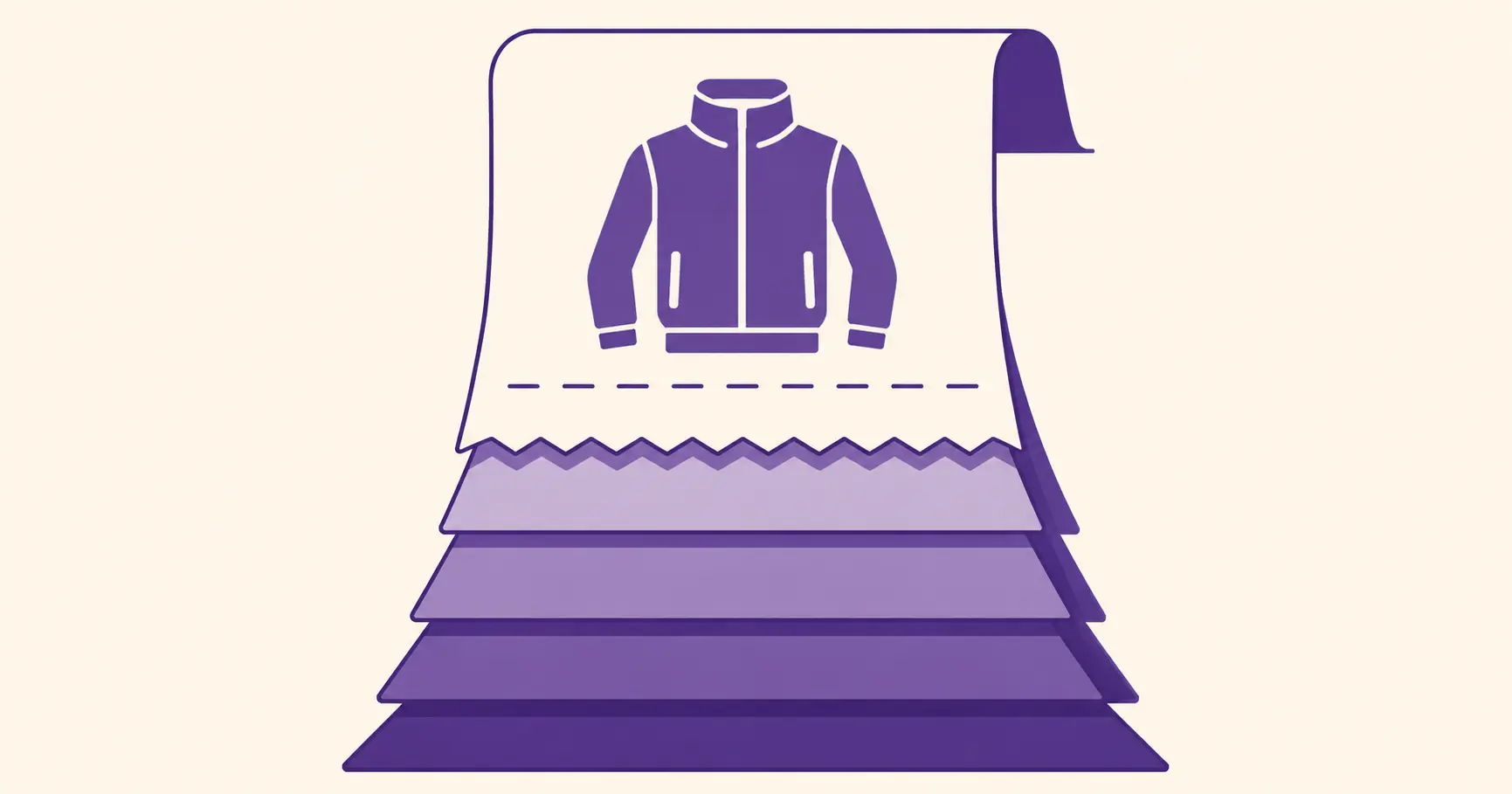
A replacement jacket costs a brand its wholesale price. A warranty claim on that jacket costs far more, and almost no finance team can say by how much.
Ask most brands what a warranty claim costs and the answer is the unit cost of the replacement. That number is wrong, usually by a factor of three to five. The real figure includes the agent time to handle the case, the return freight, the inspection, the refurbishment or scrap, and the supplier credit that was owed and never collected.
A warranty claim is a small invoice nobody sends. This is the guide to reading it.
What cost per warranty claim actually includes
The replacement or repair is the visible cost. It is rarely the largest one.
Every claim also carries handling time, and that time is expensive because it is skilled support labor, not warehouse minutes. It carries reverse freight if the item comes back, inspection to confirm the fault, and a disposition decision: repair, refurbish, scrap, or return to supplier. Claimlane's breakdown of the hidden costs of returns and claims maps where these charges sit.
The cost that hides best is the one that should have been avoided. A claim that takes two weeks on email costs more than the same claim closed in two days, because the extra days are agent touches, follow-up emails, and a customer who opens a second ticket. Claimlane's note on why warranty claims take two weeks covers that drag.
The fully-loaded formula
The formula is simple. The discipline is filling in every line, not just the obvious one.
A worked example makes the gap obvious. Take a $40 replacement. Add 25 minutes of agent handling at a loaded $36 an hour, about $15. Add $12 of reverse freight, $8 of inspection and disposition, and a few dollars of overhead. The gross cost lands near $80 before any supplier credit is recovered, double the sticker most brands quote. When the fault is a supplier defect and the credit is never claimed, the brand eats the whole $80.
Why the replacement-unit number lies
The replacement-unit number lies because it counts the cheapest part of the claim and ignores the rest.
Brands that track claims properly get this breakdown for free, because the claim record already holds the reason, the labor, and the resolution. Claimlane's warranty and returns KPIs guide lists the fields worth capturing.
The four cost buckets brands underprice
Four buckets carry most of the underpricing.
Support labor. Handling minutes times a loaded hourly rate. This scales linearly with volume unless the process changes, which is why headcount is the first thing that moves when claims grow. Warranty claims processing is where these minutes accumulate.
Reverse logistics. Return labels, freight, and the handling of goods that may not even need to come back. Returnless resolution on low-value items removes this line entirely for the right cases.
Inspection and disposition. Confirming the fault and deciding repair, refurbish, or scrap. Repair-first policies change the math here, covered in repair vs replace on warranty claims.
Unrecovered supplier credit. The defect belonged to a supplier, the credit was owed, and nobody claimed it in time. This is the quietest and often the biggest bucket, and it gets its own section below.
What a claim costs by product category
Cost per claim varies by category because the buckets weight differently.
Electronics claims are inspection-heavy and photo-heavy, so labor and no-fault-found rates dominate. Claimlane's note on no-fault-found warranty claims shows how much cost sits in claims where nothing is actually wrong. Furniture claims are freight-heavy, because the item is bulky and often should not travel at all. Sporting goods and DIY sit in between, with repair and spare-part options that lower disposition cost when the process supports them.
The cost of poor quality compounds all of this, since a recurring defect multiplies every bucket across a SKU.
The levers that move cost per claim
Three levers move the number, and none of them is "handle claims faster by trying harder."
The workflow layer is where these levers live day to day. Claimlane's claims workflows let brands route by claim type so low-value cases auto-resolve and expensive ones get a human.
Supplier recovery, the line finance forgets
When a fault is the supplier's, the brand is often entitled to a credit note. The problem is that recovery is a race against paperwork and deadlines, and most brands lose it.
A claim record that captures the defect, the photos, and the supplier at intake turns recovery into a routine step instead of a scramble. Claimlane's guide to recovering warranty costs through supplier chargebacks and its playbook on getting credit notes faster cover the mechanics. Claimlane's forward-to-supplier module sends the evidence packet to the supplier automatically, which is what makes recovery consistent rather than occasional.
For a brand with three or more suppliers driving claim volume, unrecovered credit is usually the fastest line to fix and the largest.
How AI triage changes the labor math
Support labor is the largest variable line, so anything that removes handling minutes moves cost per claim more than anything else.
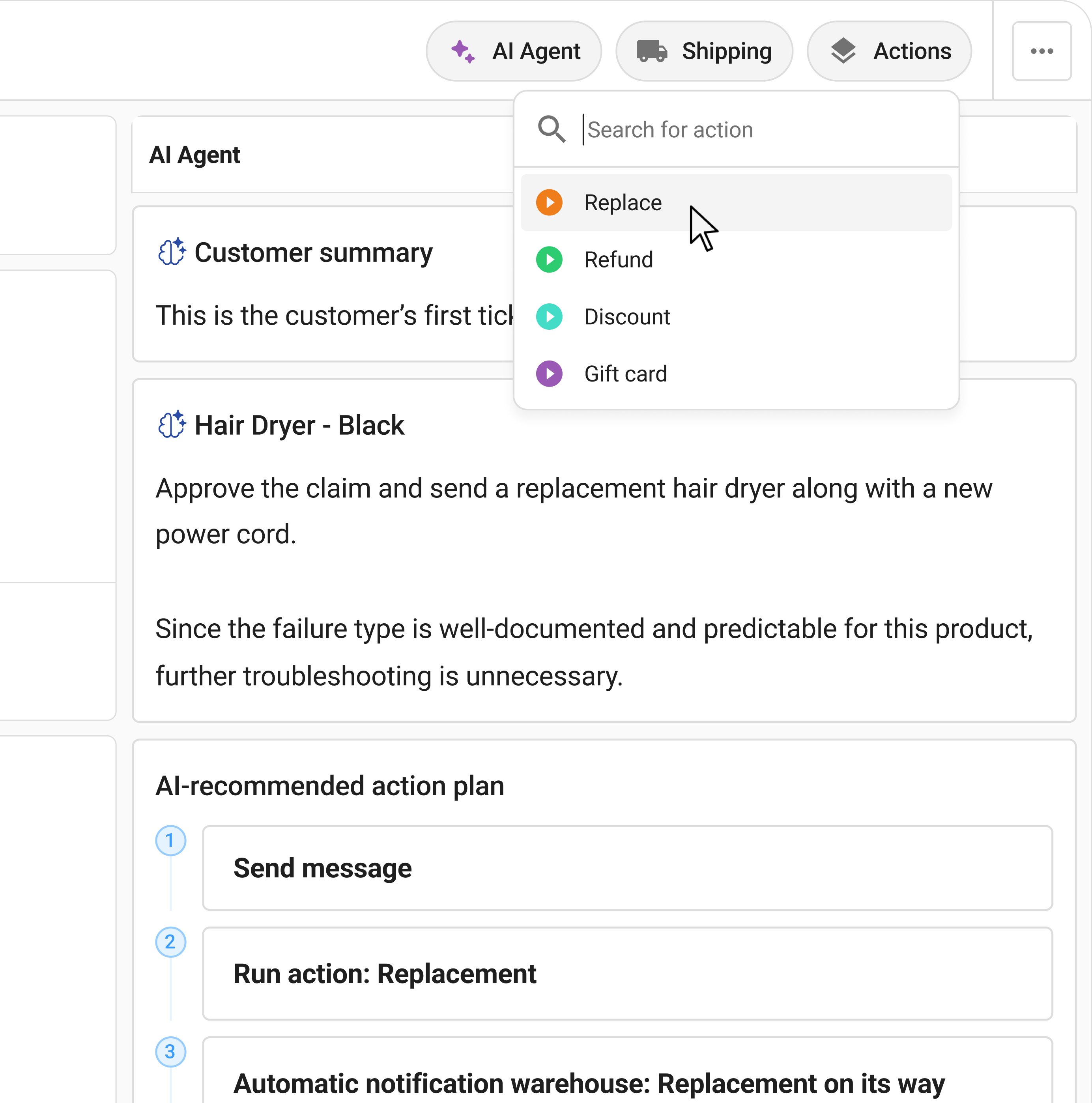
Claimlane's AI Agent, the first AI agent purpose-built for warranty claims and returns, reviews claim images and video, applies the brand's warranty rules per product and supplier, and recommends or auto-approves a resolution. Clean claims close without a person. The team spends its minutes on the cases that actually need judgment.
Guardrails keep this from becoming a black box. High-value claims route to a human, the rules are configurable per claim type, every decision leaves an audit trail, and review thresholds are set by the brand, not the model. The point is fewer touches on clear-cut cases, not fewer controls.
From cost per claim to a warranty reserve number
Cost per claim times expected claim volume is the warranty reserve. That is the number finance already carries, usually estimated loosely.
When the cost per claim is fully loaded and claim volume comes from real data, the reserve stops being a guess and becomes a line the CFO can defend and lower. Claimlane's guide to warranty reserve accounting and its warranty analytics on product quality connect claim-level data to the reserve. A reserve cut of even a few basis points of revenue is a real number on a large brand's P&L.
A readiness check
Fixing cost per claim is worth the effort when the volume and complexity justify it.
Brands weighing a system against a spreadsheet can start with the warranty management software guide, and reducing claim volume at the root is covered in how to reduce warranty claims.
What to measure
Three numbers keep cost per claim honest.
Track fully-loaded cost per claim by category, because a blended average hides the expensive corners. Track supplier recovery rate, the share of eligible supplier credit actually collected, since that is the fastest line to improve. Track handling minutes per claim, which is the labor bucket and the one AI triage moves most.
Claimlane holds a 4.8 out of 5 rating on G2. Full outcomes sit in the Claimlane case studies.
The replacement unit was never the cost. Once the fully-loaded number is on the page, the levers to cut it are obvious, and most of them pay back in labor and recovered credit before the year is out.