.webp)
What Is Warranty Claims Processing?
What is warranty claims processing? Warranty claims processing is the workflow a brand follows when a customer reports a product defect covered by warranty. It's a specific type of claims processing focused on warranty-covered defects, distinct from insurance claims processing or general returns processing.
For ecommerce brands selling durable goods (electronics, outdoor gear, furniture, appliances, fashion accessories), warranty claims are a regular part of operations. The speed and consistency of claims processing directly affects customer satisfaction, repeat purchase rates, and the brand's reputation.
Most brands handle warranty claims through some combination of email, spreadsheets, and customer service software. This works at low volumes but breaks down fast. When a brand processes more than 50 to 100 claims per month, manual workflows create backlogs, inconsistent decisions, and frustrated customers.
How Warranty Claims Processing Works: Step by Step
The standard warranty claims process follows a predictable sequence, whether the brand sells headphones or hiking boots.
Not every warranty claim needs a full replacement. Offering spare parts as a resolution option can save costs and get products back in the customer's hands faster.
Common Bottlenecks in Warranty Claims Processing
Manual warranty claims processing is slow because the same friction points appear at every step. The bottlenecks are predictable, which is good news because it means they're fixable.
Incomplete claim submissions
Customers send vague emails without photos, order numbers, or details about the defect. Support agents spend 2 to 3 exchanges gathering the information they need before they can even start evaluating the claim.
Fix: Use a structured claim form or self-service portal that requires photos, order number, and defect description before submission. Claimlane's self-service portal does this, collecting all required evidence upfront so claims arrive complete.
Manual warranty term lookups
Different products have different warranty terms. A jacket might have a 1-year warranty. A backpack might have a lifetime warranty. Checking which terms apply to each claim requires looking up the product, finding the warranty policy, and calculating whether the claim falls within the window.
Fix: Store warranty terms at the product or category level and have the claims system check eligibility automatically.
Inconsistent decisions across agents
When multiple support agents handle warranty claims, they make different decisions on similar cases. One agent approves a replacement for a scuffed zipper. Another denies the same issue. Inconsistency erodes customer trust and creates internal confusion.
Fix: Define clear warranty rules per product category and use decision trees or automated rules to standardize outcomes.
Slow supplier coordination
Many brands file warranty claims back to their suppliers for reimbursement. This B2B claim process often runs on spreadsheets and email, adding weeks to the resolution timeline. The brand fronts the cost of the customer resolution and waits months to recover it from the supplier.
Fix: Track supplier claims alongside customer claims in the same system. Set up automated supplier claim reports with defect data and batch submissions.
No visibility into claim patterns
Without structured data, brands can't see which products generate the most claims, which defects are recurring, or which suppliers have quality issues. They're flying blind on product quality.
Fix: Use a claims management platform that captures structured data (product, defect type, resolution, cost) and surfaces it in analytics dashboards.
For bulky or high-value items, the claims process needs extra care. Here's why returning nursery furniture shouldn't be hard and how to simplify it.
How to Automate Warranty Claims Processing
What is claims processing automation? Claims processing automation uses software to handle the repetitive, predictable steps in handling a warranty claim: intake, eligibility verification, routing, and resolution for clear-cut cases. The goal isn't to remove humans from the process. It's to remove humans from the parts of the process that don't need them, so the team can focus on cases that need actual judgement.
Automate claim intake
Replace email-based claims with a self-service portal that collects all required information in a structured format. The portal should:
- Look up the customer's order automatically (via order number or email)
- Display eligible products and warranty status
- Require photos and defect description
- Confirm the claim before submission
This eliminates the back-and-forth that slows down manual intake.
Handle missing information automatically
One of the most underrated wins in claims processing automation is handling missing information without sending the claim back to the customer. Common gaps:
- Customer didn't include the order number
- Photo isn't clear enough to identify the defect
- Serial number wasn't provided
- Purchase date is missing or unverifiable
Manual processes catch these only after an agent has already started reviewing the claim, which means a follow-up email, a wait, and a re-review when the customer responds. Automation in claims processing handles missing information at intake instead:
- Self-service portal validates required fields before submission
- Order lookup pulls purchase data automatically when the customer enters their email
- AI image analysis flags photos that don't clearly show the defect, prompting the customer to resubmit before the claim is filed
- Serial number lookup matches the customer's input against product database in real time
The result: claims arrive complete the first time, instead of generating two or three rounds of back-and-forth.
Automate eligibility checks
When a claim comes in, the system should automatically verify:
- The product is within the warranty period
- The customer's reported issue matches a covered defect type
- The claim doesn't duplicate a previous claim for the same product
Claims that pass all checks move forward automatically. Claims that fail get flagged for manual review or denied with an explanation.
Automate routing and assignment
Different claim types may need different handlers. Repair claims go to the repair coordinator. Replacement claims go to fulfillment. Supplier claims go to the procurement team. Automated routing ensures claims land with the right person without manual triage.
Automate resolution for clear-cut cases
For claims that meet all criteria (valid warranty, clear defect, photo evidence), the system can auto-approve and trigger the resolution (ship replacement, process refund) without human intervention. This is especially effective for high-volume, low-complexity claims.
Use AI for evidence analysis
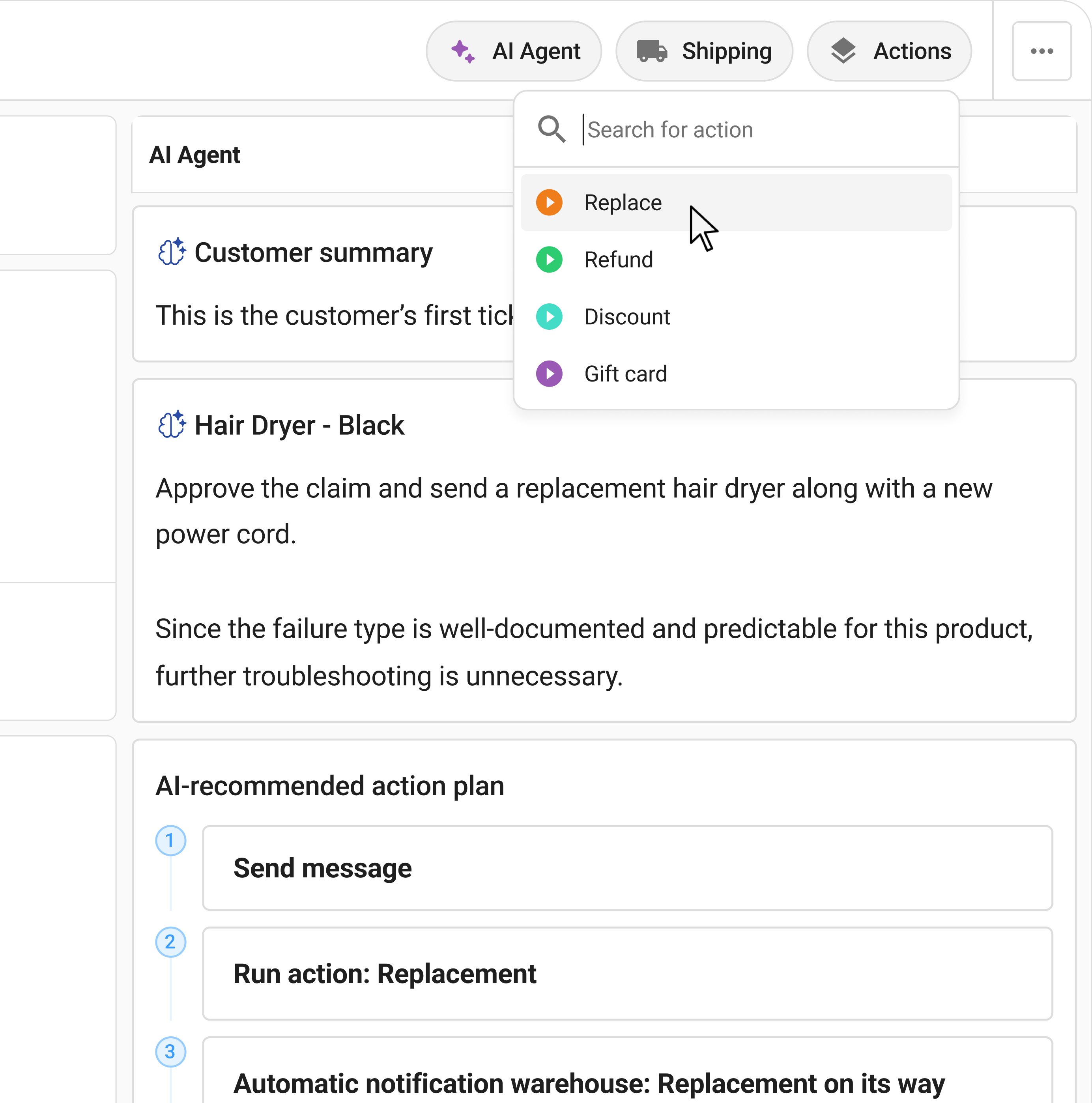
Claimlane's AI agent analyzes product images submitted with warranty claims. It can identify defect types, match them against warranty rules per product and supplier, and suggest the appropriate resolution. This doesn't replace human judgment on complex cases, but it accelerates processing on straightforward ones.
Warranty Claims Processing Systems and Software: What to Look For
Brands evaluating warranty claims processing systems and applications should look for these core capabilities. The right system replaces email and spreadsheets with a structured workflow built specifically for the job.
Self-service claim submission
A customer-facing portal that collects structured claims with photos, videos, order details, and defect descriptions. This replaces email and reduces back-and-forth.
Product-level warranty rules
The ability to set different warranty terms per product, category, or supplier. The system should check eligibility automatically based on these rules.
Automated workflows
Rule-based claim routing, auto-approval for eligible claims, and automated notifications at each step of the process.
Supplier claim management
Tools for tracking supplier-side warranty claims, generating reimbursement reports, and linking customer claims to supplier accountability.
Analytics and reporting
Dashboards showing claim volume, resolution time, cost per claim, defect patterns by product, and supplier performance.
Integration with ecommerce and ERP
Connections to Shopify, WooCommerce, ERPs, and customer service platforms (Zendesk, Gorgias) so claim data flows between systems without manual entry.
Claimlane is a warranty claims processing application built specifically for the workflow above. It covers product-level warranty rules, AI-powered image analysis, supplier claim workflows, and integrations with 75+ platforms.
When to Invest in Warranty Claims Automation
Not every brand needs a dedicated warranty claims platform on day one. Here's a rough guide.
Selling durable goods with long warranty periods
Brands offering 2-year, 5-year, or lifetime warranties face a long tail of claims. Without structured tracking, older claims get lost, and the brand loses visibility into long-term product quality.
Warranty Claim Denied: How to Handle Denials Well
Denials are part of warranty processing. Not every claim qualifies. But how the brand communicates a denial matters enormously.
Be specific about the reason
Don't just say "claim denied." Explain exactly why: the warranty expired, the damage is consistent with customer misuse, the issue isn't covered by the warranty terms. Specificity reduces follow-up disputes.
Reference the warranty terms
Include a link to the warranty policy so the customer can review it. This shows the decision is based on documented terms, not arbitrary judgment.
Offer alternatives
Even when a claim is denied, the brand can offer a goodwill gesture: a discount on a replacement, a partial credit, or a repair at a reduced cost. This turns a negative experience into a retention opportunity.
Document the denial
Record the reason and evidence for every denial. If the customer disputes the decision or escalates, having documentation makes the brand's position defensible.
Long resolution times erode customer trust. Learn why furniture returns take 47 days and what you can do to speed things up.
Warranty Claims Tracking: What Data to Capture
Every warranty claim is a data point about product quality. Brands that capture the right data can identify problems early and hold suppliers accountable.
Essential data fields
What the data reveals
Over time, warranty claims data shows:
- Which products have the highest defect rates
- Which defect types are most common
- Which suppliers produce the most claims
- Whether specific batches or production runs have quality issues
- Seasonal patterns in claims (products failing after exposure to heat, cold, or moisture)
This data feeds into product development, supplier negotiations, and quality control decisions. It turns warranty claims from a pure cost center into a valuable feedback loop.
For more on how to optimize warranty claim processes, including supplier management and claim cost reduction, see Claimlane's detailed guide.