.webp)
lectronics are the most complex product category for returns and warranty claims. A fashion brand deals with sizing issues. A furniture brand deals with logistics. An electronics brand deals with both, plus serial number tracking, firmware versions, DOA (dead on arrival) assessment, compatibility questions, and repair-vs-replace decisions that change by product line.
The average return rate for consumer electronics sits between 15% and 20%, and warranty claim rates can run significantly higher for categories like accessories, chargers, and peripherals. Each claim requires more investigation than a typical return because the product might be repairable, the defect might be a known issue, or the customer might be describing user error.
This guide covers how electronics brands and retailers can build a returns and warranty process that handles this complexity without drowning in manual work.
- Electronics returns and warranty claims are 2-3x more complex than other categories due to serial tracking, DOA assessment, firmware issues, and repair workflows.
- Structured intake with photo evidence and serial number capture reduces misdiagnosis and speeds up triage from days to hours.
- AI-powered claim assessment can classify defect types from product images and recommend repair vs replace decisions automatically.
- Claimlane handles the full electronics claims lifecycle: self-service intake, AI assessment, repair tracking, supplier forwarding, and analytics.
Why Electronics Claims Are Different
Every product category has its quirks when it comes to returns and warranty claims. Electronics stand apart because of several compounding factors:
Serial Number Dependency
Unlike apparel or home goods, electronics products are individually tracked by serial number, IMEI, or MAC address. Every claim needs to be matched to a specific unit, which means the intake process must capture this data reliably. Customers often do not know where to find the serial number, so the self-service portal needs to guide them with visual instructions.
DOA vs In-Warranty vs Out-of-Warranty
Electronics claims fall into distinct categories that require different handling:
- Dead on Arrival (DOA): Product does not work out of the box. Immediate replacement, no repair attempt.
- In-warranty defect: Product worked initially but failed during the warranty period. Repair or replacement depending on the defect.
- Out-of-warranty: Product is beyond the warranty period. Paid repair or rejection.
Each category has different SLAs, cost implications, and supplier recovery potential. ERPs and generic helpdesks do not distinguish between these. A dedicated claims management platform routes each type through the correct workflow automatically.
Repair Complexity
Many electronics products can be repaired rather than replaced, which saves cost and reduces waste. But repair workflows require tracking the item through intake, diagnosis, parts sourcing, repair, quality check, and return to customer. This is a multi-step process that generic return order workflows cannot handle.
Claimlane's repair tracking manages the full lifecycle, from initial claim through repair completion, with automated status emails keeping the customer informed at each stage.
Common Electronics Return and Claim Types
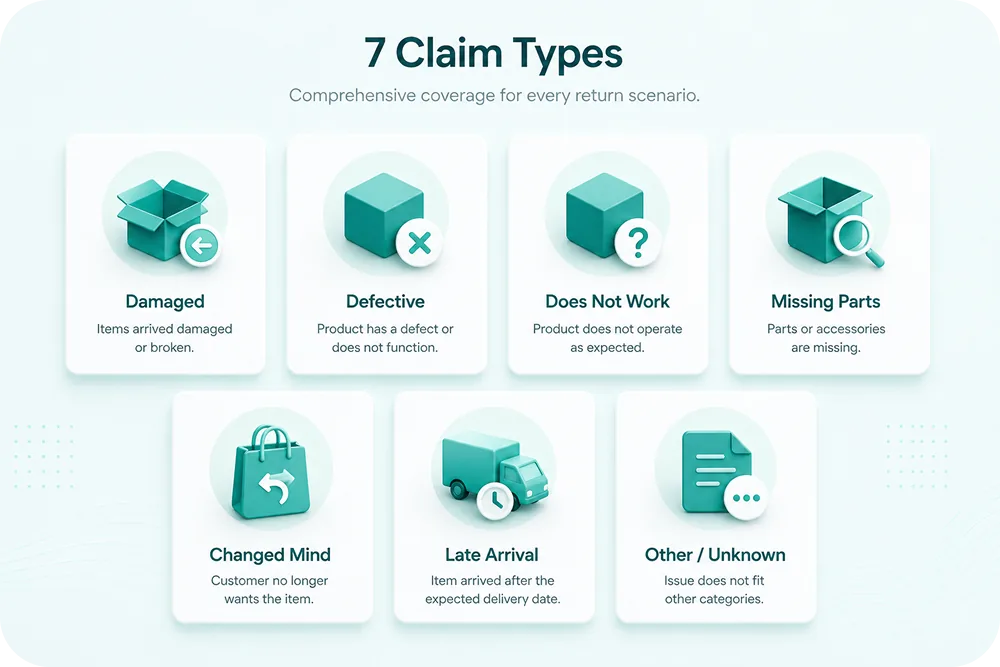
| Claim Type | Typical Cause | Resolution | Supplier Recovery? |
|---|---|---|---|
| Dead on Arrival | Manufacturing defect, shipping | Immediate replacement | Yes (full cost) |
| Functional failure | Component defect, firmware | Repair or replacement | Yes |
| Cosmetic damage | Shipping, handling, material | Discount or replacement | Depends |
| Compatibility issue | Customer error, unclear specs | Return or exchange | No |
| Battery degradation | Wear, manufacturing variance | Battery swap or replace | If premature |
| Accessory failure | Charger, cable defect | Spare part replacement | Yes |
| User damage / misuse | Water, drop, modification | Rejection or paid repair | No |
Building an Electronics Claims Intake Process
The intake process for electronics claims must capture more data than other categories. Without structured data at submission, agents spend most of their time going back to the customer for missing information.
What to Collect at Submission
- Order number (auto-populated from ecommerce integration)
- Product model and variant (auto-populated from order data)
- Serial number, IMEI, or MAC address (manual input with visual guide)
- Defect category (dropdown: DOA, functional failure, cosmetic, compatibility, battery, accessory)
- Defect description (free text)
- Photos or video (minimum 2 images: product overview + close-up of defect)
- Purchase date (auto-populated for warranty validation)
Claimlane's self-service portal supports all of these fields in a guided flow. The portal is branded to the retailer or brand, works on mobile, and supports multiple languages. When integrated with the ecommerce platform via Claimlane's integrations, order and product data auto-populates so the customer only needs to add the defect-specific information.
Warranty Validation for Electronics
Electronics warranty periods vary significantly:
- Smartphones: Typically 12-24 months
- Laptops: 12-36 months (varies by component)
- Headphones/accessories: 6-12 months
- Gaming peripherals: 12-24 months
- Home electronics: 24-36 months (EU consumer law minimum: 24 months)
Claimlane's workflow engine checks warranty eligibility automatically against product-specific rules. If the product is in warranty, the claim routes to the assessment queue. If it is out of warranty, the customer is offered paid repair options or the claim is closed.
AI Assessment for Electronics Claims
Electronics claims are where AI assessment adds the most value. The variety of defect types, the need to distinguish between manufacturing defects and user damage, and the complexity of repair-vs-replace decisions make manual assessment slow and inconsistent.
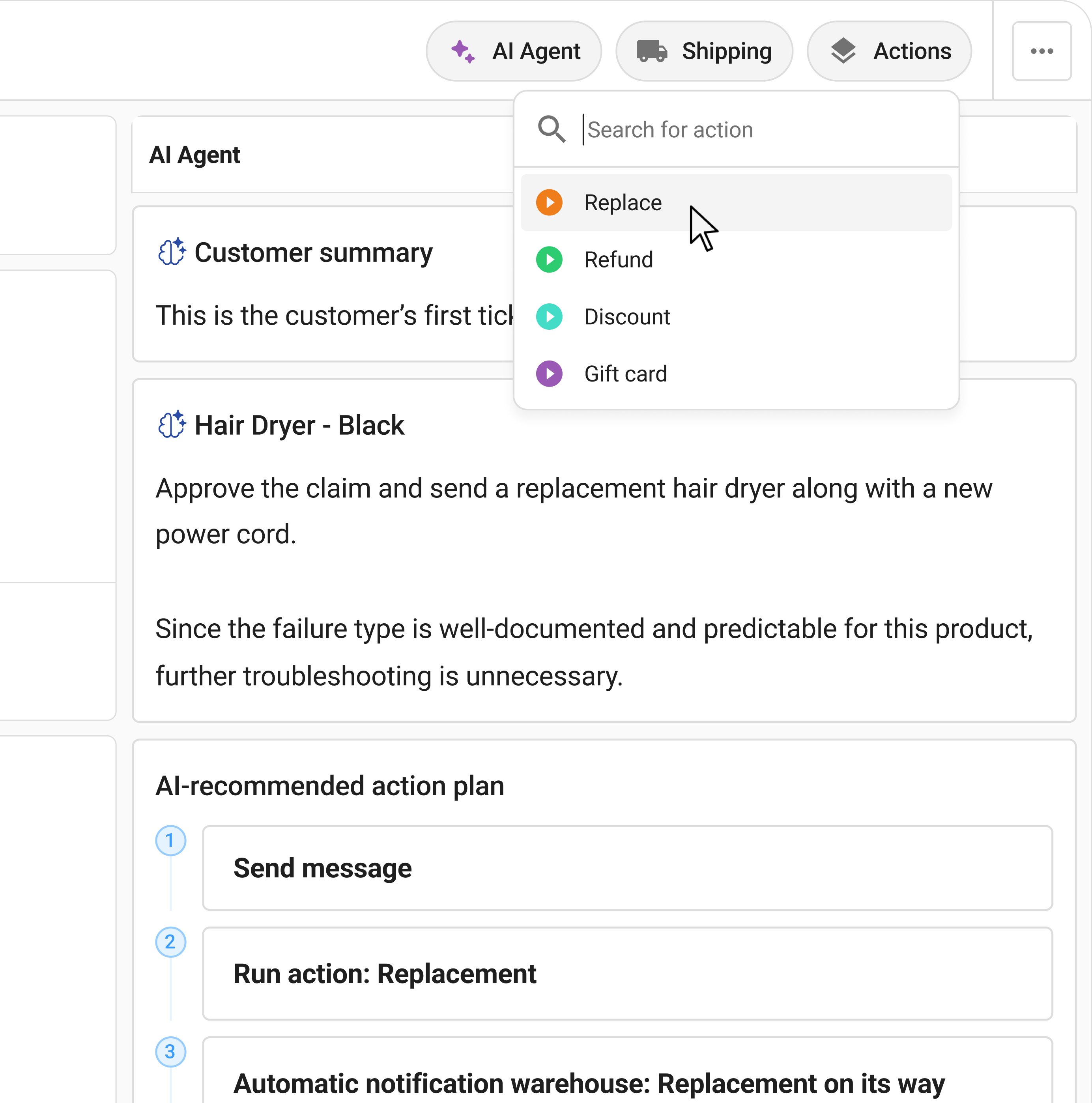
Claimlane's AI Agent, the first AI agent purpose-built for warranty claims and returns, handles electronics assessment by:
- Analyzing product photos to identify defect types (cracked screen, water damage indicators, physical deformation, burn marks)
- Checking serial numbers against known batch issues or recalls
- Applying product-specific warranty rules (different components may have different coverage)
- Recommending resolution based on defect type, product value, and repair feasibility
- Auto-approving clear-cut cases (DOA within return window, known defects, low-value accessories)
MaxGaming, the largest gaming and e-sports retailer in Scandinavia with 30,000+ SKUs across 200+ brands, uses Claimlane's AI to handle complex RMA cases. Support agents no longer need months of product-specific training because the AI reviews images, checks business rules, and recommends actions.
"At MaxGaming, we manage claims for 30,000+ SKUs from over 200 brands. Claimlane's AI takes care of the initial assessment so our agents can focus on the complex cases that actually need human judgment."
— Tess Jordan, Customer Experience Lead, Black Diamond Equipment
Repair Workflows for Electronics
Repair is often more cost-effective than replacement for electronics, especially for products above a certain value threshold. But repair workflows are operationally complex.
The Standard Electronics Repair Flow
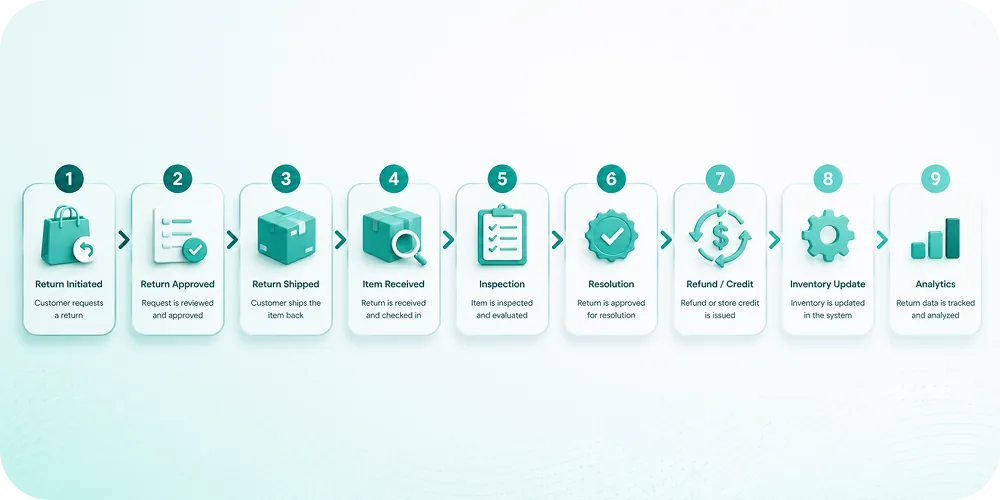
- Claim submitted with defect details and photos
- AI or agent assesses whether repair is feasible
- Return authorized with shipping label generated
- Product received at repair center (warehouse module logs intake)
- Diagnosis confirmed (technician verifies the reported defect)
- Repair performed (parts sourced, repair completed)
- Quality check (functional testing post-repair)
- Product shipped back to customer with tracking
- Claim closed and warranty extension applied if applicable
Under the EU Right to Repair directive (effective July 2026), brands selling certain electronics in the EU must offer repair as an option and complete repairs within a reasonable timeframe. This makes structured repair workflows a compliance requirement, not just an efficiency play.
Claimlane tracks each step with timestamps, technician notes, and automated status emails to the customer. The repair history is attached to the product's serial number, so if the same unit comes back for another claim, the full history is visible.
Supplier Management for Electronics Defects
Electronics brands typically work with multiple component suppliers. A laptop has a display from one supplier, a battery from another, and a keyboard from a third. When a warranty claim identifies a defective component, the brand needs to forward the claim to the specific supplier responsible.
Claimlane's forward-to-supplier feature sends the claim with full evidence (photos, serial numbers, defect descriptions) to the supplier. The supplier reviews and resolves the claim in the same platform, which means:
- Brands can track which suppliers generate the most warranty claims
- Supplier quality scoring is based on real claims data, not estimates
- Supplier chargebacks are supported by structured evidence
- Component-level defect rates feed back into procurement decisions
For B2B warranty claims where retailers submit claims to brands, the same workflow applies. The retailer submits through the B2B portal, the brand reviews, and if the defect is supplier-related, the brand forwards to the supplier.
Analytics for Electronics Returns
Electronics generate more granular analytics opportunities than most categories because of serial number tracking and component-level defect data.
Key Metrics for Electronics Brands
- Claim rate per SKU (normalized by units sold)
- DOA rate (percentage of units failing within first 14 days)
- Defect type distribution (functional, cosmetic, compatibility, battery)
- Mean time to failure by product model and production batch
- Repair success rate (percentage of repaired units that do not return)
- Supplier defect rate by component
- Average cost per claim (repair vs replace)
Claimlane's analytics dashboard provides these views out of the box. For a deeper look at which metrics to track, see the guide on returns analytics events.
Reducing Electronics Return Rates
Not all electronics returns are warranty claims. Many are preference returns (wrong color, changed mind) or compatibility returns (did not fit the use case). These can be reduced without changing the warranty process.
Better Product Descriptions
Electronics returns driven by compatibility issues often trace back to incomplete product information. Listing the exact cable types, power requirements, dimensions, and compatible devices reduces the "it doesn't work with my setup" returns.
Pre-Purchase Compatibility Tools
For products with complex compatibility requirements (RAM, graphics cards, adapters), a compatibility checker or matrix on the product page prevents returns before they happen.
Improved Packaging
Shipping damage accounts for 10-15% of electronics returns. Better inner packaging, corner protection, and "this side up" indicators reduce DOA claims caused by transit damage rather than manufacturing defects. For more on handling transit damage, see the guide on damaged-in-transit claims.
The Claimlane Approach to Electronics Claims
Claimlane is purpose-built for the complexity of electronics returns and warranty claims:
- Self-service portal with serial number capture, guided photo upload, and defect categorization
- AI Agent that analyzes product images, checks warranty rules, and recommends resolution
- Repair workflow tracking from intake through quality check and return
- Supplier forwarding with component-level defect attribution
- Analytics with claim rates, defect types, and supplier performance per SKU
- Integrations with 75+ platforms including Shopify, Business Central, Zendesk, and shipping providers
For electronics-specific use cases, see the electronics industry page.
Claimlane is rated 4.8/5 on G2.