.webp)
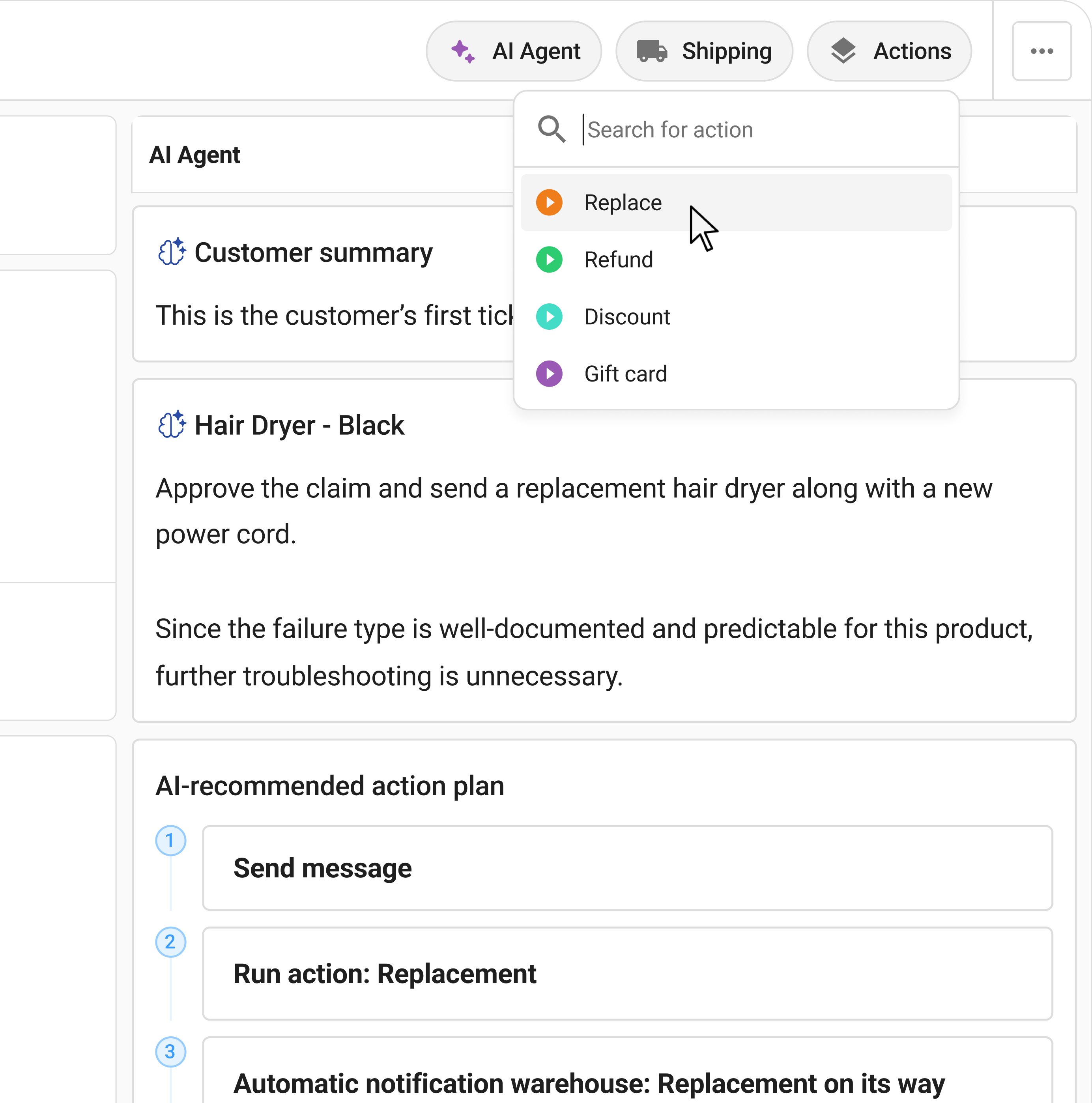
B2B warranty claims are a different beast from consumer returns. When a retailer receives a warranty claim from a customer, the story doesn't end at "send a replacement." The retailer often needs to recover the cost from the original supplier or manufacturer, which means managing a second, parallel claims process that's slower, more complex, and often entirely manual.
For retailers handling hundreds or thousands of warranty claims per month, this B2B layer is where money gets lost. Claims sit in email threads for weeks. Suppliers dispute responsibility. Documentation gets misplaced. And the retailer absorbs costs that should have been recovered.
This guide breaks down how B2B warranty claims work, where the process typically breaks, and how to fix it.
How B2B Warranty Claims Differ from B2C
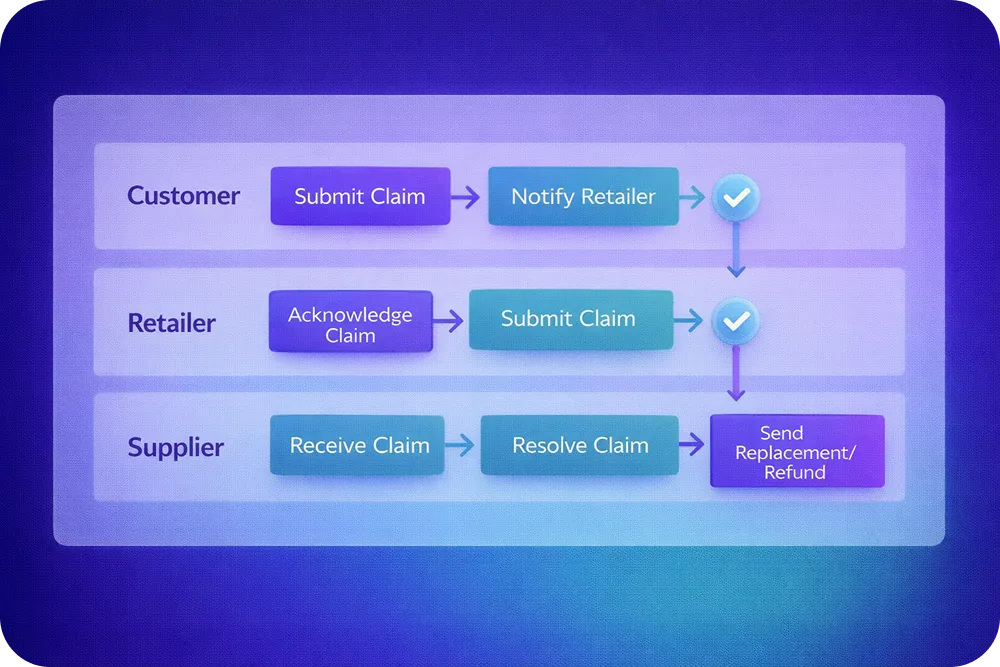
In a B2C warranty claim, the flow is straightforward: customer reports a defect, the brand validates it, and issues a repair, replacement, or refund. One relationship, one process.
B2B warranty claims involve at least two relationships:
- Customer to retailer: The end customer submits a claim to the retailer who sold the product
- Retailer to supplier/manufacturer: The retailer forwards the claim upstream to recover costs from the party responsible for the defect
Sometimes there's a third layer: the manufacturer forwarding the claim to a component supplier. Each layer adds complexity, documentation requirements, and processing time.
| Dimension | B2C Warranty Claims | B2B Warranty Claims |
|---|---|---|
| Parties involved | Customer + Brand | Customer + Retailer + Supplier |
| Volume per transaction | Usually 1 unit | Often bulk (cases, pallets) |
| Documentation | Photo, receipt, description | Photo, batch data, PO, warranty terms |
| Recovery process | None (brand absorbs) | Supplier credit, debit note, replacement |
| Resolution time | 1-7 days | 2-8 weeks |
| Financial impact | Cost of replacement/refund | Cost + lost supplier recovery |
The B2B Warranty Claim Flow
A typical B2B warranty claim follows this path:
Stage 1: Customer submits claim to retailer
The end customer reports a product defect through the retailer's claims channel. A self-service portal captures structured data: product details, defect description, photos or videos, purchase information, and serial number if applicable.
This stage is identical to a standard B2C warranty claim. The critical difference is what happens next.
Stage 2: Retailer validates and resolves for the customer
The retailer validates the claim against the warranty terms. If valid, the customer gets a resolution: replacement, repair, or refund. The customer's experience ends here, and it should be fast. Customers don't care about the B2B layer. They just want their product fixed.
Automated workflows can handle validation and resolution for straightforward claims without human intervention, keeping customer-facing resolution times short even when the supplier recovery process takes weeks.
Stage 3: Retailer forwards claim to supplier
This is where B2B gets complicated. The retailer now needs to:
- Package the claim documentation (photos, defect description, product data, customer claim details)
- Match the claim to the correct supplier warranty terms
- Submit the claim through the supplier's preferred channel (portal, email, EDI)
- Track the claim through the supplier's review process
Claimlane's Forward to Supplier feature automates this step. When a claim is validated, the system packages all documentation and forwards it to the supplier with the correct reference numbers, warranty terms, and supporting evidence. No manual re-entry, no chasing for missing documents.
Stage 4: Supplier reviews and responds
The supplier evaluates whether the claim falls under their warranty coverage. Common responses:
- Approved: Supplier issues a credit note, replacement, or accepts the return
- Partially approved: Supplier covers part of the claim (common with shared responsibility)
- Rejected: Supplier disputes the claim (product misuse, out of warranty, cosmetic wear)
- Pending: Supplier requests additional documentation or inspection
Stage 5: Financial reconciliation
Once approved, the financial recovery flows back: debit notes, credit memos, replacement shipments, or contra invoicing. This step often involves the finance team and needs to be tracked against the original claim for audit purposes.
Where B2B Warranty Claims Break Down
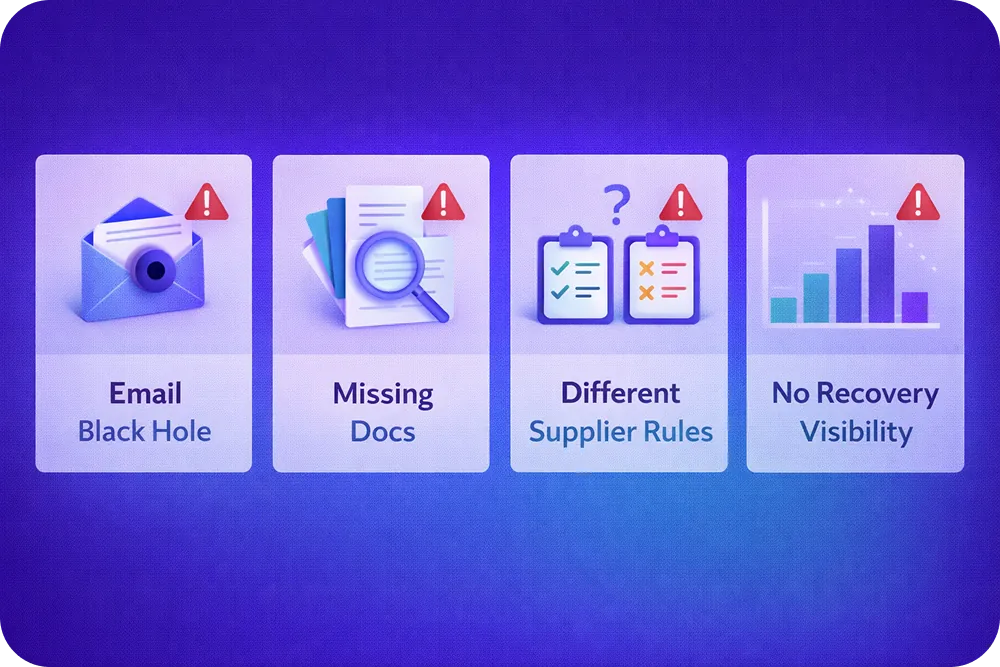
The email black hole
Most B2B claims are managed through email. A retailer emails the supplier with photos and a description. The supplier asks for more information. The retailer digs through their system, finds the data, and replies. Weeks pass. The claim sits in someone's inbox.
F. Engel, a B2B workwear brand, experienced exactly this before implementing Claimlane. Managing claims through email meant slow processing, inconsistent documentation, and difficulty tracking which claims had been resolved and which were still pending.
Missing documentation
Suppliers reject claims when documentation is incomplete. Common gaps:
- No photos of the defect
- Missing batch or lot numbers
- No proof of purchase or order reference
- Defect description too vague to classify
Every rejected claim means rework: going back to the customer for more information, resubmitting to the supplier, and waiting again. A structured intake process at the customer-facing stage prevents this by collecting everything upfront.
Different suppliers, different rules
Every supplier has different warranty terms, claim submission requirements, and resolution processes. Supplier A accepts email claims with photos. Supplier B requires submission through their own portal. Supplier C needs a formal RMA number before accepting any return.
Managing this across dozens of suppliers without a centralized system means customer service agents need to remember (or look up) each supplier's process for every claim. This is error-prone and slow.
No visibility into recovery rates
Many retailers don't track what percentage of warranty costs they successfully recover from suppliers. Without this data, they can't identify which suppliers have the highest rejection rates, which product categories have the lowest recovery, or how much revenue is being left on the table.
Analytics dashboards that track supplier recovery rates, average resolution times, and rejection reasons give operations teams the data they need to improve the process.
How to Fix B2B Warranty Claim Management
Centralize all claims in one system
The first step is getting every claim, both B2C and B2B, into a single system. When the customer-facing claim and the supplier-facing claim live in the same record, nothing falls through the cracks.
A warranty management platform that handles both the customer resolution and the supplier recovery in one workflow eliminates the gap between "customer resolved" and "cost recovered."
Automate the forward-to-supplier step
Manual forwarding is the biggest bottleneck. Automating it means:
- Claims are forwarded to the correct supplier automatically based on product data
- All documentation is packaged and attached without manual re-entry
- Supplier-specific submission requirements are applied automatically
- Follow-up reminders are sent when supplier response times exceed thresholds
Claimlane's forward-to-supplier workflow does this out of the box. Retailers set up supplier rules once, and the system handles routing, documentation, and follow-ups.
Standardize documentation at intake
The best way to prevent supplier rejections is to collect complete documentation from the customer at the first point of contact. Required fields should include:
- Product name and SKU
- Batch or lot number (if applicable)
- Purchase date and order number
- Defect category (selected from a standardized list)
- Photo or video evidence of the defect
A self-service claims portal enforces these requirements. Customers can't submit a claim without providing the necessary information, which means the claim arrives at the supplier fully documented.
Track supplier performance
Not all suppliers are equal when it comes to warranty. Key metrics to track:
- Claim rate per supplier: Which suppliers generate the most warranty claims relative to their sales volume?
- Recovery rate: What percentage of claims forwarded to each supplier are approved?
- Average resolution time: How long does each supplier take to process claims?
- Rejection rate and reasons: Which suppliers reject the most claims, and why?
This data drives better supplier negotiations, informs purchasing decisions, and identifies which suppliers need quality improvement programs.
Konges Sløjd improved its data quality on retailer claims by centralizing everything in Claimlane, which gave the team clear visibility into which products and suppliers were generating the most issues.
Use AI to accelerate processing
Claimlane's AI Agent, the first AI agent purpose-built for warranty claims and returns, accelerates B2B claims in several ways:
- Image analysis: AI reviews product photos to classify the defect type and severity, reducing manual triage time
- Rule application: AI applies supplier-specific warranty rules to determine coverage eligibility
- Auto-routing: Claims that match known defect patterns are automatically routed to the correct resolution path
- Documentation validation: AI checks that all required documentation is present before forwarding to the supplier, preventing rejections
For brands handling high claim volumes, this automation is the difference between a 15-minute manual review and a 30-second automated classification.
B2B Warranty Claims by Industry
DIY and hardware
Power tools, building materials, and hardware products often have long warranty periods (2-5+ years) and involve complex supplier chains. Davidsen, a Danish DIY chain, went from five agents handling warranty claims to one or two by automating the process through Claimlane.
The DIY/hardware sector also has unique challenges: products are often installed (meaning the customer can't easily return the physical item), and defects may not appear until months or years after installation.
Electronics and gaming
Electronics retailers deal with high claim volumes, technical product complexity, and multiple supplier tiers. MaxGaming manages warranty claims across 200+ brands and 30,000+ SKUs. With Claimlane's AI agents, complex RMA cases are resolved 77% faster because the system handles the initial classification and routing that previously required months of product training for support agents.
Baby and nursery
Safety regulations are particularly strict for baby products. Warranty claims on cribs, car seats, and feeding equipment carry compliance implications beyond normal retail. Babysam and Luksusbaby both use Claimlane to handle claims with the speed and documentation rigor that safety-critical products require.
Fashion and apparel
Fabric defects, stitching failures, and color bleeding are common warranty issues in fashion. Mads Nørgaard uses Claimlane to manage claims across their retail network, ensuring consistent handling and supplier recovery.
Supplier Warranty Agreements: What to Include
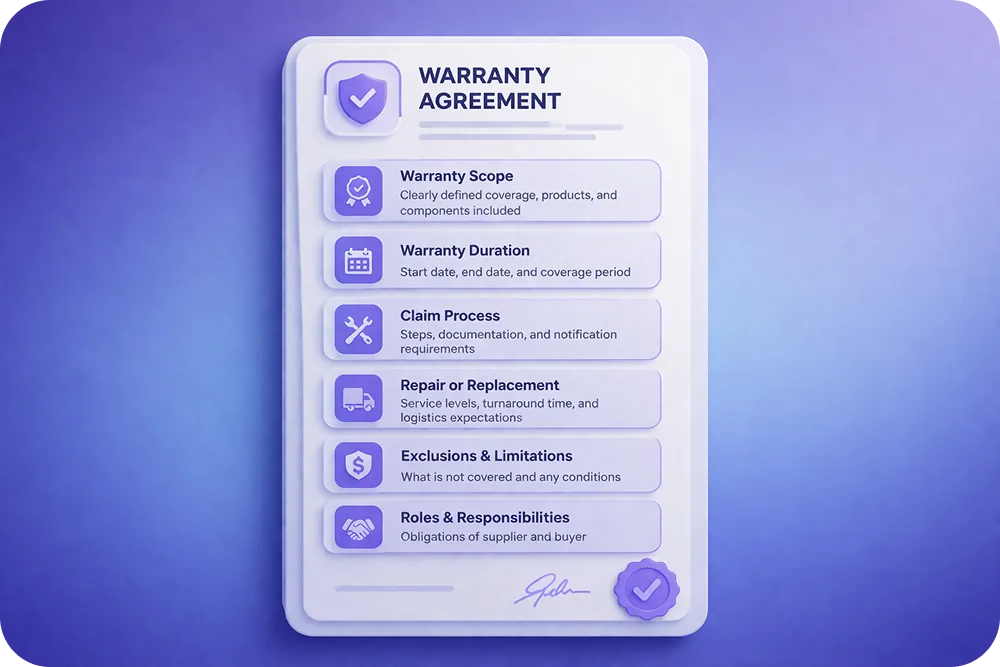
A well-structured supplier warranty agreement prevents disputes before they happen. Key elements:
Coverage scope
- Which defects are covered (manufacturing defects, material failures, component failures)
- Which defects are excluded (cosmetic wear, customer misuse, normal wear and tear)
- Warranty period per product category
Claim submission requirements
- Required documentation (photos, batch numbers, order references)
- Submission channel (portal, email, EDI)
- Maximum response time for the supplier
- Escalation process for disputed claims
Financial terms
- Credit note vs. replacement vs. refund
- Handling fee or restocking fee terms
- Freight responsibility for returned goods
- Batch-level vs. individual claim processing
Performance standards
- Maximum acceptable defect rate per product line
- Corrective action requirements when defect rates exceed thresholds
- Regular quality review meetings
Having these terms in writing, and enforced consistently with data from a claims analytics platform, transforms the supplier relationship from reactive complaint handling to proactive quality management.
The Financial Impact of Poor B2B Claim Management
Retailers that don't manage B2B warranty claims effectively lose money in several ways:
- Unrecovered costs: Claims where the supplier should have paid but the retailer absorbed the cost because the claim wasn't forwarded, was rejected for missing documentation, or simply fell through the cracks
- Processing overhead: Manual claim handling costs $5-15 per claim in labor. Multiply that by thousands of claims per year.
- Supplier relationship damage: Inconsistent or poorly documented claims erode supplier trust and reduce the likelihood of favorable outcomes on disputed claims
- Customer experience impact: When the B2B process is slow, it often slows down customer-facing resolution too
Spare Parts and Repair in B2B Claims
Not every warranty claim requires a full replacement. For many B2B products, especially in furniture, hardware, and electronics, sending a spare part is faster and cheaper.
Managing spare parts within the B2B claims flow adds another layer of coordination:
- Identifying which part is needed based on the defect
- Checking spare parts inventory
- Coordinating shipment directly to the customer or to the retailer
- Tracking whether the spare part resolved the issue or if further action is needed
A claims system that integrates spare parts management into the warranty workflow handles this seamlessly, reducing the need for full product returns and lowering the total cost per claim.