.webp)
Why electronics warranty is its own category
Consumer electronics warranty is harder than apparel and harder than home goods. Three reasons. The products carry serial numbers that need tracking. The defect patterns are technical, not cosmetic, which makes triage less obvious. The supplier chain is long, with components flowing through multiple tiers before the unit reaches the customer. Every step of that chain affects the warranty case.
This piece covers what a manufacturer warranty actually means for consumer electronics in 2026, how the claim flow runs end to end, and the operational model brands settle on after their first few thousand cases. For broader warranty management context, that page sits next to this one.
- Manufacturer warranty on consumer electronics covers defects in materials or workmanship under normal use, usually for 12 to 24 months.
- The case flow needs serial number capture, image evidence, and technical triage. Generic returns flows fall short.
- Cross-supplier component tracking matters because a single defect can route to a different supplier than the one on the invoice.
- Brands using Claimlane run electronics warranty on one platform with serial-aware routing, AI-assisted triage, and supplier handoff in one case.
guide
What manufacturer warranty actually covers
The legal frame in 2026 differs by market, but the operating frame is consistent. A manufacturer warranty promises that a product will be free of defects in materials or workmanship for a defined period, under normal use. Three things matter for the case team.
Defects in materials
The component itself was faulty. A capacitor that fails at month 8. A speaker driver that distorts under normal volume. These are usually supplier-driven, which means supplier chargebacks and recovery flows kick in. The pattern is covered in supplier recovery how to get credit notes faster.
Defects in workmanship
The product was assembled incorrectly. Loose connectors, missing screws, misaligned screens. These often trace back to the assembly line, not the component supplier. Brands tracking serialized product defect data spot these patterns fast.
Normal use
The biggest grey area. "Normal" depends on the category. Gaming peripherals get more wear than smart-home devices. Wearables get more drops than desktop electronics. The case agent needs the data to draw the line. Pair with the in-batch piece on AI for RMA automation for the front-door experience.
What manufacturer warranty does not cover
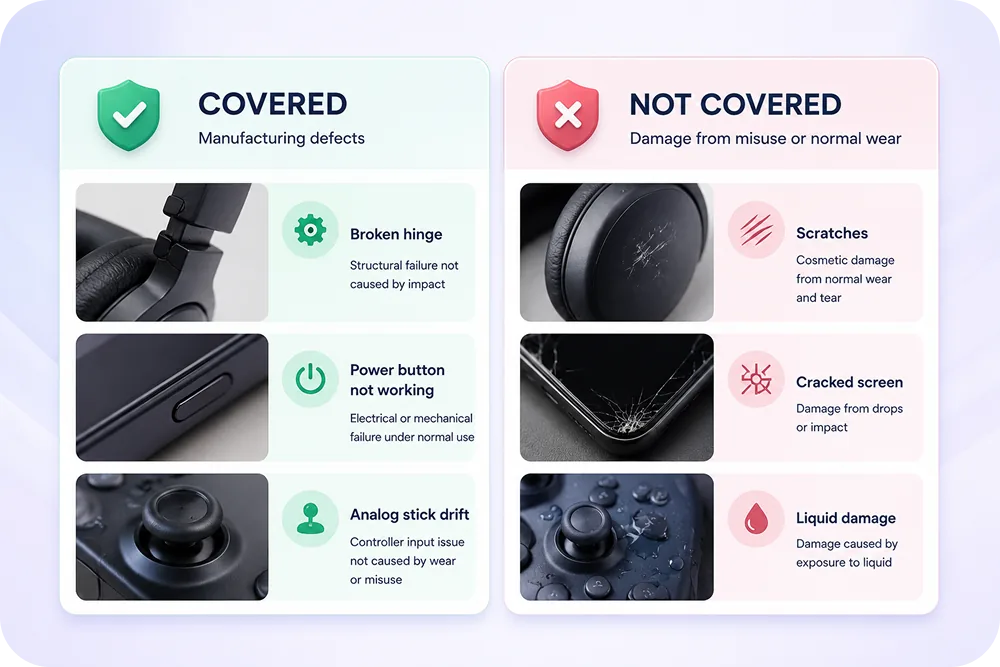
- Accidental damage (drops, liquid)
- Cosmetic wear over time
- Loss or theft
- Modification by the customer
- Use outside specifications
- Material defects under normal use
- Workmanship defects
- Component failure within the period
- Functional failure not caused by the customer
- Statutory rights per market (EU 2-year minimum)
For brands selling into the EU, implied warranty rules override commercial limits in some cases. Brands that try to enforce a 12-month manufacturer warranty against the 2-year EU statutory minimum lose those cases in court. The GPSR rules tighten this further.
Manufacturer warranty vs extended warranty
These are different products. The manufacturer warranty is the brand's promise on every unit. The extended warranty is an additional purchase that covers longer periods or wider scope, usually sold by the brand or a third party.
Where they overlap
The first 12 to 24 months. The customer can claim under either, and the case team needs to know which gives the customer a better outcome. Pair with extended warranty platforms.
Where they differ
Extended warranty often covers accidental damage and battery wear, which manufacturer warranty rarely does. Case routing needs to read the customer's purchase data and route accordingly.
The electronics warranty case flow
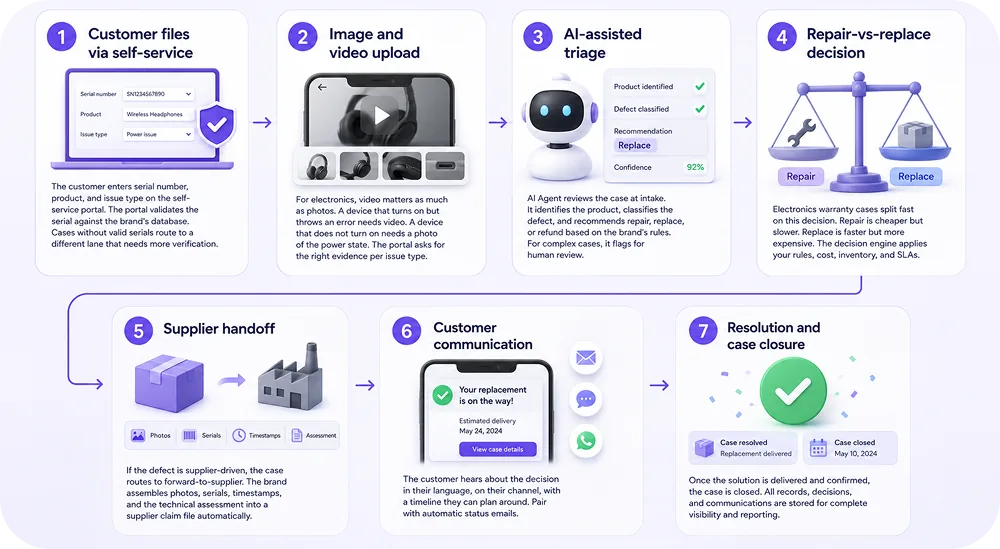
Step 1: Customer files via self-service
The customer enters serial number, product, and issue type on the self-service portal. The portal validates the serial against the brand's database. Cases without valid serials route to a different lane that needs more verification.
Step 2: Image and video upload
For electronics, video matters as much as photos. A device that turns on but throws an error needs video. A device that does not turn on needs a photo of the power state. The portal asks for the right evidence per issue type. The AI image recognition for warranty claims layer reads both.
Step 3: AI-assisted triage
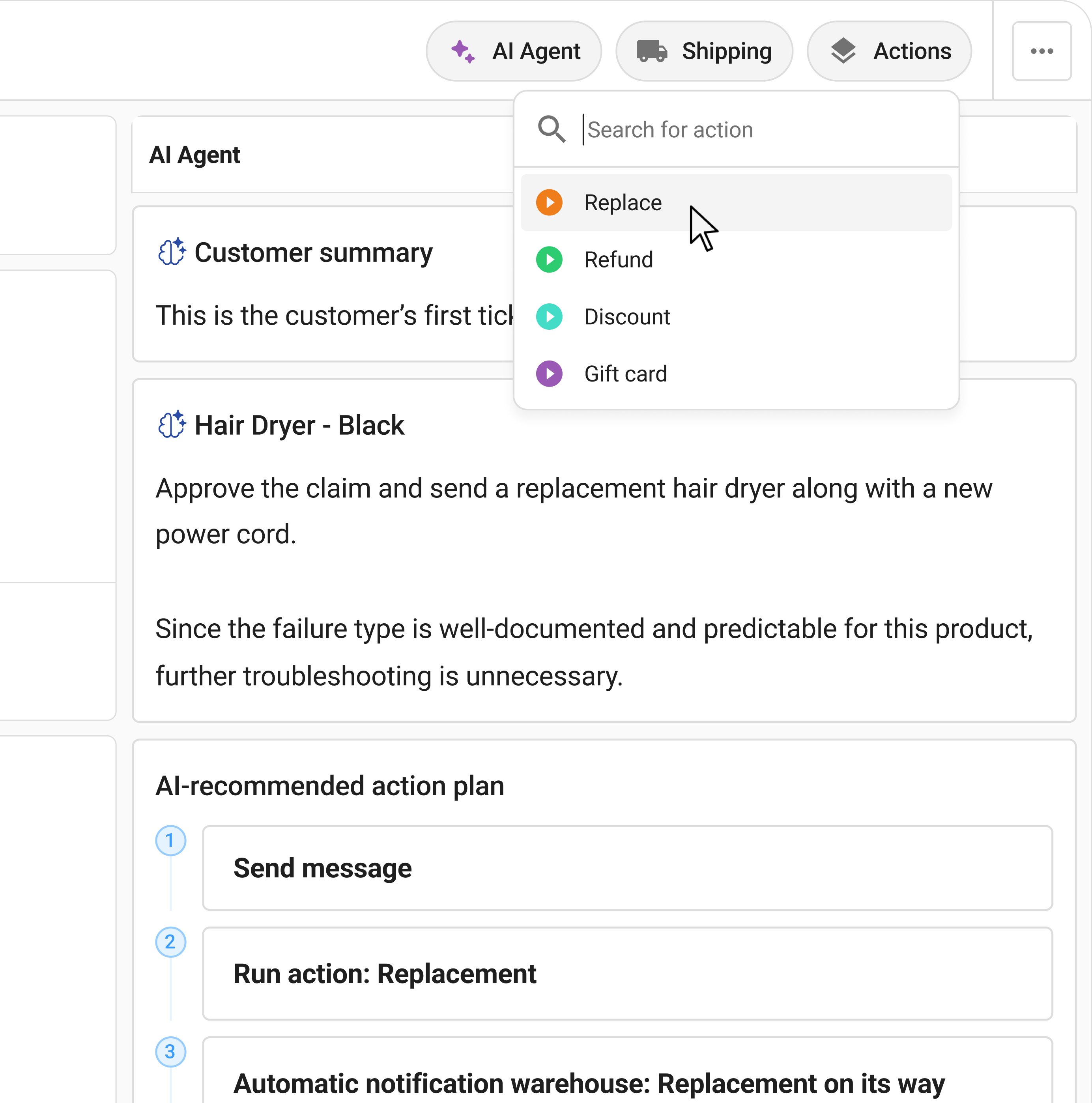
Claimlane's AI Agent, the first AI agent purpose-built for warranty claims and returns, reviews the case at intake. It identifies the product, classifies the defect, and recommends repair, replace, or refund based on the brand's rules. For complex cases, it flags for human review. The in-batch piece on AI in reverse logistics covers the broader pattern.
Step 4: Repair-vs-replace decision
Electronics warranty cases split fast on this decision. Repair is cheaper but slower. Replace is faster but more expensive. The repair vs replace decision piece covers the operational pattern.
Step 5: Supplier handoff
If the defect is supplier-driven, the case routes to forward-to-supplier. The brand assembles photos, serials, timestamps, and the technical assessment into a supplier claim file automatically. Without that automation, brands miss the supplier's claim window and eat the cost.
Step 6: Customer communication
The customer hears about the decision in their language, on their channel, with a timeline they can plan around. Pair with automatic status emails. The in-batch piece on reducing customer effort in claims and returns covers the survey side.
Step 7: Resolution and case closure
Replacement shipped, repair completed, or refund processed. The case closes with the resolution and feeds the analytics layer for product quality patterns. Track via the returns and warranty KPIs framework.
"Electronics cases used to need a senior agent to figure out the right path. Now the AI Agent does the first read and the team handles the exceptions."— MaxGaming, largest gaming and e-sports ecommerce in Scandinavia (case study)
Serial number tracking matters more than anything else
For consumer electronics, the serial is the case ID for the unit. Without it, the brand cannot tell whether a unit is in warranty, who manufactured the component, or what supplier owns the defect. The warranty registration product handles serial capture at point of registration.
What serial tracking enables
Unit-level coverage check at intake. Component-level supplier mapping per SKU. Defect-pattern analysis across batches. Early recall flagging when a serial range fails at higher than baseline rates. Pair with product recall management and product recalls retail and ecommerce.
Why most brands fail at it
Serial capture lives in three systems. The brand puts it on the box. The retailer logs it at sale. The customer ignores it. Brands without registration flows see 30 to 50% case files with no serial, which kills the recovery side. The fix is registration at point of purchase or in the first 30 days. See warranty registration why brands need it and when does warranty registration make sense to offer.
Registration as a brand operating lever
Warranty registration is not just a compliance step. It is a customer data source and a marketing channel. Brands that handle registration well see three operational lifts.
Higher contactable customer base
Registration captures email, phone, and product purchased. That data feeds lifecycle email and CRM. Pair with the in-batch best Mailchimp integrations piece.
Cleaner supplier recovery
With serials registered, supplier claims are complete on first submission. Recovery rate jumps. Track with the returns and warranty KPIs framework.
Better product quality data
Registration plus claim data lets the brand spot defective batches before the volume explodes. The warranty analytics product quality piece covers the analysis pattern.
Common electronics warranty disputes
Three categories generate most of the friction.
Drops and accidental damage
The customer says it failed under normal use. The brand says the photos show drop damage. The fix is clear policy plus image evidence at intake, then consistent application. The returns end delays for complex warranty claims piece covers the friction pattern.
Liquid damage
Most electronics carry a moisture indicator strip. If it has changed colour, liquid contact has happened. The customer often does not know about the indicator. The case team needs to communicate clearly without sounding accusatory.
Battery wear
Lithium batteries lose capacity with cycles. Manufacturer warranty usually covers premature failure, not normal wear. The line between the two needs to live in the rules engine, not in the agent's judgement.
Cross-supplier component tracking
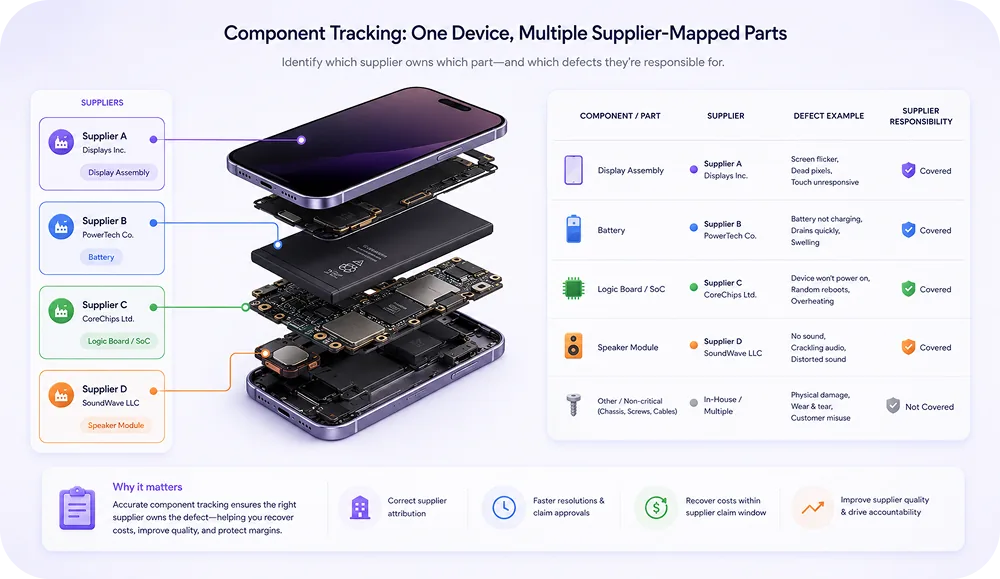
A single device often carries components from three or four suppliers. The case team needs to know which supplier owns which defect. The pattern is covered in supplier management for ecommerce and AI supplier quality scoring.
Why aggregate supplier tracking misses the point
Brands often track supplier defect rate at the SKU level. Component-level tracking is what actually drives recovery. A keyboard might be assembled by Supplier A, but the failing switch comes from Supplier B. Recovery routes to B, not A.
How AI helps the routing
Vision models trained on the brand's components identify which part failed. The case routes to the right supplier based on the photo, not on the SKU. Pair with the in-batch piece on AI reverse logistics.
Right to repair for consumer electronics
The EU right to repair directive is reshaping electronics warranty in 2026. Brands selling into the EU must offer repair as an option for many categories, plus spare parts availability for a minimum period after sale. The right to repair for home appliances view covers appliances; the same direction applies to consumer electronics.
What this means operationally
Brands need a repair workflow, not just refund-or-replace. The repair management software piece covers the platform side. Parts inventory matters more, so spare parts management software and AI predictive spare parts inventory become baseline.
Industry view: consumer electronics in 2026
The electronics industry view covers the category in detail. The pattern that consistently differentiates brands: registration rate at 60%+, AI-assisted triage on every case, and supplier recovery rate above 75%. Brands hitting all three turn warranty from a cost centre into a quality intelligence source.
How brands measure electronics warranty performance
The metric set differs slightly from generic returns. Track these alongside the standard returns and warranty KPIs.
Warranty claim rate per SKU
Claims per unit sold, per SKU, per month. The number flags batches and design issues fast. Pair with predictive warranty analytics.
Time-to-resolution by case type
DOA cases close in 3 to 5 days. Complex repairs sit at 10 to 21 days. Component-traced supplier cases stretch to 30+. Watch each category separately to avoid hiding slow lanes inside the average.
Supplier recovery rate by component
Not by supplier. By component. Most brands miss this because their case data does not capture the component, but it is where the money sits.
Repair vs replace ratio
Electronics brands hitting compliance and economics balance run repair at 40 to 60% of cases. Refund-only programmes flag policy or process issues. The 3 ways to turn warranty claims into revenue piece covers the recovery angle.
When brands need a dedicated warranty platform
Three signals indicate the brand has outgrown spreadsheet-based warranty handling.
Signal 1: 100+ claims per month
At that volume, the agent time savings alone justify a platform. Below that, a structured spreadsheet plus a helpdesk can hold up. See the 4 pillars of a warranty claims software.
Signal 2: Multiple supplier contracts on one SKU
When a single SKU sources from 2+ suppliers, manual case routing breaks. The volume of routing errors costs more than the platform.
Signal 3: Cross-border sales
Multiple markets multiply the rules. The cross-border angle pairs with the in-batch refund policy best practices piece. Single-platform handling is the operational answer.
Frequently asked questions
Conclusion
Manufacturer warranty for consumer electronics is its own discipline. Serials, components, suppliers, and rules carry weight that apparel and home goods do not. The brands that get this right in 2026 run one platform with serial-aware routing, AI-assisted triage, and supplier handoff in the same case. Registration is the foundation. Component tracking is the unlock. AI is the cycle-time win.
To see how Claimlane runs consumer electronics warranty end to end, book a demo or watch the live setup on the interactive demo.