.webp)
Most brands find out about product defects the hard way: a wave of warranty claims floods in, customer complaints pile up on social media, and by the time the quality team investigates, thousands of defective units have already shipped.
Predictive warranty analytics flips this sequence. Instead of reacting to claim spikes after they happen, it uses historical claims data, AI pattern recognition, and statistical modeling to identify emerging defects before they become large-scale problems.
For brands managing warranty claims across hundreds or thousands of SKUs, this shift from reactive to proactive can save hundreds of thousands of dollars annually in claim processing, product replacements, and brand damage.
What Is Predictive Warranty Analytics?
Predictive warranty analytics applies data science techniques to warranty claims data to forecast future failures, identify defect patterns, and trigger early interventions.
At its core, it answers three questions:
- Which products are likely to generate more claims in the coming weeks or months?
- What are the root causes of emerging defect patterns?
- What actions should the brand take now to minimize future claim volume and cost?
Traditional warranty management is reactive. A claim comes in, an agent processes it, and the data sits in a spreadsheet or CRM. Predictive analytics turns that same data into a forward-looking quality management tool.
SAS research on predictive warranty analytics describes it as "unearthing potential problems early on and identifying emerging issues before they become huge, costly problems, enabling to initiate the problem-solving process months in advance."
Why Warranty Claims Data Is an Untapped Gold Mine
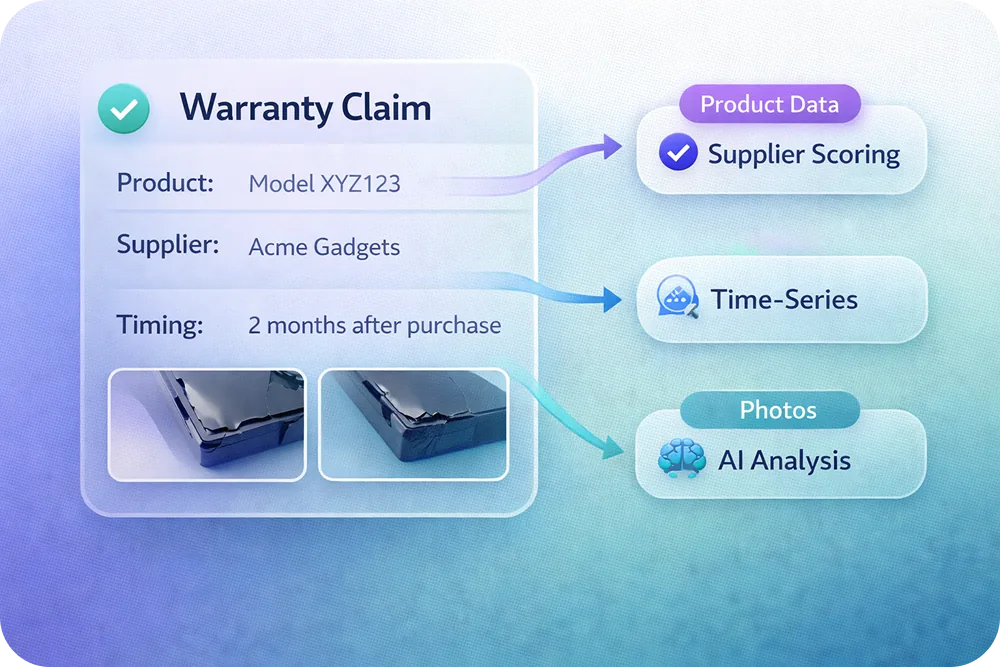
Every warranty claim contains information that goes far beyond "customer wants a replacement." A single claim record typically includes:
- Product details: SKU, batch number, manufacturing date, supplier
- Failure description: what went wrong, how long after purchase
- Customer evidence: photos, videos, written description
- Resolution: repair, replacement, refund, rejected
- Timing: time from purchase to claim, seasonal patterns
Multiply that by thousands of claims across a product catalog, and patterns start to emerge that no human analyst could spot manually.
Brands that use warranty analytics platforms to centralize this data gain visibility into defect trends that would otherwise remain hidden until the problem reaches crisis level.
The data most brands are missing
The problem isn't lack of data. It's that warranty data typically lives in disconnected systems:
- Claims processed through email with no structured data capture
- Return reasons recorded as free-text fields with inconsistent categories
- Product and supplier data stored in a separate ERP
- Customer photos and videos buried in support ticket attachments
Before predictive analytics can work, the data needs to be structured, centralized, and connected. A self-service claims portal that collects standardized information (product type, defect category, photo evidence, purchase date) at the point of submission is the foundation.
How Predictive Warranty Analytics Works
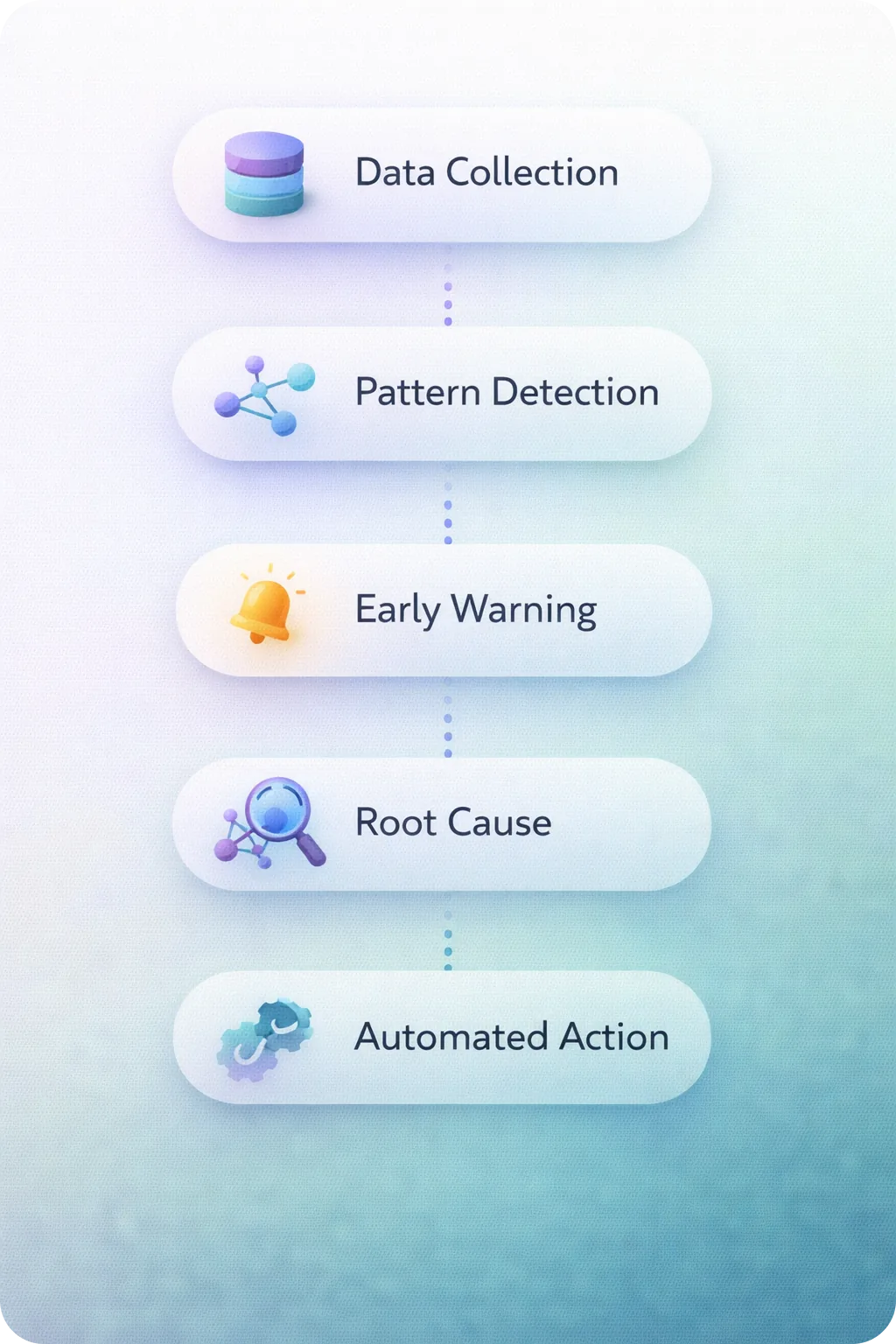
Step 1: Data collection and structuring
Every claim that comes through the system feeds the analytics engine. The key is structured data capture: standardized defect categories, mandatory photo uploads, automated order matching, and consistent product identifiers.
Claimlane's self-service portal does this automatically. When a customer submits a claim, the system pulls the original order data, matches it to the product catalog, and captures structured information about the defect type, timing, and evidence.
Step 2: Pattern detection
Once enough data accumulates, statistical models and machine learning algorithms look for patterns:
- Cluster analysis: Groups similar claims together to identify emerging defect categories
- Time-series analysis: Detects whether claim rates for specific products are increasing, decreasing, or following seasonal patterns
- Anomaly detection: Flags sudden spikes in claims for a specific SKU, batch, or supplier that deviate from historical norms
- Correlation analysis: Links claim patterns to manufacturing variables like batch numbers, production dates, or component suppliers
Step 3: Early warning signals
The system generates alerts when patterns suggest a developing issue:
- "Claim rate for Product X from Supplier Y has increased 40% over the past 30 days"
- "Three separate customers reported the same hinge failure on SKU #4521 this week, up from zero last month"
- "Warranty claims on items manufactured in Batch #B-2024-09 are 3x higher than the average for this product line"
These signals give quality teams time to investigate and act before the problem scales.
Step 4: Root cause analysis
Once a pattern is flagged, the next step is identifying why it's happening. Predictive analytics narrows the investigation by correlating claim data with:
- Supplier and manufacturing data: Which supplier's components are showing higher failure rates?
- Production timeline: Did claims spike after a specific production run or factory change?
- Geographic patterns: Are failures concentrated in specific regions (suggesting shipping or climate-related causes)?
- Usage patterns: Do claims correlate with specific customer behaviors or product use cases?
This analysis, which would take a quality team weeks to do manually with spreadsheets, can be surfaced in minutes when the data is properly structured and connected.
Step 5: Automated actions
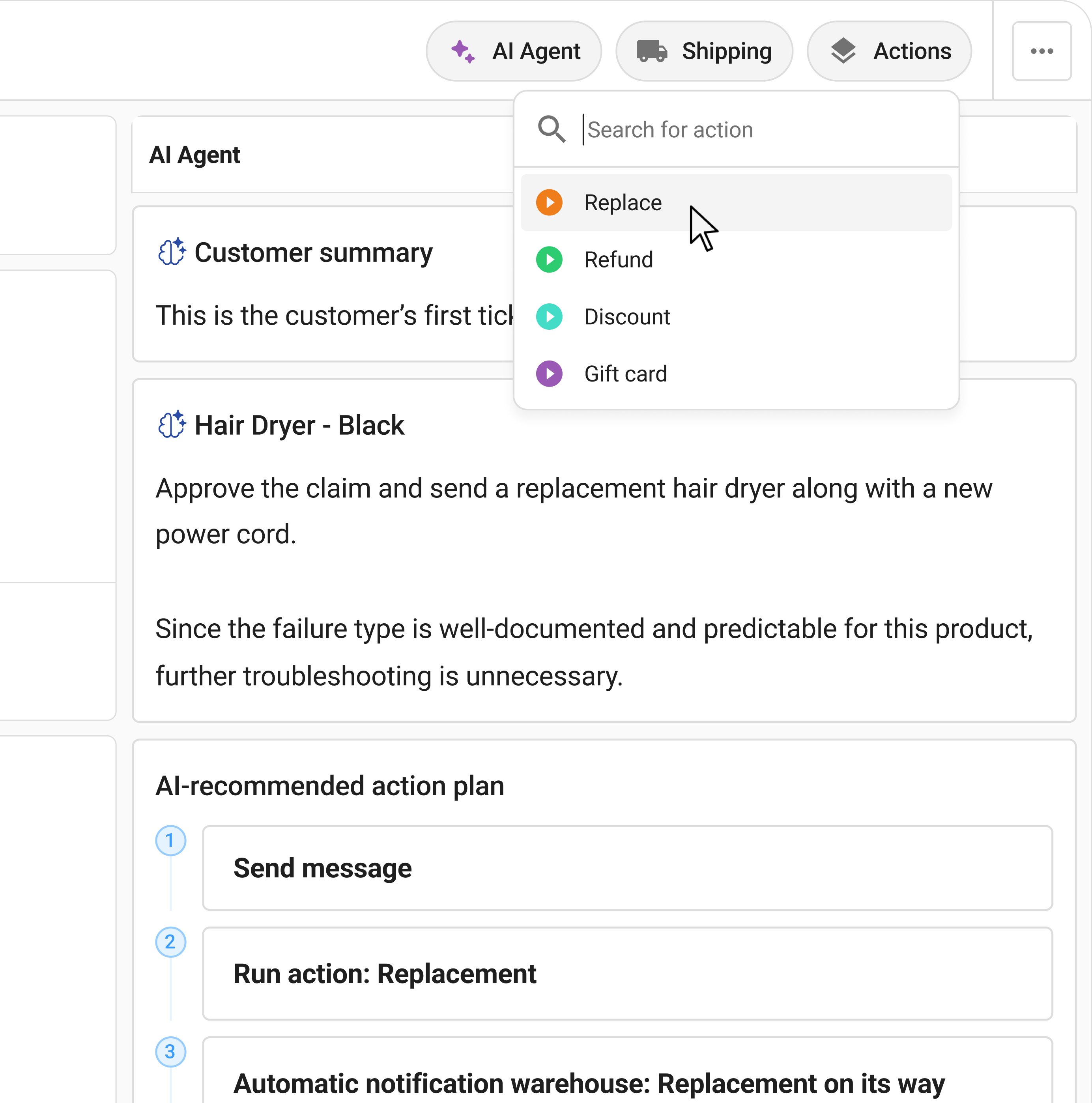
Claimlane's AI Agent, the first AI agent purpose-built for warranty claims and returns, takes this a step further. It doesn't just identify patterns. It acts on them. The AI reviews incoming claims against known defect patterns, applies warranty rules per product and supplier, and recommends or auto-approves resolutions for claims that match established patterns.
For example, if the system knows that a specific batch of products has a confirmed hinge defect, new claims for that product and batch can be fast-tracked for replacement without requiring manual review. This reduces processing time and improves the customer experience for affected buyers.
Real-World Applications
Catching a supplier quality issue early
A home goods brand notices through their Claimlane analytics dashboard that warranty claims on a specific line of kitchen products have increased 35% over the past 60 days. All claims involve the same component: a handle that cracks under normal use.
Drilling into the data, the brand sees that the spike correlates with a change in the component supplier three months earlier. The new supplier's handles are failing at a rate 4x higher than the previous supplier's.
Without predictive analytics, this pattern might not have been detected until hundreds more defective products shipped. With it, the brand can forward claims to the supplier with clear data, negotiate a resolution, and switch back to the original supplier or demand corrective action.
Identifying seasonal failure patterns
An outdoor equipment brand discovers that claims on a specific tent model spike every spring. The pattern analysis reveals that the fabric waterproofing degrades during winter storage, leading to leaks when customers use the tent in early spring.
This insight leads to two actions: updating storage instructions for customers and working with the manufacturer to improve the waterproofing treatment. Neither action would have happened without the data connecting claim timing to seasonal use patterns.
Reducing warranty reserve costs
Manufacturers and retailers set aside financial reserves for expected warranty costs. These reserves are often based on rough historical averages. Predictive analytics replaces guesswork with data-driven forecasts.
By modeling expected claim volumes and costs per product line, brands can right-size their warranty reserves. Over-reserving ties up capital unnecessarily. Under-reserving creates financial surprises. Accurate forecasting, built on real claim data, eliminates both problems.
The Role of AI in Warranty Analytics
Image and video analysis
Claimlane's AI Agent analyzes customer-submitted photos and videos as part of the claims process. This visual analysis serves double duty: it validates individual claims and feeds the analytics engine with structured defect data.
When AI can categorize defect types from images (cracked screen, torn fabric, broken component), the data becomes much richer than text-based descriptions alone. This enables more precise pattern detection and faster root cause identification.
Natural language processing on claim descriptions
Customers describe defects in their own words. Natural language processing (NLP) can extract structured information from free-text claim descriptions:
- Identifying specific failure modes mentioned across many claims
- Detecting sentiment shifts that indicate worsening product quality
- Flagging new defect types that don't match existing categories
Automated claim routing based on patterns
Once the system identifies a known defect pattern, it can automatically adjust claim workflows. Claims matching the known pattern get routed to a fast-track resolution path. Claims that don't match get standard review. This reduces average handling time and ensures consistency.
Building a Predictive Warranty Analytics Capability
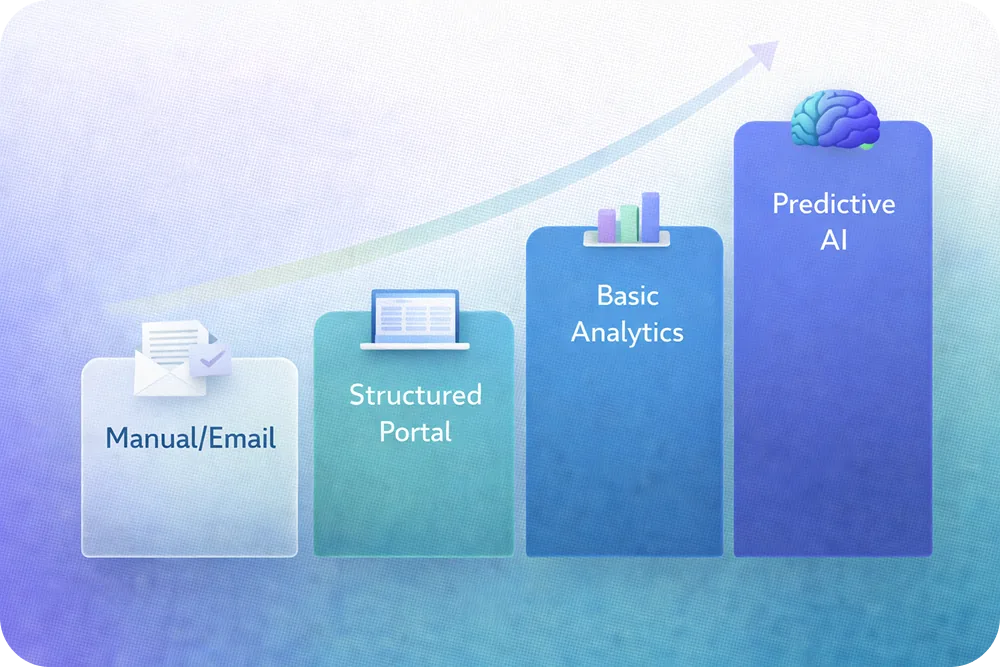
Start with structured data collection
The single biggest barrier to predictive analytics is unstructured data. If claims are processed through email with no standardized fields, there's nothing for an analytics engine to work with.
Priority actions:
- Implement a self-service claims portal with structured intake forms
- Standardize defect categories across all products
- Require photo or video evidence for every claim
- Automatically match claims to order and product data
Connect claims data to product and supplier data
Claims data in isolation tells half the story. Connecting it to product master data (SKU, batch, supplier, manufacturing date) and supplier performance data enables root cause analysis.
The integration between claims management and ERP/product systems is critical. Claimlane's 75+ integrations connect claims data to Shopify, WooCommerce, ERPs, and shipping providers, creating the connected dataset that predictive models need.
Set baselines and thresholds
Before the system can detect anomalies, it needs to know what "normal" looks like. Establish baselines:
- Average claim rate per product category
- Average time from purchase to claim
- Expected claim distribution by defect type
- Seasonal patterns in claim volume
Once baselines are set, any significant deviation triggers an alert for investigation.
Build dashboards for quality teams
Predictive analytics is only useful if the right people see the insights at the right time. Build dashboards that surface:
- Top 10 products by claim rate (rolling 30/60/90 days)
- Supplier quality scorecard (claim rates per supplier)
- Emerging defect alerts (products with accelerating claim rates)
- Financial impact estimates (projected warranty costs by product line)
Claimlane's analytics module provides these views out of the box, giving quality, product, and operations teams the visibility they need to act early.
Measuring ROI of Predictive Warranty Analytics
The ROI of predictive analytics shows up in several places:
Reduced claim volume
By catching and fixing defects earlier, fewer defective products reach customers. This directly reduces the number of incoming claims.
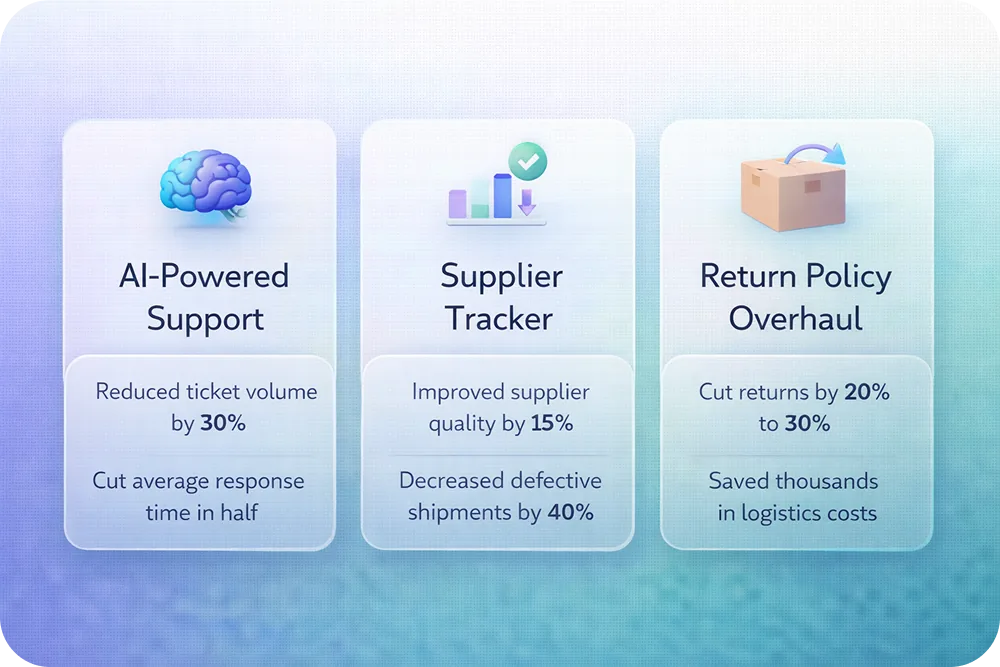
Davidsen, a Danish DIY retailer, went from five agents handling claims to one or two after implementing Claimlane. While this reduction came from automation broadly, the analytics layer contributed by identifying which product categories needed quality interventions.
Lower per-claim processing cost
Automated routing for known defect patterns reduces manual handling time. MaxGaming resolved complex RMA cases 77% faster using Claimlane's AI agents, partly because the system could recognize patterns and route claims accordingly.
Better supplier negotiations
When a brand can show a supplier clear data linking their components to elevated claim rates, the negotiation shifts from anecdotal complaints to evidence-based discussions. This leads to faster corrective action, supplier credits, and in some cases, supplier changes that prevent future claims entirely.
Improved product design
Claim data, properly analyzed, feeds back into product development. If analytics consistently show that a specific component fails after 8 months of use, the product team can redesign that component for the next production run. Over time, this creates a continuous improvement loop where each product generation is more reliable than the last.