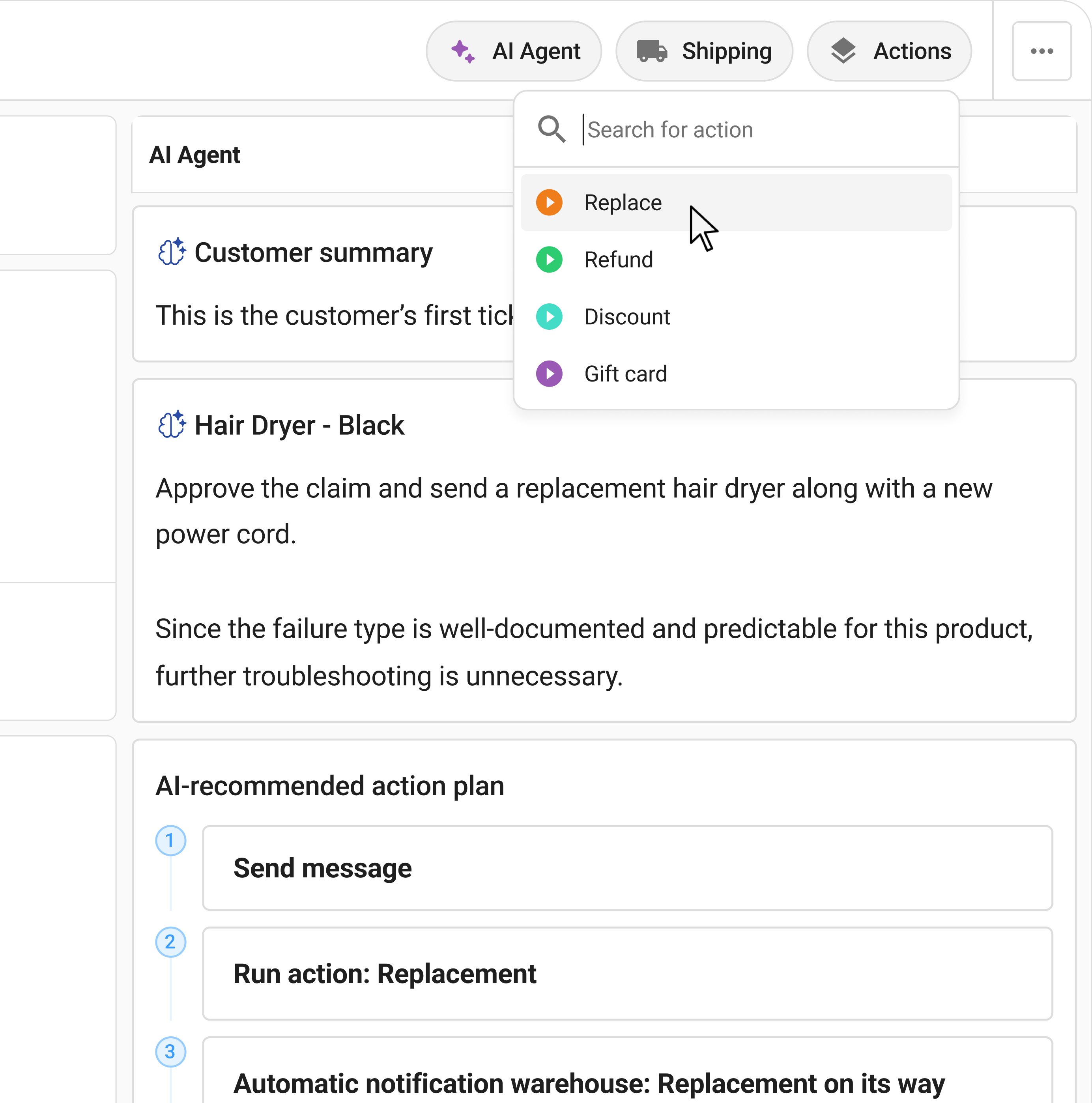
Warranty claims are one of the highest-friction parts of running an ecommerce brand. Customers expect fast resolutions. Support teams burn hours on manual approvals. Operations teams chase suppliers for credit notes. Margins disappear into the gap between policy and execution.
A working warranty management process isn't optional for brands selling durable goods. It directly affects customer retention, support cost per ticket, supplier recovery rates, and whether the warranty programme generates loyalty or generates churn.
This guide covers how warranty management actually works in ecommerce, the operational patterns that scale, and how to build a workflow that handles claims at volume without breaking margin.
Why ecommerce warranty management matters
Warranty claims are inevitable for any brand selling durable goods online. Buyers rely on descriptions, images, and reviews rather than physical inspection. Some products will arrive damaged, fail prematurely, or have manufacturing defects that only show up after weeks of use. The question isn't whether warranty claims will happen. It's whether the process for handling them works.
🤝
Build customer loyalty
A clean warranty process increases trust and drives repeat purchases. Customers remember how brands handle problems, not just how they handle sales.
💰
Reduce operational cost
Automated claim handling cuts support time per ticket and removes the manual coordination that compounds at scale.
📈
Recover supplier credit
Structured warranty workflows make it easier to claim credits from suppliers when defects originate upstream, rather than absorbing the cost.
⚖️
Stay compliant
Warranty obligations vary by jurisdiction and product category. A documented process protects against legal exposure.
For brands selling furniture, electronics, outdoor gear, baby products, or any category with meaningful warranty obligations, the warranty process is part of the product. A bad warranty experience erodes everything the marketing team built.
Common challenges in ecommerce warranty management
Most warranty operations break down in predictable ways. Four patterns show up across nearly every brand running warranty management without dedicated tooling:
Problem 1
Volume overwhelm
Manual claim handling works for 20 tickets a month. It collapses at 200. Each claim involves emails, photos, supplier coordination, approval logic, and customer communication that doesn't fit into a standard support tool.
Problem 2
Inconsistent decisions
Without documented rules per product and supplier, two agents handle the same defect differently. One approves a replacement, the other asks for more documentation. Customers notice. Supplier credits get missed.
Problem 3
No visibility across channels
Claims come in via email, chat, web forms, and phone. They live in different systems. No single view of which products are failing, which suppliers are problematic, or which customers are recurring.
Problem 4
Resource drain
Senior support agents burn time on repetitive warranty cases instead of complex customer issues. Operations teams chase suppliers manually. Finance teams reconcile credits in spreadsheets weeks after the fact.
If any of these sound familiar, the warranty operation is past the point where manual workflows pay off. Time to look at what a structured process looks like.
How to build a working ecommerce warranty process
Five operational patterns separate brands handling warranty at scale from brands drowning in it.
1. Make claim submission easy for customers
The customer-facing intake is where most warranty operations break first. If filing a claim feels like a punishment, customers escalate to chargebacks or social media instead of going through the proper channel.
01
Clear instructions on the website
Step-by-step guidance for filing a warranty claim, with policy details visible before the customer starts. Hidden return policies are a leading cause of customer frustration.
03
Multi-channel support
Allow claims via email, chat, or phone for customers who prefer those channels, but route everything to the same workflow on the backend. The customer chooses the channel; the brand keeps the data structured.
2. Automate the claim handling workflow
Manual warranty handling stops paying off above ~50 claims per month. At higher volumes, automation isn't a nice-to-have, it's the only way to keep cost per ticket reasonable.
A working automation setup handles:
Claim approval rules
Predefined rules per product and supplier auto-approve common cases (replacements within warranty window, defects with photo evidence) without agent intervention.
Centralised case data
All claims, invoices, photos, and customer history in one place. No more searching across email threads or shared drives.
Real-time status updates
Customers get automatic updates as the claim moves through the workflow. WISMO-style "where's my refund" tickets drop sharply.
Pattern analytics
Reports on which products fail, which suppliers underperform, and which fraud patterns are emerging. Feeds back into product, supplier, and policy decisions.
Brands like Davidsen reduced their warranty claims team from 5 agents to 1-2 by implementing this kind of automation. MaxGaming resolves complex RMA cases 77% faster across 30,000+ SKUs using AI-powered claim processing. The pattern repeats at brands like Black Diamond, Skechers, and Coolshop. (For the full picture, see how to automate warranty claims.)
3. Build proper RMA management
Return merchandise authorisation (RMA) is the operational backbone of warranty handling. Without a structured RMA workflow, returned products go missing, refunds get processed twice, and supplier credits never get claimed.
📋
Standardise RMA policies
Define what qualifies under warranty per product category. Communicate these rules clearly. Inconsistency in approval decisions is one of the fastest ways to erode customer trust.
🔍
RMA tracking systems
Customers can track RMA status from submission to resolution. Internal teams can track which RMAs are open, blocked, or stuck waiting on supplier response.
📦
Cost-effective return logistics
Pre-paid return labels, carrier partnerships, regional drop-off networks. The cost of return shipping adds up fast at volume.
For a deeper look at the RMA process specifically, see the complete RMA guide.
4. Reduce claim volume at the source
Handling warranty claims well matters. Reducing the need for them in the first place matters more.
Lever 1
Improve product quality
Use claim data to identify recurring defects. Feed insights back to product, supplier, and QC teams. Most brands collect this data but never act on it.
Lever 2
Educate customers
Detailed manuals, setup videos, FAQs, and proactive emails reduce claims caused by user error. Especially valuable for technical product categories.
Lever 3
Offer extended warranties
Optional extended coverage gives customers peace of mind and adds a revenue stream. Done well, extended warranty programmes lift AOV and customer retention.
Pattern data from claim analytics is the highest-leverage source of product improvement information most brands have.
5. Connect warranty to returns and supplier workflows
Warranty doesn't sit in isolation. It connects to:
📦
Many warranty claims involve a physical return. The two workflows should share the same case, not run separately.
🏭
When defects originate upstream, the brand should claim credit. Most brands lose 20-40% of recoverable supplier credit because the workflow doesn't capture it.
🔧
Many warranty cases resolve faster and cheaper through repair than replacement. The decision should be structured, not ad-hoc per agent.
📊
Long-term warranty obligations need persistent tracking. Customers may file claims years after purchase. The data has to be there.
Where returns fit into the warranty conversation
Ecommerce returns and warranty claims are different operations but live next to each other. Returns address short-term issues (wrong size, change of mind, damaged on arrival). Warranty handles long-term product issues (defects, malfunctions, premature failures). Together they're the post-purchase experience.
|
Returns |
Warranty claims |
| Typical timing |
Within 30-60 days of purchase |
Months to years post-purchase |
| Customer trigger |
Wrong size, changed mind, damaged on arrival |
Product defect, malfunction, premature failure |
| Decision complexity |
Low (within policy or not) |
High (eligibility, defect verification, supplier coordination) |
| Resolution path |
Refund, exchange, store credit |
Repair, replace, refund, supplier credit |
| Required infrastructure |
Returns portal, label generation, refund automation |
Claims portal, evidence capture, rules engine, supplier workflow |
A working post-purchase operation handles both. Most platforms specialise in one. (For brands evaluating the broader category, see the best post-purchase software for ecommerce.)
Benefits of an effective ecommerce warranty strategy
5→1-2
Davidsen's claims team after warranty automation
77%
Faster RMA resolution at MaxGaming with AI-powered claims
9x
ROI on Claimlane for Onyx Cookware's warranty operations
8000+
Brands using Claimlane for structured warranty management
The compounding effect of structured warranty management shows up across every metric: support cost per ticket, supplier credit recovery, customer retention, time to resolution, and product quality feedback.
The bottom line
Warranty claims are inevitable. The question is whether the brand handles them with structured workflows or absorbs the chaos.
Brands handling 50+ warranty claims a month past the threshold where manual processes pay off. The cost of inconsistent decisions, lost supplier credits, and slow resolution times compounds fast. The brands moving to structured warranty management see measurable changes within weeks: fewer escalations, faster resolution, recovered supplier credits, better product quality data feeding back into the operation.
For brands looking at how to build a warranty management workflow that scales, book a Claimlane demo to see how the platform handles claims, RMA, supplier coordination, and analytics in a single workflow.
Frequently asked questions
What is ecommerce warranty management? +
Ecommerce warranty management is the operational discipline of handling warranty claims for products sold online. It covers claim intake, eligibility verification, evidence collection, decision-making (repair, replace, refund), supplier coordination, and customer communication. Brands handling significant claim volume usually run this through dedicated software rather than email and spreadsheets.
What is warranty automation, and how does it help? +
Warranty automation uses software to handle claim intake, approval rules, evidence collection, and customer communications without manual agent work. It speeds up resolution, reduces inconsistent decisions across the team, and surfaces patterns in product failures and supplier performance. Brands like Davidsen reduced their claims team from 5 agents to 1-2 with proper automation.
How does RMA management improve ecommerce returns? +
RMA management ensures consistency and transparency in return processes. Customers get clear policies and tracked status. Internal teams get organised workflows, real-time updates, and the data to identify which products are failing or which suppliers underperform. Without structured RMA, returned products go missing, refunds get processed twice, and supplier credits never get claimed.
Can warranty management software integrate with my ecommerce platform? +
Yes. Modern warranty platforms integrate with Shopify, Magento, WooCommerce, Business Central, and other ecommerce and ERP systems. Claimlane covers 75+ integrations including ecommerce platforms, ERPs, helpdesk tools, and shipping providers. Integration depth determines how automated the workflow can be: deeper integration means less manual data entry and fewer broken handoffs.
When does a brand need dedicated warranty management software? +
Most brands hit the breaking point around 50-100 warranty claims per month. Below that, generic helpdesk tools (Zendesk, Gorgias) plus spreadsheets are workable. Above that volume, the inconsistency in decisions, lost supplier credits, and slow resolution times compound fast. Brands selling durable goods (electronics, furniture, outdoor gear, baby products) often need dedicated warranty workflow earlier because each claim is more complex.
What's the difference between a warranty claim and a return? +
Returns are typically initiated within 30-60 days of purchase for issues like wrong size, change of mind, or arrival damage. Warranty claims happen months or years post-purchase for product defects, malfunctions, or premature failures. Returns are simpler decisions (within policy or not). Warranty claims involve eligibility checks, defect verification, and often supplier coordination. Brands selling durable goods need both workflows.
How do brands recover supplier credits on warranty claims? +
When a defect originates upstream from the supplier, the brand can claim credit rather than absorbing the cost. Most brands lose 20-40% of recoverable supplier credit because the workflow doesn't capture the data needed to file the claim cleanly. Structured warranty management captures defect details, photos, and SKU data automatically, making supplier credit recovery a routine part of the workflow rather than a manual chase.
How can brands reduce warranty claim volume? +
Three levers. First, use claim data to identify recurring product defects and feed insights back to product, supplier, and QC teams. Second, educate customers with detailed manuals, setup videos, and FAQs to reduce claims caused by user error. Third, offer extended warranties as an optional revenue stream that also gives customers reassurance, often shifting their relationship with the brand from transactional to retention-focused.