.webp)
The global extended warranty market was valued at $147.1 billion in 2024 and is projected to reach $346.5 billion by 2033, growing at 11.8% CAGR. That's not a niche opportunity. It's one of the fastest-growing segments in ecommerce and retail.
For brands and retailers, extended warranties represent something rare: a high-margin revenue stream that also improves customer experience. Customers get peace of mind. Brands get recurring revenue, deeper customer relationships, and valuable product quality data.
But running an extended warranty program requires more than adding a checkbox at checkout. It needs software that handles enrollment, claims processing, coverage validation, and reporting. That's what extended warranty platforms do.
This guide covers how extended warranty software works, what to look for, and which platforms fit different business models.
What Is an Extended Warranty Platform?
An extended warranty platform is software that enables brands and retailers to offer, sell, and manage extended warranty programs for their products. These platforms handle the full lifecycle:
- Enrollment. Customers purchase extended coverage at checkout or within a post-purchase window.
- Coverage management. The platform tracks what's covered, for how long, and under what terms.
- Claims processing. When a customer files a claim, the platform validates coverage, collects documentation, and routes the claim for resolution.
- Financials. Revenue tracking, reserve calculations, and cost analysis for the warranty portfolio.
- Reporting. Claim rates, product reliability data, and program profitability metrics.
Extended warranty platforms sit at the intersection of ecommerce, insurance, and after-sales service. They're different from standard warranty management software in that they specifically handle paid warranty programs, not just manufacturer's warranty claims.
Extended Warranty vs. Standard Warranty
Before diving into the software, it's worth clarifying the distinction.
Most ecommerce brands already handle standard warranty claims through a returns management system or warranty platform. Extended warranty software adds the commercial layer: selling coverage, managing policies, and tracking revenue.
Why Extended Warranties Are a Growth Opportunity
High margins
Extended warranty programs typically carry 50-70% gross margins. The premium collected from the customer far exceeds the average claim cost, especially for well-made products. For brands that already have strong product quality, the economics are compelling.
Customer retention
A customer who purchases an extended warranty is locked into a longer relationship with the brand. When a claim arises 18 months after purchase, the brand has an opportunity to deliver excellent service and earn a repeat buyer. The warranty registration process itself creates a touchpoint that keeps the brand top-of-mind.
Product quality feedback loop
Extended warranty claims generate data over longer time horizons than standard warranties. If a product fails consistently at month 14 (just after the standard 12-month warranty), that pattern only shows up in extended warranty data. Analytics from extended warranty programs feed directly into product development and supplier quality conversations.
Competitive differentiation
Offering an extended warranty program signals confidence in product quality. Brands that stand behind their products for 3-5 years are making a statement that cheaper competitors can't match.
Checkout AOV boost
Extended warranty offers at checkout increase average order value by 8-15% for brands that implement them well. The key is positioning: "Protect your purchase for 3 years for just $29" is a low-friction upsell that customers appreciate.
How Extended Warranty Platforms Work

At checkout
The platform integrates with the ecommerce store (Shopify, BigCommerce, WooCommerce) and displays an extended warranty offer on the product page or in the cart. The offer is dynamically priced based on the product category, price point, and warranty duration.
When the customer adds the warranty, it appears as a line item in the order. The warranty purchase is linked to the specific product and order.
Post-purchase enrollment
Some platforms also support post-purchase warranty sales: after delivery, the customer receives an email offering extended coverage within a defined window (often 30-60 days). This catches customers who didn't buy at checkout but want protection after experiencing the product.
Post-purchase enrollment is particularly effective for electronics and furniture, where the value of protection becomes more apparent after use.
During a claim
When a customer needs to make a claim against their extended warranty, the process should mirror a standard warranty claim: submit the issue through a self-service portal, upload photos or videos of the problem, and receive a resolution (repair, replacement, or refund).
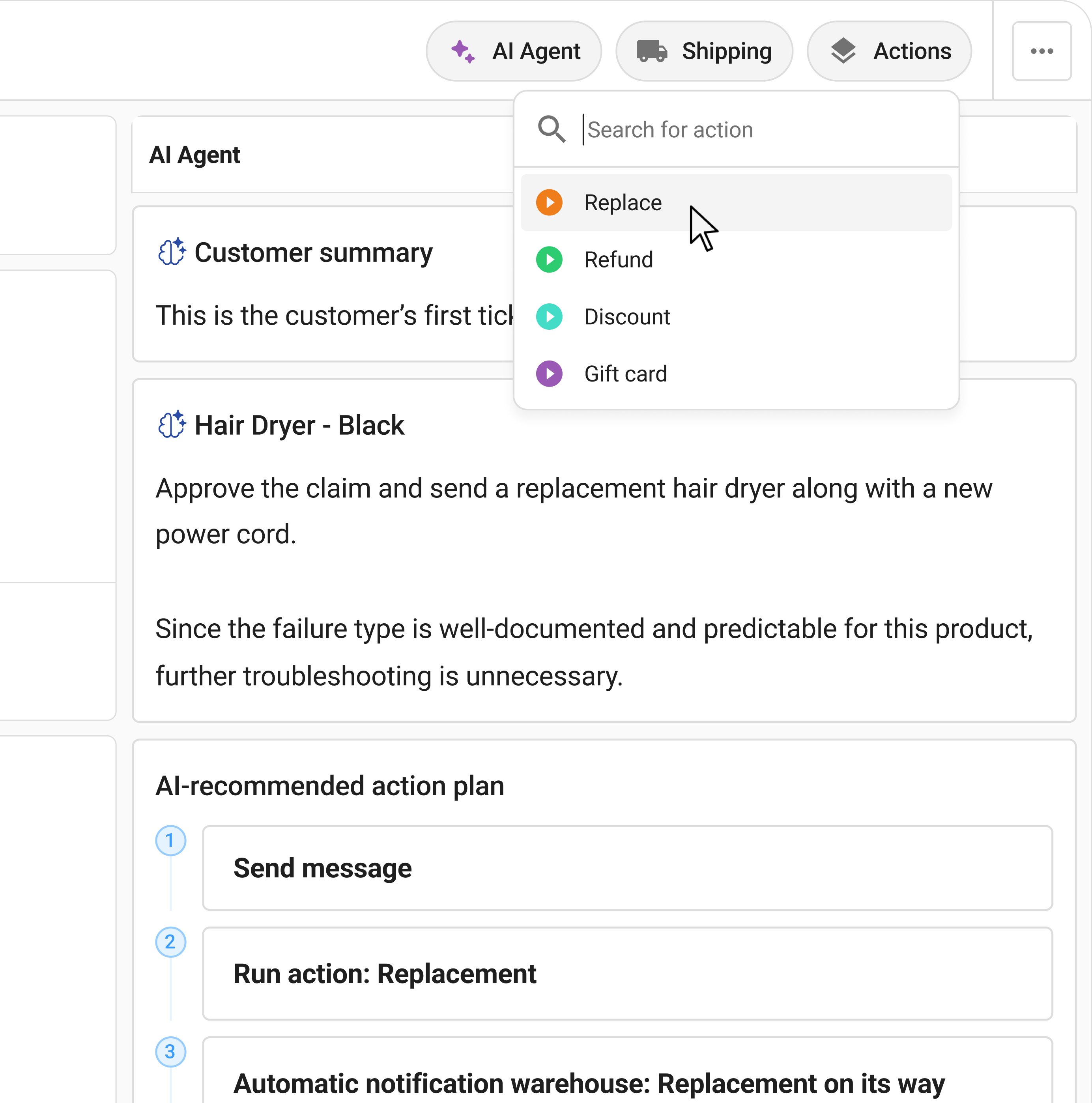
The extended warranty platform validates that the customer has active coverage, checks the claim against the warranty terms, and routes it for resolution. Claimlane's AI Agent, the first AI agent purpose-built for warranty claims and returns, can assess extended warranty claims the same way it handles standard claims: analyzing product images, checking warranty rules, and recommending actions.
Revenue and risk management
Extended warranty platforms track:
- Warranty attach rate (what percentage of eligible purchases add coverage)
- Premium revenue per period
- Claims rate and claims cost
- Loss ratio (claims paid / premiums collected)
- Reserve requirements (funds set aside for future claims)
For brands self-administering their warranty program (not using a third-party insurer), these financial metrics are critical. A well-run program maintains a loss ratio of 30-50%, leaving healthy margin after operational costs.
Two Models: Self-Administered vs. Third-Party
Brands approaching extended warranties face a fundamental choice.

Self-administered extended warranty
The brand creates, sells, and fulfills its own extended warranty program. The brand keeps all premium revenue and bears all claim costs.
Pros:
- Full control over program design, pricing, and terms
- Higher margins (no revenue share with a provider)
- Direct customer relationship throughout the warranty period
- Warranty data stays in-house
Cons:
- Requires capital reserves for claims
- Regulatory complexity (extended warranties are regulated as service contracts in many jurisdictions)
- Needs internal claims processing capability
- Risk of underpricing (claims exceed premiums)
For brands with strong product quality data and existing claims infrastructure through platforms like Claimlane, self-administration is often the highest-margin option.
Third-party extended warranty provider
A third-party company (Extend, Clyde, Mulberry, Allstate Protection Plans) provides the warranty program. The brand integrates the provider's widget at checkout. The provider handles claims and bears the risk. The brand earns a commission on each warranty sold.
Pros:
- No capital reserve required
- No regulatory burden (the provider holds the necessary licenses)
- No claims processing responsibility
- Quick to implement (just add the widget)
Cons:
- Lower margins (brand gets 15-30% commission vs. keeping 100% of premiums)
- Less control over the claim experience (the provider's brand shows up)
- Customer data goes to the provider
- Provider sets the terms, not the brand
Hybrid approach
Some brands use a third-party provider for the insurance/risk layer but handle claims themselves through their existing warranty platform. This keeps the customer experience in-house while offloading the financial risk.
Key Features of Extended Warranty Software
Dynamic pricing engine
The platform should price extended warranties based on:
- Product category and price point
- Historical claim rates for similar products
- Coverage duration (1, 2, 3, 5 years)
- Coverage type (defects only vs. accidental damage)
Pricing too high kills attach rates. Pricing too low erodes margins. The best platforms use claim data to optimize pricing over time.
Checkout integration
The warranty offer needs to appear naturally in the purchase flow. For Shopify, BigCommerce, and WooCommerce stores, this means a widget on the product page or cart page that shows the warranty option with clear pricing and coverage summary.
Claimlane's 75+ integrations with ecommerce platforms, ERPs, and helpdesks provide the infrastructure for connecting extended warranty enrollment to the rest of the tech stack.
Coverage management
The platform must track:
- Which customers have active extended warranties
- What products are covered
- Coverage start and end dates
- What's included and excluded
- Transferability (can coverage be transferred if the product is resold?)
Claims workflow
When a customer makes a claim, the platform needs to:
- Verify active coverage for that product
- Check the claim against warranty terms (is this type of damage covered?)
- Collect documentation (photos, description, serial number)
- Route to the appropriate resolution path (repair, replace, refund)
- Track the claim through resolution
- Update financial records
Claimlane's automated workflows handle this claim routing for both standard and extended warranty claims, applying different rules based on the warranty type and coverage level.
Analytics and program optimization
Extended warranty analytics should provide:
- Attach rate by product category. Which products sell the most warranties?
- Claims frequency by coverage year. When do claims spike?
- Loss ratio trends. Is the program profitable?
- Product reliability data. Which products generate the most extended warranty claims?
- Revenue attribution. How much incremental revenue does the program generate?
Returns analytics and warranty analytics together give brands a complete picture of product lifecycle performance.
Extended Warranty Platforms: Options for Ecommerce
Claimlane + self-administered program
Best for: Brands that want full control and maximum margins
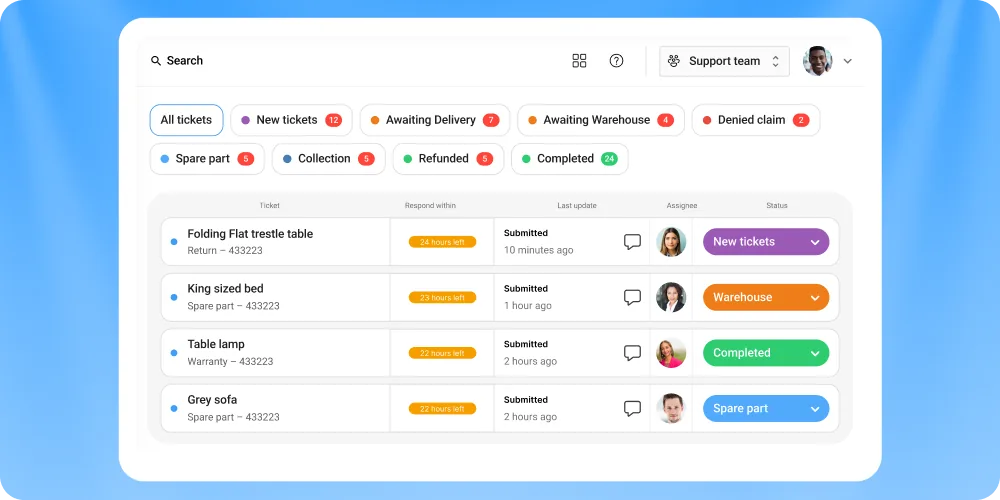
Claimlane isn't an extended warranty sales widget. It's the claims engine that powers the program once customers start filing claims. Brands use Claimlane to process both standard and extended warranty claims through a single self-service portal, with AI-powered assessment and automated workflows that differentiate between coverage types.
For brands that want to self-administer their extended warranty program, Claimlane provides the operational backbone: claims intake, documentation collection, defect assessment, resolution routing, and supplier forwarding for products that fail under extended coverage.
MaxGaming resolved complex warranty cases 77% faster using Claimlane's AI, which works identically for extended warranty claims.

Extend
Best for: Brands that want a turnkey third-party program
Extend provides the full package: checkout widget, warranty plans, claims processing, and risk underwriting. The brand adds Extend's integration to the store, and Extend handles everything else. The brand earns a commission on each sale.
Good for brands that want speed to market and don't want to manage claims or financial risk.

Clyde
Best for: Mid-market ecommerce brands on Shopify
Clyde offers product protection plans sold at checkout. Similar to Extend but with a focus on Shopify merchants. Clyde handles the claims and risk, and the brand earns revenue share.
Mulberry
Best for: Flexible warranty pricing and post-purchase offers
Mulberry focuses on personalized warranty offers and supports both checkout and post-purchase enrollment. The platform adjusts pricing based on customer and product data.

NeuroWarranty
Best for: QR-based warranty activation
NeuroWarranty uses QR codes on products for instant warranty registration. Customers scan the code after purchase to activate coverage. This approach works well for DTC brands that want to capture first-party data at the point of ownership.
How to Launch an Extended Warranty Program

Step 1: Analyze product reliability data
Before pricing warranties, understand failure patterns. Which products fail? When? Why? Analytics from existing warranty claims provide the foundation. If claim rates for a product category are 3% in year one, they might be 5% in year two and 8% in year three. This curve drives pricing.
Step 2: Choose the model
Self-administered (higher margin, more complexity) or third-party (lower margin, turnkey)? The answer depends on:
- Existing claims infrastructure (do you already use a platform like Claimlane?)
- Capital availability for reserves
- Regulatory requirements in your markets
- Desired level of control over the customer experience
Step 3: Set pricing
A common starting formula:
Extended warranty price = (Expected claim rate x Average claim cost x Coverage years) + Desired margin
For a product with a 5% annual claim rate and $50 average claim cost over a 3-year extension:
(0.05 x $50 x 3) + 50% margin = $7.50 + $3.75 = $11.25 per warranty
Round to a psychologically appealing price point ($12.99 or $14.99) and test.
Step 4: Build the claims workflow
Extended warranty claims need the same rigor as standard claims. Use Claimlane's workflows to:
- Verify coverage status
- Collect photos and defect descriptions
- Apply resolution rules per product and warranty tier
- Track resolution through to completion
- Record claim costs against the warranty portfolio
Step 5: Integrate at checkout
For self-administered programs, build a warranty offer into the product page or cart. For third-party programs, install the provider's widget. Test the offer positioning, pricing, and messaging to optimize attach rates.
Step 6: Optimize over time
Use claim data to refine pricing, adjust coverage terms, and identify products that should (or shouldn't) be eligible for extended warranties. Products with high defect rates might need pricing adjustments or coverage exclusions. Products with very low claim rates might be overpriced, suppressing attach rates.
Extended Warranties by Industry
Electronics
Electronics have the highest extended warranty attach rates in ecommerce (15-30%). Consumers understand that tech products fail, and the cost of repair or replacement is high. Laptops, smartphones, headphones, and gaming peripherals all sell well with extended coverage.
Furniture
Furniture extended warranties cover fabric stains, structural damage, and material defects beyond the standard warranty. The high price point of furniture makes the warranty feel like a small insurance cost. Swoon is an example of a furniture brand managing warranty claims through Claimlane.
Outdoor and sporting goods
Outdoor gear takes abuse. Extended warranties that cover wear and tear, not just manufacturing defects, resonate with customers who use products in harsh conditions. Black Diamond automated warranty and repair workflows for this exact use case.
Baby and nursery
Parents want maximum protection for products their children use. Baby products with safety implications (car seats, cribs, strollers) have strong extended warranty attachment rates because the emotional stakes are high.
DIY and hardware
Power tools, building materials, and home improvement products benefit from extended warranties because the cost of failure is both financial (replacement) and practical (project delays). DIY and hardware brands like Davidsen use Claimlane to manage warranty claims at scale.
Common Mistakes with Extended Warranty Programs
Overcomplicating the terms
If customers need a law degree to understand what's covered, they won't buy. Keep warranty terms simple: what's covered, what's not, how long, how to claim.
Underpricing
Setting prices too low to maximize attach rates backfires when claims exceed premiums. Use actual product reliability data, not guesses, to price warranties.
Poor claims experience
Selling an extended warranty and then making the claim process painful destroys trust. The claims experience must be at least as good as the purchase experience. A self-service portal with fast AI-powered assessment is the minimum bar.
Not connecting warranty data to product development
Extended warranty claims are a goldmine of product quality data. If that data sits in a silo and never reaches product development or supplier management, the brand is leaving value on the table.
Ignoring regulatory requirements
Extended warranties are regulated as service contracts in many US states and as insurance products in the EU. Brands that self-administer need to understand the legal requirements. Third-party providers typically handle this compliance, which is one of their key value propositions.
The Connection Between Extended Warranties and Returns
Extended warranties and returns management are deeply connected.
A customer who has an extended warranty is less likely to initiate a chargeback or leave a negative review when a product fails after the standard warranty period. Instead, they file a claim through the extended warranty. This structured process is better for the brand (lower cost of returns), better for the customer (clear resolution path), and better for the product team (structured defect data).
Brands that handle both standard returns and extended warranty claims through a single platform like Claimlane get a unified view of product lifecycle performance. The analytics span from day-one returns through multi-year warranty claims, revealing patterns that separate systems would miss.