.webp)
In an ever-competitive business landscape, a solid after sales service is becoming a vital component of any b2b or b2c business. Satisfied customers are more likely to become repeat buyers, a quality after sales service builds trust and loyalty to the brand and positive experiences lead to good reviews and recommendations.
In this guide you will learn what after-sales service is, why it matters, and how brands improve it. You will also see examples from the industries we support and simple steps to strengthen your own process.
Help customers after they buy. Fix issues. Answer questions. Keep them happy.
Types of After-Sales Services
| Service type | What it covers |
|---|---|
| Warranty support | Claims, repairs, replacements, related communication |
| Returns and exchanges | Return labels, exchanges for wrong or damaged products |
| Repair and maintenance | Fixes, spare parts, routine checks |
| Installation and setup | Guides, videos, live support to help customers get started |
| Technical support | Help by phone, chat, or email for troubleshooting |
| Onboarding and training | Lessons and guidance to use the product correctly |
| Product updates | Software updates, new features, improvements |
| Feedback collection | Gather customer insights to improve products |
The importance of after sales service
The importance of a solid after sales service is important for many reasons.
- Improves Customer Retention and Satisfaction
Aiding and addressing customer concerns after a purchase ensures a positive experience. Customers tend to feel valued when they receive support, which increases their overall satisfaction with the product or service.
- Builds Brand Loyalty and Trust
Satisfied customers are more likely to remain loyal to a brand and make repeat purchases. Furthermore, a good after-sales service fosters trust and long-term relationships, reducing customer churn – and making them less likely to look at competitors.
- Competitive Advantage
In competitive markets, after-sales service can be a key differentiator, with companies that go the extra mile in supporting customers gaining a competitive edge over firms that are perceived to leave customers to “go it alone” after purchasing a product.
- Positive Word-of-Mouth and Reviews
If customers are dissatisfied, it is easy for them to place a negative review of search engines or social media. This can instantly be viewed by millions of people. By investing in a solid after sales service, customers can still be kept on side when things do go wrong.
| Benefit | Why it matters |
|---|---|
| Customer retention | People stay when problems are solved fast |
| Trust | Customers choose brands that support them |
| Competitive edge | Good support stands out in crowded markets |
| Better reviews | Improves brand image and online presence |
What to look for when choosing an after-sales platform
Choosing the right after-sales tool depends on the specific problems you’re trying to solve. Most teams struggle in one or more of the areas below — and each requires a different type of solution.
- Customer communication
If your main challenge is keeping customers informed, tools like Klaviyo and Mailchimp are ideal for setting up automated email and SMS flows such as order updates, notifications, and follow-ups. - General customer support
For handling day-to-day customer inquiries across email, chat, and social channels, help desks like Zendesk, Gorgias, and Intercom are solid choices. These tools excel at managing conversations but are not built for operational workflows. - Warranty, returns, and repairs management
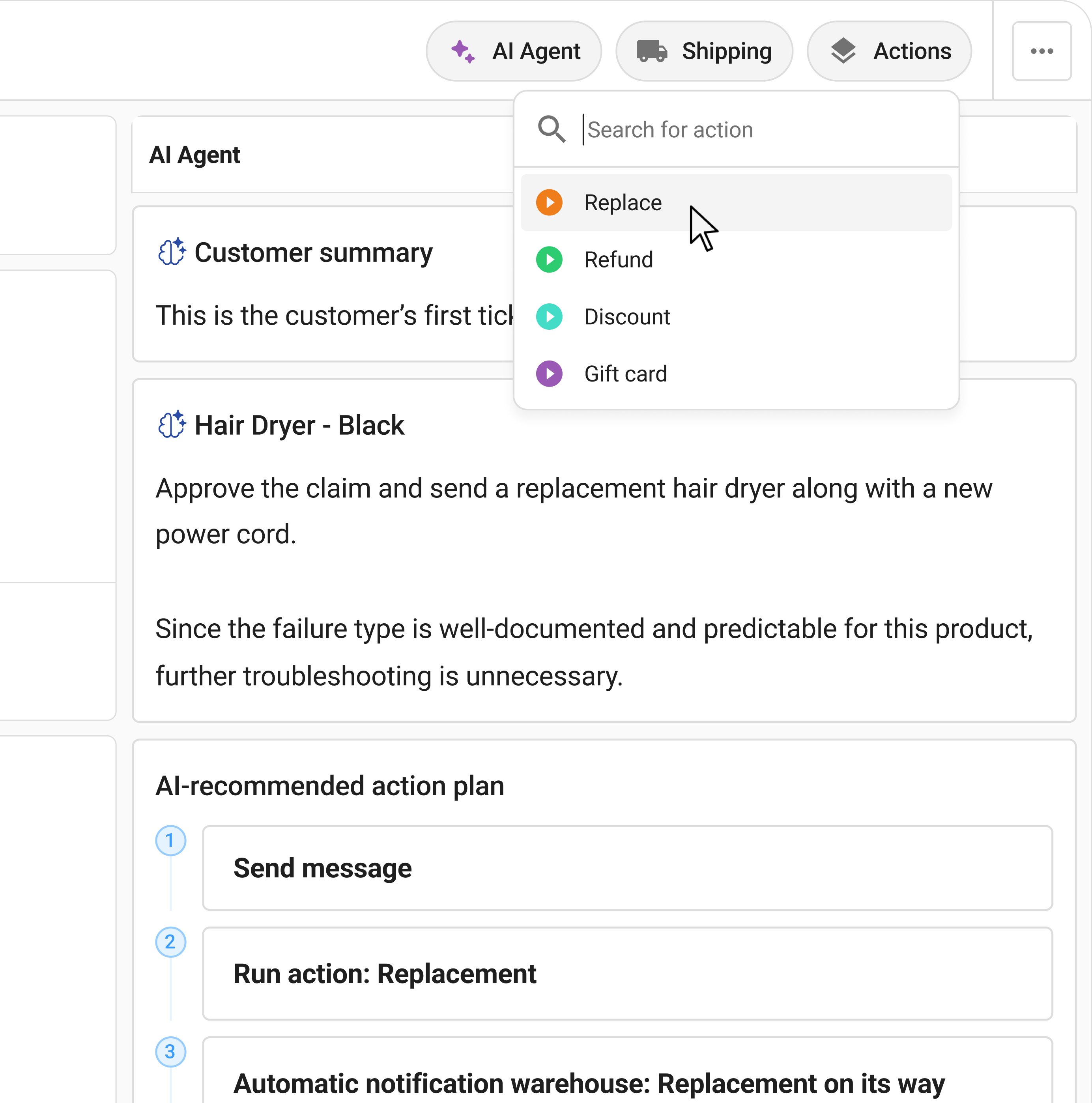
When after-sales operations become more complex, a dedicated platform like Claimlane is a better fit. It helps automate returns, warranty claims, and repair processes, reducing manual work while delivering a smoother customer experience.
How to improve your after sales service
.webp).png)
There are many ways that a business can improve its after sales functionality.
- Use a Ticket Management or Claim Management System
A business could set up a structured ticket management system as part of its after sales service software to handle customer queries or complaints efficiently. Such a system allows many benefits, including easy tracking, priority management, and ensuring no query goes unnoticed. It also allows multiple staff members to use it, ensuring there is less of a likelihood for a bottleneck caused by just one staff member assuming all responsibility.
- Use one place for all claims
- Set rules for routing and priority
- Reduce back-and-forth emails
- Strengthen Communication and Problem-Solving Skills
Staff training is a vital component of an efficient after sales service. A business should ensure customer service teams are well-trained in product knowledge, communication skills, and problem-solving. It is also important to equip them to handle customer queries and complaints effectively and empathetically.
- Product knowledge
- Clear communication
- Empathy and tone
- Automated Responses
The use of automated responses ensures customers receive an acknowledgement that their issue has been noted and is being investigated. It also buys the business some time to ensure they can look into the circumstances of the issue before providing a personalized response. It is important to emphasise that the automated response is meant to be a stopgap before providing a personal response – it is certainly not meant to replace it.
- Confirmation emails
- Basic routing rules
- Status updates
- Collect and analyse customer feedback
Collecting feedback is essential for improving overall services. Customer data is a rich source of business intelligence – it can be used to allow a business to identify trends, highlight frequent issues or illuminate the areas where service standards might be lacking. Today’s digital world means there are a multitude of easy ways to collect this date, including tools such as Google Forms, SurveyMonkey, or direct email campaigns.
- Short customer surveys
- Reason codes in claims
- Retailer or partner feedback
- Reduce Processing Times
It is important to respond to customer inquiries and complaints promptly – a delay will make customers think they are not being valued. Automated systems like chatbots can be implemented for quick responses to basic queries while maintaining human support for the more complex issues.
- Automation rules
- Pre-filled data from shops
- Fewer back-and-forth emails
- Measure and Track Your KPIs
Key performance indicators (KPIs), such as response time, resolution rate, and customer satisfaction scores, can be used to evaluate service quality. A business can regularly review and refine its processes based on this performance data. Tools such as Google Analytics, HubSpot, or Zendesk Analytics can be used to track and report these metrics.
- Average processing time
- Approval / rejection rates
- Top issue reasons
Want examples of after-sales services?
After sales service benefits
After sale service offers numerous benefits for both businesses and customers, contributing to long-term success and satisfaction.
Some of the key benefits include the following:
- Customer Satisfaction
Providing excellent after sale service, such as a quick response to queries or providing tutorials to demonstrate how a product works ensures customers remain loyal to the brand, while satisfied customers are more likely to make repeat purchases. The emotional impact here is vital - customers feel valued and respected when their concerns are addressed promptly and effectively.
- Customer Retention
Every business sector is facing increased competition and a pressure on costs. Therefore, keeping existing customers and keeping them engaged and loyal to the brand is just as important as attracting new customers. An effective after sales service builds trust, leading to repeat purchases and stronger customer relationships. Furthermore, tactics such as regular follow-ups, loyalty programs, or offering maintenance services can increase the likelihood of customers returning.
- Positive Brand Reputation
A positive after-sales experiences leads to good reviews, word-of-mouth recommendations, and a strong market presence, while a reputation for reliable customer support attracts new customers. It is important to emphasize that those businesses with a strong after sales service tend to stand apart from those that do not.
- Increase Revenue
Satisfied customers tend to purchase additional products, upgrades, or extended warranties. It is these customers that tend to be more receptive to cross-selling and upselling opportunities, subscriptions or add-on services – all of which are vital for increasing revenue. Tools like this ensure that keeping existing customers happy can be just as cost-effective as obtaining new customers, a fact that certainly highlights just how important investing I n a good after sales function can be.
.webp).png)
Examples of After-Sales Services (Industry-Specific)
Outdoor and Sporting Goods
A customer submits a warranty claim for a backpack with a broken zipper. The brand offers a fast repair and provides tracking updates throughout the process.
Furniture and Interior
A customer reports that a sofa arrived with a missing part. The manufacturer ships the part immediately and sends assembly instructions.
Baby and Nursery
A stroller has a wheel defect. The retailer logs the claim through a streamlined system, communicates with the supplier, and arranges a replacement without long delays.
Electronics and Tech
A customer struggles to set up a device. The company provides step-by-step video guides and a support chat to solve the issue.
DIY and Home Improvement
A customer needs help choosing a compatible spare part for a power tool. Support staff assist with product matching and send documentation.
These specific examples help visitors recognise what after-sales service looks like in practice and match the expectations of common search queries.
A strong after-sales process keeps customers loyal and reduces time spent on manual work. If your team wants faster claim handling, fewer emails, and better data, Claimlane can help.
Improve your after-sales process
See how Claimlane helps brands reduce claim time and improve customer experience.
Book a demo
FAQ
What is after-sales service?
After-sales service includes all support provided after a purchase, such as returns, warranty processing, repairs, onboarding, and general product assistance.
Why is after-sales service important?
It helps keep customers satisfied, reduces churn, increases repeat purchases, and improves public reviews.
What are examples of after-sales services?
Common examples include warranty handling, repair services, technical support, installation help, returns, spare parts, and onboarding guides.
How can a company improve its after-sales service?
Companies can implement a structured ticketing system, train support teams, respond quickly, analyse customer feedback, and monitor performance metrics.
What is the difference between customer service and after-sales service?
Customer service covers general interactions with customers, while after-sales service refers specifically to support provided after a product has been purchased.