.webp)
A warranty claim that takes three weeks to resolve costs more than one that takes three days. Not just in operational overhead, but in lost customer trust, negative reviews, and reduced lifetime value. Yet most brands don't set explicit SLAs (service level agreements) for warranty claim resolution. They handle claims "as fast as possible," which in practice means "whenever someone gets to it."
Warranty SLA management brings structure to this. It means defining specific response and resolution time targets for different claim types, measuring performance against those targets, and fixing the bottlenecks that cause misses.
This article covers how to set warranty SLAs, what targets are realistic, how to track compliance, and what tools make SLA management practical for growing brands.
- Most brands don't set explicit warranty SLAs, leading to inconsistent resolution times.
- Realistic SLAs: 4-8 hour first response, 2-3 day simple claims, 7-14 day complex repairs.
- SLA tracking requires structured claims data with stage timestamps.
- Claimlane automates SLA tracking with workflow escalation rules.
What Are Warranty SLAs?
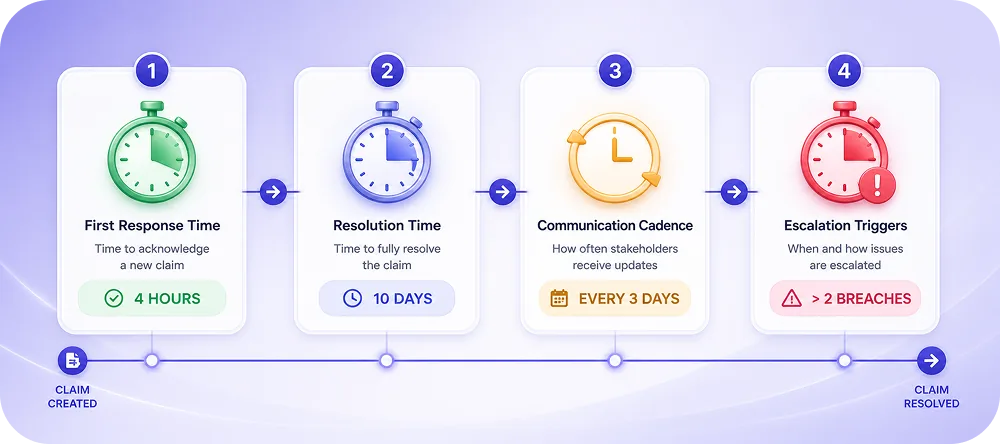
A warranty SLA is a defined commitment for how quickly a brand will respond to and resolve warranty claims. It includes:
- First response time: How fast the customer gets an initial acknowledgment
- Resolution time: How fast the claim reaches a final outcome (refund, replacement, repair)
- Communication cadence: How often the customer gets status updates
- Escalation triggers: What happens when a claim approaches or breaches its SLA
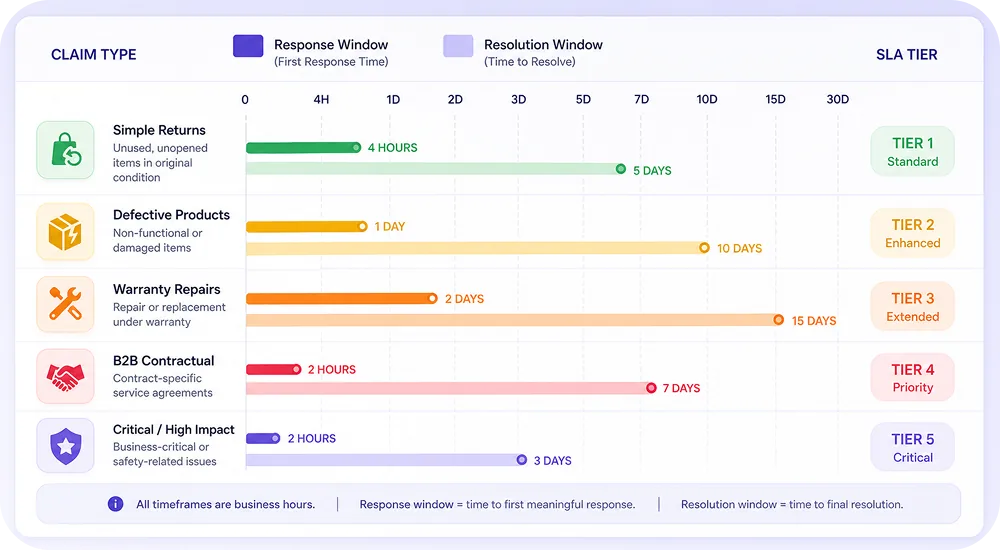
SLAs can vary by claim type. A simple returnless refund might have a 24-hour SLA. A complex repair involving spare parts might have a 14-day SLA. A B2B warranty claim with contractual obligations might have a stricter 48-hour response requirement.
How to Set Realistic Warranty SLAs
Benchmark Current Performance
Before setting targets, measure current performance. What's the actual average resolution time? What's the 90th percentile? If the average is 10 days but the 90th percentile is 25 days, the tail is the real problem.
Brands using Claimlane's analytics can pull these numbers directly from the dashboard, filtered by claim type, product category, and resolution method.
Set Tiered SLAs by Claim Type
Not all claims are equal. Set different SLAs based on complexity:
How to Track Warranty SLA Compliance
Automated Workflow Tracking
Manual SLA tracking (checking timestamps in spreadsheets) doesn't scale. Claimlane's workflow automation tracks every claim against its SLA automatically. Each claim type gets assigned an SLA based on its classification. The system monitors elapsed time and triggers escalations when deadlines approach.
SLA Dashboard
The Claimlane analytics dashboard shows SLA compliance rates across claim types, products, and time periods. Operations managers can see at a glance:
- Percentage of claims resolved within SLA
- Average resolution time by claim type
- Claims currently at risk of SLA breach
- Trending patterns (improving or worsening)
Escalation Rules
When a claim reaches a defined percentage of its SLA target without resolution, the system should escalate automatically. Options include:
- Notify the assigned agent
- Reassign to a senior agent or manager
- Flag in the dashboard for priority attention
- Send a proactive update to the customer
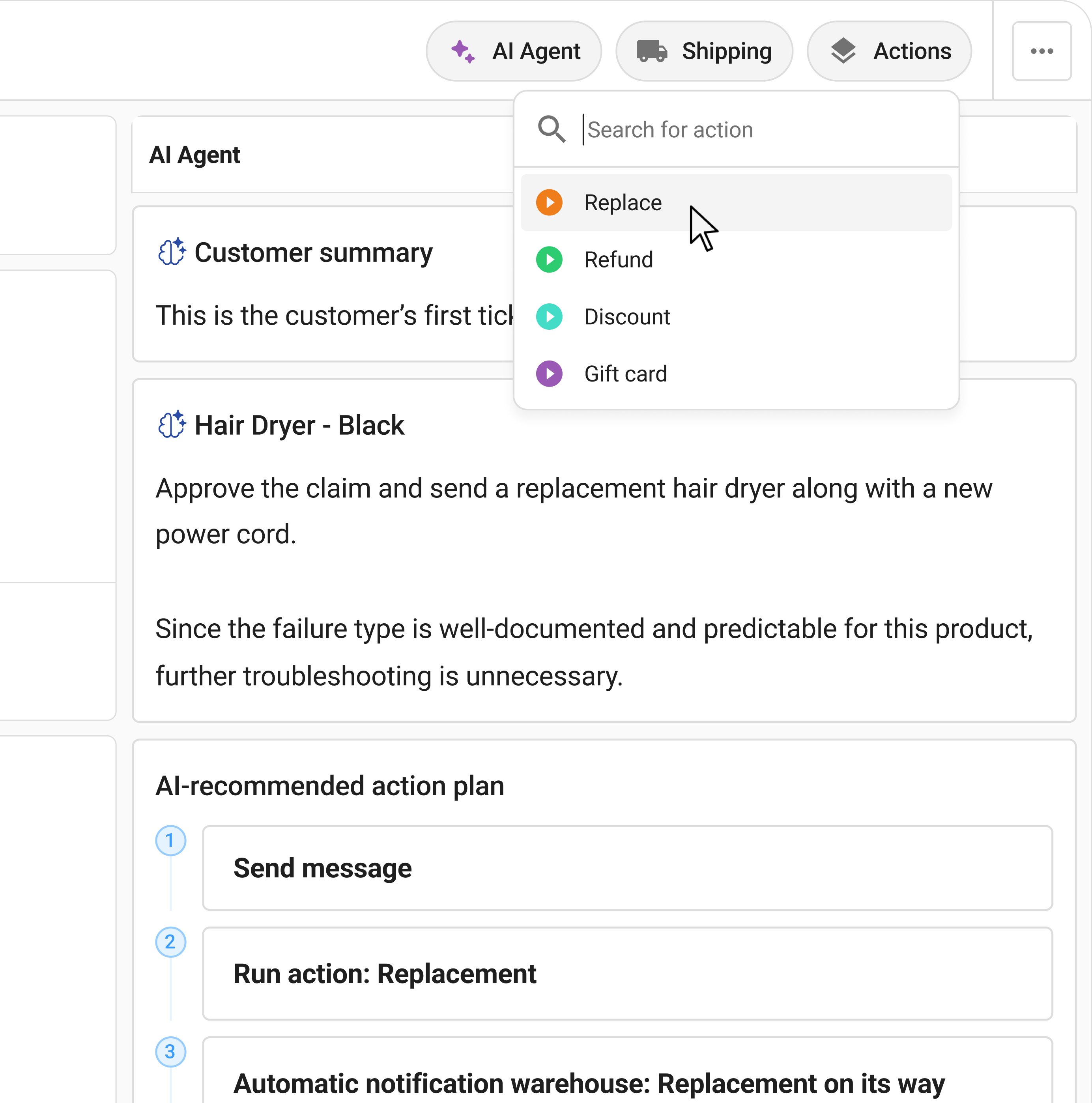
Claimlane's AI Agent, the first AI agent purpose-built for warranty claims and returns, helps prevent SLA breaches by auto-resolving simple claims before they consume agent time. When the AI can classify the defect, verify the warranty, and recommend a resolution, many claims get resolved within hours instead of days.
Claimlane is rated 4.8/5 on G2.
FAQ: Warranty SLA Management
Conclusion
Warranty SLA management turns "we'll get back to you" into a measurable commitment. By setting tiered SLAs, tracking compliance automatically, and escalating at-risk claims, brands deliver consistent service that builds loyalty.
Claimlane provides the workflow automation, AI-powered triage, and analytics that make SLA management practical at scale.
Book a demo to see how Claimlane tracks and meets warranty SLAs.