.webp)
Spare parts management software tracks, organizes, and automates the flow of replacement components used in warranty repairs, product servicing, and customer returns. For brands and retailers handling hundreds or thousands of warranty claims, getting the right part to the right place at the right time is the difference between a resolved case and a frustrated customer.
The market for spare parts software has expanded significantly. CMMS-focused tools, ERP modules, standalone inventory platforms, and warranty-specific solutions all claim to solve spare parts management. This guide cuts through the noise and ranks the best options based on how well they handle the real-world challenges ecommerce and retail brands face: warranty-driven parts tracking, supplier coordination, and integration with existing returns workflows.
- Spare parts management software ranges from CMMS tools built for maintenance teams to warranty platforms built for consumer brands.
- The right choice depends on whether spare parts tracking is part of a warranty and returns workflow or a standalone maintenance operation.
- Key differentiators: integration depth with ecommerce platforms, supplier coordination features, and AI-powered demand forecasting.
- Claimlane is the top pick for brands that need spare parts management tightly connected to warranty claims, repairs, and customer-facing returns workflows.
Comparison Table
All platforms compared at a glance:
| Platform | Best For | Key Strength | Pricing | G2 Rating |
|---|---|---|---|---|
| Claimlane ★ | Warranty-driven spare parts | AI-powered claims + parts in one workflow | Custom | 4.8/5 |
| Fiix (Rockwell) | Industrial maintenance | Deep CMMS + parts inventory | From $45/user/mo | 4.5/5 |
| eMaint (Fluke) | Facility management | Configurable work orders + parts | From $69/user/mo | 4.4/5 |
| Sortly | Small teams | Visual inventory with QR/barcode | From $49/mo | 4.5/5 |
| Netstock | ERP-connected forecasting | Demand planning for spare parts | Custom | 4.5/5 |
| Fracttal | Asset-heavy industries | Mobile-first CMMS + parts | From $40/user/mo | 4.5/5 |
| Fleetio | Fleet management | Vehicle-specific parts tracking | From $5/vehicle/mo | 4.5/5 |
| INFORM | Enterprise supply chain | AI-driven spare parts optimization | Enterprise custom | N/A |
Why Trust This Comparison
Claimlane operates in the warranty and returns management space, working with brands like Davidsen, MaxGaming, and Black Diamond that handle spare parts as a core part of their warranty repair workflows. The platform is rated 4.8/5 on G2 based on verified customer reviews.
%201.png)
Claimlane — Best for Warranty-Driven Spare Parts
Claimlane is a warranty and returns management platform that includes built-in spare parts tracking as part of its claim resolution workflow. Unlike standalone CMMS or inventory tools, Claimlane connects spare parts directly to the warranty claim that triggered the need.
Why people choose Claimlane
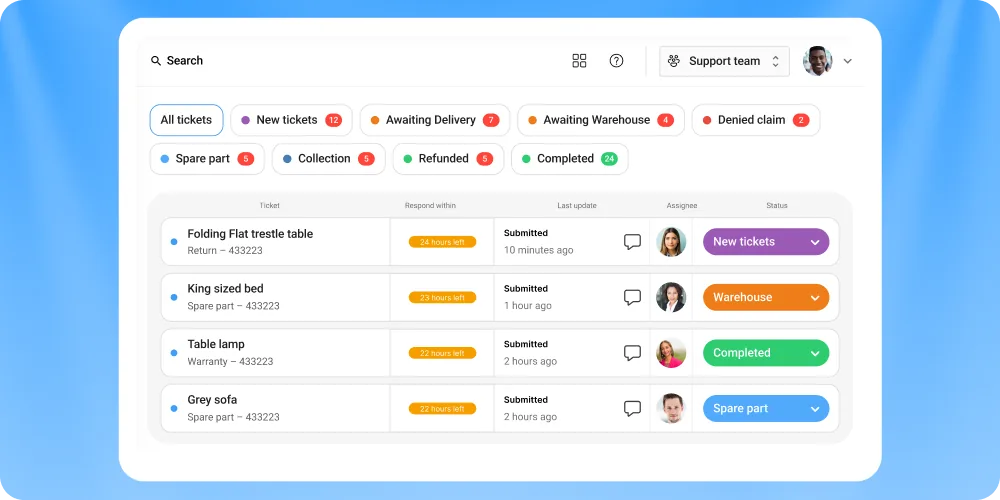
- Spare parts are tracked within the claim workflow, so there is no disconnect between the customer request and the part shipment.
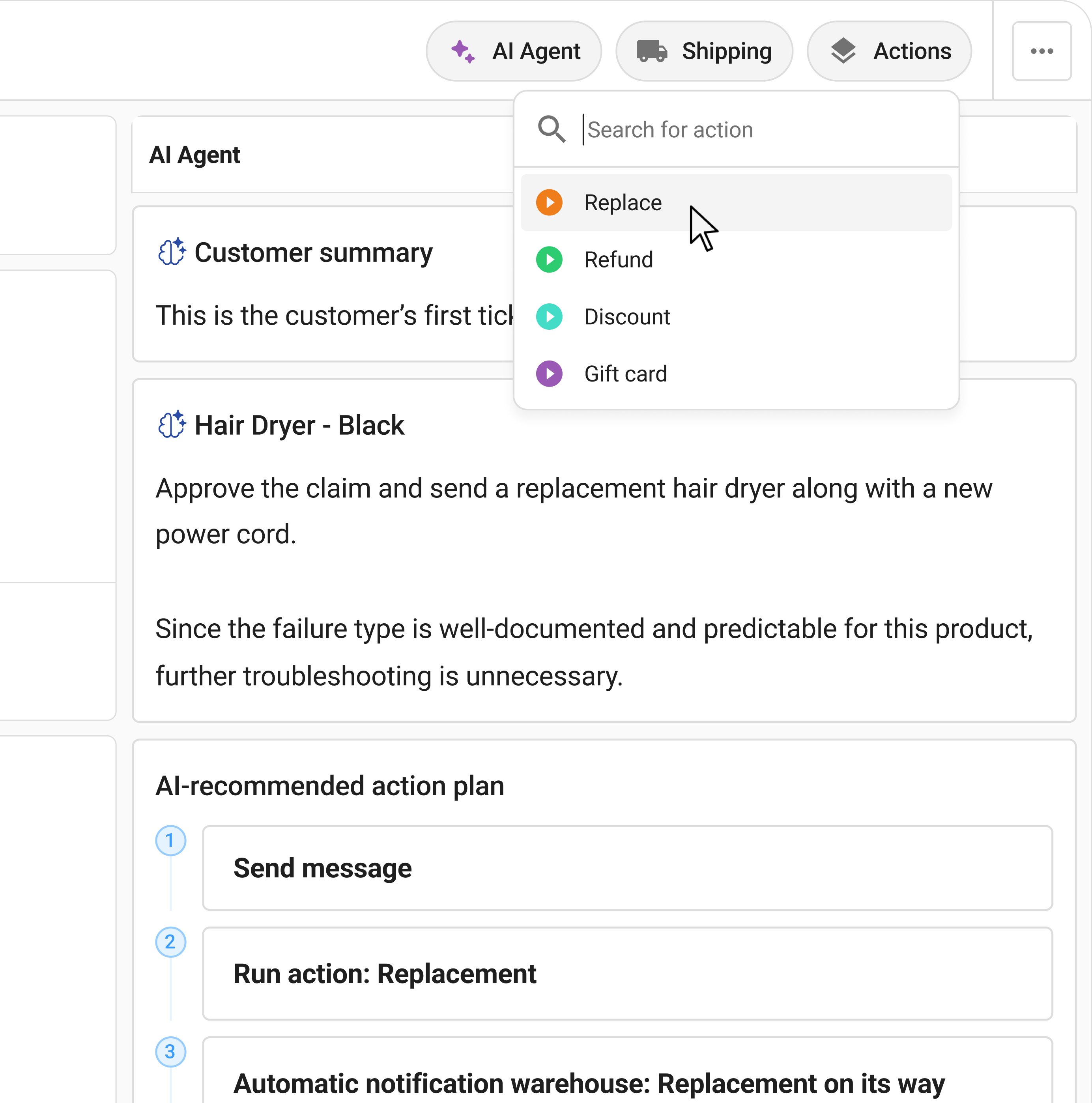
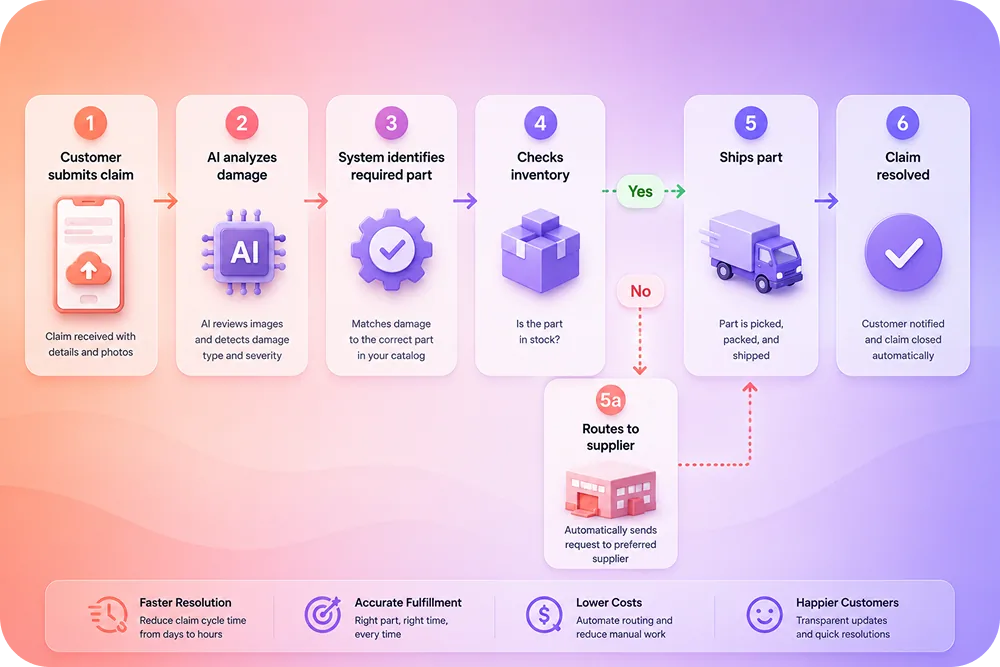
- AI-powered claim analysis determines whether a repair (and which parts) is needed before a technician gets involved.
- Supplier forwarding routes parts requests to the right supplier automatically.
- Analytics reveal which products consume the most spare parts, helping brands negotiate better supplier terms.
- 75+ integrations connect Claimlane to Shopify, WooCommerce, ERP systems, and shipping providers.
Pros and cons
Pros:
- Spare parts, warranty claims, and repairs managed in one system
- AI Agent analyzes photos and recommends repair vs. replace decisions
- Supplier coordination built in (no separate PO workflow needed)
- Self-service portal lets customers track claim and repair status
- Real case study proof: Black Diamond automated warranty and repair workflows
Cons:
- Not designed for industrial maintenance or facility management use cases
- Spare parts module works best when connected to an active warranty claim flow
Core features
- Spare parts tracking per claim: Every spare part request is linked to a specific warranty claim, creating full traceability from customer complaint to part shipment.
- AI-powered diagnostics: Claimlane's AI Agent, the first AI agent purpose-built for warranty claims and returns, analyzes product images to determine if a part replacement is sufficient or if a full product replacement is needed.
- Supplier forwarding: When a claim requires a part from a specific supplier, Claimlane forwards the request automatically with all documentation attached.
- Workflow automation: Custom workflows route spare parts requests based on product type, supplier, geography, and claim history.
- Parts consumption analytics: The analytics dashboard shows which products, SKUs, and suppliers generate the most spare parts requests, enabling data-driven procurement.
Pricing
Claimlane offers custom pricing based on claim volume and feature requirements. A free trial and interactive demo are available. Contact the team via book-demo for a tailored quote.
Product in action
Try Claimlane's interactive demo to see spare parts management within the claim workflow.
Fiix (Rockwell Automation) — Best for Industrial Maintenance
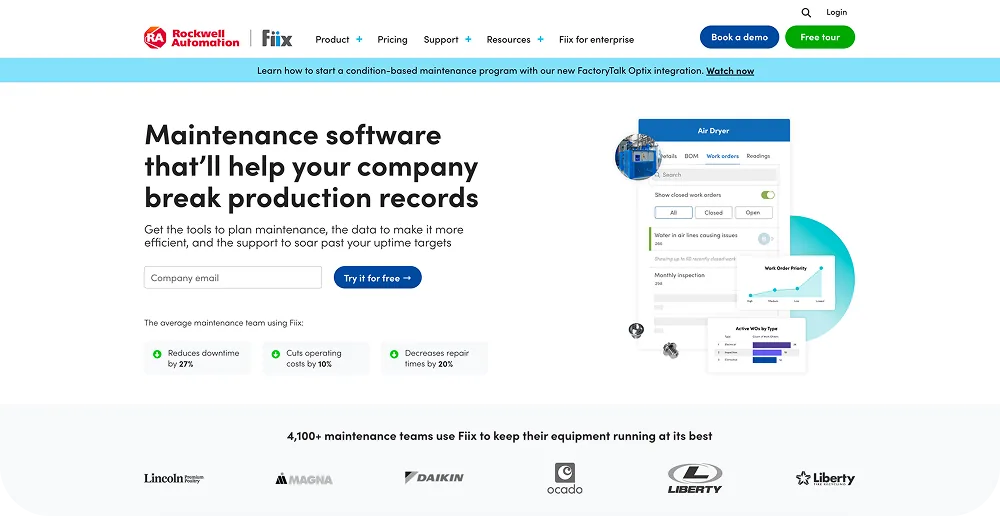
Fiix is a cloud-based CMMS platform owned by Rockwell Automation. Its spare parts module is designed for maintenance teams managing physical assets in manufacturing, facilities, and production environments.
Key features
- Parts inventory with min/max thresholds and auto-reorder points
- Integration with 1,000+ business apps through the Fiix Fuse connector
- Predictive maintenance analytics tied to parts consumption
- Mobile app for technicians to check out parts during work orders
Pros and cons
Pros: Deep maintenance workflow integration, strong asset management, large connector library.
Cons: Designed for industrial maintenance, not consumer warranty claims. No customer-facing portal. No AI-powered claim analysis.
Pricing
Starts at approximately $45/user/month for the Professional plan.
Best for
Manufacturing and facilities teams that need spare parts tracking tied to preventive maintenance schedules and work orders.
eMaint (Fluke Reliability) — Best for Configurable Maintenance
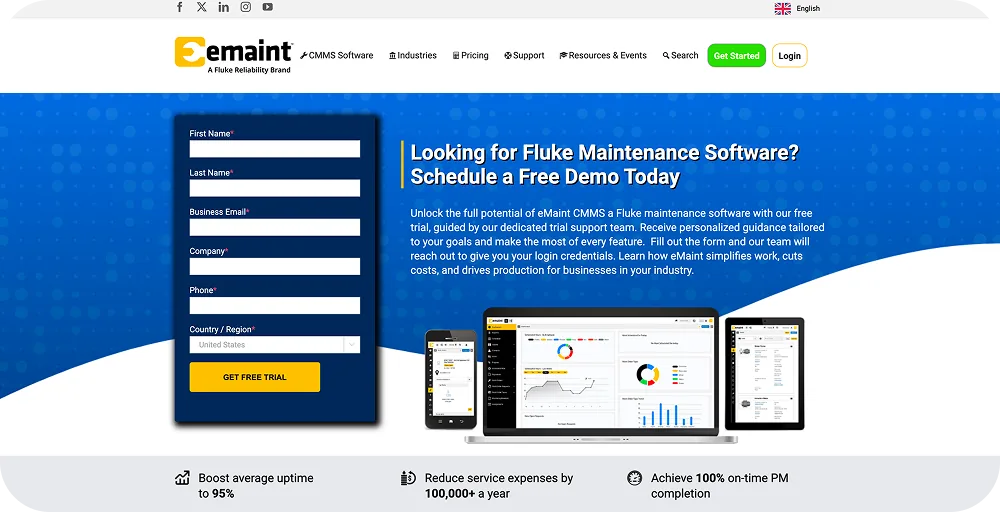
eMaint is a CMMS platform focused on work order management with a parts inventory module. It is popular among facility management teams and multi-site operations.
Key features
- Parts inventory management with barcode scanning
- Configurable work order templates that link to specific parts
- Multi-site inventory tracking with transfer capabilities
- Reporting on parts spend and usage trends
Pros and cons
Pros: Highly configurable, good for complex maintenance environments, strong reporting.
Cons: Steep learning curve, no consumer-facing features, pricing is higher than most CMMS tools.
Pricing
Starts at approximately $69/user/month.
Best for
Facility management teams running multiple sites that need centralized parts tracking across locations.
Sortly — Best for Small Teams
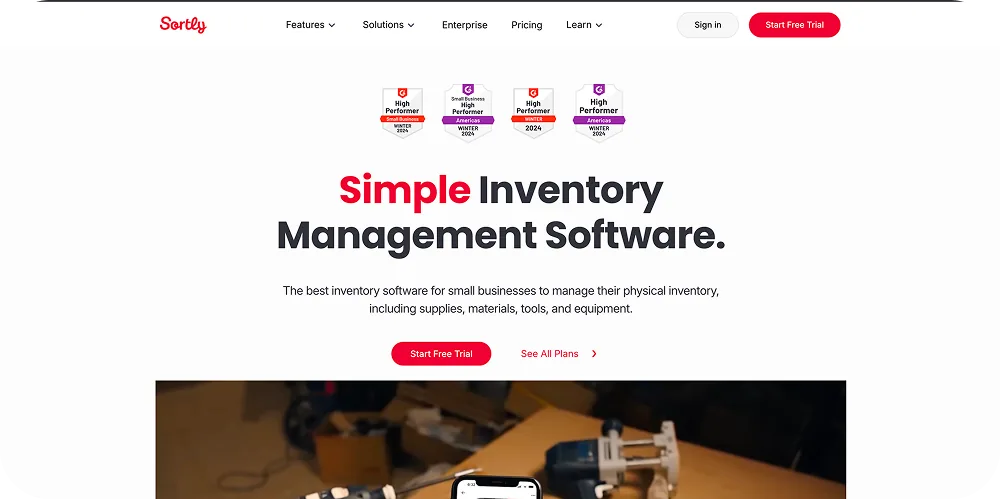
Sortly is a visual inventory management app that uses photos, QR codes, and barcodes to track items. It is not a CMMS or warranty tool but works well for small teams that need simple spare parts tracking.
Key features
- Photo-based inventory with visual browsing
- QR code and barcode generation for each part
- Low-stock alerts and customizable fields
- Mobile-first design with offline access
Pros and cons
Pros: Extremely easy to set up, visual interface is intuitive, affordable for small teams.
Cons: No maintenance workflow, no warranty integration, no supplier coordination. Limited reporting.
Pricing
From $49/month for the Advanced plan.
Best for
Small businesses and teams that need basic parts tracking without complex workflows.

Netstock — Best for ERP-Connected Demand Planning
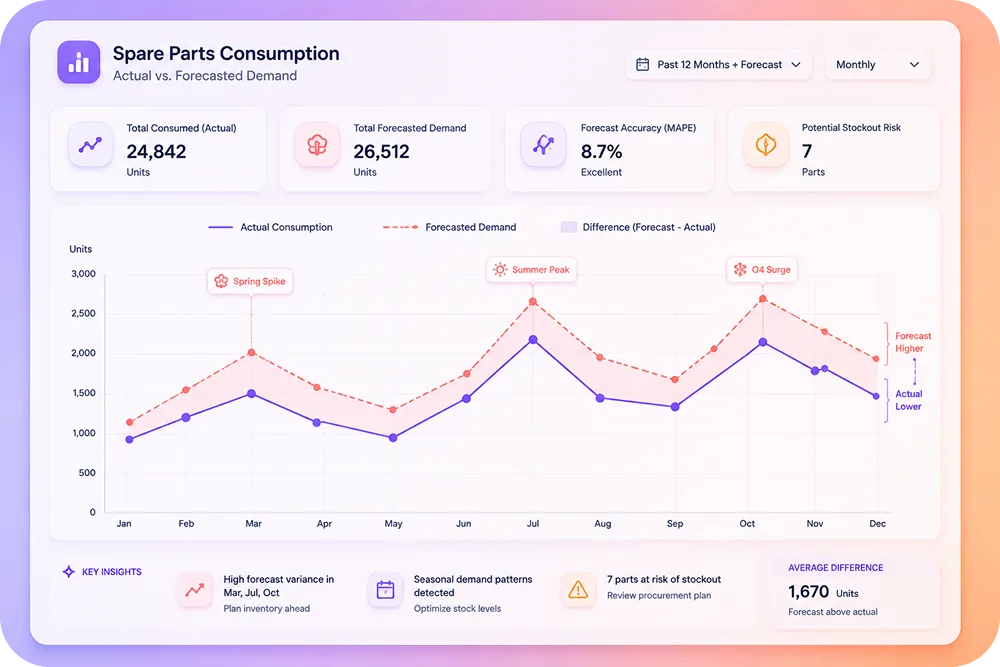
Netstock specializes in inventory optimization and demand planning. Its spare parts module connects to ERP systems to forecast parts demand based on historical consumption and lead times.
Key features
- Demand forecasting specific to spare parts with intermittent demand patterns
- Direct integration with SAP, Microsoft Dynamics, and other ERPs
- Classification tools (ABC/XYZ analysis) for parts prioritization
- Excess and obsolete parts identification
Pros and cons
Pros: Strong demand planning for irregular spare parts consumption, deep ERP integration, data-driven procurement.
Cons: Requires an ERP connection to function. No standalone inventory management. No warranty or claim workflow.
Pricing
Custom pricing based on ERP integration and volume.
Best for
Mid-market and enterprise brands using SAP or Dynamics that need smarter spare parts forecasting.
Fracttal — Best Mobile-First CMMS
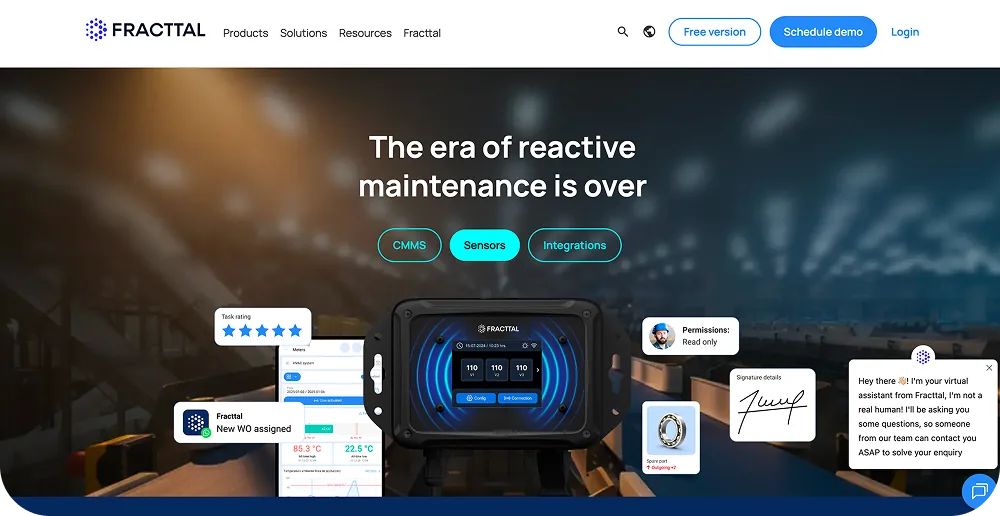
Fracttal is a CMMS platform with strong mobile capabilities and a parts inventory module designed for field teams.
Key features
- Mobile-first interface for field technicians
- Parts inventory with warehouse management
- Preventive and corrective maintenance workflows
- QR code-based asset and parts identification
Pros and cons
Pros: Excellent mobile experience, good for teams in the field, modern interface.
Cons: Parts module is secondary to maintenance workflows. No consumer-facing features.
Pricing
From approximately $40/user/month.
Best for
Field service and maintenance teams that need mobile access to parts inventory during on-site work.
Fleetio — Best for Fleet Parts
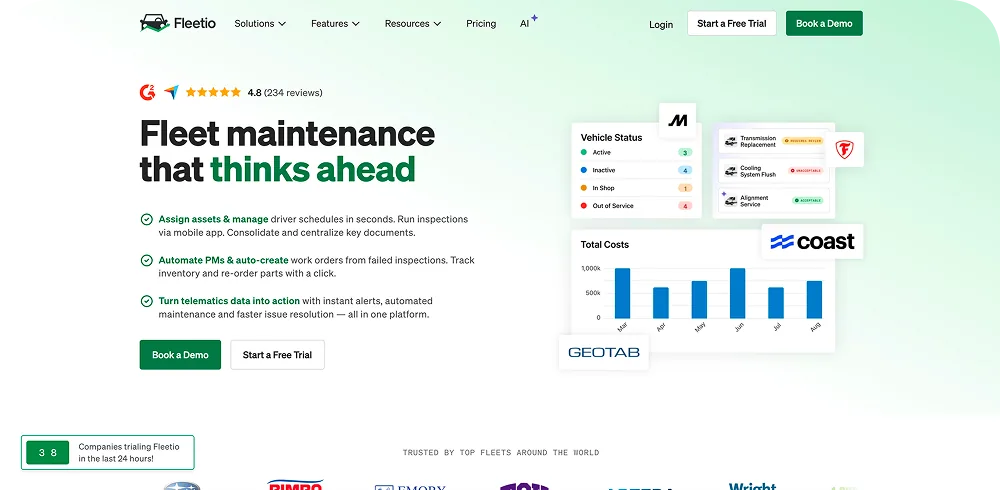
Fleetio is a fleet management platform with built-in parts inventory tracking designed specifically for vehicle maintenance.
Key features
- Parts inventory tied to specific vehicles and equipment
- Automatic parts cost allocation to individual assets
- Vendor management and purchase order tracking
- Integration with fuel cards, GPS, and telematics
Pros and cons
Pros: Purpose-built for fleet management, strong cost tracking per vehicle, good vendor management.
Cons: Only relevant for fleet and vehicle use cases. Not applicable to consumer product warranties.
Pricing
From $5/vehicle/month plus base platform fee.
Best for
Fleet managers tracking vehicle-specific parts consumption and maintenance costs.
INFORM — Best for Enterprise Supply Chain Optimization
INFORM provides AI-driven supply chain optimization software with a spare parts planning module aimed at large enterprises.
Key features
- AI-based demand forecasting for spare parts with highly intermittent usage
- Optimization of safety stock levels across multiple warehouses
- Integration with major ERP systems
- Scenario modeling for parts procurement strategies
Pros and cons
Pros: Sophisticated AI-driven forecasting, handles complex multi-warehouse setups, enterprise-grade.
Cons: Enterprise pricing and implementation timelines. Requires significant data history for accurate forecasting.
Pricing
Enterprise custom pricing only.
Best for
Large enterprises with complex, multi-location spare parts supply chains needing advanced AI-driven optimization.
How to Choose the Right Spare Parts Management Software
The right tool depends on the workflow that generates spare parts demand.
Start with the trigger
If spare parts requests come from warranty claims, choose a platform that connects claims to parts (Claimlane). If they come from preventive maintenance schedules, choose a CMMS (Fiix, eMaint). If they come from ERP-driven demand planning, choose a planning tool (Netstock, INFORM).
Evaluate integration depth
Spare parts software that does not integrate with the order management system, ERP, or ecommerce platform creates data silos. Look for native integrations or robust APIs.
Consider the customer experience
If customers are involved in the spare parts process (e.g., requesting a replacement part under warranty), the software needs a customer-facing portal. Most CMMS tools lack this entirely.
Check supplier coordination
Many spare parts come from external suppliers. The software should support forwarding requests to suppliers with documentation, tracking, and accountability.
Look at analytics
Which parts are consumed most frequently? Which products drive the most spare parts cost? Which suppliers have the longest lead times? Good analytics answer these questions and inform procurement strategy.
What Is Spare Parts Management?
Spare parts management is the process of tracking, stocking, and distributing replacement components used to repair or maintain products. In ecommerce and retail, it typically involves:
- Identifying which parts a product needs based on the type of damage or defect
- Checking parts availability across warehouses and suppliers
- Shipping the correct part to a customer, repair center, or store
- Tracking parts consumption to optimize inventory levels
Effective spare parts management reduces warranty costs by enabling repair-over-replace decisions. A brand that can ship a $15 replacement part instead of a $150 full product replacement saves significantly on every claim.
Spare Parts Management and the Right to Repair
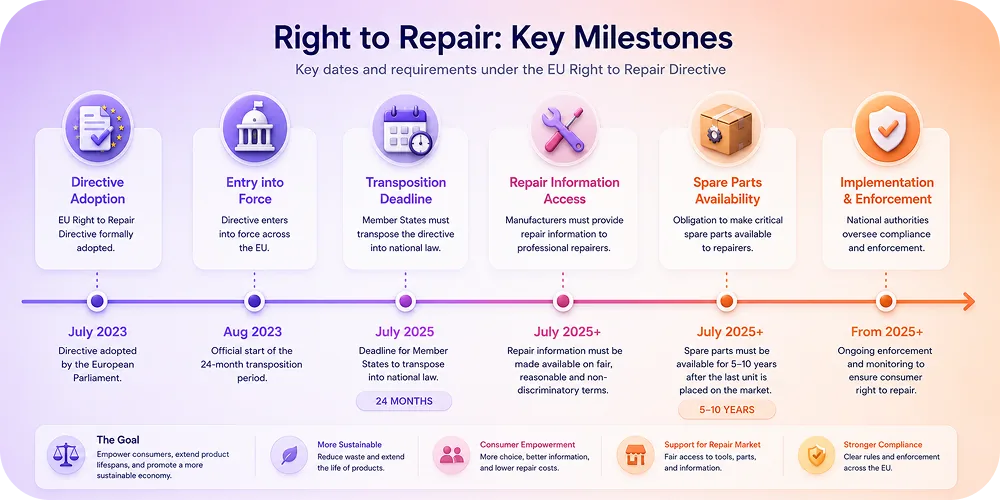
The EU Right to Repair directive is increasing the importance of spare parts management for consumer brands. Under the directive, manufacturers must make spare parts available for a defined period after the product goes off sale.
This means brands need:
- Accurate spare parts inventory tracking across extended timeframes
- Cataloging of parts by product model and compatibility
- Supplier agreements that guarantee parts availability
- Reporting to demonstrate compliance
Brands that already have strong spare parts management software in place will adapt more easily to these requirements. Those using spreadsheets or disconnected tools face a compliance risk.