
.webp)
Quality teams need more than spreadsheets and shared drives to track nonconformance reports and corrective actions. The best quality issue reporting software in 2026 does four things. It automates NCR generation. It enforces CAPA timelines. It connects defect data to supplier scorecards. And it integrates with the platforms operations teams already use.
This guide compares the top tools for nonconformance reporting and CAPA management. They are grouped by use case: enterprise QMS platforms, mid-market tools, and dedicated tools for ecommerce and retail quality teams.
TL;DR
- The best NCR and CAPA tools in 2026 automate the path from defect detection through nonconformance reporting to corrective action tracking.
- Traditional QMS platforms excel in regulated manufacturing but lack ecommerce integration and post-sale defect capture.
- For ecommerce and retail brands, the quality gap is post-sale data: returns and warranty claims contain the richest defect intelligence.
- Claimlane is purpose-built for this gap, capturing structured defect data from returns and warranty claims with AI classification and CAPA tracking.
What to Look For in NCR and CAPA Software
Before the individual tools, these are the capabilities that separate effective quality issue reporting software from digital paperwork:
- Automated NCR creation. The tool should generate nonconformance reports from inspection data, return patterns, or warranty claim thresholds without manual intervention.
- Severity-based routing. Critical defects need different workflows than cosmetic issues. The system should route NCRs to the right people based on defect severity grading.
- CAPA lifecycle management. From root cause analysis through corrective action implementation to effectiveness verification, every step needs tracking and deadlines.
- Supplier communication. The tool should let quality teams forward issues to suppliers with evidence attached, not just internal documentation.
- Analytics and trend detection. Dashboards that surface defect patterns, supplier performance trends, and cost data.
- Integration depth. Connection to ERP, ecommerce platforms, inspection tools, and support systems.
The Top NCR and CAPA Tools for 2026
1. Claimlane
Best for: Ecommerce brands, retailers, and wholesalers managing product quality through returns and warranty claims.
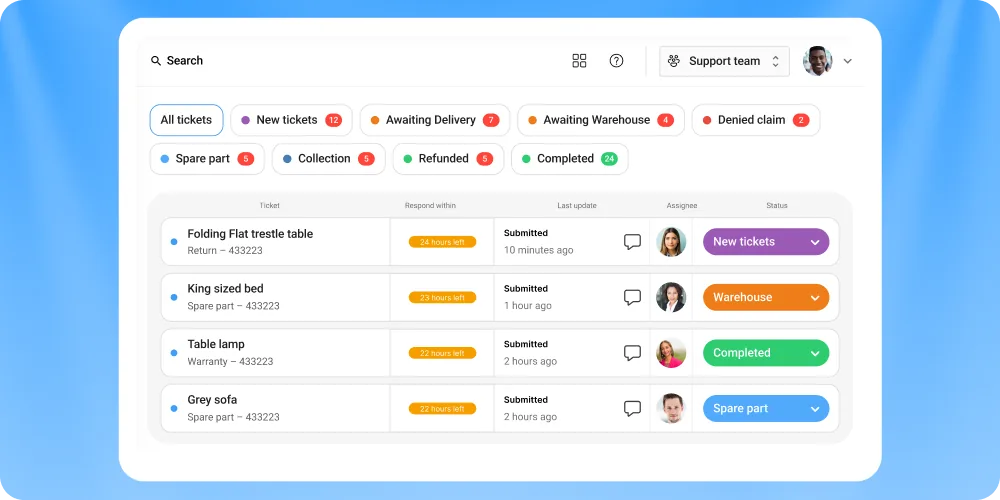
Claimlane is the first platform purpose-built for connecting returns and warranty claim data to supplier quality workflows. While traditional QMS tools focus on manufacturing inspection, Claimlane starts where the customer experience happens: at the point of return or warranty claim.
Key features:
- Self-service portal for structured defect capture with photos, videos, and product details.
- AI Agent that auto-classifies defects from images and recommends resolutions.
- Forward to supplier with full evidence chain, no email threads needed.
- Workflow engine for automated routing, escalation, and CAPA tracking.
- Analytics combining returns, warranty, and supplier data into unified dashboards.
- Integrations with Shopify, WooCommerce, Business Central, Zendesk, and more.
Why it stands out: Most NCR tools need quality teams to enter defect data manually from inspections. Claimlane captures defect data automatically from customer interactions. It then routes it to suppliers with structured evidence and deadlines. For brands where quality issues show up through returns rather than factory inspections, that is a core advantage.
Pricing: Custom pricing based on claim volume.
Rating: 4.8/5 on G2 (read reviews).
2. ETQ Reliance
Best for: Enterprise manufacturers with complex compliance requirements (FDA, ISO, automotive).
ETQ Reliance is a cloud-based enterprise quality management system (eQMS) with strong NCR and CAPA modules. It excels in regulated industries where audit trails and compliance documentation are non-negotiable.
Key features:
- Automated routing and escalation for nonconformance reports.
- Configurable CAPA workflows with root cause analysis templates.
- Compliance-ready audit trails for FDA, ISO 9001, IATF 16949.
- Document control integrated with quality processes.
- Supplier quality management module.
Limitations: Designed for manufacturing environments. Not optimized for ecommerce returns or warranty claim workflows. High entry price point.
Pricing: From $25,000/year.
3. Qualityze
Best for: Mid-to-large organizations on Salesforce wanting an integrated quality management system.
Qualityze runs natively on the Salesforce platform, which means it inherits Salesforce's reporting, dashboards, and user management. Its nonconformance management module handles NCR lifecycle from initiation through CAPA closure.
Key features:
- AI-powered nonconformance detection and routing.
- CAPA management with automated escalation and deadline tracking.
- Built-in root cause analysis tools (5 Whys, Fishbone).
- Supplier corrective action request (SCAR) workflows.
- Native Salesforce integration for companies already on the platform.
Limitations: Requires Salesforce subscription. Overkill for small quality teams. No direct returns/warranty integration.
Pricing: Custom pricing.
4. ComplianceQuest
Best for: Life sciences and regulated manufacturing companies needing end-to-end quality management.
ComplianceQuest is another Salesforce-native QMS platform. It covers the full quality lifecycle: nonconformance, CAPA, audits, supplier quality, document control, and training management.
Key features:
- Centralized nonconformance data management with automated classification.
- CAPA workflows linked to audit findings, customer complaints, and supplier issues.
- Risk-based approach to quality events.
- Mobile-friendly for field and warehouse use.
- Change control integration.
Limitations: Enterprise pricing. Salesforce dependency. Not designed for retail/ecommerce quality workflows.
Pricing: Custom pricing.
5. SafetyCulture (formerly iAuditor)
Best for: Operations teams needing mobile-first inspection and nonconformance capture.
SafetyCulture started as an inspection app and has grown into a broader workplace operations platform. Its strength is mobile inspection workflows that generate NCR data from field observations.
Key features:
- Mobile inspection checklists with photo and annotation capture.
- Automated issue creation from inspection findings.
- Basic CAPA tracking with assignment and follow-up.
- Template library for common inspection types.
- Analytics dashboards for inspection trends.
Limitations: CAPA management is less sophisticated than dedicated QMS tools. Limited supplier communication features. Better for internal quality than supply chain quality.
Pricing: Free plan available. Premium from $24/user/month.
6. QT9 QMS
Best for: Small to mid-sized manufacturers wanting an affordable, all-in-one QMS.
QT9 offers a modular QMS. It covers NCR, CAPA, document control, audit management, and supplier quality. The price point is lower than enterprise platforms.
Key features:
- NCR management with severity classification and automated routing.
- CAPA module with root cause analysis documentation.
- Integrated supplier quality management.
- Customizable reporting and dashboards.
- Cloud-based with mobile access.
Limitations: Less flexible than enterprise platforms for complex workflows. Limited ecommerce integration.
Pricing: From $4,000/year.
7. Q-Pulse (Ideagen)
Best for: Highly regulated industries (healthcare, aerospace, food safety) requiring rigorous compliance.
Q-Pulse is a well-established quality management platform focused on compliance-heavy industries. It provides strong audit, document control, and nonconformance modules.
Key features:
- Nonconformance and CAPA management with configurable workflows.
- Audit management with scheduling and findings tracking.
- Risk management module.
- Document control with version tracking.
- Regulatory compliance frameworks built in.
Limitations: Traditional interface. Not designed for product returns or warranty workflows. Higher learning curve.
Pricing: Custom pricing.
8. SolvoNext NCR CAPA
Best for: Manufacturing quality teams wanting a focused NCR and CAPA tool without the full QMS overhead.
SolvoNext is a specialized tool for nonconformance reporting and corrective action management. It focuses narrowly on doing NCR and CAPA well rather than trying to be a complete quality management system.
Key features:
- Dedicated NCR lifecycle management.
- CAPA tracking with root cause analysis.
- Statistical reporting and trend analysis.
- Configurable notification and escalation rules.
- Focused feature set without QMS bloat.
Limitations: Narrower feature set means it may need to be paired with other tools for audit management, document control, or supplier quality. Limited integration options.
Pricing: Contact vendor.
Comparison Table
How to Choose the Right Tool
For Ecommerce and Retail Brands
If product quality issues surface primarily through customer returns and warranty claims rather than factory inspections, traditional QMS tools leave a gap. Quality teams need a platform that:
- Captures defect data at the point of customer contact.
- Routes structured evidence to suppliers automatically.
- Connects post-sale quality data to supplier scorecards.
- Integrates with ecommerce platforms (Shopify, WooCommerce) and support tools (Zendesk).
Claimlane is built for this exact workflow. It connects the customer experience to supplier quality improvement through structured data and automated workflows.
For Regulated Manufacturers
If compliance documentation, audit trails, and regulatory submissions are primary concerns, enterprise QMS platforms like ETQ Reliance, ComplianceQuest, or Q-Pulse provide the depth needed. These tools are designed around manufacturing quality processes and regulatory frameworks.
For Small and Mid-Sized Operations
Teams that need solid NCR and CAPA management without enterprise pricing should look at QT9 QMS or SafetyCulture. Both offer practical quality management features at accessible price points.
For Salesforce-Centric Organizations
If the team already runs on Salesforce, Qualityze or ComplianceQuest offer the advantage of native integration with existing CRM data, user management, and reporting.
The Gap Most Tools Miss: Post-Sale Quality Data
The biggest gap in traditional quality issue reporting software is simple. There is a disconnect between what happens after a product is sold and the quality data that reaches the supplier.
Most NCR tools are designed around manufacturing inspection workflows. An inspector finds a defect, logs it, and the NCR process begins. But for brands selling through ecommerce and retail channels, the majority of quality issues surface through:
- Customer returns where the return reason code indicates a defect.
- Warranty claims where the product failed during normal use.
- Customer support tickets describing product quality problems.
None of these channels feed into traditional NCR tools by default. The returns team processes the refund. The warranty team handles the claim. The quality team never sees the data.
Claimlane bridges this gap. It treats every return and warranty claim as a potential quality data point. It then routes that data through structured workflows that connect to supplier corrective actions.
Managing warranty claims and repairs across such a wide range of products used to be messy. Claimlane gives us a setup that keeps everything organized and easy to handle. It helps us respond faster and deliver the level of service our customers expect from us.
Tess Jordan, Senior Manager of Customer Experience — Black Diamond
Key Features in Detail
Automated NCR Generation
The most valuable feature of quality issue reporting software is automating the path from defect observation to formal nonconformance report. Manual NCR creation introduces delays and inconsistency. Automated triggers ensure no pattern goes unnoticed.
Examples of automated triggers:
- 3+ returns with the same defect code on the same SKU within 30 days.
- Warranty claim cost exceeding a threshold for a specific product batch.
- Inspection finding at severity S1 or S2.
- Customer complaint mentioning a safety concern.
Root Cause Analysis Integration
Effective CAPA management requires structured root cause investigation. The best tools provide built-in templates for:
- 5 Whys analysis for straightforward defect chains.
- Fishbone (Ishikawa) diagrams for multi-factor quality issues.
- Fault Tree Analysis for complex product failures.
The root cause findings should link directly to the corrective action plan. That documents the connection between 'what we found' and 'what we are doing about it."
Supplier Scorecard Integration
Every NCR outcome and CAPA result should flow into supplier scorecards automatically. Quality teams should not need to manually update spreadsheet scorecards after closing a CAPA. The quality issue reporting software should update supplier quality scores in real time.
Warranty Claim Defect Analysis
For ecommerce and retail brands, warranty claim defect analysis is often the richest source of quality intelligence. Warranty claims capture defects that:
- Passed incoming inspection.
- Survived initial customer use.
- Manifested after weeks or months of normal use.
These defects point at material quality, design flaws, or manufacturing process issues. Inspection alone cannot catch them. Tools like Claimlane make warranty claim defect analysis part of the standard quality workflow."
AI in NCR and CAPA Tools
AI is reshaping quality issue reporting software in three key areas:
Defect Classification
AI models analyze customer-submitted photos and descriptions to auto-classify defects. This eliminates the manual triage bottleneck where quality agents review every claim to determine the defect type and severity.
Claimlane's AI Agent is purpose-built for this: it analyzes images and videos from returns and warranty claims, applies product-specific warranty rules, and recommends resolutions.
Predictive Quality Analytics
Machine learning models can spot which products and suppliers are trending toward quality problems before defect volumes spike. Predictive warranty analytics gives sourcing teams a lead-time advantage for early intervention.
Automated Resolution
For straightforward defects with clear resolution paths, AI can auto-approve resolutions without human review. This speeds up customer response times while still capturing the defect data needed for quality analysis.
It has never been easier to handle claims. We save both time and money by not having to call back faulty products from our retailers, which is also better for the environment. Now, we can judge a claim just from a picture.
Victoria Klitvad, Sales Support — Mads Nørgaard
Implementation Tips
Start With the Problem, Not the Tool
Before selecting quality issue reporting software, document the current workflow:
- Where do quality issues get reported today? (Email, spreadsheets, support tickets, informal conversations.)
- How long does it take from defect discovery to supplier notification?
- What percentage of quality issues result in formal corrective actions?
- How is CAPA effectiveness measured?
The answers reveal which tool capabilities matter most for the team.
Plan for Integration
Quality data lives across multiple systems. ERP holds inventory and cost data. Ecommerce platforms hold order data. Support tools hold customer interactions. Inspection apps hold warehouse data. The chosen tool needs to connect to at least the highest-priority sources.
Claimlane's integrations cover ecommerce platforms, ERP systems, and support tools out of the box. Enterprise QMS tools typically offer API access for custom integrations.
Pilot Before Full Rollout
Start with one product line, one supplier, or one quality process. Validate the workflow, measure the improvement in NCR response time and CAPA closure rates, then expand.
How Returns Data Reshapes Quality Reporting
Traditional NCR tools capture defects at the point of manufacture or inspection. But for consumer products, the most valuable quality data comes from the point of failure: when the customer returns the product or files a warranty claim.
Returns analytics connect return reason codes, defect photos, and product batch data to supplier quality workflows. That creates a feedback loop. The loop catches quality problems earlier and resolves them faster.
Brands managing cross-border returns face extra complexity. Different regulations, longer logistics chains, more chances for quality data to get lost. A platform that captures structured defect data at the point of return, no matter the geography, gives the quality team complete information.