.webp)
Supplier recovery is the difference between a warranty program that is annoying and one that is financially controlled.
When a product is defective, the brand or retailer usually pays the customer first. The business then tries to recover costs from the supplier through a credit note, replacement unit, reimbursement, or deduction.
That second step is where money gets lost.
Credit notes arrive late, partially, or not at all. Teams give up. The supplier learns that delays have no consequence.
This guide breaks down the most reliable ways to get supplier credit notes faster, without turning the process into a weekly firefight.
What Supplier Recovery Actually Includes
Supplier recovery is any mechanism that returns value to the business after a defect resolution.
Common recovery types:
- Credit note for the product cost
- Replacement unit shipped free of charge
- Refund or reimbursement
- Deduction in an invoice or statement
- No-claim agreement (fixed discount instead of per-claim recovery)
The method matters less than the cycle time and consistency.
Why Credit Notes Take So Long
Most supplier recovery delays come from predictable causes.
1) Incomplete documentation
Suppliers delay when they can.
Missing photos, missing serial numbers, missing fault descriptions, and missing proof of purchase all create “please resend” loops.
2) Different supplier rules
Every supplier has its own requirements.
One wants a serial number photo. Another wants a specific defect code. Another wants warehouse inspection notes.
3) No SLA or enforcement
If there is no agreed response window, the supplier’s queue becomes your backlog.
4) Claims split across tools
The claim conversation lives in one place.
The evidence lives in email.
The finance tracking lives in spreadsheets.
The supplier sees chaos and acts accordingly.
The Fast Recovery Playbook
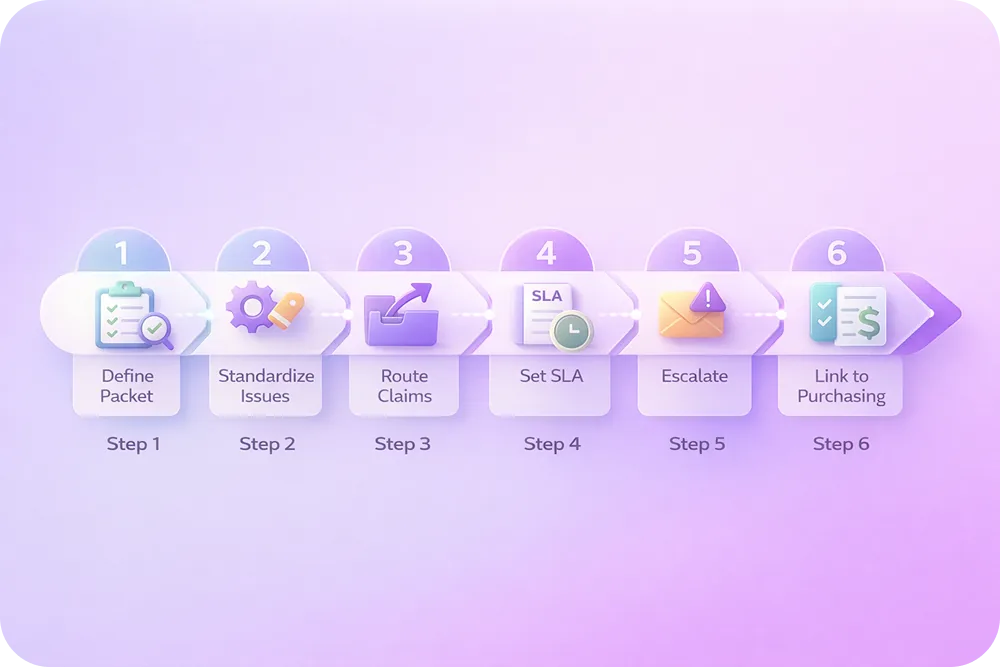
Step 1: Define a standard “claim packet”
A supplier should receive one complete package, every time.
A good packet includes:
- Order number and purchase date
- SKU and variant
- Serial number (when applicable)
- Clear defect category
- Photos and video
- Resolution chosen (refund, replacement, repair, spare parts)
- Cost breakdown (product cost, shipping, labor, parts) when the supplier is responsible
If a claim packet is not complete, it should not be sent.
Step 2: Standardize defect categories
Free-text defect descriptions slow down triage.
A controlled defect taxonomy speeds recovery and improves trend reporting.
Examples:
- Cosmetic damage
- Functional failure
- Missing parts
- Shipping damage
- Manufacturing defect
- Customer misuse (for rejection reasons)
Step 3: Route by supplier automatically
Manual forwarding is slow and inconsistent.
Supplier routing should be driven by SKU or supplier mapping.
Claimlane supports this through Forward to Supplier and workflow rules.
Step 4: Set an SLA that matches the business
A basic SLA structure:
- Acknowledgement: within 1 business day
- Decision: within 5 business days
- Credit note issued: within 10 business days
If a supplier cannot meet this, the contract pricing should reflect it.
Step 5: Escalate based on value and age
Not every claim deserves a phone call.
Escalation rules prevent wasted effort:
- High value claims escalate faster
- Claims older than [X] days go to a separate queue
- Repeat issues trigger supplier review
Step 6: Link recovery to future purchasing
Suppliers move faster when it affects revenue.
Recovery performance should feed into:
- Supplier scorecards
- Reorder decisions
- Discount negotiations
- No-claim agreement decisions
The “One Source of Truth” Requirement

Supplier recovery fails when teams cannot answer:
- Which claims are pending supplier action?
- Which were approved?
- Which were rejected, and why?
- What is the recovery rate by supplier?
- What is the average time to credit note?
A recovery dashboard needs at least:
- Open supplier claims
- Days since forwarded
- Expected recovery amount
- Recovered amount
- Reason for rejection
This is why after-sales workflows and analytics matter.
Claimlane’s analytics is designed to tie claims and suppliers together.
Vendor Reports: Automatically create vendor reports and get reimbursed more
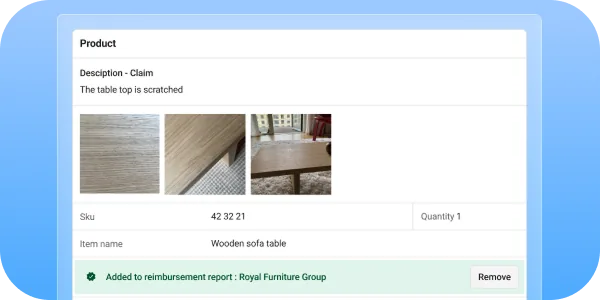
Getting reimbursements from vendors can take a lot of time.
Cases are handled one by one, spreadsheets are built manually, and reimbursements are often forgotten.
With our new Vendor Reports feature, you don’t have to deal with that anymore.
How it works:
- Mark tickets as “include in vendor report” while handling them, so nothing gets forgotten.
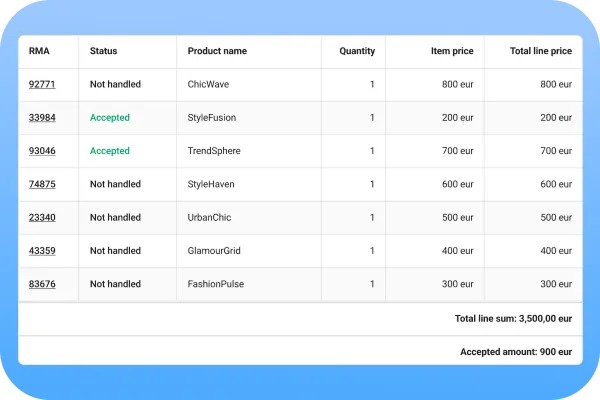
- Claimlane groups those tickets into one report per vendor instead of hundreds of separate cases.
- Each report includes case details, photos, notes, and totals so vendors can review everything quickly.
- Share the report through one simple link
The result is a report, where your vendors can easily process everything at once👇
Vendor Chargebacks vs Credit Notes
Some businesses use chargebacks or deductions instead of waiting for credit notes.
When credit notes work
- Long-term supplier relationships
- Clear guidelines
- High trust
When deductions work
- Repeated delays
- High claim volume
- Clear contractual terms
A good policy is to start cooperative and switch to deductions when SLA performance fails.
Templates
Supplier forwarding message (short)
Attached is a complete claim packet for review.
Please confirm receipt within 1 business day and provide a decision within 5 business days.
If approved, please issue a credit note for [amount] and reference case ID [ID].
Rejection clarification request
Please share the specific guideline that caused the rejection and what evidence would be required to reconsider.
Common Mistakes
- Forwarding claims before evidence is complete
- Letting agents pick defect categories freely
- No deadline language
- No tracking of recovery rate by supplier
- Treating supplier recovery as “finance’s problem” instead of an operational workflow