.webp)
An implied warranty is a legal guarantee that a product will work as reasonably expected, even when the seller doesn't make an explicit promise. Unlike an express warranty that a brand writes and publishes, an implied warranty exists by default under consumer protection law. Every ecommerce brand selling physical products is subject to implied warranty obligations, whether they know it or not.
This guide explains what implied warranties are, how they differ from express warranties, and what ecommerce brands must do to handle implied warranty claims correctly.
- • Implied warranties are automatic legal guarantees on product sales.
- • Two types: merchantability (works as expected) and fitness for purpose.
- • Cannot be disclaimed in most consumer transactions.
- • Claimlane automates implied warranty claim assessment with AI.
What Does Warranty Mean?
A warranty is a promise, either express or implied, that a product will meet certain standards of quality and performance. In ecommerce:
- Express warranty: A written or stated promise by the brand. Example: "This jacket is waterproof" or "2-year warranty against manufacturing defects."
- Implied warranty: An automatic legal guarantee that exists regardless of what the brand says or writes. The product must be fit for its ordinary purpose.
The distinction matters because brands control express warranties (they write the terms), but they don't control implied warranties (the law defines them).
What Is an Implied Warranty?
An implied warranty is a legal obligation that arises automatically from the sale of goods. The seller doesn't need to say or write anything for implied warranties to apply. They exist because consumer protection law assumes that products should work.
There are two primary types:
Implied Warranty of Merchantability
This warranty guarantees that a product is fit for its ordinary purpose. A pair of shoes should be wearable. A blender should blend. A phone case should protect a phone. The product doesn't need to be perfect or top-quality, but it must function as a reasonable buyer would expect.
The warranty of merchantability is the most common basis for consumer claims. If a product breaks during normal use within a reasonable time period, the implied warranty of merchantability has likely been breached.
Implied Warranty of Fitness for a Particular Purpose
This warranty applies when a buyer relies on the seller's expertise to select a product for a specific use. If a customer tells an outdoor gear retailer they need a tent for winter camping in Scandinavia, and the retailer recommends a specific tent, there's an implied warranty that the tent is fit for that specific purpose.
This warranty is less common in ecommerce because online shoppers typically select products themselves. But it can apply when brands offer product recommendations, guided selling, or customer service that steers purchases.
Implied Warranty vs Express Warranty
| Characteristic | Implied Warranty | Express Warranty |
|---|---|---|
| Source | Law (automatic) | Brand (written/stated) |
| Requires written terms | No | Yes (or verbal promise) |
| Can be disclaimed | Limited (varies by jurisdiction) | Yes (with proper notice) |
| Duration | "Reasonable" (varies, often 2–6 years) | As specified (e.g., 1 year, 2 years) |
| Coverage | Basic functionality and safety | As specified in warranty terms |
| Brand control | None | Full |
How Implied Warranties Apply to Ecommerce

EU Consumer Rights
In the European Union, the Consumer Sales Directive provides a minimum 2-year legal guarantee on all consumer goods. This is an implied warranty by another name. If a product fails within 2 years and the defect existed at the time of delivery, the seller must repair, replace, reduce the price, or provide a refund.
During the first year (extended to 2 years in some member states), the burden of proof is on the seller: the defect is presumed to have existed at delivery unless the seller can prove otherwise. After the first year, the buyer must prove the defect was present at delivery.
For ecommerce brands selling in the EU, this means:
- Every product carries a 2-year legal guarantee, regardless of any express warranty offered.
- Returns and claims within this period must be evaluated against implied warranty standards.
- "No warranty" or "all sales final" policies are not enforceable for consumer transactions.
US Consumer Rights (UCC)
In the United States, the Uniform Commercial Code (UCC) establishes implied warranties for commercial transactions. The Magnuson-Moss Warranty Act adds federal requirements for consumer products.
Key points:
- Implied warranty of merchantability applies to all sales by merchants.
- Some states allow limited disclaimers of implied warranties. Others (like Massachusetts, Connecticut, Mississippi) prohibit them entirely.
- If a brand offers an express warranty, the Magnuson-Moss Act prohibits disclaiming implied warranties.
- Duration of implied warranties varies by state, typically 1-4 years.
Nordic Consumer Protection
Scandinavian countries typically provide stronger consumer protections than the EU minimum. In Denmark (Købeloven), the complaint period is 2 years for new goods, and defects appearing within 6 months are presumed to have existed at delivery.
Brands like Swoon selling across Nordic markets need warranty management systems that account for these jurisdiction-specific rules.
Claimlane helps us capture every customer issue, resolve it for the customer, and feed that back to the supply chain to drive continuous improvement.
Henry Currer · Head of Operations, Swoon Furniture
Common Implied Warranty Scenarios in Ecommerce
Scenario 1: Product Fails Within Weeks
A customer buys a blender that stops working after 3 weeks of normal use. The implied warranty of merchantability is clearly breached: a blender should work for more than 3 weeks. The brand must repair or replace it, regardless of any express warranty terms.
Scenario 2: Product Wears Out Prematurely
A customer buys leather boots that fall apart after 4 months of normal wear. Leather boots are reasonably expected to last longer. This likely breaches the implied warranty, but the analysis depends on price point, quality tier, and usage patterns. This is where consistent assessment rules matter.
Scenario 3: Product Doesn't Match Description
A customer buys a "waterproof" jacket that leaks in rain. This breaches both the express warranty (the "waterproof" claim) and the implied warranty (the product doesn't match the description that influenced the purchase). These claims are typically straightforward to approve.
Scenario 4: Cosmetic Defect
A customer receives furniture with a visible scratch. The product works (it's still a functional chair), but it has a cosmetic defect. Implied warranty of merchantability requires that goods pass without objection in the trade. A scratched piece of furniture may or may not breach this standard, depending on severity.
Managing Implied Warranty Claims at Scale

Implied warranty claims are harder to manage than express warranty claims because the rules are less defined. Express warranties have specific terms. Implied warranties require judgment about what is "reasonable."
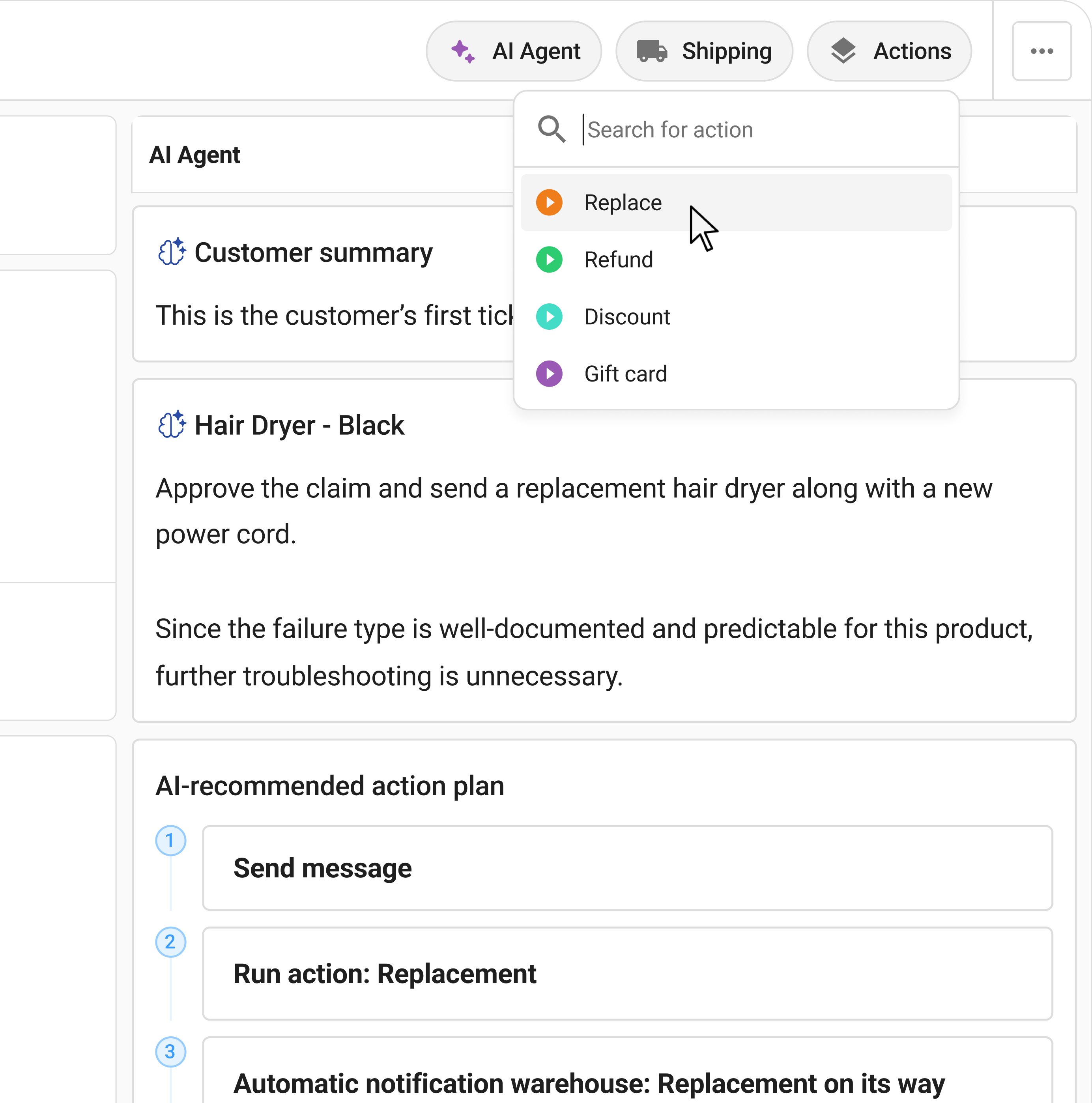
This is exactly where automation helps. Claimlane lets brands configure warranty rules per product category that encode reasonable expectations:
- A blender should last at least X years under normal use.
- Leather products showing defects within Y months are presumed defective.
- Cookware with surface damage within Z months qualifies for replacement.
The AI evaluates claim evidence against these rules and processes routine claims automatically. Borderline cases route to human agents with the AI's assessment and a recommended resolution.
Structured Evidence Collection
Claimlane's self-service portal collects the specific evidence needed for implied warranty assessment:
- Photos of the defect from multiple angles
- Purchase date (to verify the claim falls within a reasonable warranty period)
- Usage description (to assess whether the product was used as intended)
- Product identification (to apply category-specific rules)
Consistent Decision-Making
The biggest risk with implied warranty claims is inconsistency. Without automated rules, one agent approves a claim that another rejects. This creates legal risk and customer frustration. Claimlane's workflow rules ensure every claim is evaluated against the same criteria.
Supplier Accountability
When a product defect falls under the supplier's warranty obligations, Claimlane automatically compiles the claim evidence and forwards it to the supplier. This is especially important for implied warranty claims, where the retailer bears the customer-facing obligation but the supplier bears the manufacturing responsibility.
Best Practices for Ecommerce Implied Warranty Compliance
- Don't try to disclaim implied warranties. In most consumer jurisdictions, disclaimers are unenforceable. Attempting them creates legal risk without providing protection.
- Offer express warranties that exceed implied minimums. An express warranty of 2+ years in the EU signals confidence and provides clearer terms for claim assessment.
- Document warranty rules per product category. Define what "reasonable" means for each product type and configure those rules in your claims management system.
- Use AI for consistent assessment. Implied warranty claims require judgment. AI provides consistent judgment at scale.
- Track claim patterns. Analytics that show which products generate implied warranty claims help identify quality issues before they become expensive.
- Register warranties proactively. Warranty registration at point of sale creates a record that simplifies future claim processing.