.webp)
When a customer's product breaks under warranty, the repair process determines whether that customer stays loyal or leaves a one-star review. Yet most brands still manage repairs through a patchwork of email threads, spreadsheets, and disconnected systems that lose track of parts, technician assignments, and customer updates.
Repair management software brings structure to the chaos. It tracks every repair from initial claim through diagnosis, parts sourcing, technician assignment, completion, and customer notification. The best platforms in 2026 also connect repairs to warranty claims data, supplier recovery, and product quality analytics.
This guide compares the best repair management software options for ecommerce and retail brands, with honest breakdowns of features, pricing, and where each platform falls short.
- Repair management software replaces scattered email chains with structured workflows that track every step from claim intake to completed repair.
- The biggest gap in most tools: they handle repairs in isolation without connecting to warranty claims, spare parts, or supplier quality data.
- AI-powered repair triage now classifies defect types from photos, recommends repair vs. replace decisions, and routes cases to the right technician automatically.
- Claimlane tops this list because it connects warranty claims, repairs, spare parts, and supplier recovery in one platform with purpose-built AI.
Repair Management Software Comparison
Why Trust This Guide
This guide comes from the team behind Claimlane, a warranty and returns management platform trusted by brands like Black Diamond (climbing gear repairs), Swoon Furniture (furniture repairs), and Davidsen (DIY hardware warranty service).
Claimlane holds a 4.8/5 rating on G2 with reviews highlighting its repair workflow capabilities and the speed of implementation.
Claimlane: The #1 Repair Management Platform
Claimlane stands apart because it treats repairs as part of the complete post-purchase lifecycle, not as isolated work orders. A warranty claim that requires a repair flows naturally through diagnosis, parts sourcing, repair execution, and customer notification without switching systems.
Why People Choose Claimlane for Repairs
- Repairs connected to warranty claims. The repair workflow starts from a warranty claim, not a standalone ticket. All customer evidence (photos, videos, serial numbers) carries through to the repair stage.
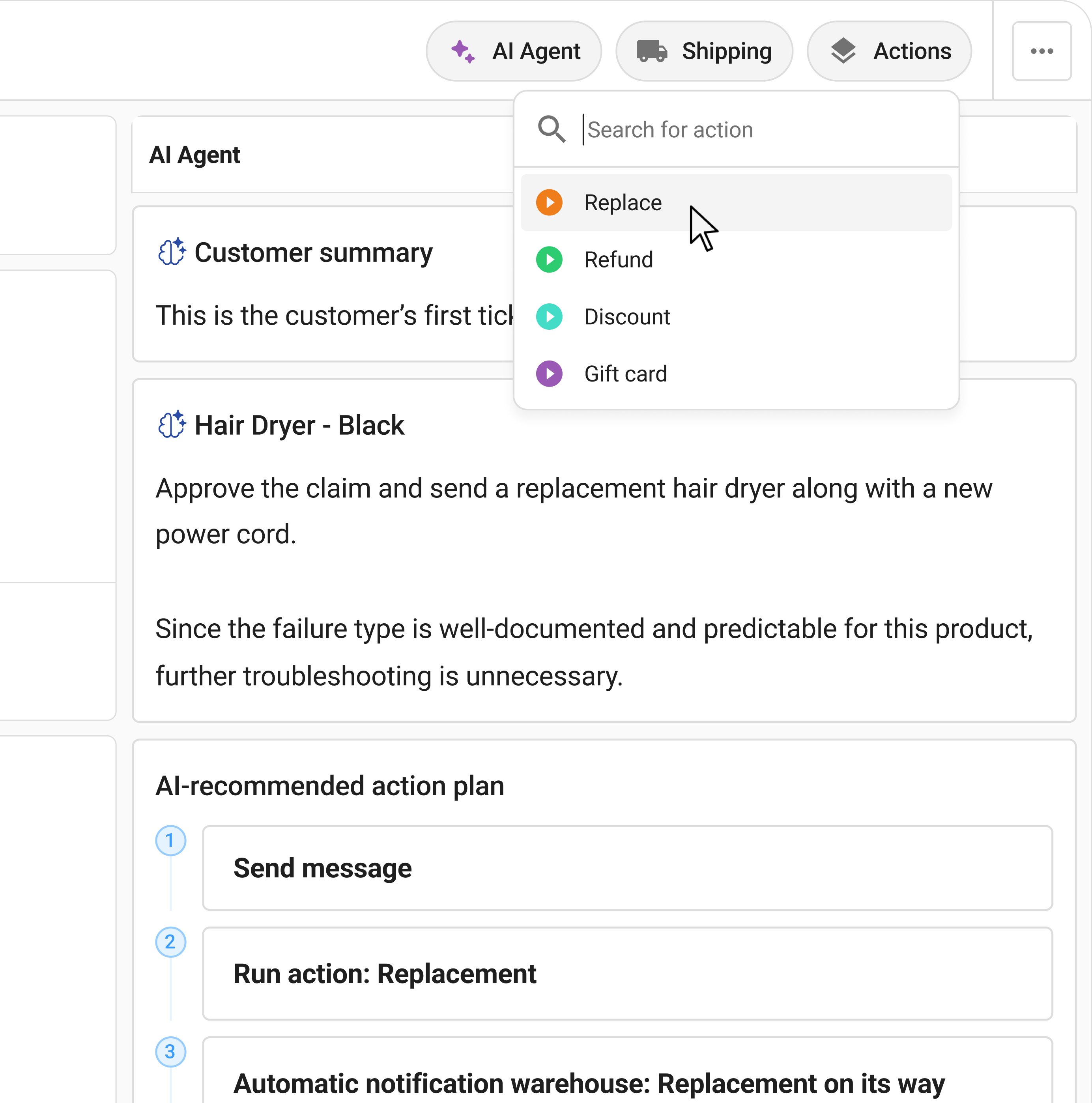
- AI-powered repair vs. replace decisions. Claimlane's AI Agent, the first AI agent purpose-built for warranty claims and returns, analyzes defect severity and recommends whether to repair, replace, or refund, saving operations teams hours of manual assessment.
- Spare parts tracking built in. Track which parts are needed, check stock availability, and link parts consumption to specific repairs for accurate inventory forecasting.
- Supplier accountability. When a defect is caused by a supplier, forward the claim with full repair evidence for cost recovery.
- Analytics on repair patterns.** Track repair rates by product, defect type, and supplier to spot quality issues before they become widespread.
Pros and Cons
Pros:
- Repairs integrated with warranty claims and returns management
- AI Agent classifies defects and recommends repair actions (MaxGaming case study)
- Spare parts management tracks consumption per repair
- Automated workflows route repair cases by product type and defect severity
- Self-service portal collects all repair evidence upfront
- 75+ integrations with ecommerce and ERP systems
Cons:
- Not designed for on-site field service (technician dispatch/GPS routing)
- Custom pricing means no instant self-serve signup
- Best suited for brands managing in-house or depot repairs, not third-party repair networks
Core Features for Repair Management
Repair Workflow Automation
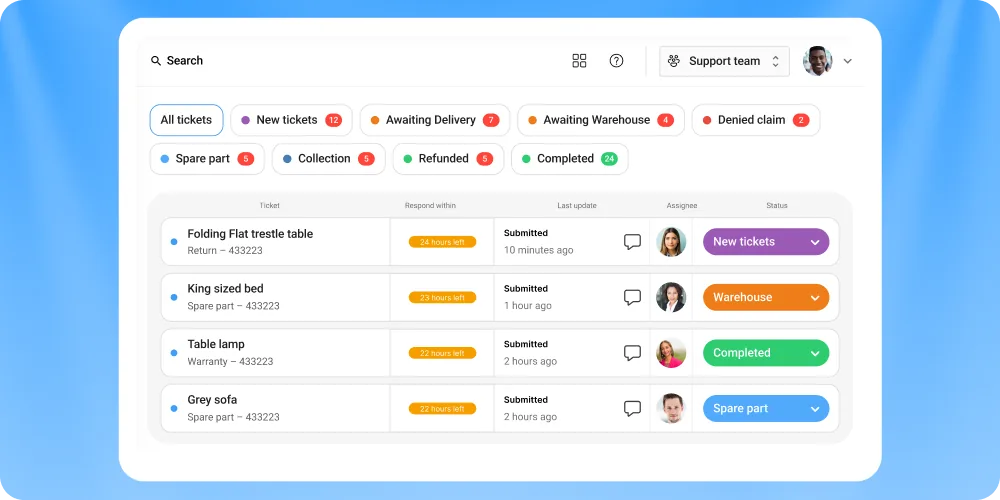
Repair cases flow through configurable stages: intake, diagnosis, parts check, repair in progress, quality check, ship back. Each stage can trigger automated notifications to the customer and internal alerts to the operations team.
AI Defect Classification
Claimlane's AI Agent analyzes customer-submitted photos and videos to classify the defect type and severity. For brands with hundreds of product SKUs, this eliminates the need for support agents to have deep product knowledge. MaxGaming, with 30,000+ SKUs, uses this to process warranty repair cases 77% faster.
Spare Parts Integration
Every repair links to the parts catalog. The system checks availability, reserves parts, and tracks consumption. This data feeds into predictive spare parts inventory models for smarter forecasting.
Supplier Claim Forwarding
Repairs caused by manufacturing defects can be forwarded to the supplier with the full repair record: original claim, customer photos, defect classification, parts used, and repair cost. This supports supplier chargebacks and quality improvement.
Pricing
Claimlane offers custom pricing based on repair volume, user count, and features. Book a demo or visit the pricing page for details.
Product in Action
Try the interactive demo to see repair workflows in action.
Suggested screenshots:
- Repair case detail view showing defect photos, AI classification, and repair status timeline
- Spare parts selection screen linked to a specific repair case
- Repair analytics dashboard showing repair rates by product category and average resolution time
Watch the webinar on automating warranty repair cases with AI agents for a walkthrough.
Other Repair Management Tools
ServiceNow Field Service Management
ServiceNow offers a field service management module for enterprise organizations that dispatch technicians to customer locations.
Key features: Work order management, technician scheduling and dispatch, GPS routing, asset tracking, knowledge base for repair procedures.
Pros: Extremely powerful workflow engine. Handles complex multi-step repair jobs with field technicians. Strong enterprise compliance features.
Cons: Massive overkill for ecommerce brands. Implementation costs six figures and takes months. No native connection to warranty claims or customer-facing portals. Designed for IT and industrial field service, not product warranty repairs.
Pricing: Enterprise quotes only.
Best for: Large enterprises with field service teams dispatching technicians to customer sites.
Salesforce Field Service
Salesforce Field Service connects repair management to the Salesforce CRM ecosystem.
Key features: Technician scheduling, mobile work orders, parts management (add-on), CRM integration, Einstein AI for scheduling optimization. For Salesforce ecosystem options, see Salesforce integrations for ecommerce.
Pros: Full customer history from CRM. AI-powered scheduling. Mobile app for technicians.
Cons: Requires Salesforce ecosystem. Expensive when adding field service and parts modules. Not designed for depot-style warranty repairs. Complex configuration.
Pricing: From $50/user/month. Full field service suite costs significantly more.
Best for: Enterprises already on Salesforce that need technician dispatch and scheduling.
Fiix (by Rockwell Automation)
Fiix is a cloud-based CMMS (Computerized Maintenance Management System) focused on industrial asset maintenance and repairs.
Key features: Work order management, preventive maintenance scheduling, parts inventory, asset lifecycle tracking, IoT sensor integration.
Pros: Strong preventive maintenance capabilities. Good parts inventory management. IoT connectivity for predictive maintenance.
Cons: Built for industrial maintenance, not consumer product warranty repairs. No warranty claims integration. No customer-facing portal. No AI defect classification from customer photos.
Pricing: From $45/user/month.
Best for: Manufacturing facilities and industrial operations managing equipment maintenance, not ecommerce brands handling customer warranty repairs.
UpKeep
UpKeep is a mobile-first maintenance management platform for facility and asset repairs.
Key features: Mobile work orders, parts inventory, asset tracking, preventive maintenance scheduling, team management.
Pros: Excellent mobile app for technicians. Clean interface. Quick setup. Good for multi-location teams.
Cons: Maintenance-focused, not warranty repair-focused. No connection to ecommerce returns or warranty claims. No customer self-service portal. No supplier forwarding for defective parts.
Pricing: From $45/user/month.
Best for: Facility maintenance teams and property managers, not product warranty repair operations.
RepairDesk
RepairDesk is built for retail repair shops (phone repair, computer repair, electronics service centers).
Key features: Point-of-sale integration, repair ticketing, basic parts inventory, customer notifications, multi-store management.
Pros: Purpose-built for walk-in repair shops. POS integration for billing. Simple ticket management.
Cons: Designed for repair shops, not brands managing their own warranty repairs. No warranty claims connection. No supplier chargebacks. No AI-powered defect classification.
Pricing: From $49/month.
Best for: Independent repair shops and electronics service centers, not brands handling warranty repairs at scale.
Repairshopr
Repairshopr targets IT managed service providers and electronics repair businesses.
Key features: Ticketing, invoicing, CRM, basic inventory, customer communication, technician assignment.
Pros: All-in-one for small IT repair businesses. Invoicing and CRM built in. Affordable.
Cons: Not built for brand warranty operations. No connection to warranty management. No product quality analytics. No B2B claim flows.
Pricing: From $59/month.
Best for: IT MSPs and small electronics repair businesses.
How to Choose Repair Management Software
Repair Type: Field vs. Depot vs. Customer Self-Service
The right tool depends on how repairs happen. Field service (technicians go to the customer) needs scheduling and dispatch tools like ServiceNow or Salesforce. Depot repair (customer ships product to brand) needs RMA workflows, shipping integration, and status tracking. Customer-guided repair (instructions sent to customer) needs a self-service portal and clear communication tools.
Claimlane excels at depot and customer-guided repairs connected to warranty claims.
Connection to Warranty Claims
Standalone repair tools create data silos. A repair that started from a warranty claim should carry the original claim data, customer evidence, and warranty status through every repair stage. Claimlane's native connection between claims and repairs eliminates duplicate data entry and keeps the full history in one place.
Spare Parts Integration
Repairs consume spare parts. If the repair tool doesn't track which parts are used, operations teams lose visibility into parts demand and costs. Look for platforms that link repairs to a parts catalog with stock-level tracking.
Supplier Accountability
When repairs reveal a manufacturing defect, the cost should go back to the supplier, not absorb into the brand's P&L. Platforms with supplier forwarding and evidence packaging make cost recovery practical.
Repair Analytics
Repair data is product quality intelligence. Track repair rates by SKU, most common defect types, average repair time, and repair vs. replace ratios. This feeds back into product development and supplier quality scoring.
FAQ: Repair Management Software
Final Verdict: Best Repair Management Software
For ecommerce and retail brands managing warranty repairs, Claimlane is the clear choice. It's the only platform that natively connects repairs to warranty claims, spare parts, supplier accountability, and product quality analytics.
Enterprise field service tools (ServiceNow, Salesforce) work for on-site technician dispatch but are overkill for depot repairs. CMMS platforms (Fiix, UpKeep) handle facility maintenance, not product warranty repairs. Repair shop tools (RepairDesk, Repairshopr) serve walk-in electronics shops, not brand operations.
Claimlane is rated 4.8/5 on G2. Book a demo to see how it handles repair workflows.