.webp)
When a product fails under warranty, someone pays. In most cases, it's the retailer or brand that absorbs the cost of the replacement, refund, or repair. But if the failure was caused by a manufacturing defect, a component flaw, or a quality issue at the supplier level, that cost should be recovered.
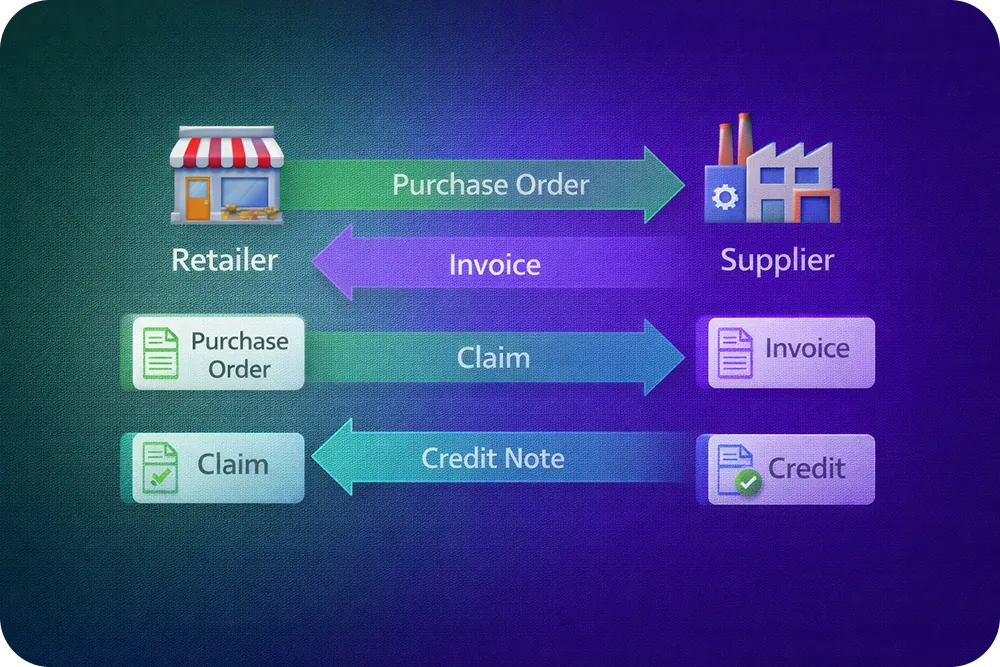
Supplier chargebacks are the mechanism for doing this. They're the formal process of billing a supplier for warranty costs that resulted from their product or component defects. Done well, supplier chargebacks recover significant revenue. Done poorly (or not at all), they represent one of the largest hidden cost leaks in retail and manufacturing operations.
This guide covers how supplier chargebacks work, why most companies leave money on the table, and how to build a recovery process that actually works.
What Are Supplier Chargebacks?
A supplier chargeback is a financial claim made by a retailer or brand against a supplier to recover costs incurred from defective products. The chargeback typically covers:
- Replacement or refund cost: The value of the product that was replaced or refunded to the customer
- Processing costs: Labor, shipping, and handling involved in processing the warranty claim
- Return logistics: Inbound shipping, inspection, and disposal or return of the defective product
- Customer service overhead: Time spent communicating with the customer about the defective product
Supplier chargebacks are different from consumer chargebacks (credit card disputes). Consumer chargebacks involve a customer disputing a transaction with their bank. Supplier chargebacks are B2B transactions between a retailer and its supplier based on contractual warranty obligations.
Why Warranty Cost Recovery Matters
The numbers are significant. The global warranty management market hit $5.51 billion in 2024 and keeps growing, according to warranty analytics research. For individual companies, warranty costs typically represent 1-3% of revenue. Even recovering a fraction of these costs from responsible suppliers has a meaningful impact on margins.
Consider a mid-size retailer processing 500 warranty claims per month with an average claim cost of $75. That's $450,000 per year in warranty costs. If 60% of those claims involve supplier-caused defects and the company recovers 80% of eligible costs, that's $216,000 recovered annually.
Most companies recover far less than that because their process is manual, inconsistent, or nonexistent.
The Supplier Chargeback Process
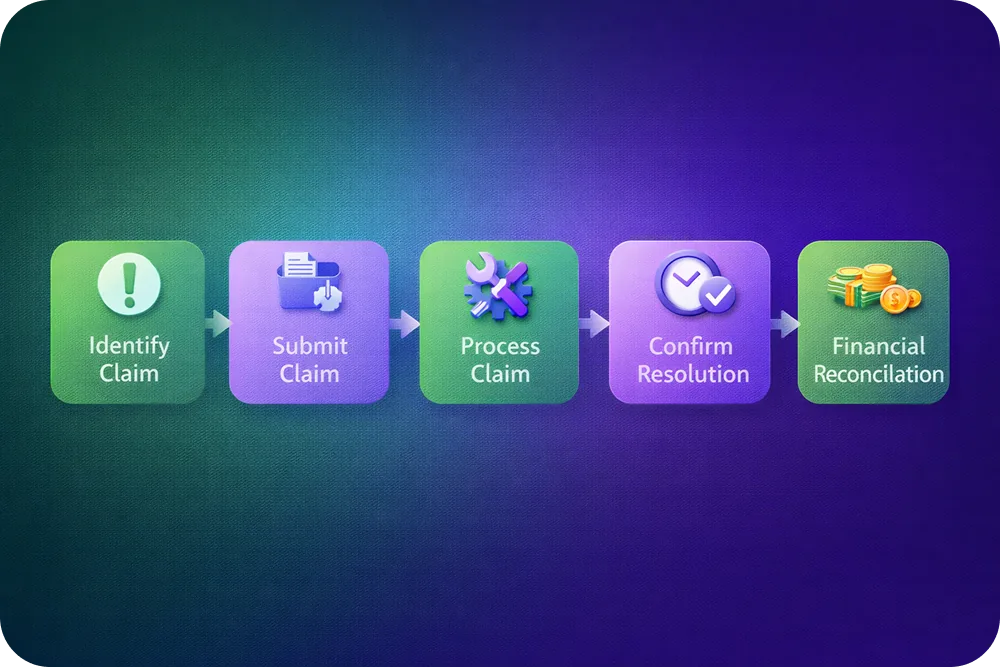
Step 1: Identify eligible claims
Not every warranty claim is eligible for supplier recovery. The claim must involve a defect tied to the supplier: a manufacturing flaw, a material failure, a component defect, or a quality control miss.
Claims caused by customer misuse, normal wear and tear, or shipping damage (unless the supplier handled logistics) are typically not recoverable.
A self-service claims portal that collects structured defect data at intake makes this classification easier. When every claim includes a standardized defect category, product identifier, and photo evidence, determining supplier responsibility becomes straightforward.
Step 2: Document the defect
Suppliers will dispute poorly documented claims. Strong documentation includes:
- Customer-submitted photos or video showing the defect
- Defect classification (manufacturing, material, component, assembly)
- Product identification (SKU, batch number, lot number, serial number)
- Purchase data (order number, purchase date, warranty terms)
- Customer claim details (when the defect appeared, how the product was used)
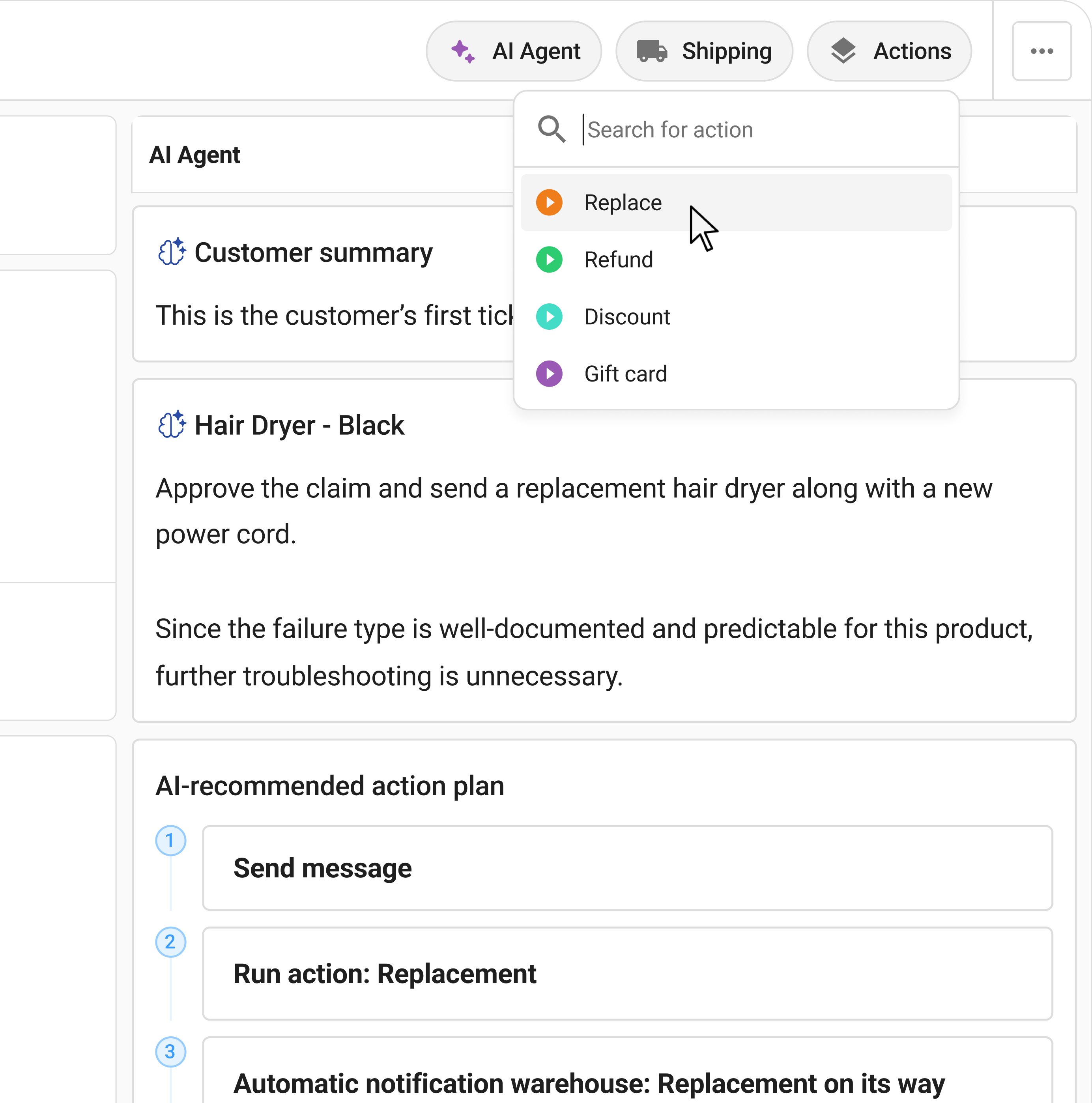
Claimlane's AI Agent, the first AI agent purpose-built for warranty claims and returns, validates defect photos and classifies them automatically. This creates a consistent documentation standard across all claims, which strengthens the chargeback case when presented to suppliers.
Step 3: Forward the claim to the supplier
The claim, with all supporting documentation, needs to reach the supplier through their preferred channel. Some suppliers accept email claims. Others have their own portals. Some require formal debit notes or RMA submissions.
Claimlane's Forward to Supplier feature automates this step. When a claim is validated and classified as supplier-caused, the system packages the documentation and sends it to the right supplier. Reference numbers and warranty terms come pre-attached.
Step 4: Track supplier response
Suppliers respond in one of several ways:
- Approved: Supplier accepts responsibility and issues a credit note
- Partially approved: Supplier covers a percentage (common in shared-responsibility scenarios)
- Rejected: Supplier disputes the claim (product misuse alleged, out of warranty, insufficient documentation)
- No response: Supplier ignores the claim (more common than it should be)
Tracking response rates, approval rates, and average response times per supplier is critical. These metrics feed into supplier quality scoring and inform procurement decisions.
Step 5: Financial reconciliation
Approved chargebacks result in financial recovery through:
- Credit notes: The supplier issues a credit against future orders
- Debit notes: The retailer issues a debit note deducting the amount from upcoming payments
- Direct payment: Less common, but some suppliers refund costs directly
- Replacement shipment: The supplier sends a replacement product or component instead of a financial credit
Each method needs to be tracked against the original claim for audit and accounting purposes.
Why Most Companies Leave Money on the Table
No formal recovery process
Many companies simply don't have a supplier chargeback process. When a warranty claim comes in, the customer gets a replacement or refund, and the cost is written off. Nobody tracks whether the defect was supplier-caused, and nobody sends a claim upstream.
This is especially common at companies where warranty claims are handled by customer service (focused on the customer) rather than operations (focused on cost management).
Manual, email-based forwarding
Companies that do forward claims to suppliers often do it via email. An agent processes the customer claim, then manually compiles the documentation and emails the supplier. This works for a handful of claims but breaks at scale.
Common failure points:
- Claims are forwarded inconsistently (some agents do it, others don't)
- Documentation is incomplete (missing photos, wrong order number)
- Follow-up falls through the cracks (no system tracks which claims await supplier response)
- Financial reconciliation is disconnected from the claims process
Davidsen, a Danish DIY chain, went from needing 5 agents to handle claims to 1-2 agents using Claimlane. The automation freed up capacity that could be directed toward systematic supplier recovery instead of basic claim processing.
Supplier pushback
Suppliers have an incentive to reject chargebacks. Common pushback tactics:
- Requesting additional documentation that wasn't in the original submission
- Claiming the defect was caused by customer misuse
- Disputing the warranty terms
- Simply not responding and hoping the claim is forgotten
Countering this requires strong documentation, clear contractual terms, and data showing defect patterns. When a retailer can show that Supplier X has a 4.8% defect rate against a 1.2% category average, the supplier has less to negotiate with.
Warranty leakage
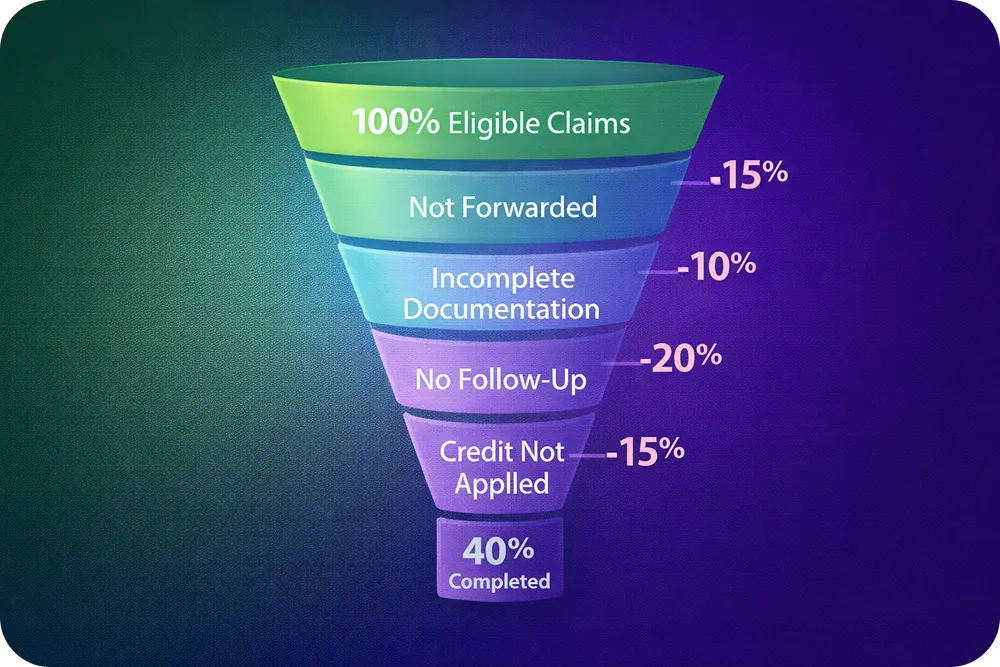
"Warranty leakage" is the industry term for recoverable warranty costs that are never recovered. Common causes:
- Claims processed and resolved for the customer but never forwarded to the supplier
- Claims forwarded but rejected due to incomplete documentation
- Claims forwarded but never followed up on
- Claims approved by the supplier but credit never applied to financials
Research from Detering Consulting estimates that many manufacturers recover only 40-60% of eligible warranty costs from suppliers. The gap represents pure profit leakage.
Building a Better Supplier Recovery Process
Start with the warranty agreement
The foundation of supplier recovery is the warranty contract between the retailer and each supplier. Key terms to define:
- Warranty period per product category
- Covered defect types (manufacturing, material, component)
- Excluded defect types (cosmetic wear, customer misuse)
- Required documentation for claims
- Maximum response time (e.g., supplier must respond within 14 business days)
- Default resolution if supplier doesn't respond (auto-approval after X days)
- Financial terms (credit note, debit note, or replacement)
- Per-claim handling fees(some agreements include a per-claim handling fee)
Without clear terms, every chargeback becomes a negotiation. With clear terms, the process is predictable and scalable.
Automate the forward-to-supplier workflow
Automation is the single biggest improvement most companies can make to their recovery process. A warranty management platform that automatically forwards eligible claims to suppliers:
- Ensures every eligible claim is forwarded (no claims slip through the cracks)
- Packages complete documentation every time
- Applies supplier-specific submission requirements automatically
- Sends follow-up reminders when response times exceed thresholds
- Tracks approval and rejection rates per supplier
Claimlane's workflow engine handles this end-to-end, from claim intake through supplier response tracking to financial reconciliation.
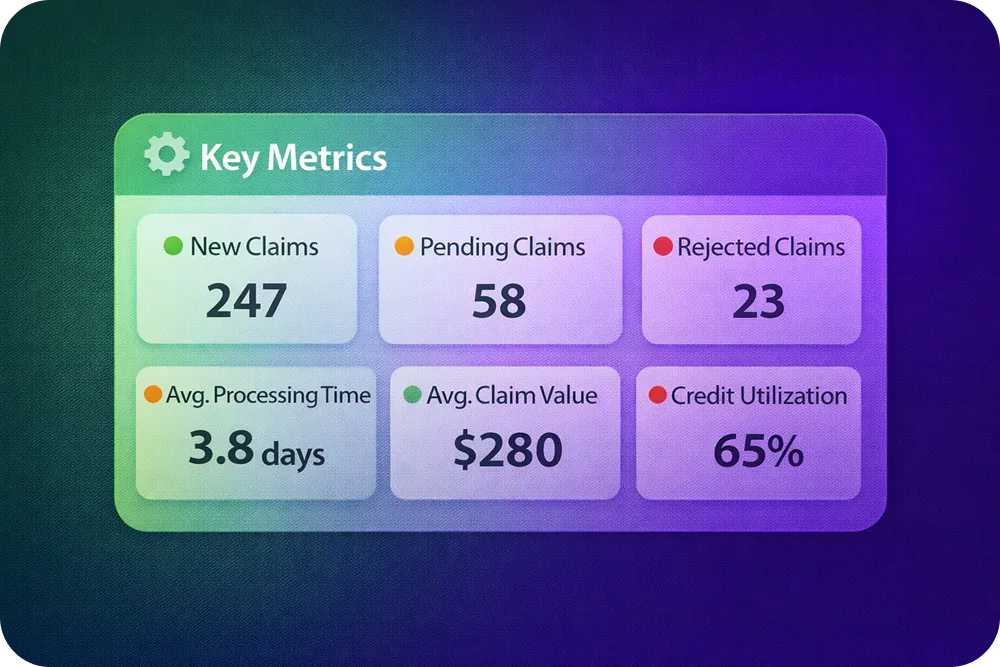
Track recovery metrics
Key metrics to monitor:
| Metric | What It Measures | Target |
|---|---|---|
| Forwarding rate | % of eligible claims forwarded | 95%+ |
| Approval rate | % of forwarded claims approved | 75%+ |
| Recovery rate | % of warranty costs recovered | 50-70% |
| Response time | Days to supplier response | <14 days |
| Rejection reasons | Top reasons for rejections | Track & reduce |
| Revenue recovered | Total $ recovered per period | Grow QoQ |
Claimlane's analytics dashboard tracks these metrics automatically, giving operations and finance teams visibility into recovery performance without manual reporting.
Escalate systematically
When suppliers reject claims or don't respond, have a clear escalation path:
- First follow-up: Automated reminder after the contractual response deadline
- Second follow-up: Escalation to a senior contact at the supplier with the claim data and defect evidence
- Batch escalation: Monthly review of all open/rejected claims per supplier, presented as a pattern rather than individual disputes
- Contract review: If a supplier consistently rejects valid claims, factor this into contract renewal negotiations
Industry-Specific Recovery Considerations
DIY and hardware
DIY retailers often carry products with long warranty periods (power tools: 2-5 years, building materials: 10-25 years). This means supplier recovery claims can be filed years after purchase, requiring strong documentation retention. Davidsen manages this complexity through Claimlane's centralized claims system.
Electronics
Electronics have high claim volumes and multiple supplier tiers (component suppliers, assembly partners, logistics providers). Determining which supplier is responsible requires detailed failure analysis. MaxGaming uses Claimlane's AI agents to classify defects across 200+ brands, creating the data foundation for accurate supplier attribution.
Furniture
Furniture warranty claims often involve spare parts (replacement legs, mechanisms, fabric panels). Recovery on spare parts claims is often simpler because the cost is lower and the defect is specific to a single component. Swoon uses Claimlane to manage their furniture claims and supplier relationships.
B2B wholesale
B2B operations involve larger claim values (bulk orders), more complex warranty terms, and formal contractual frameworks. B2B chargebacks usually run through debit notes or contra invoicing, not individual claim-by-claim credits. F. Engel manages B2B returns and supplier claims through Claimlane.
Debit Notes vs Credit Notes: A Quick Reference
| Feature | Debit Note | Credit Note |
|---|---|---|
| Issued by | Retailer (buyer) | Supplier (seller) |
| Direction | "You owe us" | "We're crediting you" |
| Typical use | Retailer initiates | Supplier acknowledges |
| Timing | Proactive | After supplier review |
| Accounting impact | Reduces payable | Reduces payable |
Both achieve the same financial outcome but are initiated differently. The approach depends on the contractual terms and the power dynamic in the relationship.
The Role of Data in Supplier Negotiations
Supplier chargebacks work best when backed by data. Claimlane's analytics give the evidence needed for productive supplier reviews.
- Defect rate per supplier: Objective comparison against category averages
- Most common defect types: Shows the supplier exactly what's failing and how
- Batch-level analysis: Identifies whether quality issues are tied to specific production runs
- Cost impact: Total warranty cost tied to the supplier
- Trend data: Whether the supplier's quality is improving or declining
When a quarterly supplier review includes this data, the conversation shifts from one-off complaints to evidence.
Konges Sløjd improved data quality on retailer claims by moving everything into Claimlane. That data became the foundation for better supplier conversations.
Connecting Chargebacks to the Broader Warranty Process
Supplier chargebacks don't exist in isolation. They're the the financial step that follows of a well-managed warranty claims process:
- Customer submits claim through self-service portal with structured data
- AI Agent validates the defect and classifies it
- Customer receives resolution (replacement, repair, or refund)
- System automatically forwards eligible claims to suppliers
- Supplier responds (approve, reject, partial)
- Financial recovery is reconciled
- Analytics track recovery rates and feed back into supplier quality scoring
Each step depends on the one before it. A weak intake process (no structured data, no photos) produces weak chargeback documentation. A strong intake process produces chargebacks that suppliers can't easily dispute.
Brands like Matas use Claimlane to manage this end-to-end flow, ensuring warranty costs are tracked and recovered systematically rather than absorbed as an unavoidable expense.