.webp)
The Salesforce AppExchange lists more than 7,000 apps. Most businesses end up using 8 to 12 of them. The other 6,990 sit unused because they solve problems most companies do not have. The real question is not "what can Salesforce connect to", it is "which 10 connections actually move the needle".
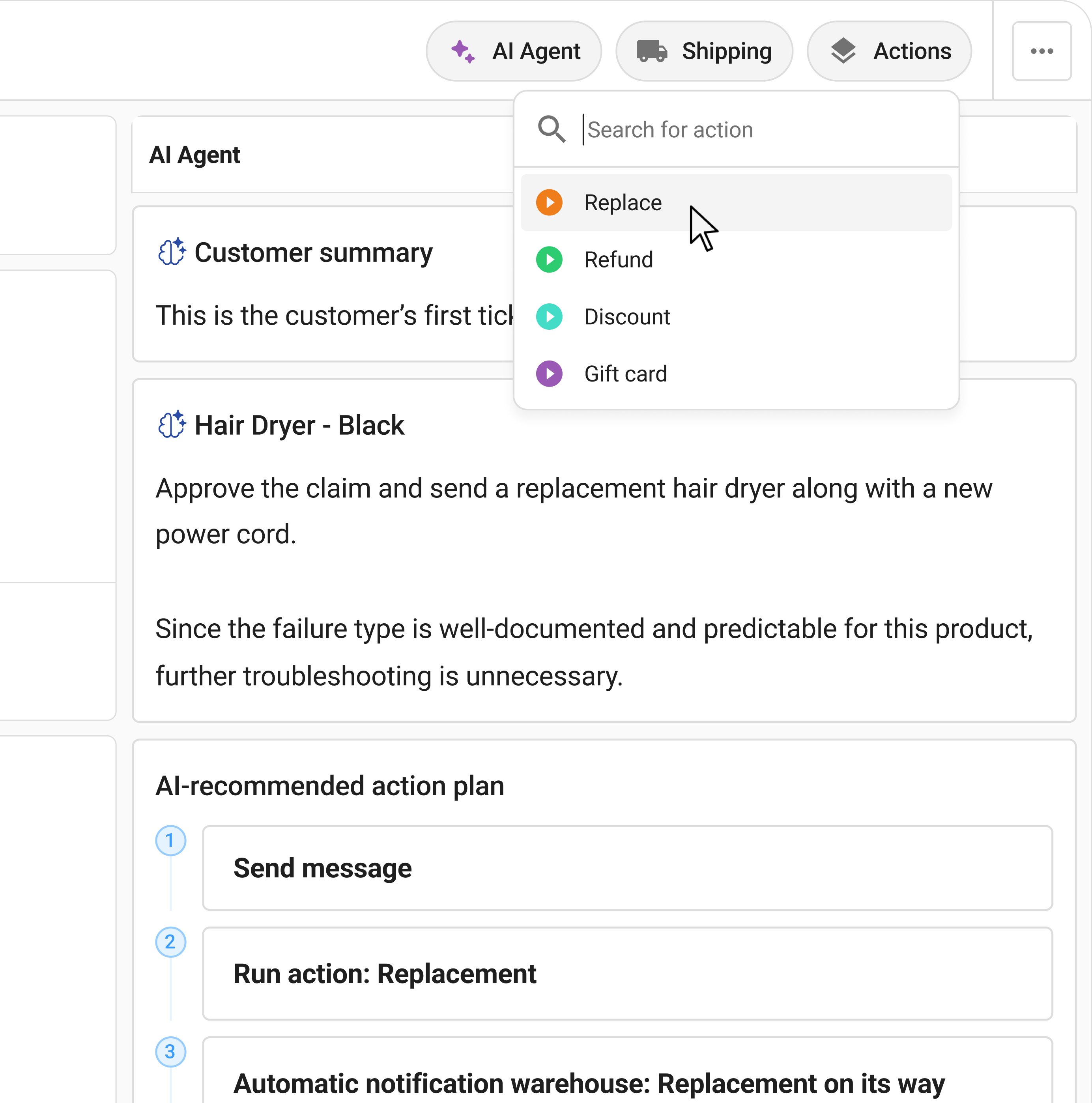
This guide covers the 10 Salesforce integrations most businesses use in 2026, grouped by category. It also looks at the integration most Salesforce stacks miss entirely: post-purchase data. When a brand sells physical products, returns and warranty claims generate the richest customer signal there is. That signal rarely makes it into Salesforce. Claimlane is the platform that closes that gap by syncing claim, return, and repair data back into the CRM record where it belongs.
TL;DR
- The Salesforce AppExchange has 7,000+ apps; most businesses only need 8 to 12.
- The most-used integrations: Slack, HubSpot, Outlook, Mailchimp, Shopify, QuickBooks, MuleSoft, Zapier, Workato, Boomi.
- Salesforce APIs come in three flavours: REST for most use cases, SOAP for legacy, Bulk for migrations.
- The integration most physical-product brands miss: post-purchase data. Claimlane syncs returns, warranty, and repair claims into Salesforce records.

The 10 Salesforce Integrations Most Businesses Actually Use in 2026
| Integration | Category | Best for | Pricing starts at |
|---|---|---|---|
| Claimlane | Post-Purchase | Syncing returns, warranty, and repair data into Salesforce records | $800/month |
| Slack | Comms | Deal alerts, lead notifications, account collaboration | Slack plan |
| HubSpot | Marketing | Lead sync, campaign attribution, lifecycle tracking | HubSpot plan |
| Microsoft Outlook | Email logging, calendar sync, contact updates | Microsoft 365 | |
| Mailchimp | Campaign tracking, subscriber sync, engagement | Free / $13/mo | |
| Shopify | Commerce | Order history, customer profiles, revenue data | Shopify plan |
| QuickBooks | Finance | Invoice status, payments, accounting sync | QuickBooks plan |
| MuleSoft | iPaaS | Complex enterprise integrations and API management | Enterprise |
| Zapier | No-Code | Simple workflow automation between apps | Free / $19.99/mo |
| Workato | iPaaS | Enterprise automation across business systems | Custom |
What a Salesforce Integration Actually Does
A Salesforce integration connects Salesforce to another system so the two can exchange data and trigger actions. Most integrations sit in one of three layers: data sync (information moves between systems), workflow automation (an event in one system triggers an action in the other), or unified UI (the other system's data shows up inside Salesforce).
The integration usually runs on one of three technical foundations: a Salesforce API (REST, SOAP, or Bulk), a middleware platform like MuleSoft or Zapier, or a prebuilt AppExchange app. The choice depends on volume, complexity, and how much engineering time the business wants to spend.
Four Types of Salesforce Integrations
Native
Built by Salesforce or close partners. Minimal setup, reliable performance, limited customisation.
API
Custom integrations built with Salesforce REST, SOAP, or Bulk APIs. Highest flexibility, requires engineering time.
Middleware
MuleSoft, Zapier, Workato, Boomi. Sit between systems and manage data flows. Good for connecting many tools.
AppExchange
Prebuilt apps from Salesforce's marketplace. Install and configure, no code needed. Cover most common use cases.
Claimlane Salesforce Integration

For ecommerce businesses handling delivery issues and damaged orders, integrating Salesforce with Claimlane can significantly streamline post-purchase support workflows.
Claimlane is a post-purchase issue resolution platform that helps brands manage delivery problems, damaged products, lost shipments, and customer claims. When connected with Salesforce, customer service teams can sync claims data directly with CRM records, giving agents full visibility into order issues alongside customer history.
This integration helps support teams automate claim handling and keep customer data consistent across systems. For example, when a customer submits a delivery issue through Claimlane, the information can automatically appear inside Salesforce as a case or support record.
With Salesforce connected to Claimlane, businesses can:
- Track delivery issues alongside customer accounts
- Sync claims and support cases automatically
- Give support agents full context about post-purchase problems
- Improve resolution speed and customer satisfaction
By connecting post-purchase issue management with Salesforce, support teams can handle delivery claims more efficiently while maintaining a complete view of the customer journey.
Most Popular Salesforce Integrations
Several widely used tools integrate directly with Salesforce. These integrations help businesses connect marketing, communication, e-commerce, and finance platforms with their CRM.

Slack Salesforce Integration
The Slack integration allows teams to collaborate around Salesforce data directly within Slack channels.
Capabilities include:
- Real-time notifications for deal updates
- Alerts for new leads and opportunities
- Workflow automation triggers
- Team collaboration on accounts
Pricing depends on Slack subscription plans.
Use cases include sales collaboration and deal tracking.

HubSpot Salesforce Integration
HubSpot integrates marketing automation with Salesforce CRM data.
Capabilities include:
- Lead syncing between systems
- Marketing campaign tracking
- Contact and lifecycle stage updates
- Marketing attribution reporting
Pricing varies depending on HubSpot subscription tiers.
Businesses use this integration to align marketing and sales teams.

Mailchimp Salesforce Integration
Mailchimp connects email marketing campaigns with Salesforce contact records.
Capabilities include:
- Campaign tracking inside Salesforce
- Subscriber syncing
- Audience segmentation
- Email engagement tracking
This integration is popular among small and mid-size businesses.

Microsoft Outlook Salesforce Integration
The Outlook integration connects email communication with Salesforce records.
Capabilities include:
- Email tracking
- Contact syncing
- Calendar synchronization
- Automated activity logging
Sales teams benefit from having email conversations directly linked to CRM records.

Shopify Salesforce Integration
Shopify integrations connect e-commerce data with Salesforce CRM.
Capabilities include:
- Order tracking
- Customer purchase history
- Product data syncing
- Revenue reporting
Businesses use this integration to unify customer and transaction data.

QuickBooks Salesforce Integration
QuickBooks integrations sync financial data with Salesforce.
Capabilities include:
- Invoice tracking
- Payment updates
- Financial reporting
- Customer account synchronization
This helps finance teams maintain visibility into sales data.
Salesforce Native Integrations vs Third-Party Integrations
Organizations can integrate Salesforce using native tools or third-party platforms.
Native + AppExchange
Use when: The use case is standard, volume is modest, and customisation needs are low.
- Setup in hours, not weeks
- Reliable, supported by Salesforce or a vendor partner
- Limited control over data mapping
- Best for SMB and mid-market
Middleware or Custom API
Use when: Volume is high, multiple systems need to connect, or business logic is custom.
- Full control over data mapping and triggers
- Connects 3+ systems in one integration layer
- Requires engineering or iPaaS license
- Best for enterprise and complex stacks
What Are Native Salesforce Integrations
Native integrations are built directly by Salesforce or supported through AppExchange apps.
They typically require minimal configuration and offer reliable performance.
Examples include Slack integration and Outlook integration.
What Are Third-Party Integrations
Third-party integrations use middleware platforms or custom applications.
These platforms connect multiple systems together and manage data flows between them.
Pros and Cons of Each Approach
Native integrations are simple and reliable but limited in customization.
Third-party integrations offer flexibility but may require additional setup and maintenance.
When Businesses Should Use Each Option
Smaller organizations often choose native integrations for simplicity.
Larger companies frequently use middleware platforms to manage complex integration environments.
Salesforce Integration Methods Explained
Businesses can integrate Salesforce using several technical approaches depending on their infrastructure and requirements.\
Middleware platforms abstract the API choice. MuleSoft, Zapier, Workato, and Boomi all use Salesforce APIs underneath but expose a higher-level interface. For most non-engineering teams, picking a middleware tool is easier than building directly on the APIs.
Step-by-Step Guide to Integrating Salesforce With Other Systems
Successful integrations require careful planning.
Define the use case
What data needs to move, in which direction, and what triggers an update.
Map the fields
Salesforce field to external system field, both directions. Document the mapping before building.
Pick the method
AppExchange, middleware, or custom API. Simpler is usually better.
Configure authentication
OAuth for most modern integrations. Use connected apps and scoped permissions.
Test in sandbox
Run end-to-end scenarios in a Salesforce sandbox before pushing to production.
Monitor and maintain
Watch API call limits, error rates, and field changes. Integrations break when source systems change.
Common Challenges With Salesforce Integrations
Despite their benefits, integrations can introduce technical challenges.
Frequently Asked Questions
Where to Start
For most businesses, the right move is to start with the obvious integrations: Slack for comms, HubSpot or Mailchimp for marketing, Outlook for email logging, Shopify or QuickBooks for the commerce or finance side. Those cover 80 percent of the operational value with AppExchange-level effort.
The harder call is what to add next. For brands selling physical products, the answer is usually post-purchase data. Returns, warranty claims, and repair status carry the richest customer signal in the entire stack. They tell sales which customers are at risk, support which cases are about to escalate, and procurement which suppliers are quietly costing money. Claimlane covers that integration and adds an AI Agent to keep the workflow fast.
The integrations to think hardest about are the ones that connect departments. A Salesforce stack where marketing, sales, support, and post-purchase all share the same customer record is worth more than the sum of the parts. The integrations that get used are the ones that close that loop.