.webp)
The UK baby and nursery market is one of the more resilient consumer categories. New parents prepare extensively, spend deliberately, and choose items they expect to use for years. The market reflects this: total value sits around £42 billion in 2026, with annual growth tracking at roughly 7-8% through 2031.
That spending comes with high expectations. New parents researching cots, changing tables, prams, and nursery furniture invest hours in the buying decision. When something doesn't work out and an item needs to go back, the experience of returning it shapes whether they ever buy from that retailer again.
For retailers in the baby and nursery space, returns are not a back-office function. They're a brand moment.
The 47-day resolution stat is from a deeper guide on why furniture returns take so long, which goes into the operational reasons behind the number.
What new parents actually want from a returns process
Buying for a new baby is one of the most considered purchases categories in retail. Parents research, ask friends, read reviews, factor in safety ratings, and increasingly weigh sustainability (FSC-certified wood, organic textiles, non-toxic finishes). They also factor in durability for items they expect to use through multiple children.
When something needs to go back, the last thing parents want is friction. They're already exhausted, often sleep-deprived, and managing logistics that didn't exist three months earlier.
The retailers who get this right become the ones parents recommend in WhatsApp groups, on local Facebook pages, and through Mumsnet threads. Word travels fast in a market where every parent is already in 10 conversations about baby gear.
Why nursery returns have traditionally been a nightmare
Nursery furnishings sit in a particularly painful category for returns. They're bulky, often pre-assembled, frequently damaged in transit, and almost never returnable through the postal channels that handle apparel and accessories.
The traditional process for handling a nursery furniture return looks something like this:
Total elapsed time: 3-6 weeks. Spread across customer service, logistics, warehouse, and finance. The case lives in email threads, spreadsheets, and the warehouse management system simultaneously, with nobody having full visibility.
For smaller items (toys, clothing, accessories), the postal channel works but the experience isn't much better. Even smaller returns can spawn long email threads when documentation is incomplete. The problem isn't unique to nursery furniture, it's the operational pattern across most furniture and bulky-goods retail. The why furniture returns take 47 days guide breaks down the industry-wide picture.
Bulky vs small item returns: a quick comparison
Different items, different operational realities. The comparison matters because retailers running both kinds of inventory often try to use one process for both, and that's where the friction concentrates.
A working returns operation handles both flows from the same platform with different rules. The intake form asks different questions, the routing logic is different, the SLA is different, but the data lives in one place so the team has visibility across both.
How leading nursery retailers do this differently
Two real Claimlane customers in the baby and nursery space show what a working operation looks like. Both started in roughly the same place most retailers are now (email-based claims, scattered systems, slow resolutions) and rebuilt around structured workflows.
Two things stand out across both customers:
- The customer experience improved measurably. Parents now self-serve through branded portals instead of waiting on email threads.
- The supplier conversation got data-backed. When BabySam or Luksusbaby push back on a defect rate with a specific brand, they have the evidence to back it.
Furniture brands outside the nursery vertical see the same pattern. Swoon improved their returns and warranty process along similar lines, and Cult reduced manual work in claims handling using the same structured approach.
Where AI changes the math for nursery retailers in 2026
The shift this year is AI handling parts of a case that previously needed a trained agent. For baby and nursery retailers in particular, this matters for two reasons.
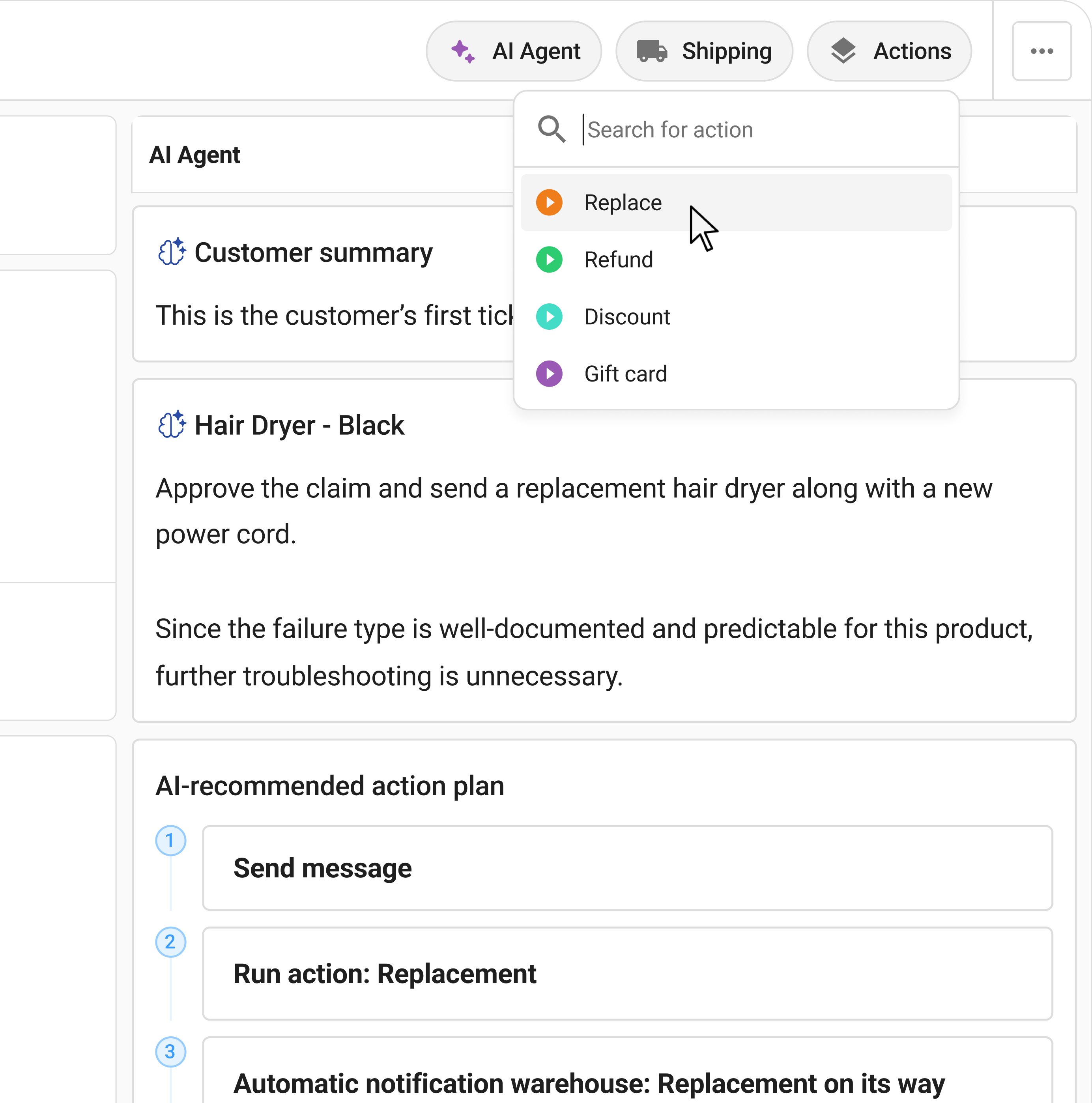
First, the documentation problem. Parents submitting claims for damaged cots or stained mattresses often send blurry photos in difficult lighting. An AI Agent that can read the photo, classify the defect, and apply the brand's policy in seconds collapses the back-and-forth that usually delays bulky-item resolutions.
Second, the volume problem. Larger retailers carrying hundreds of brands across furniture, toys, clothing, and accessories have policy variance the team can't memorise. Claimlane's AI Agent, the first AI agent purpose-built for warranty claims and returns, handles the brand-policy layer automatically.
For smaller nursery brands carrying their own products, the AI Agent removes the agent training burden entirely. New customer service hires can handle complex cases from day one because the policy layer isn't in their head.
Five things any baby and nursery retailer can do this quarter
You don't need to overhaul everything to start fixing the returns experience. Five practical moves cover most of the value.
The fifth one matters disproportionately for this vertical. Word-of-mouth in baby and nursery retail is concentrated and fast. One delayed cot resolution can cost a brand 50 prospective customers from a single Facebook group post.
For brands ready to systematise this beyond ad-hoc fixes, the baby and nursery industry page shows how Claimlane handles the operational specifics.
The end-state any nursery retailer wants is the same: a parent in their nursery, baby asleep in the right cot, exhausted but content. When something needs to go back, the returns process should be quiet enough that nobody remembers it as the bad part of an otherwise good experience. Claimlane handles the operational layer that makes that quiet possible. Book a demo to see what it looks like for a baby and nursery operation specifically.