
Most advice about outgrowing a returns app measures the wrong thing. It counts returns per month and says that when the number gets big, it is time to upgrade. Volume is rarely the reason a returns app breaks.
Complexity is. A brand can process 10,000 simple size swaps a month on a basic returns app forever. The same brand hits a wall at 200 claims a month the moment those claims involve faults, photos, repairs, and suppliers who owe for the defect. Complexity, not count, is what a simple tool cannot hold.
This is written for warranty-heavy brands with real supplier exposure, the ones where a growing share of cases are claims rather than returns. For them, outgrowing a returns app follows a predictable ladder. Naming the rung a brand is on makes the next move obvious.
Rung 1: the returns app is doing fine
At the bottom of the ladder, life is good. Returns are mostly size and fit, the customer wants a different variant, and a returns management system handles the whole thing. Nothing is broken.
Brands on this rung should not upgrade. A specialist claims layer would be overhead they do not need. The signal to watch is the arrival of the first fault claims that do not fit the return flow, the ones an agent starts handling over email because the app has no place for them.
Rung 2: the spreadsheets appear
The first real sign of outgrowing a returns app is not a system alert. It is a spreadsheet. Someone on the support team starts tracking warranty claims in a sheet because the returns app cannot, and that sheet becomes the real system of record for anything complex.
This is the tell that external SERP guides keep pointing to: when staff build manual workarounds to fill software gaps, the tool no longer fits. The spreadsheet is cheap to start and expensive to live with, because it holds no rules, no evidence, and no audit trail. The cost shows up as slow claims, which is the theme of why warranty claims take two weeks.
Rung 3: photos and evidence enter
The next rung arrives when claims start requiring evidence. A photo of the fault, a serial number, proof of purchase. A returns app built for size swaps has nowhere clean to put any of it.
Now agents are collecting evidence over email threads and losing it. This is where a structured warranty intake becomes the difference between a defensible decision and a guess, and where returns and delays on complex warranty claims start hurting the customer relationship. Electronics, furniture, and sporting-goods brands hit this rung early.
Rung 4: suppliers and repairs enter
This is the rung where the money changes. Once a meaningful share of faults trace back to a supplier, every claim is also a recovery opportunity, and a returns app has no concept of it.
Brands here are leaving supplier credit on the table, often close to 30% of defect cost that structured supplier recovery would claw back. They are also making repair-or-replace calls case by case with no rule. Claimlane's forward-to-supplier flow and the wider view in retailer challenges with supplier claims are aimed squarely at this rung. This is the point where the tool stops being a cost of doing business and starts being a way to recover cash.
Rung 5: channels and dealers multiply
The top rung is structural. The brand now sells DTC and through dealers or B2B, and a claim's path depends on who sold it and who owes for it. A consumer returns app was never built for hybrid B2C and B2B claims.
At this rung the brand needs B2B warranty claims handling, supplier scorecards, and warranty SLA management that a simple tool cannot express. This is the fully-grown version of the complex tier, and it is where a specialist layer pays for itself several times over. Black Diamond automated its warranty claim and repair workflows on Claimlane at this rung, shown in the Black Diamond case study.
The finance-readable version of the ladder
Each rung has a number attached, and the numbers are what move a decision past ops into finance.
Agent time is the first. Brands consolidating complex claims onto one specialist layer have cut claims handling sharply, in one case from five agents to one or two. Supplier recovery is the second, the roughly 30% of defect cost a returns app never chases. Fully-loaded cost per warranty claim is the third, and it falls when evidence, rules, and routing stop living in email. Put together, these are the hidden costs of returns and claims that a maturity upgrade removes.
Moving up without ripping everything out
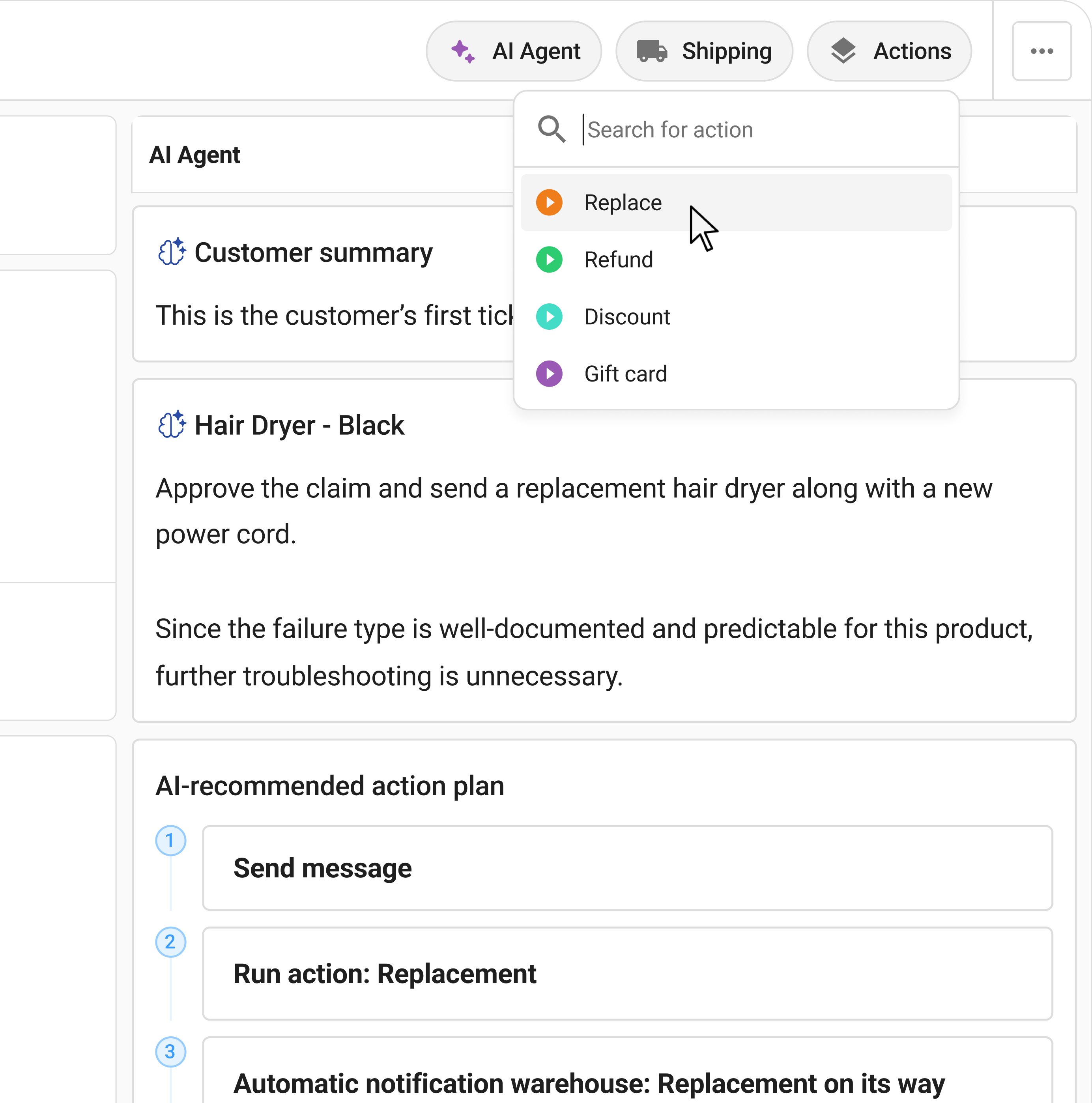
Outgrowing a returns app does not mean replacing the whole stack. The simple returns flow can stay. What changes is that the complex tier gets a specialist layer beside it, reading order data and writing resolutions back through the brand's integrations. Where AI fits, Claimlane's AI Agent, the first AI agent purpose-built for warranty claims and returns, handles the evidence review and recommendation on that complex tier, described on the product AI page.
The move is additive, not a rip-and-replace, which is what makes climbing the ladder low-risk. Brands mid-climb often start by auditing their returns process to see exactly which rung is leaking.
Claimlane holds a 4.8/5 rating on G2, largely from brands that climbed this ladder one rung at a time rather than waiting for the spreadsheet to collapse.
Frequently asked questions
Find the rung, then take one step
The brands that upgrade well do not wait for a breakdown. They name the rung they are on, check what it is leaking in agent time and supplier credit, and add the specialist layer for the complex tier while leaving the simple flow alone.
The fastest way to locate the rung is the free warranty process benchmark, which shows how much of the complex tier is still riding on email and spreadsheets, and what the next step is worth.