
Most guides to the warranty management process are written for manufacturers. They describe a field-service loop: a part fails, a technician is dispatched, the claim runs through an ERP. Useful if a brand builds engines. Less useful if it sells jackets, furniture, or gaming gear.
For a brand or retailer, the process is a different chain, and it has a stage almost everyone skips. The claim gets resolved, the customer is happy, and the process stops there. The last stage, recovering the cost from the supplier who caused the fault, is where the money comes back, and it is the one most often left undone.
The clearest way to see the whole chain is to follow one claim through it.
One claim, followed end to end
A customer buys an outdoor jacket in March. In June the main zipper fails. She files a warranty claim.
The zipper is the easy part. What happens to that claim over the next stages is the whole process, and it decides whether the brand keeps the customer, how much the resolution costs, and whether the supplier who sold a bad zipper batch ever pays for it. That single claim is the thread through the six stages below.
Stage 1: registration and proof of purchase
The process starts before the claim, at registration. If the brand captured the purchase and the product details up front, the claim opens with the order, the model, and the warranty window already attached.
Without that, stage one becomes a hunt for a receipt. Claimlane's guides to warranty registration and proof of purchase for warranty cover why this stage sets the speed of every stage after it. The warranty registration module collects that customer and product data at the point of sale.
For the jacket, registration means the claim already knows it is within the coverage window before anyone looks at it.
Stage 2: claim intake and evidence
The customer submits the claim. This stage decides whether it arrives complete or arrives as the first of four emails.
Structured intake asks for the order, the product, the fault category, and photos or video at submission. The claim on the broken zipper arrives with a photo of the failure, not a paragraph describing it. A self-service portal enforces that completeness, which is what stops the back-and-forth that stretches resolution to two weeks, covered in why warranty claims take two weeks.
Stage 3: validation against warranty terms
Validation checks the evidence against the coverage. Is the fault covered, is the product in warranty, is this wear or a defect.
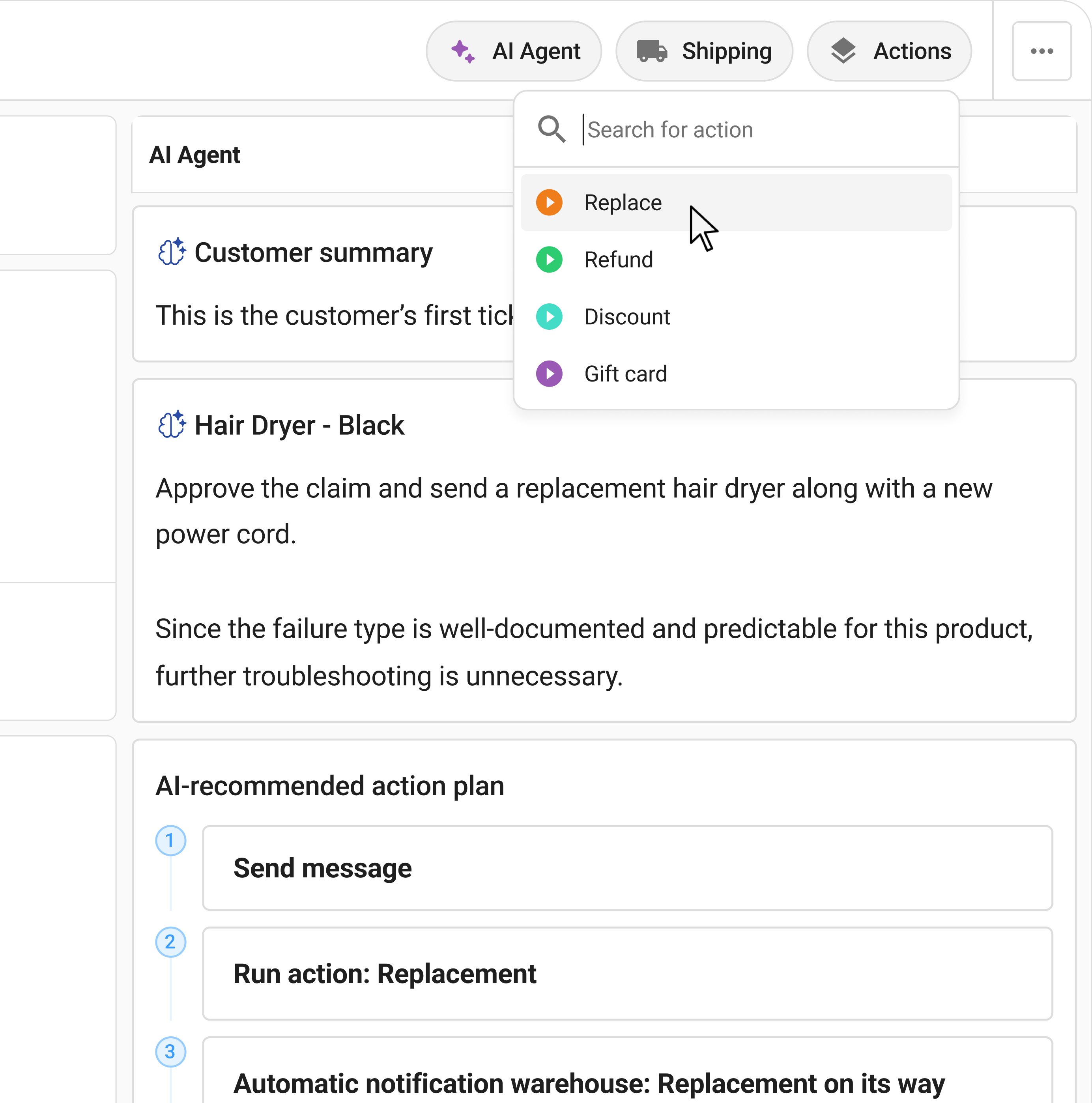
For the jacket, validation confirms a zipper failure inside the window is a covered manufacturing defect, not misuse. This is where rules matter, and where a large catalog slows a human down, since no agent holds every product's terms in memory. Claimlane's notes on what voids a product warranty and thinking in workflows for warranty resolution cover how validation gets encoded. Claimlane's AI Agent, the first AI agent purpose-built for warranty claims and returns, can run this check on the image and the rules, then recommend or auto-approve, with a human kept in the loop on high-value cases and an audit trail on every decision.
Stage 4: resolution
Resolution is the decision the customer sees: repair, replace, or refund. The right choice is a cost decision as much as a service one.
Repairing or rezipping the jacket may cost less than replacing it and keeps a sold unit in the field, the logic in repair vs replace on warranty claims. Whatever the path, the customer gets automatic status updates so the resolution does not generate its own follow-up tickets. Claimlane's warranty claims processing and SLA management guides cover keeping this stage inside a promised window.
Stage 5: supplier recovery
The claim is closed. The credit is not. This is the stage most brands skip.
The bad zipper came from a supplier, and the brand is likely owed a credit for the defect. Recovery is a race against paperwork, and a claim record that already holds the fault, the photos, and the supplier turns it into a routine step. Claimlane's supplier recovery playbook and supplier chargeback guide cover the mechanics, and the forward-to-supplier module sends the evidence packet automatically. For a brand with a bad zipper batch across hundreds of jackets, this stage is the difference between eating the cost and recovering it.
Stage 6: analytics and root cause
One claim is an incident. A hundred claims on the same zipper is a signal.
The final stage turns closed claims into product and supplier intelligence: which SKUs fail, which suppliers drive the claims, which faults repeat. That is what closes the loop, feeding warranty analytics on product quality through Claimlane's analytics so the brand fixes the zipper spec instead of processing the same claim a hundred more times. Claimlane's warranty management best practices tie the stages together.
The process as a flowchart
The six stages in sequence, with the loop back to product decisions:
At validation, covered claims move to resolution and not-covered claims are declined with a reason. Analytics feeds product and supplier decisions back to registration.
Where the process breaks and what fixes it
Run this chain on email and it breaks at the joins. Evidence arrives incomplete at stage two, validation stalls at stage three, and stages five and six never happen because the data is scattered across inboxes.
A single record fixes the joins. When registration, intake, validation, resolution, recovery, and analytics share one claim record, each stage hands clean data to the next. This is also where the stack matters: order and customer data from Shopify or an ERP like NetSuite or Business Central, ticket context from Zendesk or Gorgias, and the recovered credit back to finance. Claimlane runs as the execution layer alongside those systems. Brands weighing the move can read the warranty management software guide, and the industry variants sit in OEM warranty and dealership warranty management.
A finance-readable metric per stage
Each stage carries a number finance can read.
| Stage | Metric finance can read |
|---|---|
| Registration | Share of claims opening with order and product attached |
| Intake | Rework rate (claims sent back for missing info) |
| Validation | No-fault-found rate and time-to-first-decision |
| Resolution | Repair-vs-replace mix and cost per claim |
| Supplier recovery | Recovery rate: eligible supplier credit actually collected |
| Analytics | Repeat-defect rate by SKU and supplier |
Strung together, these show up on the P&L as cost per claim and warranty reserve. Davidsen went from five claims agents to one or two after moving the whole chain onto one system, which is the labor line of this same process. The wider set sits in returns and warranty KPIs.
Black Diamond automated its warranty claim and repair workflows end to end with Claimlane, running the full process on one system instead of stitching stages across tools.
Black Diamond — read the case study
A readiness check and what to measure
The process is worth formalizing when volume and complexity make the email version expensive.
- 50+ claims per month
- Repairs or spare parts in the resolution mix
- Three or more suppliers driving claim volume and recovery opportunity
- Photo-required claims across a large catalog
- Claims currently living in email and spreadsheets
Measure the process at its weakest stage. For most brands that is validation time and supplier recovery rate, the two stages email handles worst. The optimize your warranty claim process guide covers tightening each stage.
Claimlane holds a 4.8 out of 5 rating on G2.
Back to the jacket. Resolved well, the customer replaces a zipper and stays a customer, the supplier credits the defect, and the analytics flag the batch before the next hundred jackets ship. Resolved on email, the refund goes out, the credit is never claimed, and the same zipper fails again next quarter. Same claim, two very different endings, and the difference is whether the process runs all six stages or stops one stage too early.
Frequently asked questions
What are the stages of the warranty management process?
For a brand, six stages: registration and proof of purchase, claim intake and evidence, validation against warranty terms, resolution (repair, replace, or refund), supplier cost recovery, and analytics with root-cause review. The last two are the ones most brands skip.
What is the most overlooked stage in warranty management?
Supplier recovery. The claim gets resolved and the process stops, leaving the credit the brand is owed on a supplier defect uncollected. A claim record that holds the fault, photos, and supplier turns recovery into a routine step.
How long should the warranty management process take?
On email, resolution typically stretches past two weeks, most of it waiting on missing information. With structured intake and validation, simple claims resolve in days and supplier-involved claims in under a week.
How is warranty management different for brands versus manufacturers?
Manufacturer warranty management is a field-service loop tied to an ERP and technician dispatch. For brands and retailers it is a post-purchase execution chain from a customer claim to a supplier credit, with resolution options like repair, replace, or refund rather than field repair.