Customers read the word limited as stingy. Lawyers read it as precise. The gap between those two readings is where a lot of warranty trouble lives, because a brand that meant precise often writes stingy, or writes nothing clear at all.
A limited warranty is a promise with named edges. It covers some failures, for some time, minus some exclusions, and the whole value of the word limited is that it draws those lines on purpose. Limited is not a smaller promise. It is a clearer one, as long as the brand actually does the drawing.
This is written for warranty-heavy brands in electronics, sporting goods, furniture, DIY, and baby and nursery, where products carry a written warranty and the exclusions get tested by real claims every week. The sibling terms to know first are the express warranty the brand writes and the OEM warranty that may sit under it on branded components.
Limited warranty, defined
A limited warranty is a written warranty that covers specific defects or failures under stated conditions, with named exclusions and limits on duration, remedy, or what is covered. The word limited signals that the coverage has defined boundaries rather than promising everything.
The boundaries are the feature, not the catch. A limited warranty tells the customer exactly what is covered and tells the brand exactly what it owes, which is what a workable warranty policy template is built to capture. The trouble only starts when the boundaries are fuzzy, because a fuzzy boundary is decided by whoever argues hardest at claim time.
Limited versus full warranty
The clearest way to see what limited means is to set it against full. The two are not just marketing labels, they carry different obligations.
| Limited warranty | Full warranty | |
|---|---|---|
| Coverage | Named defects and conditions | Broad, few conditions |
| Exclusions | Stated and specific | Very limited |
| Remedy | Can be capped or conditional | Repair or replace, free, in reasonable time |
| Best fit | Most consumer products | High-trust, simple products |
Most consumer warranties are limited, and that is the sensible default. A full warranty carries obligations most brands cannot meet on a complex product, the reason a clear manufacturer warranty on consumer electronics is almost always a limited one. What a full warranty must deliver is set out in the FTC guide to federal warranty law, which is worth reading before labeling anything full.
What a limited warranty can and cannot legally exclude
A limited warranty gives a brand room to exclude, but not unlimited room. This is the part brands get wrong in both directions, either excluding too little and drowning in claims, or trying to exclude things the law will not let them.
A limited warranty can generally exclude wear and tear, misuse, unauthorized repair, and consequential damage, and it can cap the remedy. What it usually cannot do is disclaim the implied warranty of merchantability entirely for consumer goods, the boundary described in the Cornell Legal Information Institute on UCC 2-316. The exclusions that hold up are the ones written as specific, testable conditions, the ground in what voids a product warranty. A vague exclusion is an exclusion the brand loses.
A sample limited warranty structure
A limited warranty that operates cleanly names five things in plain terms. The word does the marketing. The exclusions do the work.
- What is covered: "Defects in materials and workmanship under normal use."
- For how long: a stated period, tied to the product's real service life.
- What is excluded: "Wear and tear, misuse, accidental damage, and unauthorized repair."
- The remedy: "Repair, replacement, or credit, at the brand's option."
- What proof is needed: a purchase record and, for a fault, photo evidence.
Each of those lines maps to a field the intake form should capture, and to a rule the claim system should enforce, which is the discipline in warranty management best practices and the reason a purpose-built warranty claim software beats a policy PDF. Capturing the purchase record up front is the job of warranty registration, which is what makes the proof requirement painless years later.
Where limited warranties break at claim time
A limited warranty is only as strong as its weakest exclusion, and the break always shows up at the claim, not on the page. A customer claims on a product the brand considers misused, the exclusion says "misuse" with no definition, and now two people are arguing about a word.
That argument is the source of most warranty disputes, the pattern behind a denied warranty claim and part of why retailers dread warranty claims in the first place. The fix is not more exclusions, it is sharper ones, plus the evidence to apply them, collected through a self-service portal at intake so the decision rests on a photo rather than a memory.
Claimlane holds a 4.8 out of 5 rating on G2.
Writing exclusions a claim system can enforce
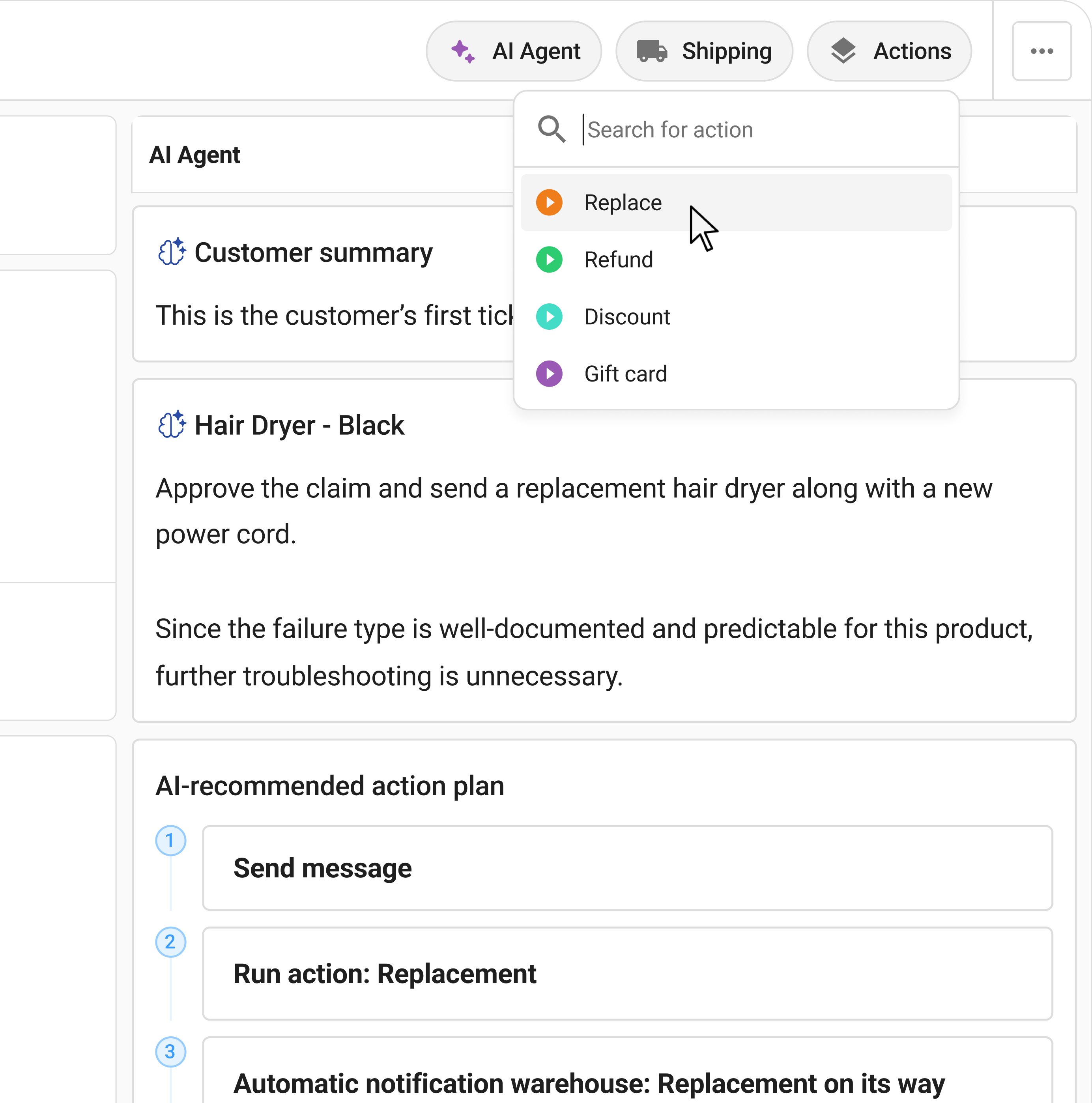
The test for any exclusion is whether a system, or a new agent, can apply it without a judgment call. "Misuse" is not enforceable. "Damage from use outside the stated operating conditions, shown in submitted photos" is. The first invites an argument, the second invites evidence.
Turning a written exclusion into an enforceable rule is what moves a limited warranty from a page into a process, the logic that lives in a workflow rather than in a folder. Done well, the common claims resolve without a human reading them, which is what lifts the warranty claim rate the brand can handle and is one of the four pillars of warranty claims software. On a brand taking 1,000 warranty claims a month, tightening one vague exclusion so it resolves at intake instead of in a dispute can take a hundred or more claims a month off the escalation pile, which is handling capacity the brand keeps rather than hires.
Keeping the same limited terms across channels and dealers
A limited warranty only holds if it means the same thing everywhere the product sells. A brand selling direct, through retailers, and through dealers can end up with three readings of the same exclusion, which is how a claim approved on the website gets denied by a dealer. One set of terms, enforced by one system and synced across the stack through integrations, keeps the promise consistent. Handled well, a clean limited-warranty claim is also a loyalty moment, the argument in why the warranty claim process builds customer loyalty. For baby and nursery brands, where parents claim quickly and expect a clear answer, the pattern sits in the baby and nursery industry view, and paid coverage that extends a limited term is the subject of extended warranty platforms.
On platform fit, simple size-and-fit returns belong to exchange-first tools like Loop or tracking-led tools like AfterShip. Writing, enforcing, and reporting on a limited warranty across channels, with repairs and spare parts in the mix, is the complex post-purchase work Claimlane runs alongside the commerce and ERP stack rather than under it.
What to measure
Track dispute rate by exclusion, because a single vague clause usually drives a disproportionate share of arguments and points straight at the wording to fix. Track first-pass resolution, the share of limited-warranty claims the terms let the system settle without a human. Track denial-to-complaint conversion, since a well-written limited warranty should let a brand decline a claim without turning the customer into an escalation.
Frequently asked questions
What is a limited warranty?
What is the difference between a limited and a full warranty?
What can a limited warranty exclude?
How should a brand write a limited warranty?
Rather than copy a vague clause from a competitor, start from a real structure.
The warranty policy template breaks down each section a limited warranty needs, with wording written to be enforced at claim time rather than argued over.
Start from the warranty policy template