.webp)
Most brands treat warranty claims as a cost. Something to resolve quickly, document, and forget. The brands that grow fastest in the next few years will treat them as the opposite: as the single highest-leverage moment to turn a frustrated customer into a loyal one.
The data backs this up. Customers are 93% more likely to shop with you again if they feel valued and heard when something goes wrong. A bad claim experience pushes 65% of customers toward a competitor. The claim process isn't just a support function. It's a retention engine.
More likely to shop again if they feel heard during a claim
Will leave for a competitor after a bad claim experience
Say repeating themselves is the worst part of customer service
Revenue lift per one-star Trustpilot rating gain
Why the warranty claim process matters more than ever
A faulty product is the single most emotionally charged moment in the customer journey. The customer paid for something that broke. They're already disappointed. Whatever happens next sets the tone for the rest of the relationship.
There are only two outcomes:
- The brand handles it well. The customer feels heard, the issue gets resolved fast, and they come back. Often more loyal than before, because the brand proved it would stand behind the product.
- The brand handles it badly. Long email threads, unclear status, manual handovers, the customer asked to repeat themselves three times. They leave. Often loudly, with a 1-star review on Trustpilot.
A 5 to 9% revenue increase comes with each one-star Trustpilot rating gain. Nine out of ten consumers read reviews before buying. The claim experience compounds, both ways.
Just like bad news, bad reviews will travel fast
A study found that businesses can enjoy a 5-9% increase in revenue for every one-star increase on sites like Trustpilot. However, handling customer complaints about faulty products tends to be a manual and time-consuming process that often leads to frustrations, slow resolution times, and angry customers.


We all know the saying the customer is always right. If that’s the case, you have to find a suitable solution as quickly as possible to protect your brand reputation from bad online reviews. In fact, nine out of ten consumers make the effort to read a review before making a purchase.
What a good warranty claim process actually looks like
Most articles on this topic stop at "be fast and helpful." That's not actionable. Here's what good actually looks like, step by step:
The customer reports the issue through a portal, not an email. Order number, photos, video, and issue category submitted in one form. No follow-up emails for missing information.
The system checks warranty terms, purchase date, and product against business rules. Clear-cut cases get auto-approved. Edge cases route to a human with full context already attached.
The customer sees what's happening without having to ask. So does the support team. So does the supplier, if one is involved. No black holes.
Refunds, replacements, repairs, or store credit, all triggered from inside the same platform. No manual coordination across spreadsheets and email.
Every claim adds to a feedback loop on product quality, supplier performance, and recurring defects. The next product cycle uses what the last one taught you.
This isn't theoretical. It's the workflow Claimlane customers run every day.
Faulty products are critical for your customers
It’s a critical moment for customers when a product becomes faulty, and a business can face serious consequences for lagging behind the competition. If a product is faulty, customers expect the issue to be resolved quickly, and the process needs to be fast and hassle-free.
If you don’t take ownership, you will encounter unhappy and dissatisfied customers that will leave your business. On the other hand, if you help them and exceed their expectations by providing the best aftersales service, they will become advocators of your brand as seen below.

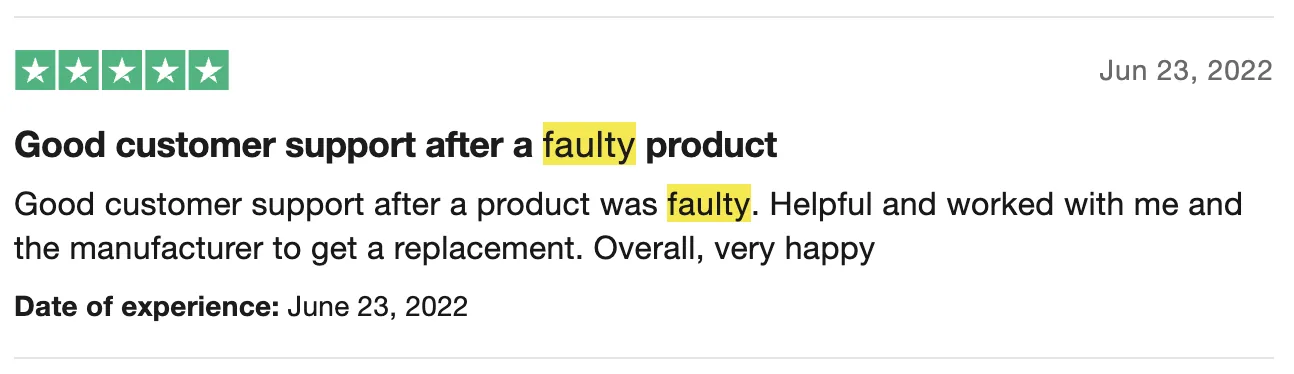
It cannot be underlined enough how important customer complaints about faulty products need to be taken serious to ensure happy customers. You risk 65% of customers leaving your business for the competition due to a poor experience. You need to be customer-centric to stay ahead of the competition, and optimizing the post-purchase experience is a great way to start improving your customer loyalty.
The hidden cost of a bad claim process
Most brands underestimate what a poor claim experience actually costs them. The visible cost is agent time. The hidden costs are bigger.
The hidden costs are where the money is. They just don't show up on a P&L line.
Manual processes make claim handling a pain
Good customer service goals might be to improve your customer retention, lifetime value, or satisfaction. Reducing your claim handling resolution time will do all three. However, manual and disjointed processes are common challenges many retailers run into, slowly draining the business.
Here’s why:
- Most brands will typically have their own claims guidelines
- Emails are often the standard for dealing with warranty claims
- Difficult to ensure customers submit all the needed information
- Customer service teams need to copy data into different systems
- Long resolution times due to a lack of claim data from customers
- Wasted time and resources on manual and redundant workflows
Each brand typically has its own claim guidelines for what information they need if a product becomes faulty within the warranty period. Emails are often the standard when dealing with customer complaints. Long email conversations are common, as customers almost never submit all the needed data right away. Streamlining the claim process is difficult due to this and a major pain point for customer service employees. You should, therefore, quit emails to beat the odds and try to move away from manual workflows and decrease wasted resources.
How Sebra reframed claims as a value-creating activity
The clearest example of what this looks like in practice comes from Sebra, a Danish baby and nursery brand.
Sebra knew that every warranty claim was a potential churn event. Baby products are emotional purchases. When something fails, the parent is already stressed before the support email even gets written. Handling that moment poorly meant losing a customer and probably a future generation of customers too.
After implementing Claimlane, Sebra didn't just speed up the process. They changed how their team thought about it.
"Claim handling is now treated as a value-creating activity, not a cost centre. Every incoming claim is approached as an opportunity to deepen the customer relationship."
Strategic reframing
Every claim is now a loyalty moment
The shift isn't operational. It's strategic. The same claim that used to feel like a tax now feels like a chance to build loyalty. Same product fault, same customer, completely different outcome.
This is what a strong warranty claim process makes possible.
A streamlined warranty claim process is key
The warranty claims process must be streamlined to avoid manual workflows and can be executed by having all the correct data collected from customers right away. It’s also important to ensure customers don’t have to repeat themselves, as 66% claim this as being the most annoying aspect of customer service, and make the claim process feel as seamless as possible from a customer perspective.
We are going through a digital transformation, and 90% of customers expect the convenience of using an online self-service portal to start their claims. A stellar claim experience is therefore crucial to higher customer satisfaction and is a powerful way to turn warranty claims into a source of revenue by earning your customers’ loyalty.
Five things that destroy customer loyalty during a claim
If you want to know what's actually breaking your retention, look here first:
66% of customers say this is the most annoying part of customer service. Email-based claim handling guarantees it.
Two weeks is the email-based industry average. A self-service portal cuts this to days, sometimes hours.
"We'll get back to you" with no timeline is worse than a slow answer. Visible status beats fast resolution if the customer doesn't know it's happening.
Every time a claim moves between systems or teams, information gets lost. The customer feels it.
The claim closes, the agent moves on, and the customer never hears from the brand again. The loyalty moment passes unused.
The claim solution for the competitive retailer: Claimlane
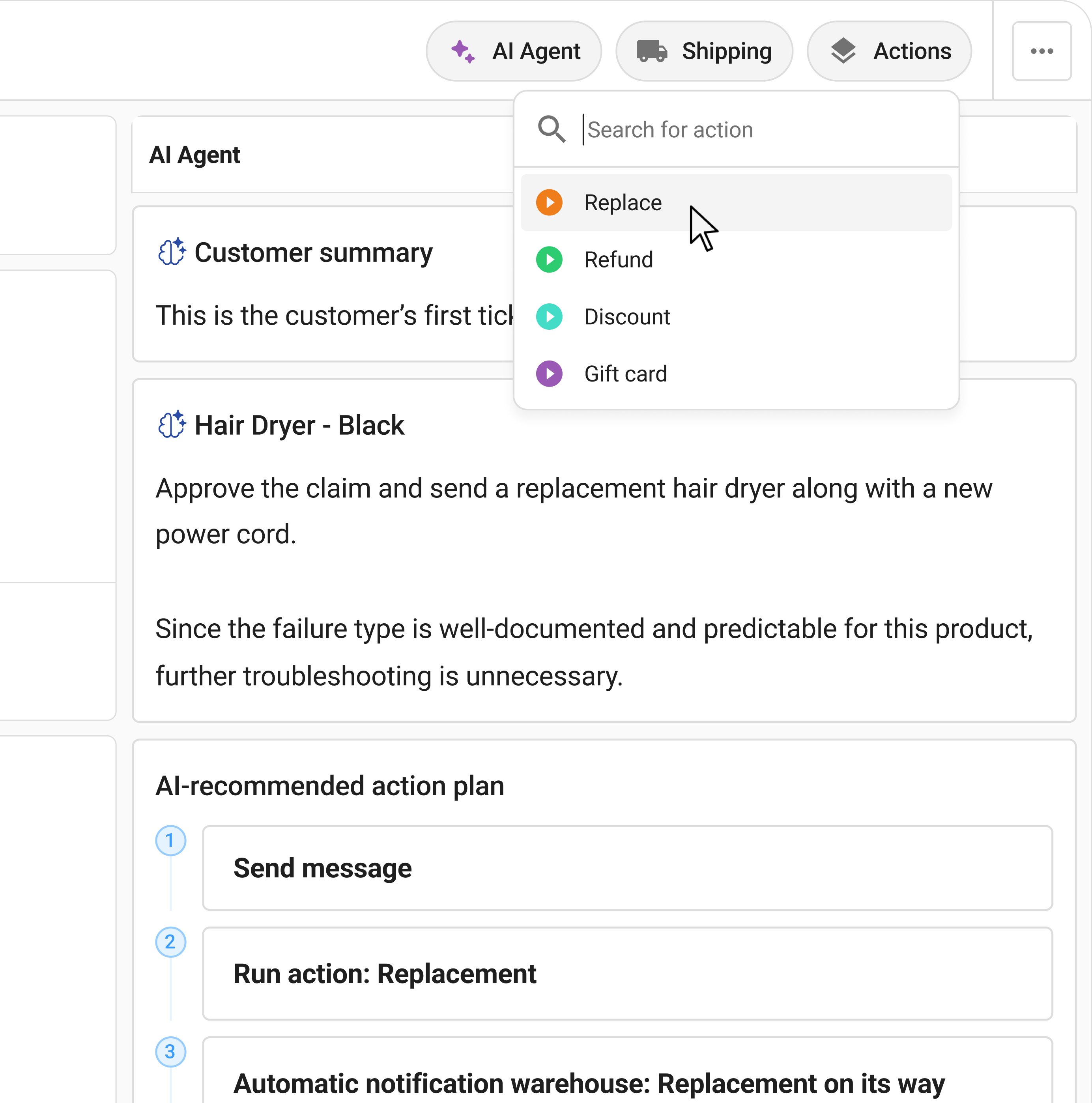
With Claimlane, you can proactively streamline the claim handling process of faulty products with customers and suppliers (brands), all from a single integrated platform. You also gain control over your customer journey to ensure a seamless claim experience every time with the customizable Customer Self-Service Portal. Furthermore, the platform gives you access to advanced Analytics and a data-driven overview to help you reduce the resolution time on claims, prevent unnecessary returns, and avoid customer complaints. Below you can see a brief overview of how the Claimlane platform works.

Customers submit claims with full context
Warranty rules and business logic applied automatically
Built in, not bolted on
End-to-end visibility for every party
Product, supplier, and claim trend data
Reviews images, applies rules, recommends resolutions
Typical first-year return for Claimlane customers
What to measure if you want to improve
Customer service goals like retention, lifetime value, and satisfaction all sit downstream of the claim process. If you want to move them, measure these inputs first:
The last one is the one most teams don't measure. It's the one that actually tells you whether your claim process is building loyalty or burning it.
BabySam, a leading retailer of baby products in Denmark, has leveraged Claimlane to get ahead of the competition. They are now even more data-driven and collect data on faulty products as well as having one unified workflow for all their brands. Claimlane is a must-have in your tech stack to provide an unforgettable aftersales experience that exceeds customer expectations.
What good aftersales does for your bottom line
When the warranty claim process works, three things happen at once:
Sebra's repeat-purchase rate on customers who'd filed a claim ended up matching, in some segments exceeding, customers who'd never had a problem.
Positive Trustpilot reviews about claim handling do more for conversion than positive reviews about the product itself. Anyone can sell. Standing behind a product is harder.
Claim data points directly at what's failing, why, and at which supplier. The same data that resolves individual claims fixes the root causes that create them.