.webp)
Pull a sample of returned electronics flagged as faulty, put them on a test bench, and a large share power on, pass every check, and show no defect. Published estimates put no fault found rates in electronics somewhere between 20% and 50% of returned units, depending on category and channel.
That gap between "customer says broken" and "bench says fine" has a name. No fault found, or NFF. For a brand running warranty and returns at scale, it is one of the most expensive numbers nobody on the team is measuring.
Claimlane sees this pattern across warranty-heavy brands in electronics, sporting goods, and appliances. The units come back, get handled, get tested, and quietly cost money on every touch. The brands that shrink that cost treat NFF as a data problem, not a quality slogan. Tracking it well sits at the core of any serious return management system.
What no fault found means in returns and warranty
NFF is not a customer lie. Most NFF returns come from real frustration: a setting that looked broken, an intermittent issue that did not repeat, a fault the customer could not reproduce, or a product that worked once it was set up correctly.
The term comes from aviation and industrial maintenance, where a removed part tests clean and goes back into service. In consumer brands and retail, the same thing happens with headphones, drills, coffee machines, and bike computers. The difference is volume and margin. A brand handling thousands of electronics returns and warranty claims a month carries NFF cost on a scale that shows up in the P&L.
It helps to separate NFF from the broader defect rate. A genuine defect needs repair or replacement. An NFF unit needs neither, but it still consumes the same intake, diagnosis, and logistics work as a real fault.
How common no fault found returns actually are
The honest answer is that most brands do not know their own NFF rate, because their claim records do not capture the test outcome in a structured field. The unit gets refunded or replaced, and the reason stays vague.
Where brands do measure it, NFF tends to cluster in categories with setup complexity, firmware, or pairing steps. Wireless audio, smart home, power tools with battery systems, and connected fitness gear all run high. Reading NFF next to your other returns and warranty KPIs is the only way to see whether a category is a quality problem or a usability problem.
The reason this matters: the fix for a true defect is supplier pressure and design change. The fix for high NFF is often instructions, onboarding, or returns-gate questions. Treat them the same and a brand wastes money on both. Pulling that signal out of raw claims is exactly what warranty analytics on product quality is built to do.
What a single no fault found claim costs a brand
NFF feels free because no part was replaced. It is not. Each returned-but-fine unit still pays for inbound shipping, intake, diagnosis time, testing, repackaging, restocking or write-down, and often a goodwill refund or a replacement that was never needed.
Add those up and a single NFF cycle commonly runs in the tens of dollars in handling alone, before any product value is written down. At a few thousand NFF units a year, that is a six-figure line that never appears as its own row in the warranty reserve. Brands that map this against their claims and returns analytics usually find the number larger than they guessed.
Why products come back with no fault found
Root cause usually falls into four buckets. Usability and setup, where the product works but the customer could not get there. Intermittent faults, where a real issue did not repeat on the bench. Returns abuse, where the warranty path is used to get a refund on a working item. And mis-triage, where a frontline agent approved a return without asking the questions that would have solved it.
Each bucket has a different owner. Usability points back to product and content teams. Intermittent faults point to the supplier and to better test protocols. Abuse points to your returns policy and gate. The only way to assign blame correctly is to track each NFF return against its serial number, so the same unit cycling three times reads differently from three separate customers. That is the case for serialized product defect tracking.
Where brands lose the no fault found battle
The loss happens at intake. When a return is logged with a free-text reason and no structured test outcome, the NFF signal is gone before anyone can act on it. The unit is refunded, the data is mush, and the same firmware confusion generates the next hundred returns.
The second loss is at the supplier. An intermittent fault that genuinely traces to a component is recoverable from the supplier, but only if the evidence exists in a form the supplier accepts. Most brands never build that case, so they eat costs that were never theirs. Closing that gap is the point of supplier recovery and faster credit notes, and it is a recurring theme in the four pillars of warranty claims software.
How Claimlane turns no fault found records into recovery
Claimlane captures each claim with structured fields: product, serial number, supplier, customer-reported symptom, photos or video, and the test outcome the technician records. NFF stops being a shrug and becomes a tagged, countable result.
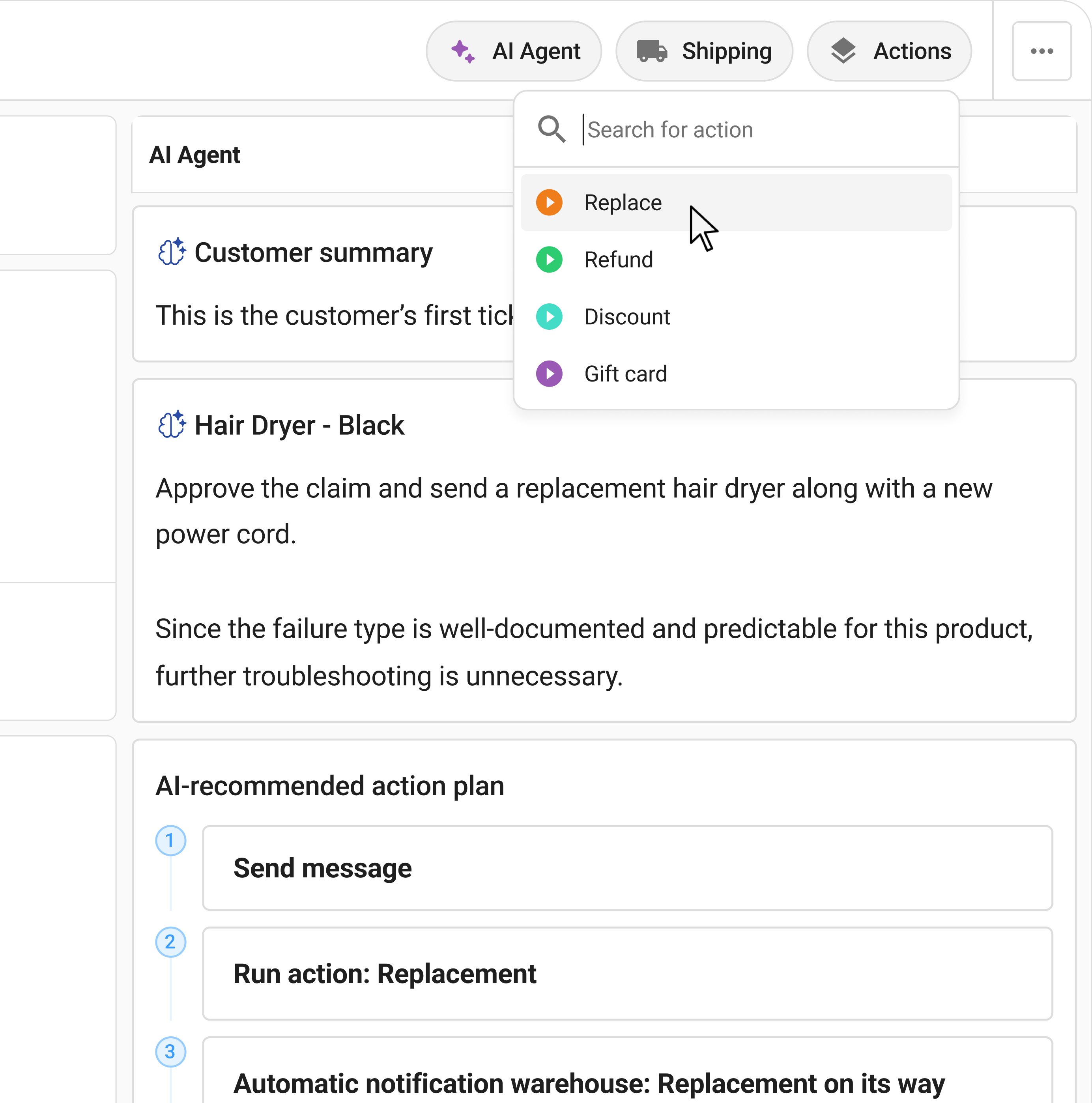
On top of that data, Claimlane's AI Agent, the first AI agent purpose-built for warranty claims and returns, reviews the submitted evidence, applies the warranty rules set per product and per supplier, and recommends a resolution. High NFF on one SKU surfaces as a pattern instead of a thousand separate tickets. The brand can then push a documented case to the supplier, route real intermittent faults to repair, and answer usability returns with content instead of refunds.
Because the claim record is structured, the same workflow feeds the brand's claim and repair workflows and connects to the wider stack through Claimlane's integrations with commerce and ERP systems like NetSuite, Microsoft Dynamics, Business Central, and Shopify, so a recovered supplier credit lands back in finance instead of getting lost in a spreadsheet.
A working method to reduce no fault found returns
Reducing NFF is a sequence, not a single fix. The brands that bring it down tend to run these steps in order.
This mirrors the broader playbook in how to reduce warranty claims and the rate math in how to calculate and reduce warranty claim rate. NFF is the slice of that work most teams skip.
Is a brand ready to manage no fault found systematically
Not every brand needs a structured NFF program. The math tends to make sense past a few clear thresholds.
Brands under those thresholds can usually handle NFF with simple discipline. Above them, the manual approach leaks money, and a dedicated defective product returns process with proper tracking pays for itself.
Claimlane vs general returns tools on no fault found
This is where it pays to be clear about where each tool fits. Simple size-and-fit returns on a Shopify store are well served by general returns apps. NFF is a different animal, because it lives at the intersection of warranty rules, supplier evidence, and repair routing.
The short version: simple returns to Loop or similar, complex warranty, repairs, and supplier claims to Claimlane. NFF sits firmly in the second column. Reading NFF trends over time also feeds predictive warranty analytics, so a brand can forecast which SKUs will generate the next wave.