.webp)
When a customer reports a defective product, the first question should be: which exact unit was it? Not just the SKU. The specific unit, with its production batch, manufacturing date, component history, and supply chain journey.
Serialized product tracking assigns a unique identifier to every individual unit. When that unit generates a warranty claim, the serial number connects the claim to the product's full history. Suddenly, brands can answer questions that batch-level tracking cannot: Was this unit part of a problematic production run? Did it pass through a warehouse with known handling issues? Is the defect isolated to units from a specific supplier?
This article covers how serialized tracking works in the context of warranty claims and returns, why defect categorization matters, and how AI is changing the way brands connect product data to quality outcomes.
- Serialized tracking connects every warranty claim to a specific unit, production batch, and supplier, enabling root cause analysis that batch-level tracking cannot provide.
- Defect categorization turns unstructured claim data into actionable quality intelligence: which defects are most common, which suppliers produce them, and which products need design changes.
- Manual defect categorization is slow and inconsistent. AI-powered assessment standardizes defect classification across thousands of claims.
- Claimlane's AI Agent analyzes product photos and claim details to automatically categorize defects, check warranty rules per serial number, and feed structured data into quality analytics.
What Is Serialized Product Tracking?
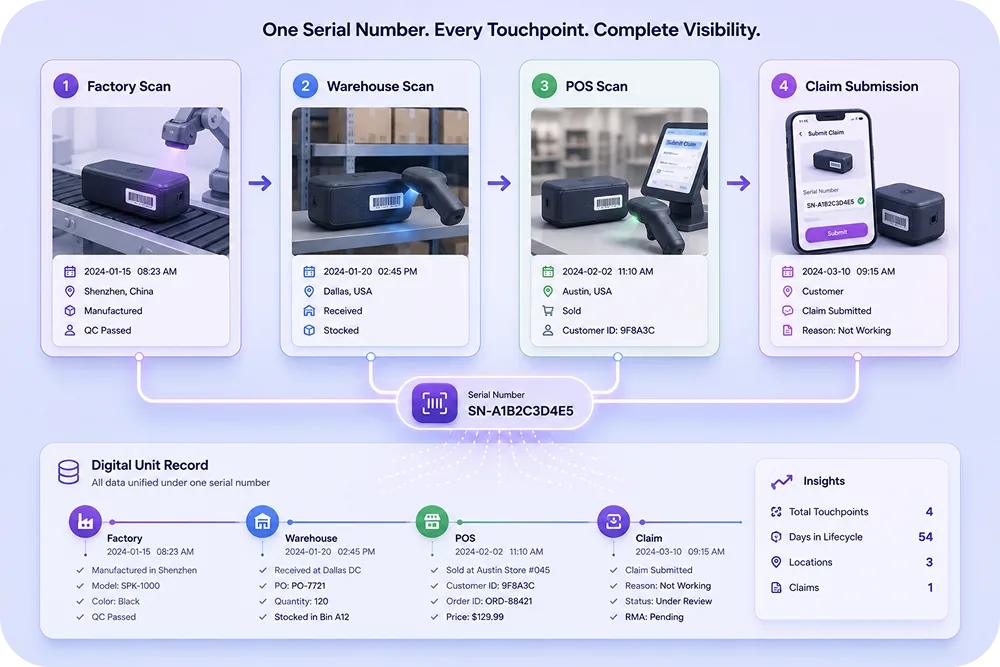
Serialized tracking means assigning a unique identifier (serial number, QR code, RFID tag, or NFC chip) to each individual product unit. Unlike SKU-level tracking, which groups all units of the same product together, serialization treats every unit as distinct.
This matters for warranty claims because it enables unit-level traceability. When a customer submits a claim for a defective blender with serial number BL-2024-08-1547, the brand can trace that exact unit back to:
- Production batch: Which manufacturing run produced it?
- Component sourcing: Which suppliers provided the components?
- Quality control: Did it pass inspection? Were there noted anomalies?
- Distribution path: Which warehouse stored it? How long was it in transit?
- Purchase details: When was it sold? Through which channel?
This chain of information transforms a warranty claim from a cost center into a quality intelligence signal.
Why SKU-Level Tracking Is Not Enough
Most ecommerce brands track inventory at the SKU level. They know they have 500 units of product X in warehouse Y. But when claims start coming in, SKU-level data cannot answer the critical questions.
The batch problem
A product might have a 2% defect rate overall, which seems acceptable. But if all those defects come from a single production batch, the actual defect rate for that batch could be 15%. SKU-level tracking averages out the problem. Serialized tracking isolates it.
The supplier problem
Many brands source the same product from multiple suppliers or factories. If one supplier has quality issues, SKU-level tracking cannot identify which units came from the problematic source. Serialized tracking, combined with production data, makes the connection immediately.
The recall problem
When a product needs to be recalled, brands without serialization must recall every unit of that SKU. With serialization, recalls can be targeted to specific production batches, date ranges, or supplier lots. This dramatically reduces the cost and scope of recalls.
According to McKinsey's research on product quality management, companies with unit-level traceability resolve quality issues 40-60% faster than those relying on batch-level data.
Defect Categorization: Turning Claims Into Quality Data
Collecting warranty claims is step one. Turning those claims into useful quality data is where most brands struggle.
The categorization challenge
When a customer submits a warranty claim, they describe the issue in their own words: "it stopped working," "the handle broke," "the color is wrong," "it arrived damaged." These descriptions are unstructured and inconsistent. Without standardized defect categories, claims data is noise rather than signal.
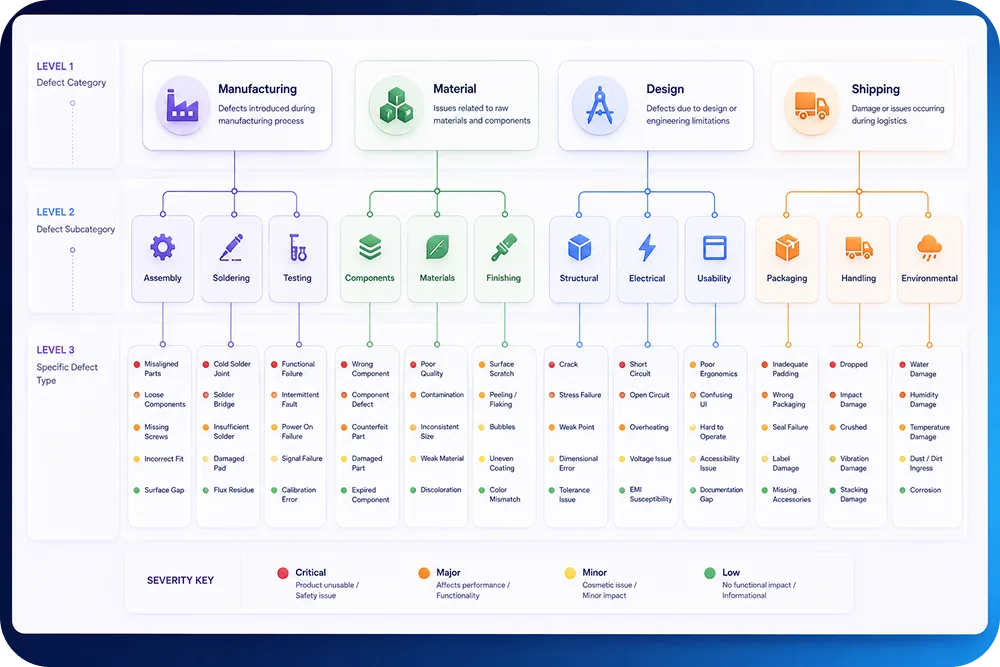
A proper defect categorization system classifies every claim into structured categories:
- Defect type: Manufacturing, design, material, shipping damage, user error
- Defect severity: Critical, major, minor, cosmetic
- Component affected: Which part of the product failed?
- Root cause category: Supplier quality, production process, packaging, logistics
This structured data feeds into warranty analytics and enables data-driven quality improvement.
Manual vs. automated categorization
Manual defect categorization relies on support agents to classify each claim. This is slow, subjective, and inconsistent. Agent A might classify a claim as "material defect" while Agent B calls the same issue "manufacturing defect." The resulting data is unreliable.
Automated categorization uses AI to analyze claim descriptions, photos, and product data to assign standardized defect categories. This is where Claimlane's AI Agent adds significant value.
How Claimlane's AI Agent Powers Defect Tracking
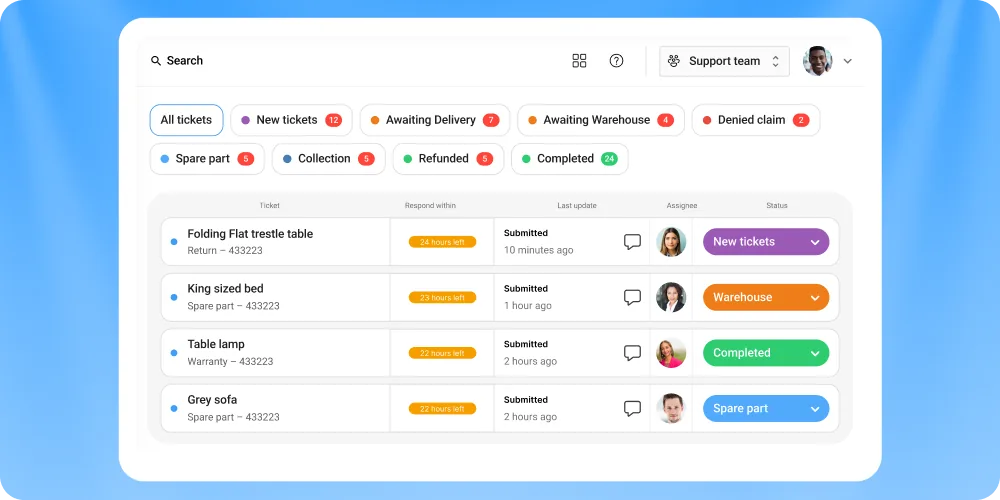
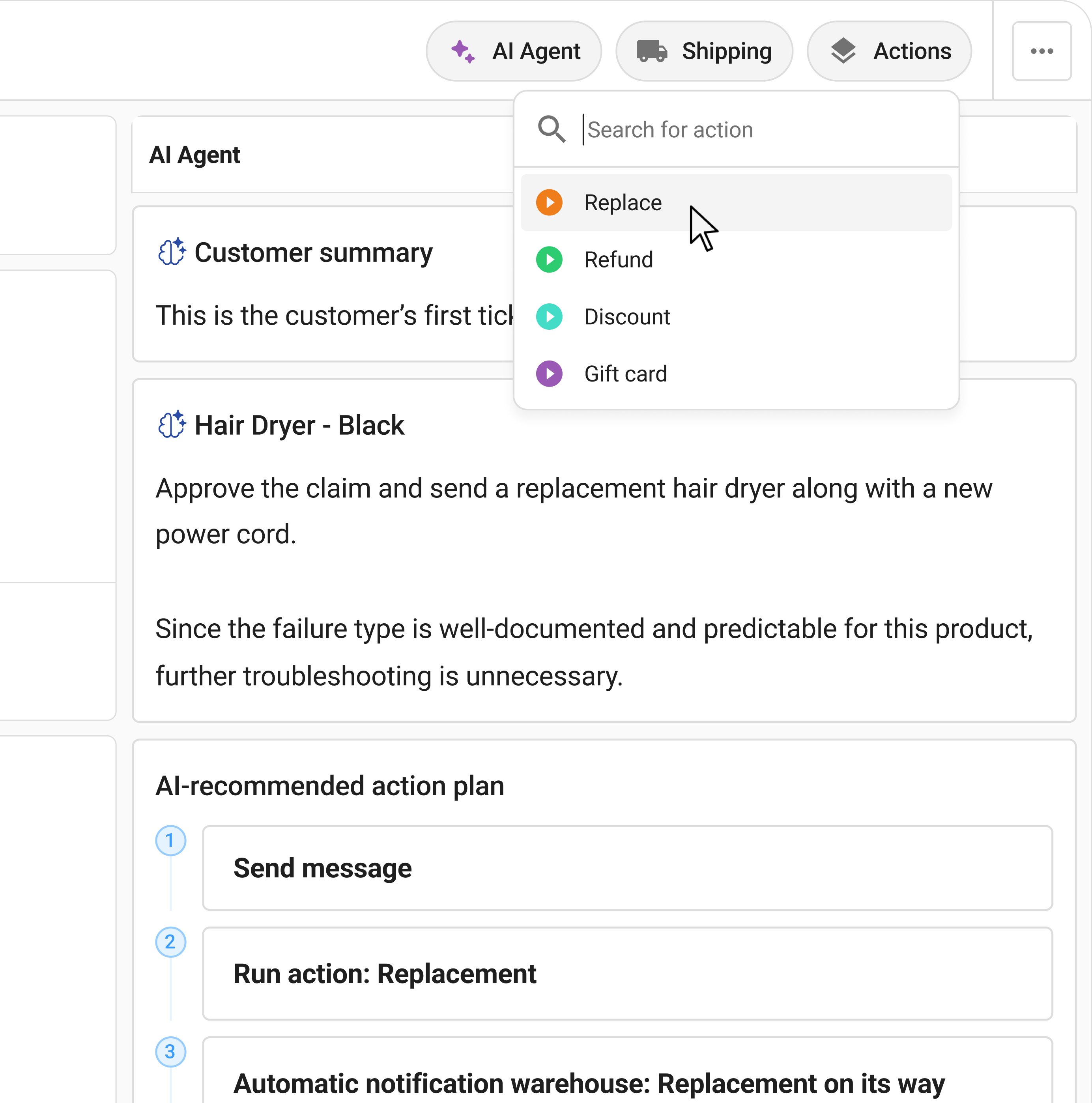
Claimlane's AI Agent, the first AI agent purpose-built for warranty claims and returns, transforms unstructured claim data into structured defect intelligence. Here is how it works in the context of serialized tracking:
Visual defect analysis
When a customer submits claim photos through the self-service portal, the AI analyzes the images to identify the defect type, severity, and affected component. A cracked screen looks different from a paint chip, which looks different from a missing part. The AI categorizes each automatically.
Serial number-aware warranty validation
The AI cross-references the serial number with the product's warranty terms, purchase date, and claim history. It can identify if the same serial number has generated previous claims (repeat failure), if the warranty period has expired, or if the product was subject to a known issue that changes the resolution path.
Automated defect pattern detection
As claims accumulate, the AI identifies emerging patterns: a spike in a specific defect type for units from a particular production batch, or a correlation between defect rates and seasonal shipping conditions. These patterns feed into quality analytics dashboards that product and sourcing teams can act on.
Supplier defect attribution
When serialized data includes supplier and batch information, the AI can attribute defects to specific suppliers. This transforms the supplier recovery process from anecdotal complaints to data-driven conversations backed by unit-level evidence.
"Claimlane has given us a 77% faster claim resolution time. The AI-powered assessment means our team can focus on the cases that actually need human attention, while routine claims are handled automatically."
Implementing Serialized Defect Tracking
Step 1: Define the serialization strategy
Decide what gets serialized. High-value products, products with warranty obligations, and products with known quality risks should be prioritized. Not every SKU needs unit-level tracking.
Choose the identifier type: printed serial numbers for consumer products, QR codes for easy scanning, RFID tags for supply chain tracking, or NFC chips for authentication.
Step 2: Connect serial numbers to production data
The serial number is only useful if it links to upstream data. Connect each serial number to its production batch, manufacturing date, component lot numbers, supplier information, and quality inspection results. This data typically lives in the ERP system or manufacturing execution system (MES).
Step 3: Capture serial numbers at every touchpoint
Scan serial numbers during production, warehouse receipt, order fulfillment, and point of sale. Each scan creates a timestamped record in the product's lifecycle. When a claim comes in, the full history is available.
Step 4: Integrate serial data with the claims platform
When a customer submits a warranty claim, the self-service portal should prompt for the serial number. Claimlane's integrations pull the associated product data, allowing the AI to make informed decisions about warranty validity and defect classification.
Step 5: Build defect category taxonomy
Define a hierarchical defect categorization system specific to the brand's products. Start broad (manufacturing, material, design, shipping) and add specificity as data accumulates. The AI will use this taxonomy to classify claims consistently.
Step 6: Set up quality feedback loops
Route defect data from the claims platform back to product development, sourcing, and manufacturing teams. Use Claimlane's analytics to create automated reports on defect trends, supplier performance, and batch quality.
CAPA: Corrective and Preventive Action
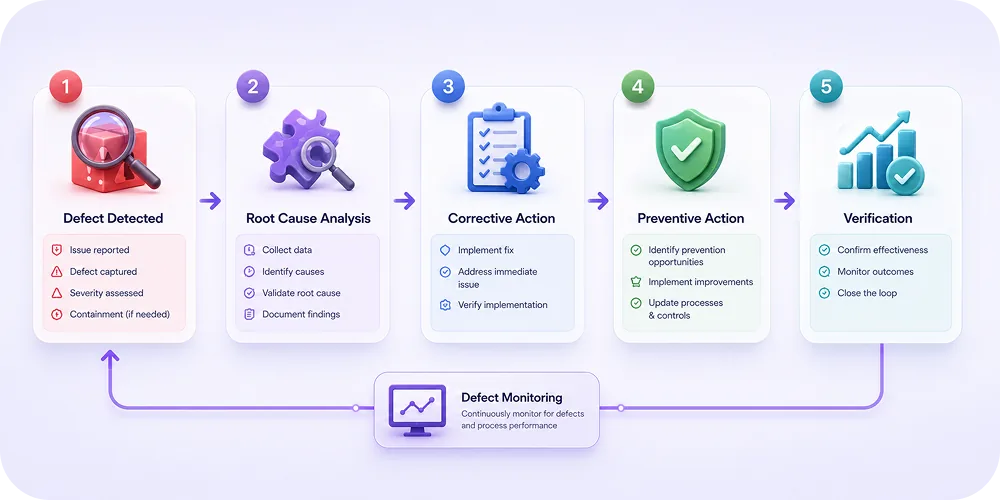
Serialized defect tracking naturally feeds into CAPA processes. When the data shows a pattern, brands need a structured process for addressing it.
Corrective action
When a defect is identified, the immediate response: pull affected units from inventory, notify customers who purchased units from the problematic batch, and initiate supplier discussions. Serialization makes corrective action targeted rather than broad.
Preventive action
Once the root cause is identified, the long-term fix: change the supplier, modify the product design, update quality inspection criteria, or improve packaging. Serialized defect data provides the evidence base for these decisions.
Connecting claims to CAPA
Claimlane's workflow engine can automatically trigger CAPA processes when defect thresholds are exceeded. If the defect rate for a specific batch exceeds a set percentage, the system flags it for quality team review and initiates the supplier quality investigation.
Industries Where Serialized Defect Tracking Matters Most
Consumer electronics
Electronics brands benefit most from serialized tracking because their products have complex component supply chains, firmware versions that vary by production date, and warranty obligations that depend on the exact unit. Serial numbers are already standard in electronics; the challenge is connecting them to claims data.
Outdoor and sporting goods
Outdoor equipment often carries safety certifications tied to specific production standards. When a climbing harness or bicycle helmet generates a warranty claim, the brand needs to know which factory produced it and whether it passed safety testing.
Furniture
High-value furniture benefits from serialized tracking because defects are often tied to specific material lots (wood grain, fabric dye batches) or assembly lines. Tracking at the unit level helps identify whether a fabric supplier's latest batch is causing premature wear.
Medical and health devices
Regulated industries require unit-level traceability by law. But the principles apply broadly: any product where a defect has safety or liability implications benefits from serialized tracking connected to claims data.
Using Defect Data for Supplier Negotiations
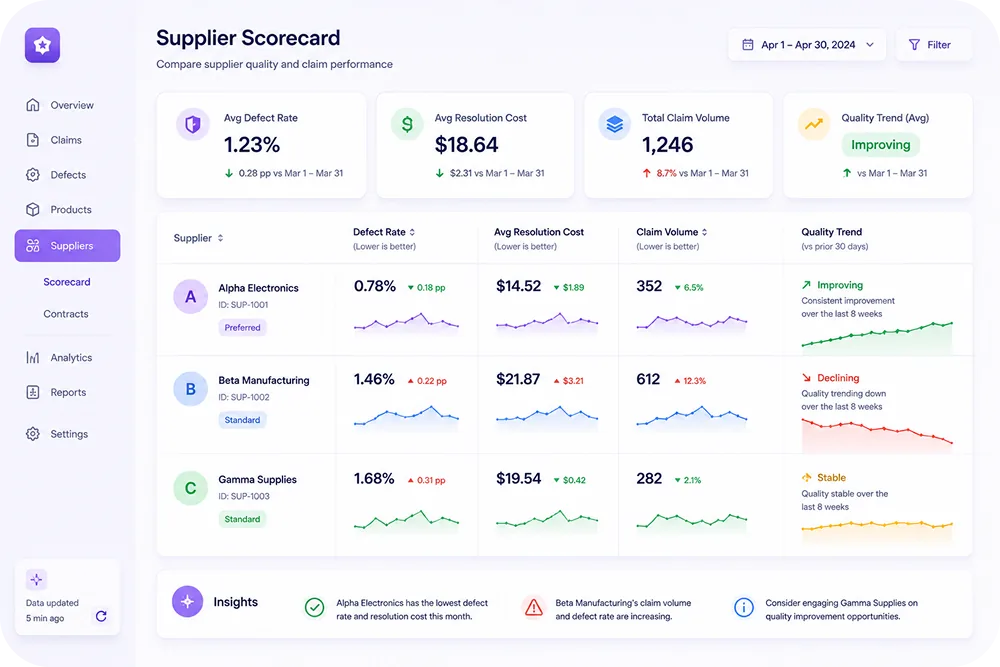
Serialized defect tracking transforms supplier relationships from subjective discussions to data-backed negotiations.
Building the evidence base
When the claims platform tracks defects by serial number and links them to supplier data, brands can produce reports showing: defect rate per supplier, defect types per supplier, cost of warranty claims attributable to specific suppliers, and trend data showing whether quality is improving or declining.
Supplier scorecards
Use claims data to create supplier scorecards that track quality metrics over time. Share these scorecards with suppliers as part of regular business reviews. The data from Claimlane's analytics provides an objective basis for quality improvement plans.
Chargeback evidence
When pursuing supplier chargebacks for defective products, serialized claim data is strong evidence. Each chargeback request includes the serial numbers of defective units, photos of the defects, the defect categorization, and the total warranty cost. Claimlane's forward-to-supplier feature packages this information automatically.
"We use Claimlane to ensure that the feedback loop from claims to product development is tight. When we see a pattern in defect reports, we can trace it back to the source and fix it."
Common Serialized Tracking Mistakes
Not collecting serial numbers at the claim stage
If the claims portal does not prompt for serial numbers, the connection between claims and production data is lost. Make serial number entry easy (barcode scanning, QR code, or manual entry with validation).
Inconsistent defect categories
If the categorization taxonomy is too broad, the data is not actionable. If it is too narrow, agents struggle to classify correctly. Start with 10-15 top-level categories and refine based on actual claim patterns.
Not closing the feedback loop
Collecting defect data is pointless if product and sourcing teams never see it. Set up automated reports from Claimlane's analytics to relevant stakeholders on a weekly or monthly cadence.
Ignoring repeat serial numbers
A serial number that appears in multiple claims is a strong signal. It might indicate an unreliable repair, a design flaw that causes recurring failure, or a customer service issue where the original claim was not properly resolved.
Not integrating with the ERP
Serialized tracking works best when claims data flows into the ERP system for financial reconciliation, inventory adjustments, and supplier chargeback processing. Claimlane's integrations make this connection seamless.
Measuring Defect Tracking Effectiveness
Defect detection speed
How quickly does the system identify a new defect pattern? Measure the time between the first claim in a cluster and the point at which the system flags it as a trend.
Category accuracy
What percentage of AI-categorized defects match expert human assessment? Track this to calibrate and improve the AI model over time.
Supplier defect rate trend
Is the defect rate from each supplier improving or declining? This metric shows whether quality improvement efforts are working.
Warranty cost per unit by batch
Compare the warranty cost (claims, refunds, replacements) for different production batches. Higher costs indicate quality issues specific to those batches.
CAPA cycle time
How long does it take from defect identification to corrective action implementation? Faster cycles mean less time selling defective products.
FAQ
Conclusion
Serialized product tracking and structured defect categorization transform warranty claims from a cost center into a quality intelligence engine. The brands that connect unit-level data to claims data can identify defect patterns faster, hold suppliers accountable with evidence, and make targeted product improvements instead of guessing.
Claimlane's AI Agent automates the hardest part of this process: turning unstructured claim data into standardized, actionable defect intelligence. Combined with the analytics dashboard and supplier forwarding, it closes the loop from claim to corrective action.
Book a demo to see how Claimlane powers serialized defect tracking.