.webp)
A retailer running Lightspeed at the counter usually has eight other systems pulling on the same data: an ecommerce store, an accounting tool, a shipping app, a loyalty engine, a warehouse system, and somewhere off the side, a returns and warranty process that lives mostly in email. The POS keeps the store running. The integrations decide whether the rest of the operation moves at the same speed.
This is the 2026 list of Lightspeed integrations omnichannel retailers actually keep. Not the full app marketplace. The tools that survive a budget review.
- Most omnichannel retailers on Lightspeed run 6-9 integrations across ecommerce, accounting, shipping, and customer support.
- The integration retailers underestimate: returns and warranty. It controls foot traffic conversion on in-store returns of online orders.
- Claimlane links Lightspeed in-store transactions and the ecommerce side so claims look the same regardless of where the purchase happened.
- Pick integrations that handle both directions. POS-only or ecommerce-only stacks always break at the channel handoff.
What Lightspeed is, and what it expects from its integrations
Lightspeed Retail runs in-store: barcode scanning, inventory counts, employee shifts, tax handling, and payment capture. Lightspeed eCom (now folded into the broader Lightspeed product) covers the online side for retailers that do not run on Shopify or BigCommerce.
What Lightspeed does not do well alone: cross-channel order history when the customer bought in one place and returned in another, warranty management on long-life products, deep accounting reconciliation, or claims data flowing back to suppliers. Those are integration jobs.
10 integrations omnichannel retailers run
1. Claimlane (returns and warranty)
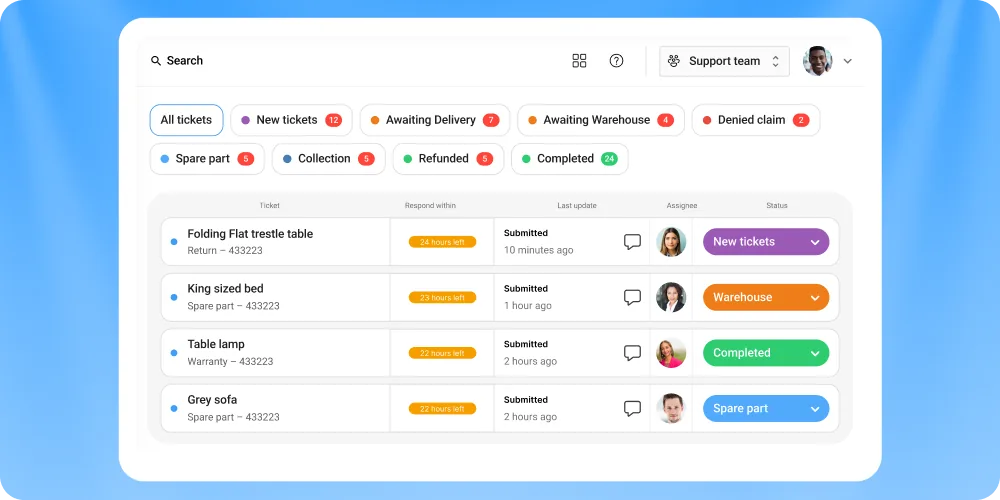
- Pulls order data from Lightspeed and the ecommerce platform into one claim record.
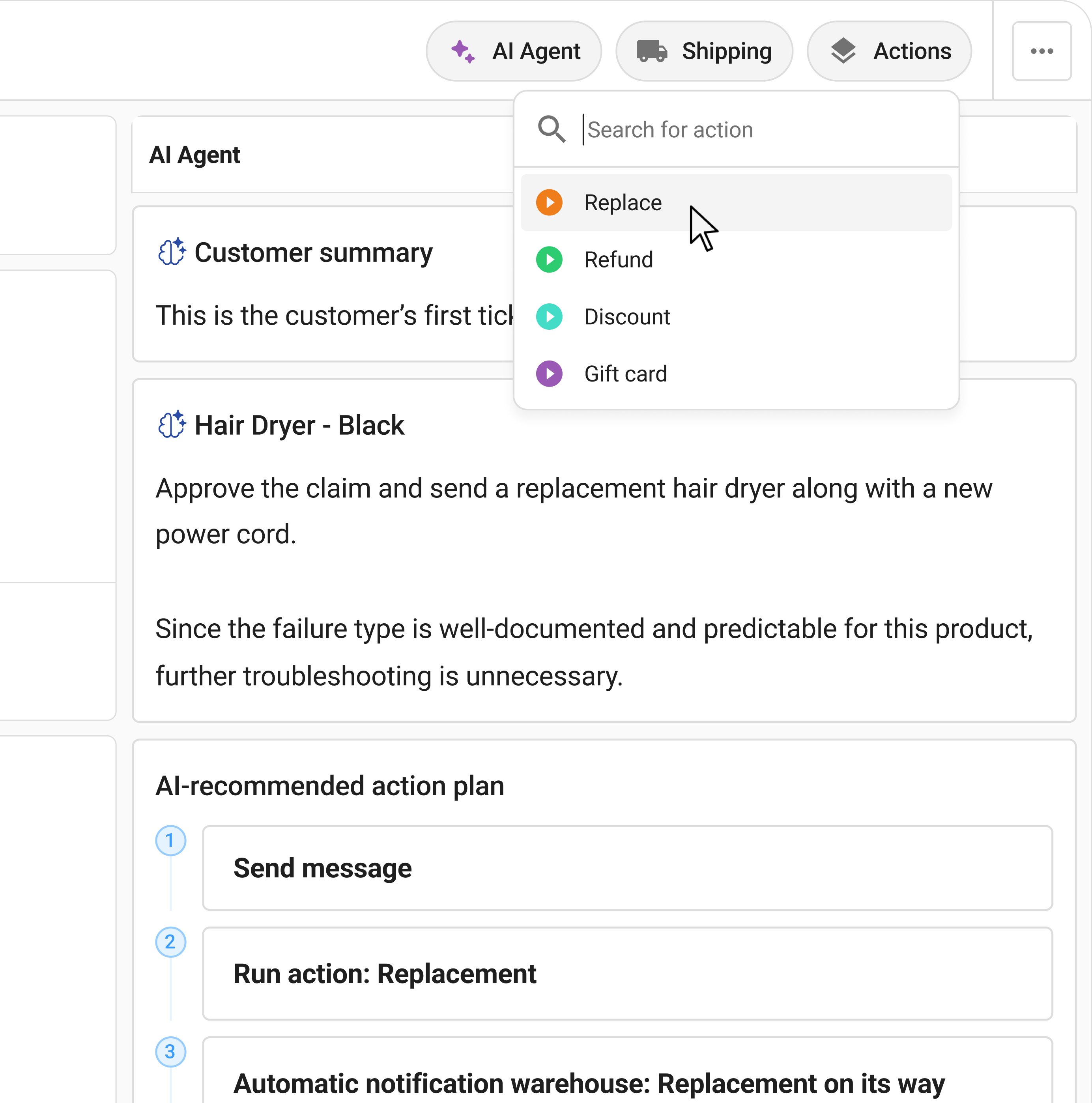
- AI Agent reviews photos, applies warranty rules, and recommends resolution before the customer leaves the store. Claimlane's AI Agent is the first AI agent purpose-built for warranty claims and returns.
- Triggers credit memos in the ERP automatically when a return is approved.
Matas, the Danish health and beauty retailer, runs Claimlane across its store network and online channel. The Matas case study covers the operational setup. Coolshop (case study) and Luksusbaby (case study) run similar omnichannel setups in different categories.
"Whether customers are shopping in-store or online, their expectations are, quite rightly, increasing every day. We, therefore, decided the time was right to invest in our vital online aftercare service, something which many retailers often overlook, despite its power to make or break a retailer's reputation if they do not get it spot-on."
For broader context, see warranty management software, return management software, best returns software for ecommerce, and the Claimlane integrations page.
2. QuickBooks Online
Daily sales totals, sales tax, refunds, and supplier payments all flow from Lightspeed into QuickBooks. The integration handles the closing process at the end of each day so the accounting team is not entering numbers by hand.
The pattern that catches up to most retailers: refunds processed in-store from an online order go to QuickBooks correctly, but the credit memo logic in the ERP for the original online sale lags. The fix is keeping refunds and credit notes in one returns workflow that talks to both systems. See business central credit memo returns for the ERP angle.
3. Xero
Functionally the same job as QuickBooks for retailers outside the US. Xero is the default for many EU and UK retailers. The Lightspeed-Xero connector handles daily sales journals, tax rates per region, and refund mapping. Pair with a returns platform to keep refund line items consistent across channels.

4. Klaviyo
Customer data lives in Lightspeed for in-store buyers and in the ecommerce platform for online buyers. Klaviyo pulls both into one profile so a customer who bought in-store and online sees one consistent experience. Triggers can fire from Lightspeed events (a customer hitting a spend threshold) or ecommerce events (an abandoned cart).
For the broader Klaviyo stack, see best Klaviyo integrations for ecommerce.

5. Shopify (returns and warranty)
Retailers running Lightspeed in-store often run Shopify online. The pairing works when product and inventory data sync both ways: a product sold in the store updates the online stock count within minutes, and an online order placed for in-store pickup shows up in the staff queue immediately.
The break point: returns. A customer who buys online and returns in-store creates an inventory and accounting puzzle that a stock POS-to-ecommerce sync does not handle. That gap is where a returns platform earns its place. For the wider Shopify context, see Shopify returns, returns management system for Shopify, and best Shopify tools.
6. ShipStation
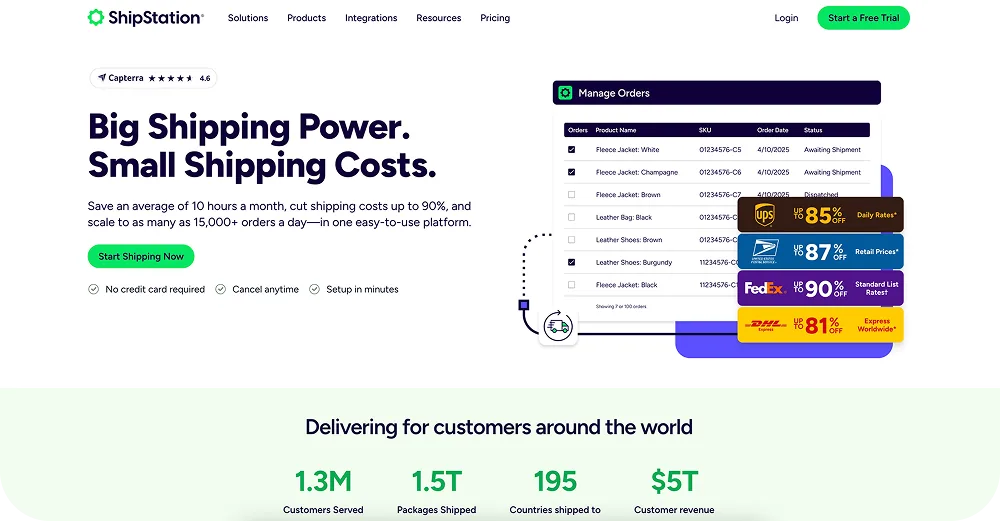
Multichannel retailers ship from stores, warehouses, and 3PL partners. ShipStation pulls orders from every sales channel including Lightspeed and routes them to the right fulfillment point. The label costs, the carrier rates, and the tracking events all live in one place.
Return shipping is the other half. ShipStation generates prepaid return labels that Claimlane can issue from the customer-facing portal. For the broader returns operations context, see how to automate returns and return labels best practices.
7. Marsello
Loyalty programs that run across in-store and online. A customer earning points at the till should see the same balance online. Marsello handles the sync with Lightspeed and most ecommerce platforms.
The integration earns its place for retailers with 20%+ repeat customer rates. Below that, loyalty effort is better spent elsewhere.

8. Zendesk
Support tickets pulled together with order history, in-store visits, and online activity. A customer calling about a defective product gets a faster answer when the agent sees the receipt, the product, and the warranty status in one screen.
For brands looking at alternatives, see Zendesk alternatives and best Zendesk integrations. For the RMA-specific angle, see Zendesk RMA and Zendesk vs Claimlane difference.
9. Business Central
Retailers running multi-store networks usually outgrow QuickBooks or Xero at some point. Business Central handles inventory, finance, purchasing, and supplier management at scale. The Lightspeed-Business Central connector keeps store sales and online sales in the same general ledger.
When a return turns into a credit memo, that document needs to land in Business Central correctly. For how that ties to the returns flow, see business central shopify integration and sales returns business central.
10. Google Analytics 4
The ecommerce side of a Lightspeed retailer needs attribution. GA4 captures online traffic, conversion paths, and product page performance. For brands that want richer cross-channel attribution, pair GA4 with a dedicated analytics tool. See best ecommerce analytics platforms for that conversation.
Where returns and warranty fit in a Lightspeed stack
Returns and warranty is the integration most Lightspeed retailers wait too long to add. The default behavior is to push everything through email and the helpdesk until the volume becomes unmanageable. By the time that happens, customer trust has already taken hits the brand never sees in reviews because the customer just stops buying.
The brands that fix this early see three changes: in-store returns of online orders go from a 15-minute process to under five minutes, supplier follow-through speeds up because every claim has structured photos and serial numbers, and the analytics dashboard starts surfacing defect patterns the merchandising team can act on. See warranty claims processing and the 4 pillars of warranty claims software.
Claimlane is rated 4.8/5 on G2.
Industries where this stack works best
Baby and nursery retail. Long warranty windows on furniture and high-volume returns on apparel. Luksusbaby is a working example.
Beauty and health retail. Mixed in-store and online, with claims tied to product batches. Matas runs Claimlane on this profile.
Outdoor and sporting goods retail. Warranty claims on high-value gear, often serviced through repair networks. Black Diamond is a comparable model on the brand side.
DIY and hardware. Davidsen handles claims from professional buyers and walk-ins with the same setup. The Davidsen case study covers the playbook.
Common mistakes Lightspeed retailers make with integrations
- Treating the POS as the source of truth and the ecommerce platform as a copy. Both have legitimate customer data. Pick a customer data layer that merges them.
- Letting returns live in two places. In-store returns in Lightspeed, online returns in the ecommerce platform, and warranty claims in email. The customer sees one brand. The systems should too.
- Ignoring the ERP step. Daily sales sync to QuickBooks or Xero is not enough at scale. Credit memos, supplier payments, and inventory adjustments need their own integration logic.
- Skipping the customer service tool. Lightspeed has notes and tags. They are not a helpdesk. Connect Zendesk or similar early.
- Not connecting in-transit returned inventory. Returned products in transit between a store and a warehouse become invisible inventory if the systems do not talk.
How to pick the right stack for the business size
Small retailers (1-3 stores, $1-5M revenue): Lightspeed, Shopify, QuickBooks, Klaviyo, ShipStation, Claimlane. Six tools cover the basics.
Mid-market retailers (4-20 stores, $5-50M revenue): Add Zendesk, Marsello, and either Xero or QuickBooks Advanced. Eight to nine integrations.
Enterprise retailers (20+ stores, $50M+ revenue): Add Business Central or NetSuite, GA4 paired with a dedicated analytics layer, and tighter supplier management. Ten or more integrations, with most data flowing through the ERP.
For the broader operations frame, see omnichannel customer service platforms and managing cross-channel returns.
Measuring whether your stack is working
- Inventory accuracy across channels. Target above 97%.
- Return processing time (in-store and online). Under 5 minutes in-store, under 24 hours online for approval.
- Cross-channel customer match rate. What percentage of in-store and online profiles map to the same customer.
- Refund-to-credit-memo time. Should be same-day with the right ERP integration.
- Support ticket volume per 100 orders. Trending down means the stack is working.
See returns and warranty KPIs for the broader measurement set.
FAQ
Conclusion
Lightspeed retailers do not need more tools. They need fewer, better-connected ones. The POS, the ecommerce platform, the accounting tool, and the returns platform should pass data both ways, so the customer experience is the same in-store and online. Get that part right and the rest of the stack falls into place.
Book a demo to see how Claimlane fits a Lightspeed retail setup.