.webp)
A customer buys a jacket from a brand's website, tries it on at home, and wants to return it at the nearest store. Another customer buys from a marketplace listing, gets a defective product, and contacts the brand directly. A third buys in-store but wants to ship it back because the store is too far for a second trip.
These are omnichannel returns. And they're becoming the norm, not the exception.
Retailers and brands that sell through multiple channels face a growing challenge: every channel combination creates a different return path, and customers expect all of them to work without friction. This guide covers how to build omnichannel return processes that actually scale.
What Are Omnichannel Returns?
Omnichannel returns means allowing customers to return products through any channel, regardless of where the purchase was made. The most common patterns:
- BORIS (Buy Online, Return In Store). The customer purchases online and returns at a physical location.
- BOPIS returns. The customer picks up in-store, then returns by mail.
- Marketplace-to-brand returns. The customer purchases through Amazon, eBay, or another marketplace but returns directly to the brand.
- Cross-border returns. International customers returning products purchased from a domestic webshop.
- In-store purchase, online return. The customer bought in a physical store but initiates a return through the website or a self-service portal.
The goal is a consistent return experience no matter the purchase channel. That sounds simple. In practice, it requires unified systems, clear policies, and automated workflows.
Why Omnichannel Returns Matter
Customer Expectations Have Changed
According to the National Retail Federation, return rates for online purchases hover around 20-30% depending on the category. Apparel is higher. Electronics tend to be lower but involve more complex warranty claims.
Customers don't think in channels. They think in brands. If they bought from Brand X, they expect Brand X to handle the return, regardless of whether it was through Shopify, Amazon, a retail partner, or a physical store.
Financial Impact
Poor return experiences cost money in multiple ways:
- Lost customers. A frustrating return experience reduces repeat purchase rates by up to 30%.
- Higher support costs. Manual, channel-specific return processes require more agent time. Brands like Davidsen went from 5 agents handling claims to 1-2 agents by centralizing their claims workflow.
- Inventory delays. Returns that take weeks to process sit in limbo instead of being restocked or forwarded to suppliers.
- Hidden costs including shipping, restocking labor, quality inspection, and write-offs.
Competitive Advantage
Brands with smooth omnichannel returns gain an edge. Customers actively check return policies before buying. A clear, flexible return policy that works across channels can be the deciding factor between two similar products.
The Challenges of Cross-Channel Returns
Disconnected Systems
The biggest challenge is technology. Most brands use different systems for each channel:
- Shopify or WooCommerce for the webshop
- A POS system for physical stores
- Marketplace seller portals for Amazon, eBay, etc.
- A helpdesk for customer support
- An ERP for inventory and finance
When a customer returns a product, data needs to flow between all of these. Without integrations, agents end up copying data between screens, and mistakes happen.
Policy Complexity
Different channels often have different return rules:
- Online purchases might have a 30-day return window
- In-store purchases might have 14 days
- Marketplace purchases follow the marketplace's rules (which vary by platform)
- Warranty claims follow the product's warranty terms, not the channel's return policy
Managing these overlapping policies across channels without creating confusion for customers or agents is genuinely hard.
Inventory Visibility
When a return is initiated through one channel but the product needs to go to a different warehouse or store, inventory systems need real-time visibility. Without it, restocking delays pile up and the returned product loses value sitting in transit.
Fraud and Abuse
Omnichannel returns open more vectors for fraud. Wardrobing (buying, wearing, returning) is harder to detect when returns happen across channels. Cross-channel return fraud can also involve returning products purchased at discount through a full-price channel.
How to Build an Omnichannel Return Process

Step 1: Unify the Return Policy
Start with one return policy that covers all channels. Keep the core terms consistent:
- Return window (30 days is the most common)
- Condition requirements
- Refund method (original payment, store credit, exchange)
- Who pays for return shipping
Channel-specific exceptions should be clearly documented. For example: "Items purchased on Amazon must be returned through Amazon's return process. Items purchased on our website or in-store can be returned through any channel."
Step 2: Create a Single Entry Point
Give customers one place to start any return, regardless of where they bought. A self-service portal on the brand's website is the most effective approach. The portal:
- Looks up the order using email, order number, or purchase reference
- Presents eligible items for return
- Collects the reason and any supporting documentation (photos for warranty claims)
- Offers return method options (mail, in-store drop-off, pickup)
- Generates a return label or QR code
This works even for in-store purchases if the POS system shares order data with the portal.
Step 3: Automate Routing and Resolution
Once a return is initiated, the workflow engine needs to determine:
- Where should the product go? Back to the original warehouse, a returns center, or directly to the supplier?
- What resolution applies? Refund, exchange, repair, or replacement?
- Does it need inspection? Defective products need quality review. Simple change-of-mind returns can be processed faster.
- Which team handles it? Customer service, warehouse operations, or supplier relations?
Automating these decisions based on product type, return reason, and channel reduces processing time and ensures consistency.
Step 4: Sync Inventory in Real Time
Returned items should update inventory as soon as they're received and inspected. For brands selling across multiple channels, inventory adjustments from returns need to propagate to all sales channels immediately. A returned jacket that's restockable should appear as available on Shopify, the marketplace listing, and the POS system simultaneously.
Step 5: Track and Communicate
Customers expect updates. Automated status emails at each step keep customers informed:
- Return request received
- Return shipping label generated
- Product received at warehouse
- Inspection complete
- Refund processed
This reduces "where is my refund?" tickets, which are among the most common customer service inquiries for ecommerce brands.
Step 6: Analyze and Improve
Omnichannel returns generate valuable data. Returns analytics should track:
- Return rates by channel
- Most common return reasons by product
- Average processing time by return type
- Cost per return by channel
- Fraud patterns
This data feeds back into product decisions, supplier conversations, and policy adjustments.
BORIS: The Most Requested Omnichannel Return Type

Buy Online, Return In Store is the single most requested omnichannel return option. Why:
- Convenience. Customers don't need to pack, label, and ship.
- Instant resolution. Refunds or exchanges happen on the spot.
- Foot traffic. Returns drive store visits, and a percentage of returners make additional purchases.
Making BORIS Work
For BORIS to function, store associates need:
- Access to online order data (order number lookup at the POS)
- Clear guidelines on which online returns are eligible in-store
- The ability to process refunds to the original online payment method
- A way to flag defective items for warranty processing vs. simple restocking
Brands without physical stores can achieve a similar effect through third-party drop-off networks (Happy Returns, UPS, etc.), though these lack the upselling opportunity.
Marketplace Returns: The Tricky Part
Marketplace returns (Amazon, eBay, Zalando, etc.) add complexity because the marketplace often controls the return policy and process.
Common Marketplace Return Challenges
- Policy override. Amazon's A-to-Z guarantee gives customers generous return rights that may exceed the brand's standard policy.
- Limited data. Marketplace returns often arrive with minimal context about why the product was returned.
- Commingled inventory. Products in Amazon FBA may be returned to Amazon's warehouse, not the brand's.
- Financial impact. Marketplace return shipping costs and restocking fees vary by platform and often eat into already-thin marketplace margins.
Strategies for Marketplace Returns
- Separate reporting. Track marketplace return rates and reasons independently from direct-channel returns.
- Return-to-brand programs. Some marketplaces allow brands to direct returns to their own return management system instead of the marketplace warehouse.
- Warranty claim routing. For defective products returned through marketplaces, route them into the warranty claims workflow for proper documentation and supplier recovery.
Warranty Claims in an Omnichannel Context
Warranty claims are fundamentally different from standard returns, but they happen across all channels. A customer might buy a coffee maker on Shopify, discover a defect three months later, and initiate a warranty claim through email, the website, or even social media.
Why Warranty Claims Need Special Handling
- Longer timeframes. Warranty periods extend far beyond the standard return window.
- Documentation requirements. Photos, videos, serial numbers, and proof of purchase are typically required.
- Resolution variety. The outcome might be a replacement, repair, spare part, or credit, not just a refund.
- Supplier involvement. Many warranty claims need to be forwarded to the manufacturer.
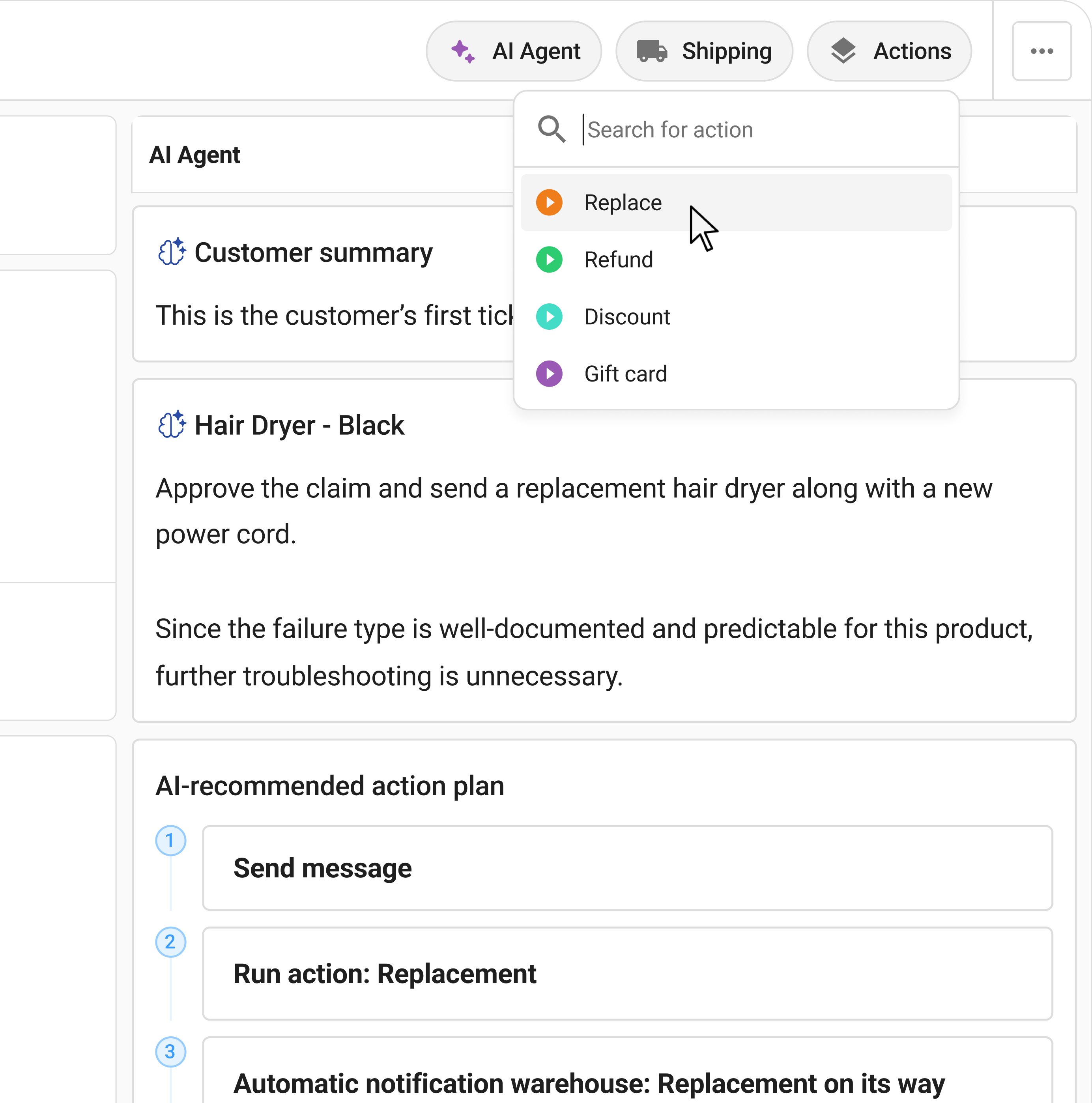
Claimlane's AI Agent, the first AI agent purpose-built for warranty claims and returns, handles the complexity that makes warranty claims different from standard returns. It analyzes product images and videos, applies warranty rules per product and supplier, and recommends or auto-approves resolutions.
Brands like Konges Sløjd use Claimlane to improve data quality on retailer claims. Black Diamond automated warranty and repair workflows across channels.
Tools for Managing Omnichannel Returns
The technology stack for omnichannel returns typically includes:
The key is that these systems communicate. A return initiated through the self-service portal should create a ticket in the helpdesk, update inventory in the ERP, and notify the warehouse, all automatically.
Measuring Omnichannel Return Performance
Track these metrics across all channels:
- Return rate by channel. Are marketplace returns higher than direct? That signals a product listing or expectation gap.
- Cost per return by channel. Include shipping, labor, restocking, and write-off costs.
- Processing time by channel. How long from return initiation to refund? In-store returns should be instant; mail returns typically take 5-10 business days.
- Exchange conversion rate. What percentage of returns become exchanges? Higher is better for revenue retention.
- Supplier recovery rate. For defective products, what percentage of costs are recovered from the supplier?