
Looking to optimize your Shopify store and get rid of those pesty manual tasks with Shopify Integrations?
Then you’ve come to the right place. Here's a list of Shopify Tools you need to take a look at in 2026👇
AI tools for Shopify Stores
Let's start by looking at some of the most popular AI tools for Shopify stores.
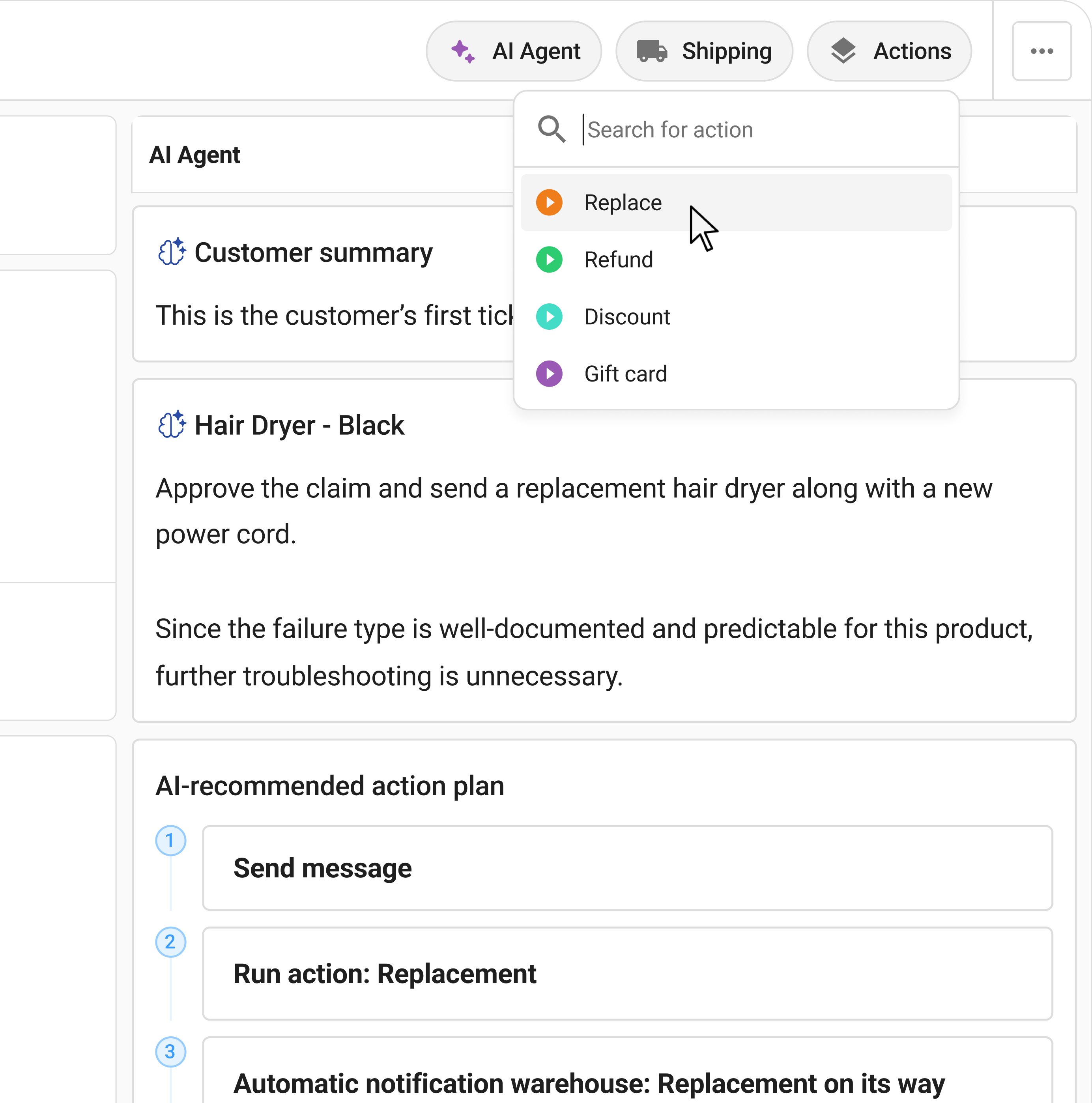
Claimlane - AI Agents for Returns and Warranties
Best for: Automating aftersales support including returns, refunds, replacements and warranty cases.
Core capabilities
- AI agents that resolve refunds, replacements, warranty claims and repair requests.
- Automated decision logic using product, order, supplier and customer data
- Smart recommendations for refund, replacement, or repair
- Reduces support volume by handling repetitive post-purchase questions
- Fully integrated with Shopify orders, products, and claim rules
Learn how Black Diamond Equipment automated their refund, replacements and repair tickets.
.webp)
Gorgias - AI for Support
Best for: AI-assisted customer support inside a Shopify-focused helpdesk
Core capabilities
- AI agent that drafts and resolves support tickets
- Suggested replies based on past conversations
- Automated workflows for refunds, cancellations, and order checks
- Auto-tagging, intent detection, and CSAT prediction
Rebuy - AI Personalization
Best for: AI-driven upsells and personalized shopping experiences
Core capabilities
- Predictive product recommendations across PDP, cart, and checkout
- AI-created bundles and cross-sell logic
- A/B testing tools for offer performance
- Post-purchase upsells and smart cart experiences
Klaviyo - AI for Marketing
Best for: Predictive email and SMS optimization
Core capabilities
- AI subject line suggestions and campaign optimization
- Predictive metrics including churn risk, LTV, and next-order likelihood
- Smart audience segments created from behavioral data
- Automated recommendations for flows and campaign timing
Octane - AI Product Quiz
Best for: AI-powered product quizzes and zero-party data collection
Core capabilities
- AI-generated quiz questions and product matching
- Customer preference mapping
- PDP and cart recommendations powered by quiz results
- Syncs zero-party data to Klaviyo and Meta audiences
Tidio - AI Chat (Lyro)
Best for: Affordable AI chat support for smaller Shopify brands
Core capabilities
- AI chatbot that answers product, order, and store policy questions
- Learns from your website and help center
- Live chat plus AI hybrid support model
- Fast setup and onboarding
Jasper - AI for Content
Best for: Generating product descriptions, ads, and landing page copy
Core capabilities
- AI-generated product descriptions optimized for Shopify
- Brand voice training for consistent tone
- Ad copy for Meta, Google, and TikTok
- Bulk content generation for large catalogs
Marketing & Email Automation Tools
Marketing integrations live and die by data quality. When they’re connected properly, they feel almost invisible. When they’re not, campaigns miss the mark.
Klaviyo
Best for: SMBs and Enterprises
Core capabilities
- Advanced email and SMS automation
- Deep segmentation using Shopify order and product data
- Predictive metrics like expected next order date
- Strong post-purchase and retention flows
Pricing: Starts from $60 dollars per month, volume based.
G2 Rating: 4.6/5
Omnisend
Best for: Brands wanting simplicity across channels
Core capabilities
- Email, SMS, and push notifications in one platform
- Pre-built automation workflows
- Easier onboarding than more complex tools
Pricing: Starts from $16 per month, volume based
G2 Rating: 4.6/5
Postmark (ActiveCampaign)
Best for: Focused on Email Deliverability
Core capabilities
- Ensuring your emails make it to your customers' inboxes
- Extremely fast delivery and high deliverability
Pricing: Starts from $15 per month, volume based
G2 Rating: 4.6/5
Returns & Warranty Claims Tools
These tools help brands automate returns and post-purchase workflows.
Claimlane
✨ Best for: Automated returns and warranty claims workflows
Core capabilities
- Configurable returns, warranty, and repair workflows in one system
- Branded self-service portals for customers
- Central inbox for all customer and partner cases
- Automation rules and approvals (e.g., partial refunds, exchanges, warranty eligibility)
- Advanced analytics and resolution tracking
Pricing: Starts from $800/month with unlimited users
G2 Rating: 4.8/5
Narvar Return & Exchange
Best for: Enterprise stores prioritizing branded customer experience
Core capabilities
- Branded return/exchange portal with customizable flows
- Carrier and reverse-logistics support (home pickup, multiple drop-off points)
- Return tracking and post-purchase notifications
- Smart routing and exchange upsell logic
Pricing: Enterprise pricing on request
Pro's and Con's: Narvar is strong on customer experience and visibility but less focused on deep operational automation (e.g., warranty claims). Implementation can sometimes take longer.
G2 Rating: 4.2/5
Happy Returns
Best for: Brands focused on physical convenience for shoppers
Core capabilities
- In-person drop-off returns at a network of Return Bars
- Consolidated shipping back to warehouse or 3PL
- Box-free, label-free return options for customers
- Data dashboards and returns reporting
Pricing: Custom, usually based on return network usage and volume
Customer Support & Helpdesk
Support tools reduce friction when ticket volume increases.
Claimlane (If your biggest problem is returns and claims)
Best for: Stores looking to automate returns and warranty claims in one unified workflow
Core capabilities
- Automates refunds, replacements, and warranty claims from a single dashboard
- Unified return and warranty portal connected directly to Shopify product and order data
- Custom claim rules based on product, order status, or warranty terms
- Reduces back-and-forth with support by guiding customers through self-service flows
Pricing: Starts from $800/month
G2 Rating: Average rating: 4.8/5
Gorgias
Best for: Shopify-first support teams. Pricing starts low, great for smaller shopify stores looking to centralize their customer support.
Core capabilities
- Pulls Shopify order data directly into tickets
- Automation for refunds, cancellations, and common questions
- Central inbox for email, chat, and social
Pricing: Starts from $10/month
G2 Rating: 4.6/5
Zendesk
Best for: Larger or multi-brand support teams
Core capabilities
- Highly customizable workflows
- Advanced reporting and SLAs
- Supports complex support organizations
Pricing: Starts from $19/month
G2 Rating: 4.3/5
Freshdesk
Best for: Small to mid-sized teams
Core capabilities
- Ticketing, automation, and basic reporting
- Easier setup than Zendesk
- Works well with lower ticket volume
Pricing: Starts from €17/month
G2 Rating: 4.4/5
Subscription & Loyalty Tools
These integrations focus on lifetime value, not just the first order.
Recharge
Best for: Subscription-first Shopify brands
Core capabilities
- Recurring billing and subscriptions
- Customer self-service portals
- Retention tools like skip, swap, and pause
Pricing: Starts from $99/month
G2 Rating: 4.4/5
Yotpo
Best for: Brands investing heavily in social proof and loyalty
Core capabilities
- Reviews and UGC
- Loyalty and referral programs
- Optional SMS and email add-ons
Pricing: Starts from $79/month
G2 Rating: 4.3/5
Smile.io
Best for: Simple loyalty programs
Core capabilities
- Points, rewards, and referrals
- Easy Shopify setup
- Minimal configuration required
Pricing: Starts from $79/month
G2 Rating: 4.6/5
Consio.ai
Best for: Smart AI for customer support and AI-powered outbound sales
- Core capabilities
- AI Voice Agent for Support handles inbound customer calls automatically with full e-commerce context resolving questions about orders shipping returns and more
- Outbound call campaigns combine AI and human agents to call high-value Shopify and Klaviyo segments
- AI Dialer Assistant guides agents in real time providing scripts full customer profiles, order and cart history for personalized conversations
- Voice AI to SMS automatically sends SMS to customers from calls or interactions delivering tracking links product info or messages with full context
- Multi-channel integrations works seamlessly with Shopify Klaviyo and your helpdesk
Pricing: Starts from $30/month (volume based)
G2 Rating: 5/5
Shopify ERP Integrations
Shopify runs your storefront. An ERP runs the financial, operational, and inventory backbone of your business.
Shopify NetSuite Integration
Best for: Mid-market to enterprise brands with complex operations
Core capabilities
- Financial management and reporting
- Multi-entity and multi-currency support
- Advanced inventory and order management
- Strong B2B and wholesale workflows
Pros
- Extremely powerful and flexible
- Scales well with global operations
Cons
- Expensive to implement and maintain
- Requires experienced implementation partners
Tired that your warranty and returns data isn't tied to your ERP? Use Claimlane to connect Shopify, NetSuite and your aftersales.
Microsoft Dynamics 365 Business Central
Best for: Accounting-first SMB and mid-market brands
Core capabilities
- General ledger and financial reporting
- Inventory and supply chain management
- Tight integration with Microsoft tools
- B2B invoicing and pricing logic
Pros
- Strong accounting foundation
- More accessible pricing than NetSuite
Cons
- Native Shopify connectors can be limited
- Customization often requires partners
Odoo
Best for: Cost-conscious or highly customizable setups
Core capabilities
- Modular ERP with finance, inventory, and CRM
- Open-source flexibility
- Wide ecosystem of add-ons
Pros
- Lower licensing costs
- Highly customizable
Cons
- Heavier technical overhead
- Integration quality varies by connector
SAP Business One
Best for: Established businesses with traditional ERP needs
Core capabilities
- Financials and inventory management
- Manufacturing and supply chain support
- On-prem or cloud options
Pros
- Proven ERP foundation
- Strong for manufacturing-led businesses
Cons
- Less Shopify-native
- Often overkill for pure DTC brands
How to Choose the Right Shopify Integrations for Your Business
There isn’t a single “right” Shopify integration stack. What you need depends entirely on the kind of business you’re running and how far along you are.
The biggest mistake is copying an enterprise setup too early or waiting too long to fix problems that are already slowing you down.
Here’s a more realistic way to think about it.
Small Shopify Stores:
At the beginning, the goal is simple. Sell products, talk to customers, and keep things manageable.
You don’t need an ERP. You don’t need ten tools. You just need a few integrations that cover the basics.
Most early-stage Shopify stores are fine with:
- Email and SMS marketing using Klaviyo
- A support desk like Zendesk or Gorgias
- Native Shopify reporting and analytics, perhaps looking at tools made specifically for smaller shopfiy stores.
At this stage, speed matters more than perfection. Choose tools that are easy to set up and don’t require constant maintenance.
Scaling Shopify brand:
This is where integrations stop being optional.
Order volume increases. Support tickets grow. Returns become more frequent. Manual processes start to break.
Scaling brands usually need to add:
- An ERP or accounting system to keep inventory and finances aligned
- A dedicated returns and warranty claims system like Claimlane
- More advanced post-purchase and retention workflows
- Better reporting across tools
This is also when clean data becomes critical. If returns, replacements, and refunds aren’t synced
properly, support and finance teams feel the pain fast.
Shopfiy enterprise
At this level, integrations are no longer just about convenience. They define how the business runs.
Enterprise Shopify setups almost always include:
- A fully integrated ERP as the system of record
- A dedicated warranty and returns platform
- Tight integration between Shopify, ERP, and warranty claims tools like Claimlane
- Advanced support, analytics, and reporting integrations
The goal here isn’t adding more tools. It’s reducing friction between teams, systems, and customers.
Conclusion
Shopify integration is really about one thing. Making your store easier to run as it grows.
Most brands don’t need a huge stack on day one. A solid email setup, a support desk, and Shopify’s native tools are usually enough. Over time, volume increases, edge cases pile up, and manual work starts slowing teams down. That’s when integrations begin to matter.
The brands that scale well are intentional. They add ERP when operations demand it. They bring in dedicated returns and warranty tools when support load increases. And they make sure systems like Claimlane connect cleanly with Shopify instead of living in silos.
In 2026, the strongest Shopify stacks aren’t the biggest. They’re the ones that remove friction, keep data clean, and let teams focus on growth instead of fixing problems.