Handling RMAs is often a tedious and complicated process. You need to collect information, store the data, communicate with the customer, and then solve the issue the right way. For growing e-commerce and retail brands, this can turn into a real bottleneck.
Using Zendesk for RMA management
Zendesk is one of the most popular customer service platforms in the world. It works well across many industries and is a natural place for customers to reach out when they have a problem with a purchase.
You might expect Zendesk to be well prepared for RMA handling. But once you try to run returns inside Zendesk, it quickly becomes clear that the platform is built for communication, not for hands-on return handling.
Pros and cons of using Zendesk for RMAs
Zendesk does some things brilliantly and some things not at all. Here's how it breaks down when you apply it to RMA work specifically:
✅ Pros
- Strong customer support system
- Easy for agents to work in
- Good overview of conversations
❌ Cons
- No built-in RMA workflows
- No connections to warehouse, carriers, or ERP
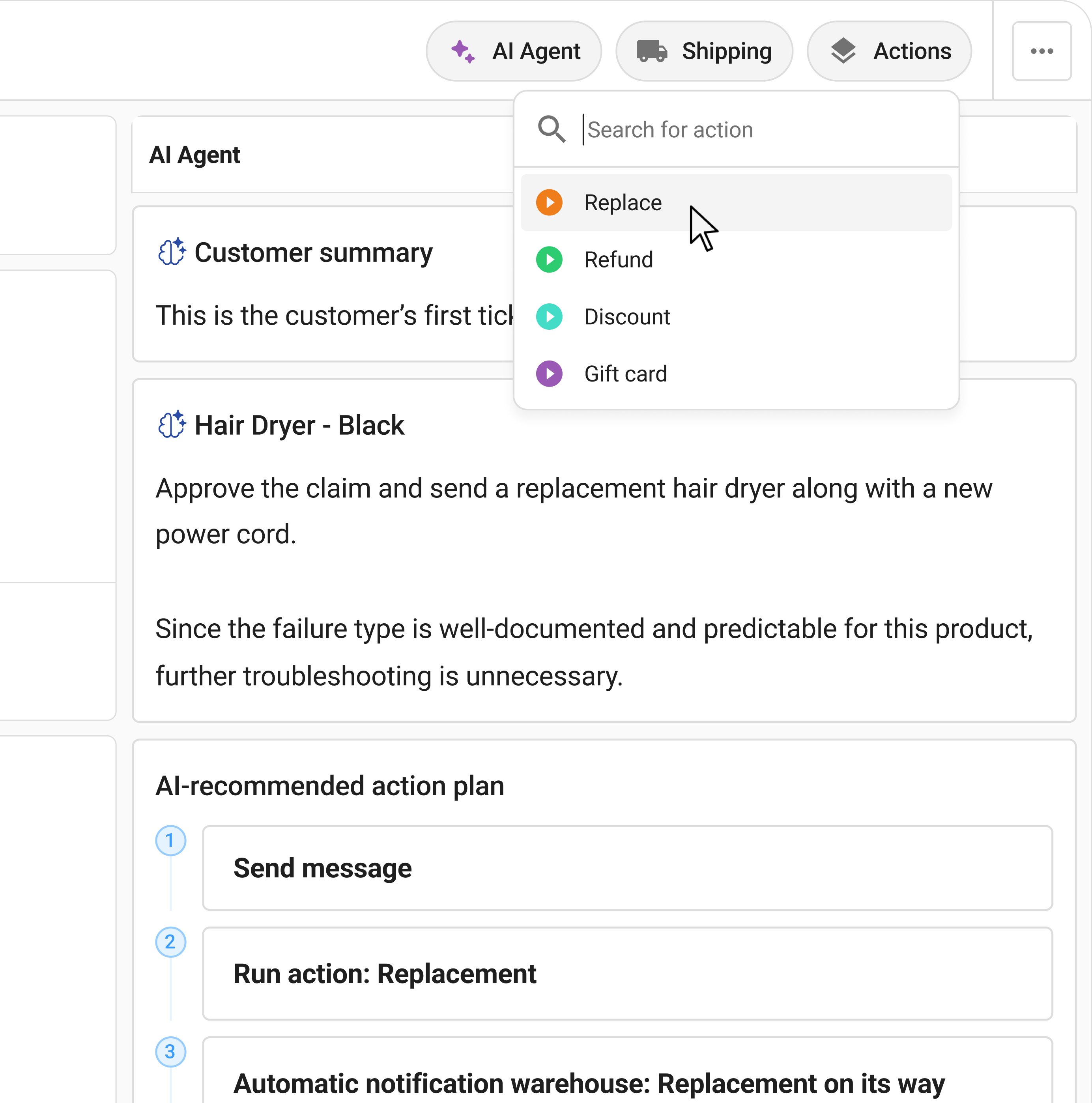
- No way to trigger refunds or replacements directly
- Return info can disappear inside long ticket threads
Zendesk is a great place to talk to customers. It is not a great place to solve product return issues from start to finish. If you want a deeper breakdown, here's how Zendesk compares to a dedicated RMA platform.
Why Claimlane might be what you are looking for
Claimlane is an RMA software built for e-commerce, retailers, and OEMs. The platform helps teams handle every part of the return, from the first form submission to the final resolution.
Claimlane connects directly to Zendesk. You can keep Zendesk as the first point of customer contact and let Claimlane take care of the operational work.
How Claimlane works with Zendesk
There are two common setups. You can choose what fits your support team best.
Claimlane creates or forwards a ticket into Zendesk. Agents reply inside Zendesk as usual.
- Claim status, notes, tags, and updates mirror back to the Zendesk ticket
- Support has full visibility without learning new tools
- The customer stays in one channel
Claimlane handles the customer conversation. Zendesk stays informed with reference tickets.
- Claims follow structured steps inside Claimlane
- Automated rules help decide outcomes
- Reduces inbound Zendesk ticket volume significantly
1) Zendesk keeps the customer conversation
Your agents don't have to learn a new way of talking to customers. Communication stays in Zendesk, while Claimlane takes care of the details in the background. Good fit for support teams that are already deeply trained on Zendesk and want minimal change management.
2) Claimlane runs the RMA workflow and messages the customer
Claims follow structured steps inside Claimlane. Automated rules help decide outcomes without agents having to touch every case. An optional reference ticket in Zendesk keeps Support informed without cluttering their queue. This setup is a better fit for brands with high return volume, where reducing the number of messages and tickets landing in Zendesk translates directly into agent capacity.
Benefits of adding RMA software to Zendesk
Pairing a purpose-built RMA platform with Zendesk changes the math on the whole process:
🎯 What changes
- Clear ownership of every step in the return
- Faster outcomes for the customer
- No more lost data buried in ticket threads
- Better cooperation between support, warehouse, and finance
- Real measurements on product issues and return reasons
Zendesk covers the conversation. Claimlane covers the work that solves the claim.
Final thoughts
If you try to handle all RMAs inside Zendesk alone, you will eventually hit limits. By pairing Zendesk with a dedicated RMA management tool like Claimlane, you can keep customer support simple while improving the entire return experience. For teams expanding their Zendesk stack more broadly, here are the top Zendesk integrations worth evaluating.
Learn more about how you can handle your after-sales inside Claimlane.
Want to see Claimlane and Zendesk working together?
Book a demo →