.webp)
Why ecommerce shipping software matters in 2026
Ecommerce shipping software is the layer between an order and a carrier. It compares carrier rates, prints labels in bulk, picks the cheapest or fastest service per parcel, and pushes tracking back to the customer. For a brand shipping at any real volume, it is the difference between an hour of label work and a few minutes.
Most shipping guides only weigh the outbound parcel. This one weighs both directions. Every brand that ships also receives, because returns come back, and the return label, the reverse route, and the link to a returns process are part of the shipping job. A platform strong on outbound labels but blind to return shipping leaves half the work undone. This guide compares seven platforms for 2026 and scores each on outbound shipping and on the reverse side. For the wider picture, the ecommerce logistics guide and the reverse logistics overview sit next to this comparison.
- Ecommerce shipping software compares carrier rates, prints labels in bulk, and pushes tracking to customers from one place.
- Most platforms focus on the outbound parcel and treat return labels and reverse shipping as a minor feature.
- The right pick depends on volume, region, carrier mix, and whether the brand needs an app or an API.
- Claimlane handles return shipping inside a full returns and warranty process, so the return label is part of a resolved case, not a loose document.
The best ecommerce shipping software at a glance
The table below compares the seven platforms in this guide. Claimlane is first because it covers the reverse direction as a complete process, not as a label feature bolted onto outbound shipping.
| Platform | Best for | Core focus | Pricing model |
|---|---|---|---|
| Claimlane | Return shipping inside a full returns process | Returns and warranty handling with return labels | Custom, by volume and modules |
| ShipStation | SMB and mid-market multichannel sellers | Multi-carrier labels and order sync | Tiered subscription |
| Shippo | Brands wanting simple multi-carrier rates | Multi-carrier shipping app and API | Pay-per-label or tiered |
| EasyPost | Developers building shipping into a stack | Shipping API across many carriers | Usage-based API |
| Sendcloud | European multichannel sellers | EU multi-carrier shipping and tracking | Tiered subscription |
| ShippingEasy | Small US sellers wanting simple labels | Label printing with marketing tools | Tiered subscription |
| nShift | Enterprise European delivery management | Enterprise multi-carrier delivery management | Custom, enterprise |
Pricing models change often, so brands should confirm current terms with each vendor. The table is about fit, and fit includes whether the platform leaves return shipping to be solved separately through a returns management system.
How this guide was assessed
This comparison is written for ecommerce brands and retailers choosing a shipping platform. Each platform was assessed on carrier coverage, label and rate features, the regions it serves, and one factor most shipping guides treat lightly: the reverse direction.
The reverse direction matters because a return is a shipment too. It needs a label, a route, and a status the customer can see. But a return label on its own is not a returns process. A customer who gets a label still needs the brand to receive the item, judge it, and resolve the case. A shipping tool that prints a return label has done one step of a job with several. This guide treats reverse shipping as part of a returns process, which is why it weighs each platform against how prepaid return labels actually work inside a real returns flow.
Claimlane
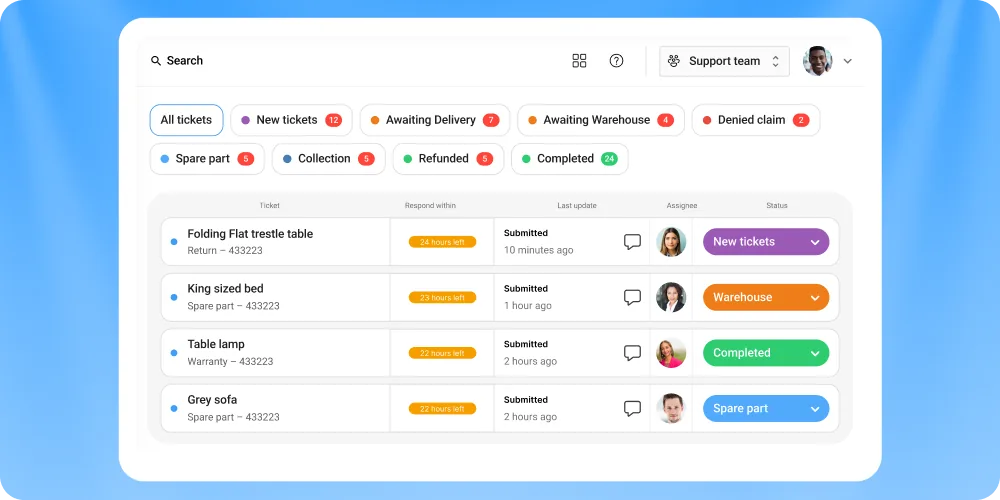
Claimlane is a returns and warranty management platform. It is not an outbound shipping tool, and a brand still needs shipping software to move orders out. Claimlane is first in this guide because the return label belongs to the returns process, and Claimlane runs that process end to end.
Why Claimlane
A shipping tool can generate a return label. What it cannot do is run the case the label belongs to. When a customer returns an item, the brand needs to know why it is coming back, whether it is a change of mind or a fault, what evidence supports it, and what the resolution should be. A loose return label answers none of that.
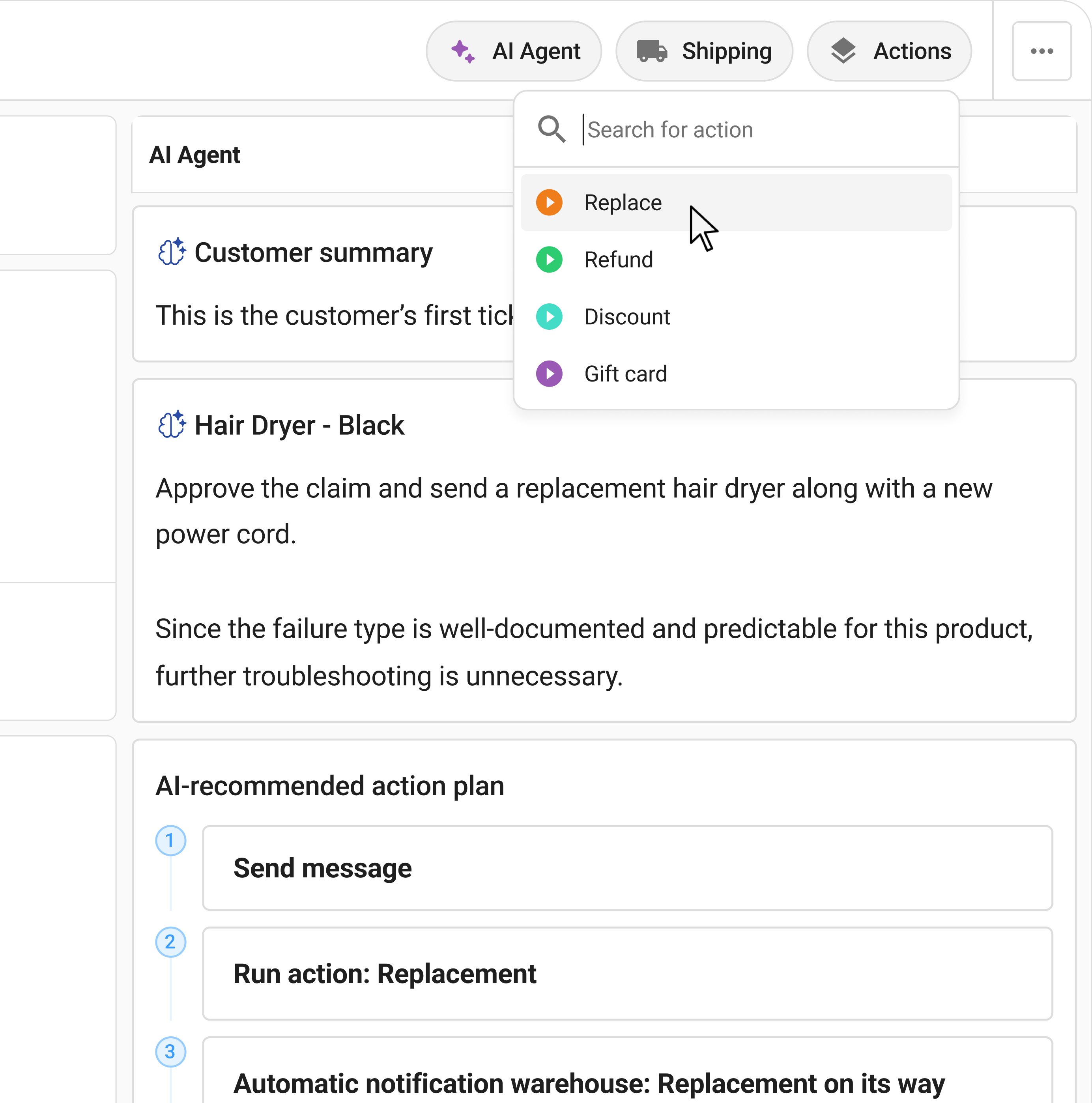
Claimlane makes the return label one step inside a structured case. The customer files the return or warranty claim, the workflow applies the rules, and the return label is issued as part of an approved case, not handed out blind. The brand gets the parcel back with context attached, which is the difference between a label and a returns process that actually resolves. Claimlane connects to shipping carriers and providers, so the label generation still uses the brand's existing rates.
Pros and cons
Key features
Claimlane runs the post-purchase case from intake to outcome. Customers start a return or warranty claim in the self-service portal with photos, videos, and order details. A workflow applies the rules per product and supplier, and a return label is issued through the connected carrier when the case is approved. Status updates flow to the customer through automatic status emails, which removes the where-is-my-return follow-ups. When a fault belongs to a supplier, forwarding the case to the supplier recovers the cost, and Claimlane analytics reports on return reasons and faulty products. With 75-plus integrations, it connects to shipping, ecommerce, and ERP systems across the ecommerce technology stack.
Pricing
Claimlane pricing is custom, scoped to claim volume and the modules a brand needs. There is no public list price. A brand can book a demo for a quote.
Claimlane in action
Claimlane fits brands where returns and reverse shipping are operationally heavy. The furniture brand Swoon handles bulky-item returns and feeds the data back to its supply chain. The DIY retailer Davidsen moved claims handling from five agents to one or two, and the gaming retailer MaxGaming runs complex RMA returns across more than 30,000 SKUs. Claimlane is rated 4.8 out of 5 on G2.
We went from 2.5 people in our returns and claims department that contacted all our suppliers to only 1 person in customer service handling all inquiries. We achieved our ROI almost immediately by implementing Claimlane.Jesper, Head of Customer Service, GrejFreak
ShipStation
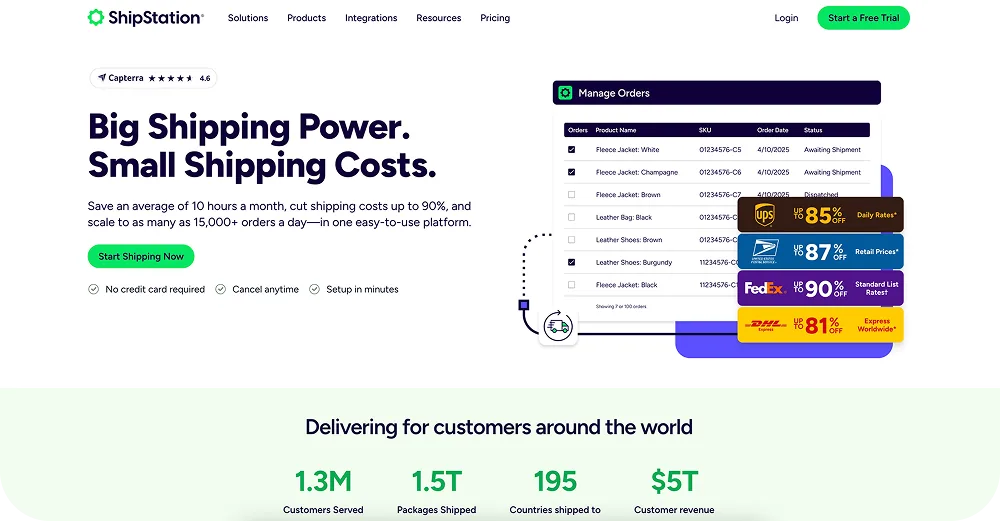
ShipStation is one of the most widely used shipping platforms for small and mid-market sellers. It connects to a long list of sales channels and carriers, imports orders automatically, and prints labels in batches, which is the day-to-day work most sellers want handled.
Its strength is breadth and maturity: many integrations, many carriers, and a workflow built for high label volume. ShipStation can generate return labels, but the return is still a label rather than a managed case. It is a strong outbound choice that pairs well with a dedicated returns process. Pricing is a tiered subscription. Brands shipping internationally should also weigh how it handles cross-border returns.

Shippo
Shippo is a multi-carrier shipping platform offered as both an app and an API. It is known for straightforward access to discounted carrier rates without a heavy setup, which appeals to small and growing brands.
For a brand that wants simple rate comparison and label printing, Shippo is quick to start with. The API option also lets a brand build shipping into its own tools later. Return labels are supported, again as labels rather than as a returns workflow. Shippo suits brands whose main need is clean outbound shipping at a fair rate. Pricing runs pay-per-label or tiered. The return side still needs a process, as the return labels best practices guide explains.
EasyPost
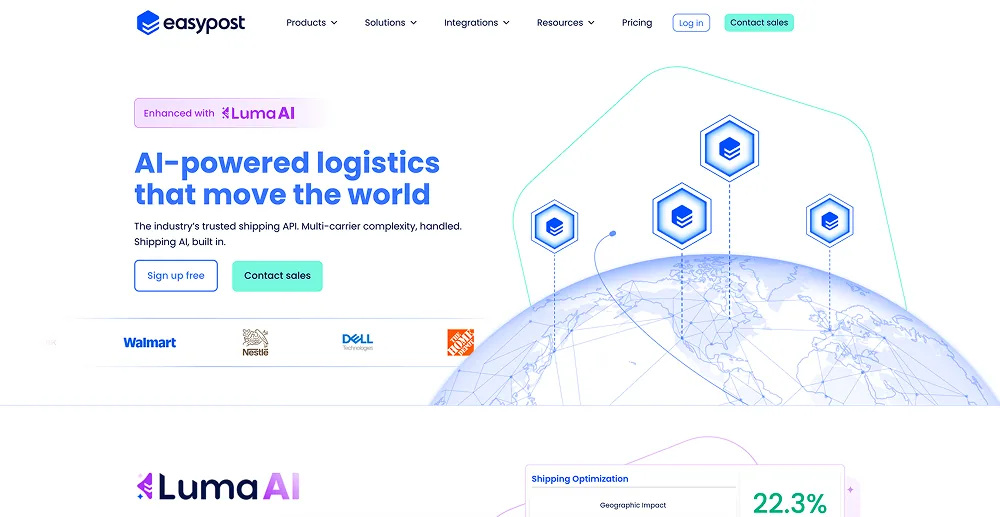
EasyPost is a shipping API built for developers. Rather than an app a team logs into, it is infrastructure a brand builds on, with access to a wide range of carriers through a single integration.
For a brand with engineering resource that wants shipping embedded in its own systems, EasyPost is a strong base. It also offers tracking and address verification through the same API. It is not an out-of-the-box app, so a brand without developers will find it harder to adopt than ShipStation or Shippo. Returns are handled at the label and tracking level, which still leaves the returns case itself to a separate system. Pricing is usage-based.
Sendcloud
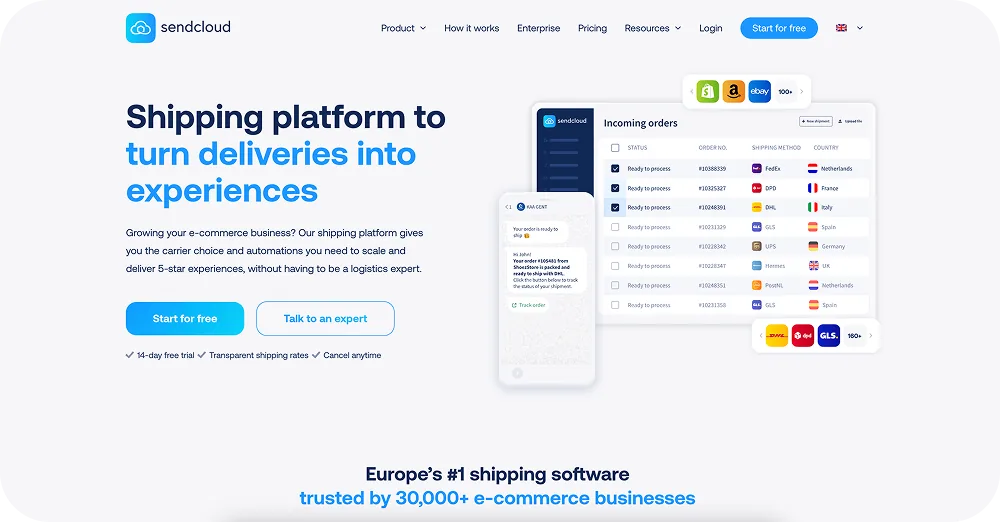
Sendcloud is a shipping platform built for the European market. It connects EU and cross-border carriers, handles labels and tracking, and gives shoppers branded tracking pages, which is a fit for brands shipping across European countries and carrier networks.
For an EU-based or EU-shipping brand, Sendcloud's regional carrier depth is the main reason to choose it. It includes a return portal, which is more reverse capability than a pure label tool, though it is still focused on the shipping movement rather than on judging and resolving the return. Sendcloud suits European multichannel sellers. Pricing is a tiered subscription. Brands managing returns across regions should also read the global multi-warehouse returns guide.
ShippingEasy
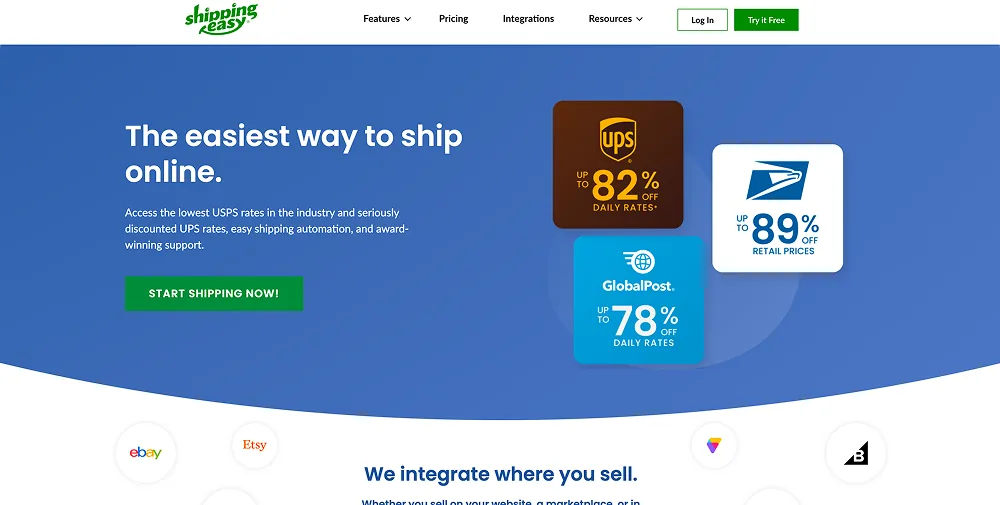
ShippingEasy is a shipping tool aimed at small US sellers that want labels handled simply, with some marketing features attached. It connects to common US carriers and sales channels and keeps the label workflow light.
For a small US brand, ShippingEasy is approachable and quick to run. The added email marketing tools can suit a seller that wants a couple of jobs in one app. Its scope is small-seller outbound shipping, so it is lighter on enterprise features and on the reverse side. Returns are label-level. Pricing is a tiered subscription. A small brand that grows will usually outgrow it on both shipping depth and the returns process it needs.
nShift
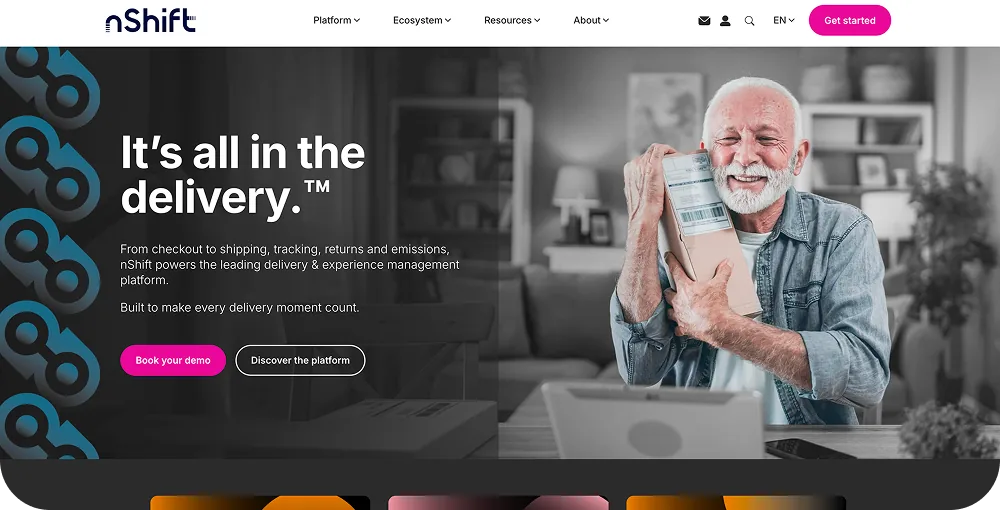
nShift is an enterprise delivery management platform with a long-established presence in the European market. It connects a very large carrier network and focuses on delivery management at scale, including checkout delivery options and post-purchase tracking.
For large retailers and enterprise brands, nShift offers carrier breadth and delivery-experience tooling that smaller platforms do not. It also covers returns as part of its delivery management scope. It is built and priced for enterprise, so it is heavy for a small or mid-market brand. Even at enterprise scale, the returns case, the warranty judgement, and supplier recovery are usually run on a dedicated layer alongside the delivery platform, as the reverse logistics software guide describes.
How to choose ecommerce shipping software
The right platform depends on volume, region, carrier mix, and whether the brand wants an app or an API.
For a small US seller wanting simple labels, ShippingEasy fits. For an SMB or mid-market multichannel brand, ShipStation has the breadth. For a brand wanting easy multi-carrier rates, Shippo is quick to adopt. For a developer-led stack, EasyPost is the API base. For a European brand, Sendcloud has the regional carriers. For enterprise European delivery management, nShift has the scale.
The last line is the point of this guide. Outbound shipping software handles the parcel going out well. The parcel coming back is a different job, because a return is a decision before it is a shipment. A brand that pairs a strong shipping tool with a structured returns process gets both directions right, and it keeps the returns time to resolution low instead of letting return labels pile up with no case behind them. For brands tracking the parcel itself, the best returns tracking platforms guide covers the visibility layer.
Frequently asked questions
For brands shipping bulky goods, the damaged in transit claims guide covers what happens when a shipment, outbound or return, arrives broken.
Conclusion
Ecommerce shipping software earns its place by taking the manual work out of getting orders to customers: rate comparison, bulk labels, carrier choice, and tracking. The right platform depends on volume, region, carrier mix, and whether the brand wants an app or an API.
The blind spot every shipping guide shares is the return. A return is a shipment, but it is a decision first, and a return label with no case behind it is half a process. Brands that get both directions right pair a strong outbound shipping tool with a structured returns and warranty platform, so the parcel coming back is judged, resolved, and learned from. The five Rs of reverse logistics describe why that reverse side deserves the same care as the forward one.
To see how Claimlane handles return shipping inside a full returns and warranty process, book a demo.