.webp)
What Is Ecommerce Logistics?
Ecommerce logistics is the process of moving products from a seller to a buyer through online channels. It covers everything from inventory storage and order fulfilment to last-mile delivery and returns processing. Sometimes called electronic commerce logistics or e-commerce logistics, it's the operational backbone of any modern ecommerce business.
Unlike traditional retail logistics, where goods move in bulk from warehouses to store shelves, ecommerce logistics deals with individual orders shipped directly to consumers. This is part of what is digital commerce: every transaction happens online, every order is unique, and every shipment is a separate logistical event.
What is an ecommerce brand without reliable logistics? Just a website with promises it can't keep. In 2026, ecommerce logistics is more complex than ever. Customers expect two-day (or same-day) delivery, free shipping, and easy returns. The full ecommerce experience — from clicking "buy" to receiving the package to handling any returns afterward — depends on logistics working invisibly in the background.
Ecommerce Logistics vs. Supply Chain Management
These terms get used interchangeably, but they cover different scopes.
Supply chain management is the broader discipline. It includes sourcing raw materials, manufacturing, supplier relationships, demand forecasting, and distribution. It starts before a product exists and extends through its entire lifecycle.
Logistics is the operational subset. It focuses on the physical movement and storage of goods: warehousing, transportation, order fulfillment, delivery, and returns.
For ecommerce brands, the practical difference is this: supply chain decisions determine what products are available and at what cost. Logistics decisions determine how fast and reliably those products reach the customer.
| Aspect | Supply Chain Management | Logistics |
|---|---|---|
| Scope | End-to-end, sourcing to customer | Movement and storage of goods |
| Focus | Strategy, planning, relationships | Execution, speed, accuracy |
| Key activities | Procurement, manufacturing, demand planning | Warehousing, fulfillment, shipping, returns |
| Who owns it | Operations, procurement, finance | Operations, fulfillment, customer experience |
How Does Ecommerce Work? The Logistics Perspective
Ecommerce works by connecting customer demand with product supply through digital infrastructure. From a logistics perspective, the flow looks like this:
Through a website, marketplace, or app. Payment is processed and the order enters the brand's systems.
An order management system (OMS) checks inventory and assigns the order to the warehouse closest to the customer or with the right stock.
Staff or automation pick the product, pack it, and apply a shipping label. The package goes into the carrier network.
FedEx, UPS, USPS, DHL, or regional carriers move the package through their networks and handle last-mile delivery.
Customers can initiate returns, claim warranty issues, or request exchanges. Reverse logistics moves products back through the supply chain.
The whole flow takes anywhere from same-day to two weeks depending on shipping speed and product complexity. The brands competing on speed compress this entire flow into 24-48 hours from order to door.
The Core Components of Ecommerce Logistics
Every ecommerce logistics operation has the same building blocks, whether the brand ships 50 orders a day or 50,000.
Inventory management
Inventory management is knowing what products are available, where they're stored, and when to reorder. For ecommerce brands, this means tracking stock across warehouses, 3PL partners, and sometimes retail locations.
The biggest risk here is overselling (accepting orders for items that aren't in stock) or overstocking (tying up cash in slow-moving inventory). Modern inventory management systems sync stock levels across all sales channels in real time.
Order management
Order management is the system that connects a customer's purchase to the fulfillment process. When someone clicks "buy," the order management system (OMS) verifies payment, checks inventory, assigns the order to the right warehouse or fulfillment center, and triggers picking and packing.
A solid OMS also handles split shipments (when items in one order come from different locations), backorders, and order modifications after purchase.
Warehousing and fulfillment
What is ecommerce fulfilment? Ecommerce fulfilment is the process of receiving an online order, picking the product from inventory, packing it, and shipping it to the customer. It's the operational core of ecommerce logistics, sometimes called order fulfilment or simply fulfilment.
Ecommerce fulfilment also overlaps with the broader "what is order fulfilment in supply chain management" question, which extends the concept to B2B and wholesale operations. The principles are similar; the scale and complexity differ.
Brands handle ecommerce fulfilment in three main ways:
- In-house fulfillment. The brand operates its own warehouse. Offers maximum control but requires significant investment in space, staff, and technology.
- Third-party logistics (3PL). An ecommerce partner that handles fulfilment stores inventory and ships orders on the brand's behalf. The right ecommerce partner scales easily, reduces fixed costs, and can integrate ecommerce and logistics workflows so the brand doesn't have to manage two separate operations. Popular 3PL options include ShipBob, ShipMonk, and Deliverr.Dropshipping. The manufacturer or wholesaler ships directly to the customer. The brand never touches the product. Lowest upfront cost, but also the least control over quality and speed.
Most mid-size ecommerce brands use a mix of in-house and 3PL fulfillment, choosing partners based on geography and order volume.
Warehouse operations play a huge role in ecommerce logistics. Here are 10 common warehouse challenges and how to solve them before they slow down your fulfilment.
Shipping and transportation
Shipping solutions for ecommerce cover the movement of packed orders from the fulfilment centre to the customer. The main decisions when choosing a shipping solution are:
- Carrier selection. FedEx, UPS, USPS, DHL, and regional carriers each have strengths. Multi-carrier strategies let brands optimize for speed, cost, and reliability by region.
- Shipping speed. Standard (5 to 7 days), expedited (2 to 3 days), overnight, and same-day. Each tier has different cost structures.
- Shipping cost model. Free shipping (absorbed by the brand), flat-rate shipping, real-time carrier rates, or free shipping above a threshold.
Shipping costs are the single largest logistics expense for most ecommerce brands. Negotiating carrier rates based on volume is one of the highest-ROI activities in operations.
Last-mile delivery
Last-mile delivery is the final leg of the journey, from the local distribution hub to the customer's door. It's also the most expensive part of the shipping process, accounting for up to 53% of total shipping costs according to a 2025 Capgemini report.
Last-mile challenges include:
- Urban delivery congestion and parking
- Rural delivery distances
- Apartment and multi-unit building access
- Customer availability for signature-required packages
- Package theft (porch piracy)
Innovations in last-mile delivery include locker networks (Amazon Hub, UPS Access Point), crowdsourced delivery (DoorDash, Uber), and autonomous delivery vehicles being piloted in select markets in 2026.
Even the best logistics setup runs into hiccups. Here's what to do when a delivery exception occurs and how to minimise their impact on your customer experience.
Reverse logistics
What is reverse logistics? Reverse logistics is what happens when products flow backward through the supply chain, from customer to brand. It covers returns, exchanges, warranty claims, repairs, and recycling. In supply chain management, reverse logistics is the operational mirror of standard fulfilment, moving products in the opposite direction for inspection, processing, and resolution.
For most ecommerce brands, reverse logistics is the most neglected part of the logistics operation. Returns alone cost U.S. retailers an estimated $890 billion in 2024, and that number continues to climb. The brands that treat reverse logistics as a first-class operation (not an afterthought) recover more value, retain more customers, and spend less on support.
Platforms like Claimlane help brands manage the reverse logistics workflow by handling returns, warranty claims, and repairs from a single system, with automated rules, a customer-facing self-service portal, and integrations with Shopify, ERPs, and shipping providers.
Knowing how to optimise reverse logistics comes down to four levers: a customer-facing self-service portal, automated routing of returns to inspection, structured grading and disposition workflows, and integration with the brand's claims and order management systems. For a deeper look, see this guide on how to optimise your returns process.
Not every brand can manage logistics in-house. If you're evaluating outsourcing, check out this overview of 3rd-party logistics companies and what to look for in a provider.
Key Ecommerce Logistics Metrics to Track
Logistics performance comes down to a handful of metrics. Tracking these consistently reveals where money is being wasted and where the customer experience is breaking down.
Best-in-class: 99.5%+. Measures orders shipped without errors.
Percentage of orders delivered within the promised window. Directly affects retention.
Total shipping spend divided by orders. Track by carrier to find negotiation opportunities.
Average ecommerce: 20-30%. Fashion runs higher (30%+), electronics lower.
Customer expectations have compressed this to 2-3 days for most categories.
High turnover means products move quickly. Low signals overstocking.
Unresolved delivery issues often lead to disputes. Learn how payment reversals and chargebacks work and how to protect your margins.
Ecommerce Logistics Challenges in 2026
The e-commerce logistics industry is shifting fast. Here are the biggest challenges ecommerce brands face right now.
Rising shipping costs
Carrier rate increases, fuel surcharges, and dimensional weight pricing continue to push shipping costs higher. FedEx and UPS both implemented rate increases of 5.9% in January 2026, on top of peak season surcharges. Brands are responding by negotiating zone-based rates, using regional carriers, and offering slower (cheaper) shipping options alongside expedited tiers.
Customer expectations for speed and free shipping
Amazon Prime has set the standard. Customers expect fast, free shipping, and they'll abandon carts or switch brands to get it. For brands without Amazon's logistics network, meeting these expectations requires strategic warehouse placement, 3PL partnerships, and careful margin management.
Cross-border complexity
Selling internationally means navigating customs, duties, tariffs, VAT collection, and country-specific regulations. The EU's Import One Stop Shop (IOSS) and the UK's post-Brexit customs requirements add layers of compliance. Brands expanding internationally need to factor in landed cost (product + shipping + duties + taxes) to price accurately.
Sustainability pressure
Consumers and regulators are pushing for greener logistics. The EU's Corporate Sustainability Reporting Directive (CSRD) requires large companies to disclose environmental impact, including logistics emissions. Brands are responding with carbon-neutral shipping options, reduced packaging, and consolidated shipments.
Returns volume
Online return rates are significantly higher than in-store return rates. Each return eats into margins through shipping costs, processing labor, and potential inventory loss. The brands winning this battle are the ones investing in return prevention (better product descriptions, size guides, customer reviews) and return optimization (automated processing, self-service portals, data-driven policies).
A healthy inventory turnover ratio is one of the clearest signs your logistics are working. Learn how to calculate and improve your inventory turnover ratio to keep stock moving efficiently.
How to Optimize Ecommerce Logistics
Optimization isn't about one big change. It's about improving each component by small increments that compound over time.
Place inventory closer to customers
The farther a package travels, the more it costs and the longer it takes. Distributing inventory across multiple fulfillment centers (or using 3PLs with national networks) reduces shipping distances and delivery times.
A simple rule: analyze your order data by destination ZIP code. If 60% of orders ship to the East Coast but your warehouse is in California, you're overpaying on every order.
Automate fulfillment workflows
Manual picking, packing, and label generation are error-prone and slow. Warehouse management systems (WMS), barcode scanning, and automated label printing reduce errors and increase throughput. For brands processing more than 500 orders a day, automation pays for itself quickly.
Negotiate carrier rates aggressively
Carrier contracts aren't one-size-fits-all. Brands shipping 1,000+ packages per month have leverage to negotiate lower rates, reduced surcharges, and better dimensional weight thresholds. Use a shipping platform (ShipStation, EasyPost, Shippo) to compare rates across carriers in real time.
Invest in return logistics
Returns are a cost center for most brands, but they don't have to be. Automating return approvals, routing returned items for inspection and restocking, and providing a self-service return portal all reduce cost per return and improve customer satisfaction.
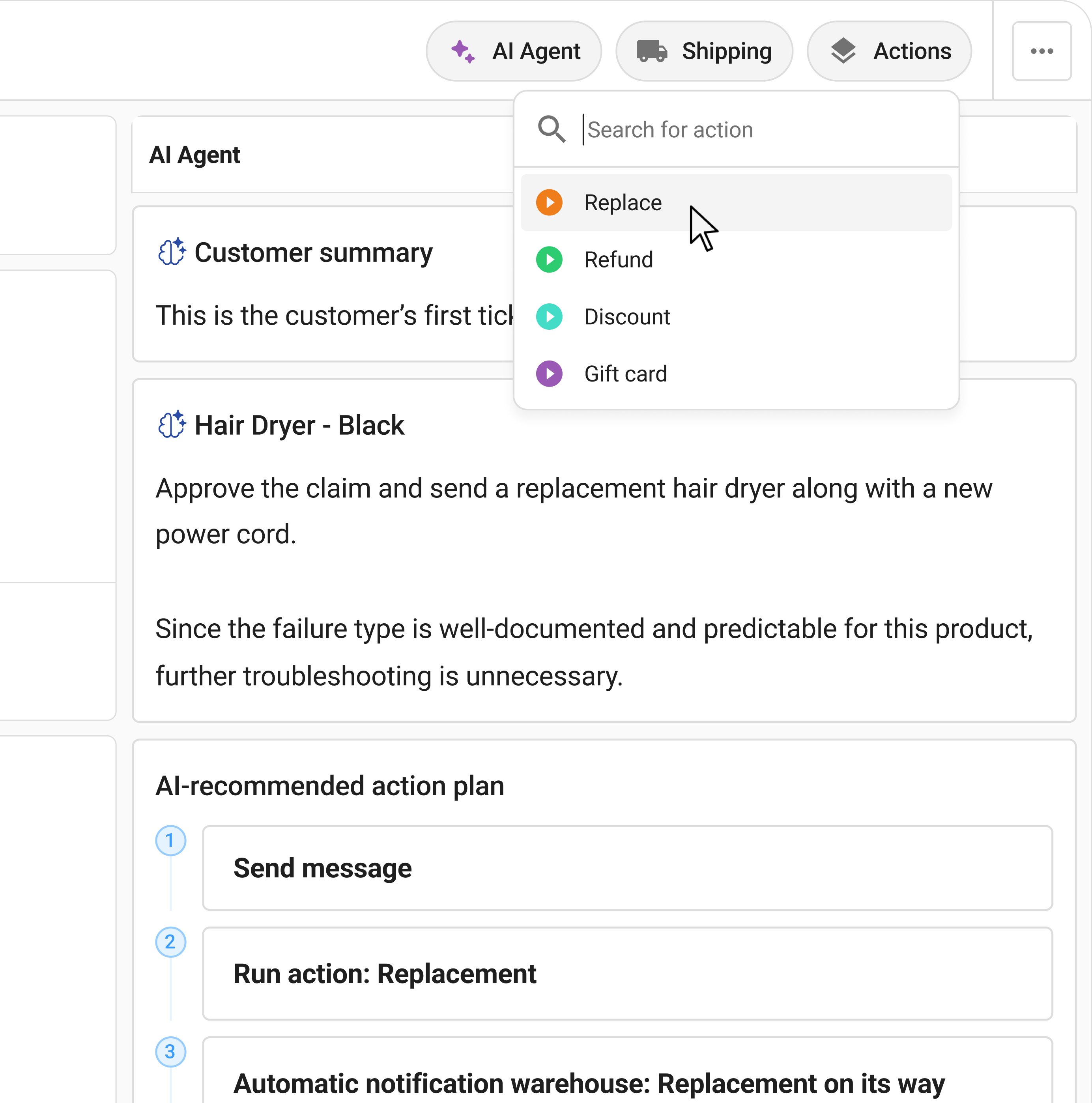
Claimlane helps brands automate the entire post-purchase claims process, from return requests and warranty claims to repairs and replacements. The platform's AI agent can analyze product images, apply warranty rules, and suggest resolutions automatically.
Use data to drive decisions
Every logistics decision should be backed by data. Which carrier has the best on-time rate for your top shipping zones? Which products have the highest return rates? Where are delivery exceptions clustering? Regular reporting on logistics metrics turns reactive firefighting into proactive optimization.
Logistics starts before the order ships. Here's a guide to the purchase order management process and how it keeps your supply chain running smoothly.
The Role of Technology in Ecommerce Logistics
Technology has reshaped every part of the logistics stack. Here's what matters most for ecommerce brands in 2026.
Order management systems (OMS)
Centralize orders from all sales channels, route them to the right fulfillment location, and provide a single source of truth for order status. Examples: Shopify, BigCommerce, NetSuite.
Warehouse management systems (WMS)
Optimize warehouse layout, picking routes, inventory placement, and packing workflows. Essential for brands with in-house fulfillment. Examples: ShipHero, Cin7, Logiwa.
Shipping platforms
Aggregate carrier rates, print labels, and track shipments across carriers. Examples: ShipStation, EasyPost, Shippo.
Returns and claims management
Automate return requests, warranty claims, and repair workflows. Reduce support ticket volume and processing time. Example: Claimlane, which integrates with Shopify, WooCommerce, ERPs, and shipping providers.
Visibility and tracking
Give customers real-time tracking and proactive delivery updates. Reduce WISMO tickets and improve post-purchase experience. Examples: AfterShip, Malomo, ParcelLab.
In-House Fulfillment vs. 3PL: How to Choose
This is one of the biggest operational decisions an ecommerce brand makes. There's no universal right answer; it depends on volume, growth trajectory, and how much control the brand needs.
| Factor | In-House Fulfillment | 3PL |
|---|---|---|
| Control | Full control over process and quality | Less direct control, relies on SLAs |
| Cost structure | High fixed costs (rent, staff, equipment) | Variable costs based on volume |
| Scalability | Limited by warehouse capacity | Scales quickly with demand |
| Geographic reach | Single location (unless multi-warehouse) | National or global network |
| Best for | Custom packaging, fragile items, high-touch brands | Fast growth, seasonal peaks, multi-region shipping |
Many brands start with in-house fulfillment, switch to a 3PL as order volume grows, and then bring some fulfillment back in-house once they reach a scale where fixed costs make sense again.
Building an Ecommerce Logistics Strategy: Step by Step
For brands building or rethinking their logistics operation, here's a practical framework.
Step 1: Map your current logistics flow
Document every step from order placement to delivery and returns. Identify bottlenecks, manual processes, and points of failure.
Step 2: Benchmark your metrics
Measure order accuracy, delivery time, shipping cost per order, and return rate. Compare against industry benchmarks and your own historical data.
Step 3: Identify your biggest cost driver
For most brands, it's either shipping costs or return costs. Focus optimization efforts where the numbers are biggest.
Step 4: Evaluate technology gaps
Are you still printing labels manually? Processing returns over email? Using spreadsheets for inventory? Each gap is an opportunity for automation.
Step 5: Test and iterate
Logistics optimization is ongoing. Test new carriers, fulfillment partners, packaging options, and technology tools. Measure results and double down on what works.