.webp)
A third party logistics company — often called a 3PL — manages logistics operations on behalf of another business: typically warehousing, order fulfillment, and transportation. Instead of running these functions in-house, companies outsource them to a third party logistics company that sits between the business and the customer: storing inventory, picking and packing orders, shipping products, and often handling returns.
3PL logistics services range from large asset-based carriers running their own trucks and warehouses to ecommerce-focused 3pl services built specifically for DTC brands shipping thousands of orders a month. Whether you're comparing third party logistics services for the first time or switching providers, the core decision comes down to the same thing: how much of your fulfillment operation you want to control directly versus hand off.
If you ship products at scale, logistics can make or break your margins. Late deliveries, damaged goods, inventory stuck in the wrong warehouse, rising freight costs — one weak link and customer experience suffers. That's the operational problem 3pl logistics is built to solve.
This guide covers what third party logistics companies do, the 3PL services they offer, how pricing works, the top providers to consider, and how to choose the right one for your business.
1PL vs 2PL vs 3PL vs 4PL
Understanding the difference clarifies where 3PL companies fit in supply chain management.
The difference between 3PL and 4PL comes down to execution versus orchestration. A 3PL executes logistics operations. A 4PL designs and manages the full network.
How Do 3PL Providers Work?
Most 3PL companies follow this flow:
The more advanced providers integrate warehouse management systems, transportation management systems, and real-time tracking dashboards.
Claimlane has also partnered with one of the world's largest logistics providers. Read about the Claimlane and DSV partnership and what it means for returns handling.
The Evolution of 3PL
Originally, 3PLs were basic warehousing and trucking operations.
Ecommerce changed everything.
Today, 3PL services include:
- Multi-channel ecommerce fulfillment
- Cross-border shipping
- Last-mile delivery partnerships
- Technology-enabled visibility
- Automated fulfillment centers
Speed and data now define competitive advantage.
Who Uses 3PL Services?
3PL companies support:
- Fast-growing ecommerce brands
- Manufacturers scaling distribution
- Retailers expanding into omnichannel
- Healthcare and pharma companies
- Food and beverage businesses needing temperature control
If shipping becomes complex, a 3PL becomes attractive.
Core Services Offered by 3PL Companies
Not all 3PL services are the same. But most providers offer four core capabilities.
Warehousing & Inventory Management
Warehouse management is foundational.
3PL companies offer:
- Shared warehouse space
- Dedicated warehouse facilities
- Inventory tracking systems
- Barcode scanning
- Cycle counting
- Cross-docking operations
Shared storage lowers costs for smaller brands. Dedicated facilities offer greater control for high-volume companies.
Modern warehouse management systems integrate directly with ecommerce platforms, giving real-time visibility into stock levels.
Order Fulfillment & Ecommerce Fulfillment
This is where speed meets accuracy.
Ecommerce fulfillment includes:
- Pick and pack services
- Kitting and bundling
- Subscription box assembly
- Returns processing
- Multi-channel fulfillment across Shopify, Amazon, and retail
A good fulfillment center minimizes error rates and reduces delivery times.
For growing brands, this is often the first operational bottleneck.
Transportation & Freight Brokerage
Many 3PL companies also provide freight brokerage services.
That includes:
- Carrier sourcing
- LTL and FTL shipping coordination
- International freight forwarding
- Customs compliance
- Freight auditing
Freight brokerage allows 3PLs to negotiate bulk shipping rates and pass savings to clients.
Last-Mile Delivery Solutions
Last-mile delivery is the most expensive and complex stage.
3PL providers often partner with regional carriers to improve speed and reduce costs. Some offer:
- Same-day delivery
- Urban distribution hubs
- Delivery exception management. What a delivery exception is and how to handle it.
- Real-time tracking notifications
And when deliveries fail, structured claims management becomes critical. That’s where systems like Claimlane enhance post-delivery workflows and protect margins.
Claimlane is growing fast, we recently closed our seed round to accelerate product development and expand our logistics integrations.
How Claimlane Fits Into Your 3PL Workflow
Even the best third party logistics company deals with damaged goods, missing items, and delivery disputes. The difference between high-performing logistics operations and chaotic ones often comes down to how those issues are handled after the shipment leaves the warehouse.
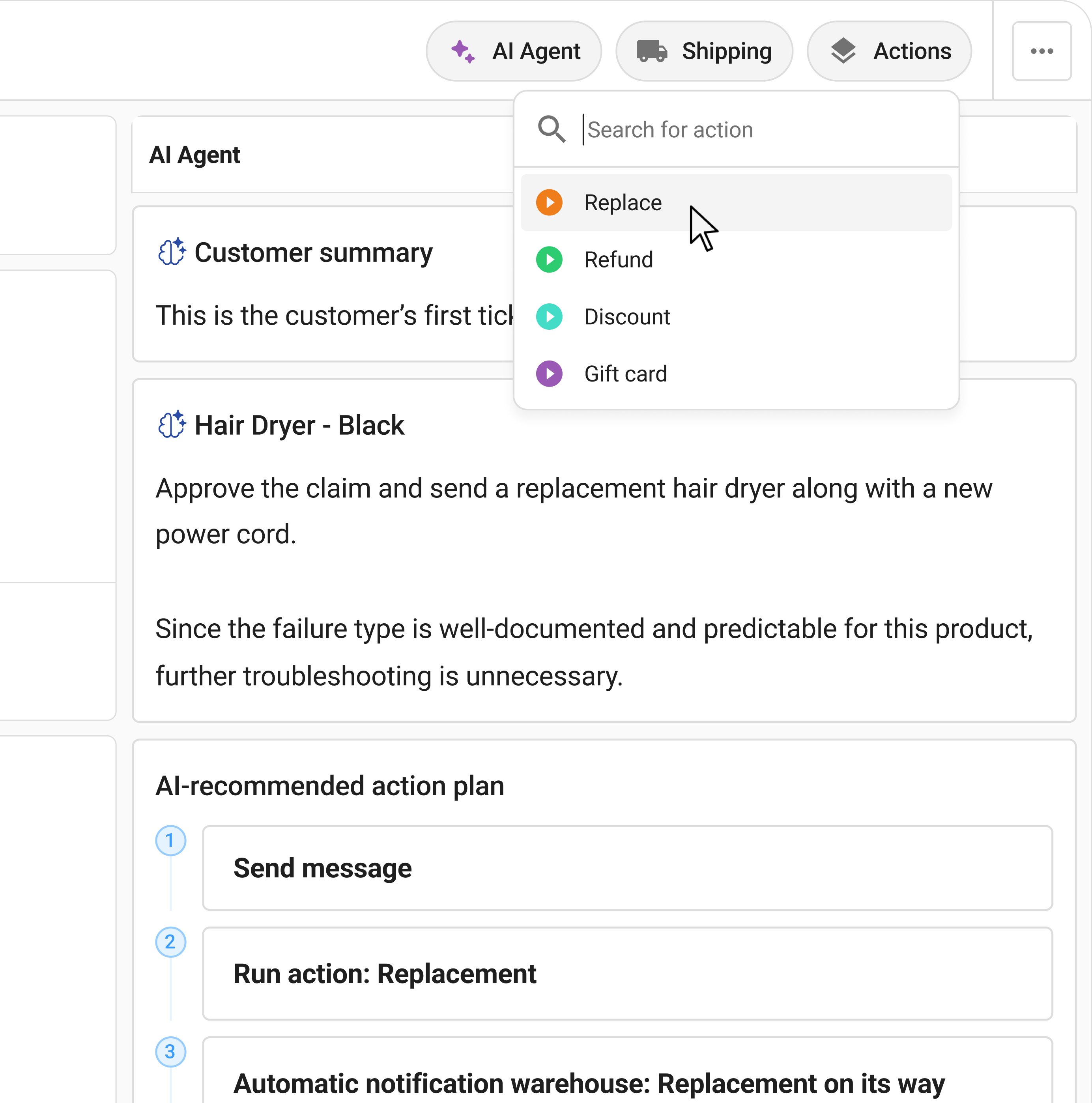
That's the layer Claimlane adds on top of a 3PL's operational work. While a 3PL handles warehousing, fulfillment, and transportation, Claimlane brings structure and visibility to what happens after: delivery claims, damage documentation, and post-delivery issue resolution. In a world where last-mile delivery failures directly impact customer retention, that layer matters more than ever.
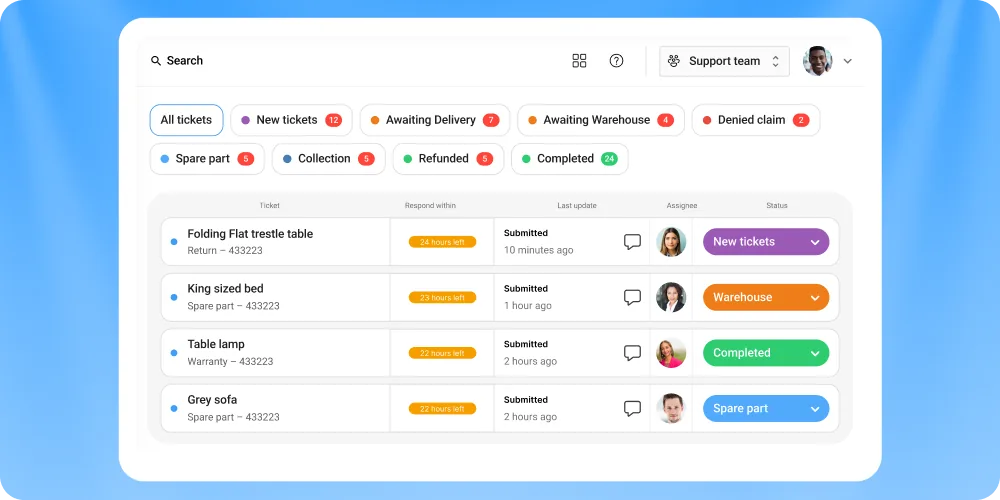
How the Claimlane integration typically works
1. The order ships from the fulfillment center.
2. The carrier completes last-mile delivery.
3. If there's damage, shortage, or delivery failure, the issue is logged through Claimlane.
4. Documentation is collected immediately, including photos and structured data.
5. Claims are routed automatically to the correct carrier or logistics partner.
6. Resolution tracking is centralized and visible to all stakeholders.
Instead of scattered emails and manual paperwork, everything lives in one controlled workflow.
Integration points with 3PL systems
Claimlane connects with the tools most 3PL companies already use:
- Warehouse Management Systems (WMS)
- Transportation Management Systems (TMS)
- Ecommerce platforms
- Carrier APIs
- ERP systems
This means claim data ties directly to order IDs, shipment tracking numbers, and inventory records, instead of living in a separate spreadsheet or inbox.
Why this matters for 3PL performance
3PL companies are typically judged on service level agreements — order accuracy, on-time delivery, damage rates. A structured claims layer directly supports those metrics:
- Reduces manual claim time — claim handling moves from email threads to a structured workflow.
- Improves documentation accuracy — structured intake captures photos, reasons, and order data automatically, at the moment the issue is reported.
- Speeds up carrier reimbursement — cleaner documentation means faster claims processing on the carrier side.
- Identifies damage patterns — pattern data shows which routes, carriers, or facilities have higher damage rates over time.
- Protects margins on volume — high-volume operations lose margin to delivery issues; structured claims data helps control that leakage.
Without a proper claims infrastructure, these metrics become difficult to track, let alone improve — most of that visibility gets lost in email threads and manual follow-ups.
Without a proper claims infrastructure, those metrics become hard to control.
Claimlane helps 3PL providers:
- Reduce manual claim handling time
- Improve documentation accuracy
- Speed up carrier reimbursement
- Identify recurring damage patterns
- Protect margins on high-volume shipments
For ecommerce fulfillment operations especially, post-delivery transparency directly impacts retention. A delayed or mishandled claim often costs more than the product itself.
Supporting Both Brands and 3PL Providers
One of the biggest friction points in logistics outsourcing is visibility: brands want transparency into what's happening with their shipments, while 3PL providers want to maintain operational efficiency without extra reporting overhead. Claimlane is built to give brands structured reporting while letting 3PL teams keep process control internally — a balance that strengthens the long-term partnership between the two sides rather than adding friction to it.
Ideal for brands working with a third party logistics company and looking at how to handle the post-delivery layer — damage claims, delivery disputes, supplier coordination. Book a Claimlane demo to see how the platform integrates with existing 3PL workflows.
How 3PL Companies Fit Into Supply Chain Management
Supply chain management is about coordination.
A 3PL becomes the operational backbone of that system.
They help with:
- Demand forecasting alignment
- Inventory allocation
- Multi-warehouse distribution
- Data-driven analytics
- Risk mitigation
Instead of fragmented shipping operations, companies get centralized visibility.
The best 3PL companies operate as extensions of your internal team.
Types of 3PL Companies
Asset-Based 3PL Providers
These companies own trucks, warehouses, and equipment.
Pros:
- More control over infrastructure
- Potentially higher reliability
Cons:
- Less flexibility
Non-Asset-Based 3PL Providers
These providers manage brokered networks.
Pros:
- Greater flexibility
- Easier geographic expansion
- Lower fixed costs
Cons:
- Dependence on external carriers
Industry-Specific 3PLs
Some specialize in:
- Healthcare logistics
- Food and beverage cold chain
- Automotive supply chains
- Ecommerce fulfillment
Specialization often improves compliance and efficiency.
Benefits of Hiring a 3rd Party Logistics Company
Cost Reduction
- Lower labor expenses
- Reduced warehouse overhead
- Bulk shipping discounts
- Less capital investment in technology
Scalability
Seasonal spikes become manageable.
You don’t need to lease new space for Q4.
Technology Access
Modern 3PL companies offer:
- AI route optimization
- Robotics in fulfillment centers
- Real-time tracking dashboards
Risk Management
Compliance expertise reduces regulatory exposure.
And structured claims handling through platforms like Claimlane reduces delivery-related losses.
When Should a Business Use a 3PL?
Signs you need logistics outsourcing:
- You’re running out of warehouse space.
- Order accuracy is slipping.
- Shipping costs are rising.
- You’re expanding internationally.
- Your team spends more time packing boxes than growing the business.
Many ecommerce brands consider 3PLs once they exceed 1,000 to 2,000 orders per month.
How to Choose the Right 3PL Company
Evaluate Capabilities
Ask:
- Do they support your product type?
- Can they handle your peak volumes?
- Do they offer freight brokerage if needed?
Assess Technology
Look for:
- WMS and TMS integrations
- Ecommerce platform compatibility
- Real-time reporting dashboards
- Claims and issue resolution workflows
Geographic Coverage
- Warehouse locations
- Carrier partnerships
- International capabilities
Pricing & Contracts
Understand:
- Storage fees
- Fulfillment fees
- Setup charges
- Long-term commitments
SLA & Performance Metrics
Negotiate:
- Order accuracy rates
- On-time delivery percentages
- Damage rate thresholds
- Claims resolution timelines
3PL Logistics Services Pricing Explained
Third party logistics services costs vary based on volume and service complexity.
As a rough benchmark: SMB ecommerce brands typically pay $500–$1,500/month in base account and storage fees, plus $2–$5 per order for pick and pack, depending on product size and order complexity. Mid-market brands with higher volume often negotiate flat per-order rates instead of tiered fees. Enterprise contracts with dedicated warehouse space and custom integrations can run into six or seven figures annually. These figures vary significantly by product category, order volume, and geographic coverage — always request an itemized quote based on your actual SKU count and order profile.
3PL costs vary based on volume and service complexity.
Common fee categories include:
- Receiving fees
- Storage fees per pallet or cubic foot
- Pick and pack fees
- Shipping costs
- Account management fees
Hidden costs can include:
- Minimum monthly charges
- Seasonal surcharges
- Technology integration fees
In-House vs 3PL Cost Comparison
In-house fulfillment requires:
- Warehouse lease
- Labor
- Equipment
- Software
- Carrier contracts
A 3PL converts fixed costs into variable costs.
For growing brands, that flexibility often outweighs the margin trade-off.
Top 3rd Party Logistics Companies in 2026
Leading global 3PL companies include:
Enterprise brands often choose global providers.
SMBs often choose ecommerce-focused fulfillment companies.
Each has different strengths in freight brokerage, warehouse management, and last-mile delivery.
3PL vs 4PL vs Freight Forwarder
- 3PL: Executes logistics operations.
- 4PL: Oversees multiple logistics partners.
- Freight Forwarder: Specializes in international shipping coordination.
Choose based on complexity.
If you need execution, go 3PL.
If you need orchestration, go 4PL.
Technology Trends Shaping 3PL
- Predictive analytics
- Robotics automation
- Blockchain tracking
- Sustainability reporting
- Micro-fulfillment centers
Data visibility is now the competitive advantage.
Risks & Challenges of Working With a 3PL
- Loss of direct operational control
- Dependency risks
- Data transparency gaps
- Contract lock-ins
Mitigation requires:
- Clear SLAs
- Transparent reporting
- Structured claims workflows
- Diversified carrier networks
The Future of 3rd Party Logistics Companies
Expect:
- Nearshoring growth
- Autonomous vehicles
- AI-driven logistics ecosystems
- Sustainability mandates
- Greater transparency requirements
The line between logistics provider and technology partner will continue to blur.
Don't just take our word for it, Claimlane was recognised in G2's Spring 2024 report with two badges for returns and warranty management.
For brands working with 3PL providers and looking at how to handle the post-delivery layer (damage claims, delivery disputes, supplier coordination), book a Claimlane demo to see how the platform integrates with existing 3PL workflows.