.webp)
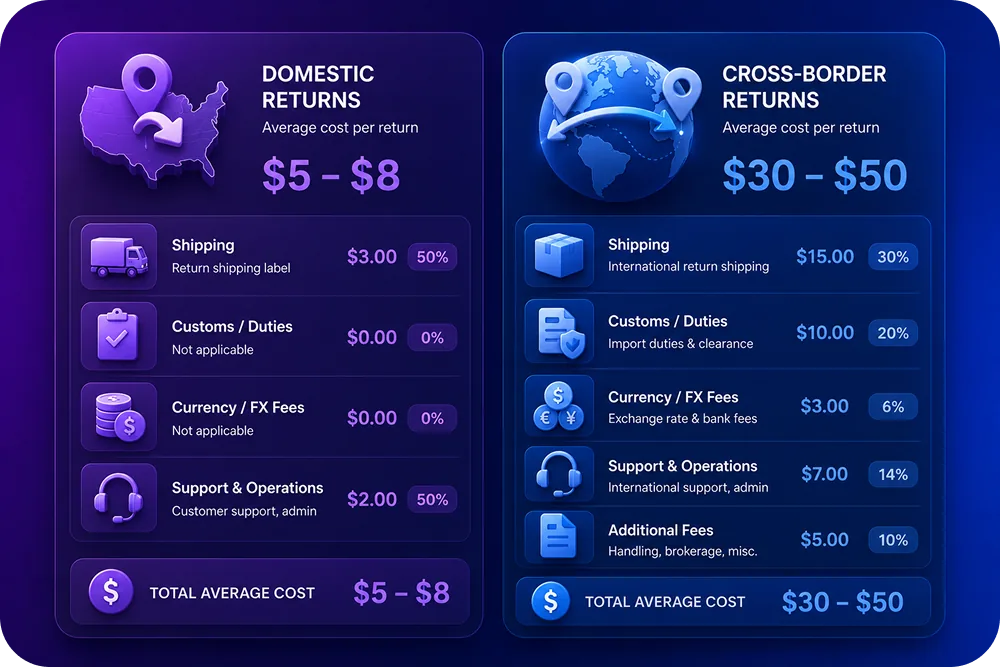
Cross-border returns are the most expensive part of international ecommerce. A return that costs $5 domestically can reach $30-50 when it crosses borders, between customs paperwork, international shipping, duties recovery, and multi-currency refunds.
For brands selling internationally, the returns platform matters more than it does for domestic operations. The wrong tool turns every cross-border return into a manual, costly process. The right platform automates customs documentation, routes returns to the nearest hub, and keeps customers informed in their language.
This guide ranks the best platforms for handling cross-border returns in 2026.
- Cross-border returns cost 3-5x more than domestic returns due to customs, shipping, and currency complexities.
- The best platforms automate customs docs, multi-language portals, local return hubs, and duty recovery.
- Choose based on whether your primary need is warranty/claims management or pure logistics.
- Claimlane is the top pick for brands where cross-border returns involve warranty claims, repairs, and supplier coordination.
Comparison Table
| Platform | Best For | Key Strength | Pricing |
|---|---|---|---|
| Claimlane ★ | Warranty + intl returns | AI claims + multi-market | Custom |
| Global-e | Full cross-border | End-to-end intl selling | Revenue share |
| Narvar | Post-purchase CX | Branded tracking | Custom |
| ZigZag | Logistics network | 200+ countries | Per-return |
| Loop Returns | Shopify exchanges | Exchange incentives | From $155/mo |
| ReturnGo | Shopify automation | Rules + exchanges | From $23/mo |
| Reclaimit | Nordic/European | EU carrier network | Custom |
Why Trust This Comparison
Claimlane works with brands like Skechers (multi-country rollout), Konges Sløjd (retailer claims across markets), and F. Engel (B2B cross-border returns). Rated 4.8/5 on G2.
Claimlane — Best for Warranty-Driven International Returns
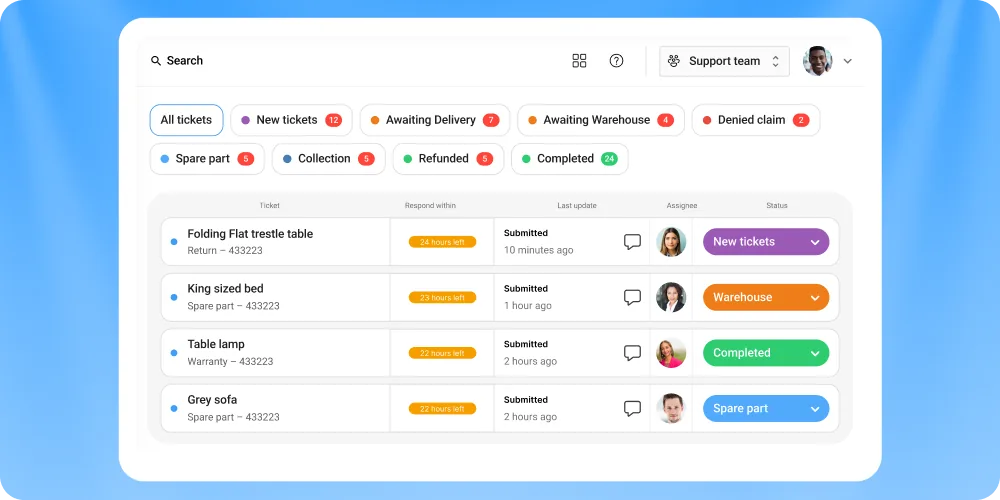
Claimlane handles the full lifecycle of cross-border returns involving warranty claims, repairs, replacements, and supplier coordination. Unlike logistics-only platforms, Claimlane manages the decision-making: is this claim valid? Should the product be repaired or replaced? Which supplier is responsible?
Why people choose Claimlane for cross-border
- Multi-language self-service portal for customers in any market
- AI-powered claim analysis works regardless of market or language
- Supplier forwarding routes claims to correct suppliers across borders
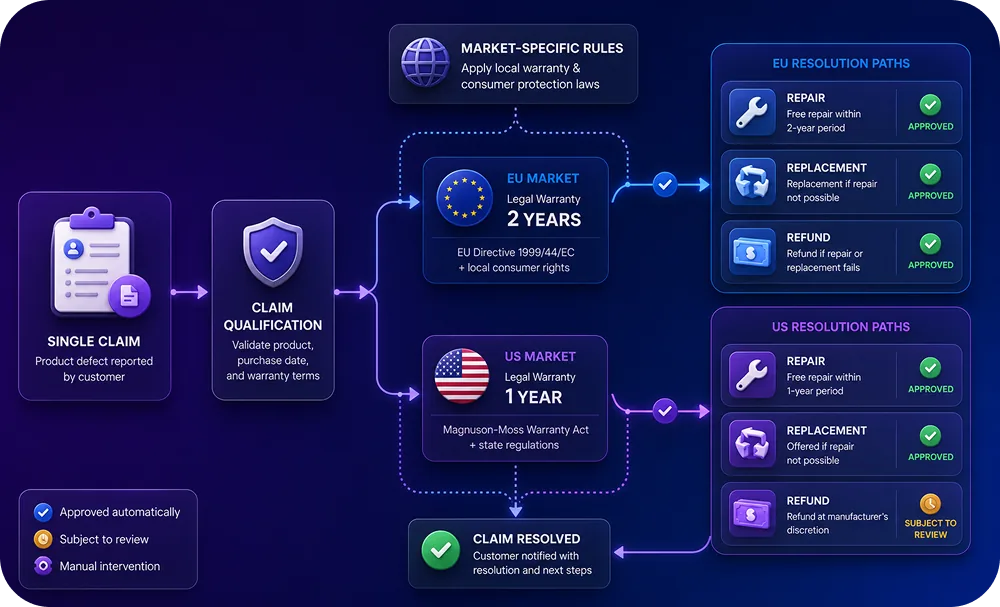
- Custom workflows vary by market (different warranty terms, regulations, resolutions)
- 75+ integrations connect to Shopify, WooCommerce, ERPs, and shipping providers
Pros and cons
Pros: Warranty claims, returns, and repairs in one system across markets. AI Agent handles multi-regulation complexity. Skechers rolled out across multiple countries successfully.
Cons: Not a logistics carrier network (pairs with providers). Best for warranty/claims complexity, not pure fashion returns.
Core features
- Multi-market workflows: Different warranty rules and resolution paths per country.
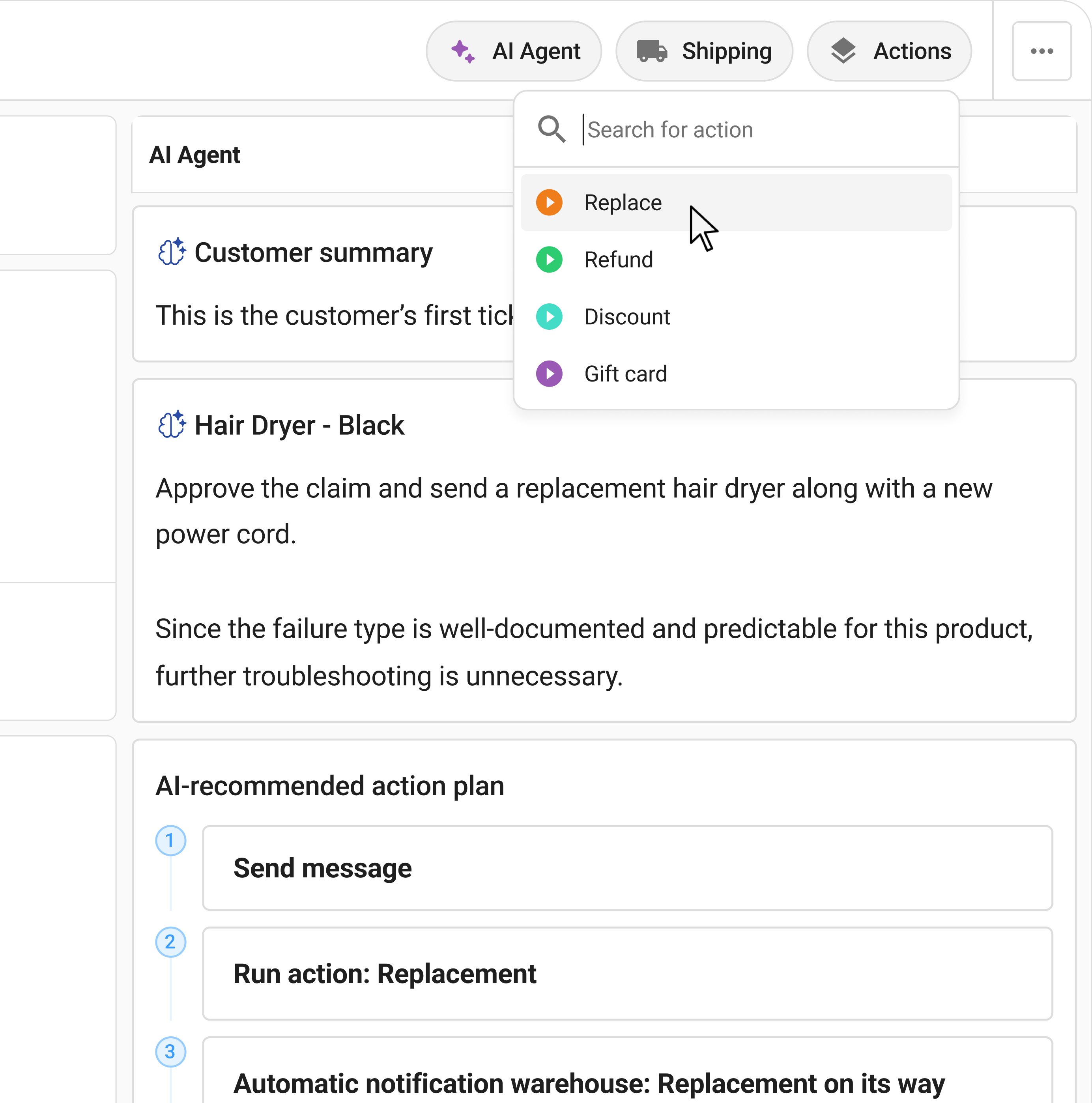
- AI Agent: Claimlane's AI Agent, the first AI agent purpose-built for warranty claims and returns, handles triage across all markets.
- Cross-border supplier coordination: Forward claims to suppliers in other countries with full documentation.
- Market-level analytics: Returns analytics broken down by region, product, and supplier.
Pricing
Custom pricing. Book a demo or try the interactive demo.
Global-e — Best for Full Cross-Border Commerce
Global-e handles international selling, checkout, shipping, duties, and returns end-to-end. The dominant player for fully managed cross-border DTC.
Key features
- Localized checkout with real-time duty/tax calculation
- International returns with local labels
- Currency conversion and local payment methods
- Landed cost guarantees
Pros: Complete cross-border solution, strong duty handling. Cons: Revenue share model expensive at scale. Returns module is secondary. No warranty claims.
Best for: Brands wanting fully managed cross-border commerce including returns.

Narvar — Best for Branded Post-Purchase CX
Narvar focuses on branded tracking and returns portals with international carrier integrations.
Key features
- Branded multi-language returns portal
- International carrier integrations
- Proactive status notifications
- Return reason analytics
Pros: Strong brand experience, good carrier network. Cons: Limited warranty functionality. No AI claim analysis. No supplier forwarding.
Best for: DTC brands focused on consumer return experience without warranty complexity.

ZigZag (Sorted) — Best for Logistics Network
ZigZag offers a global returns logistics network spanning 200+ countries with consolidation hubs.
Key features
- Local return labels in 200+ countries
- Consolidation hubs batching returns before warehouse forwarding
- Carrier optimization by cost and speed
- Grade and disposition management
Pros: Massive logistics network, strong consolidation. Cons: Logistics-only, no warranty management, no AI.
Best for: High-volume retailers needing to reduce cross-border shipping costs.
Loop Returns — Best for Shopify Exchanges
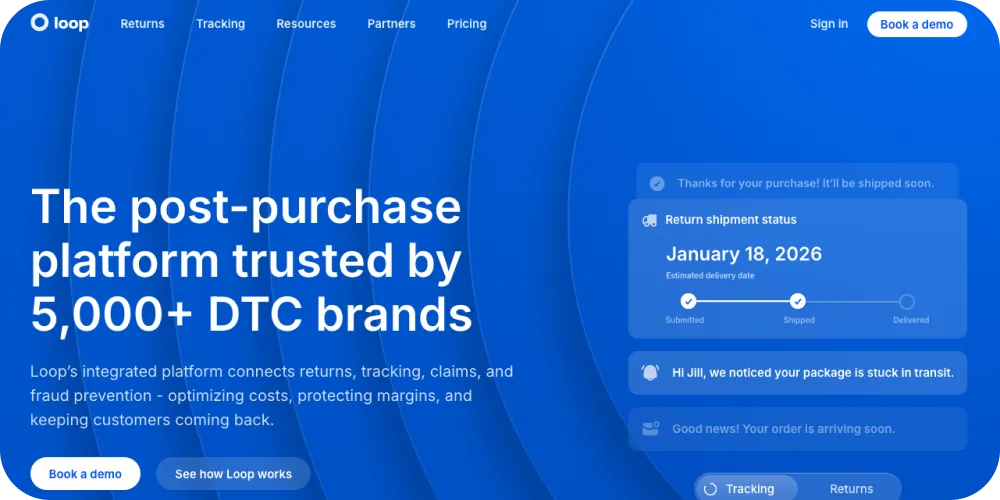
Loop Returns converts refunds into exchanges with growing international support.
Key features
- Exchange-first flows incentivizing swaps over refunds
- Store credit with bonus credit for exchanges
- Growing international carrier support
- Shopify-native integration
Pros: Revenue retention focus, good Shopify integration. Cons: Primarily Shopify. International still maturing. No warranty management.
Best for: Shopify brands with growing international sales wanting revenue retention.
ReturnGo — Best Budget Shopify Option
ReturnGo offers returns automation for Shopify with multi-language and multi-currency support at accessible pricing.
Key features
- Automation rules for approvals and routing
- Multi-language return portal
- Exchange and store credit options
Pros: Affordable, multi-language. Cons: Shopify-only, basic analytics, no warranty management.
Best for: Smaller Shopify stores selling internationally.

Reclaimit — Best for Nordic/European Markets
Reclaimit specializes in Nordic and European returns with strong regional carrier integrations.
Key features
- Carrier integrations across Scandinavia and Europe
- Drop-off point selection portal
- Sustainability-focused processing
Pros: Strong Nordic presence, good EU coverage. Cons: Limited outside Europe. No warranty management.
Best for: Nordic/European retailers needing regional carrier integrations.
How to Choose a Cross-Border Returns Platform
Identify your primary pain point
If the challenge is warranty claims across borders, choose Claimlane. If it is logistics cost reduction, choose ZigZag. If it is full cross-border commerce, choose Global-e.
Evaluate warranty vs. logistics needs
Most cross-border returns platforms focus on logistics. If returns involve warranty claims, defect analysis, and supplier recovery, a warranty-first platform is essential.
Consider customer experience
A multi-language portal is table stakes. But quality varies from basic translation to fully localized workflows.
Check compliance coverage
EU regulations like GPSR and the Right to Repair directive require documented processes. The platform should support compliance documentation across markets.
The True Cost of Cross-Border Returns
- International shipping: $15-40 per return
- Customs/duties: Recovery takes weeks; some duties lost entirely
- Currency conversion: Exchange rate fluctuations affect refund amounts
- Compliance: GPSR and country-specific laws require documentation
- Support: Multi-language teams or automated portals needed
Automation cuts cross-border return costs by 40-60%.