.webp)
Returns tracking is no longer optional for ecommerce brands. Customers expect real-time updates on their return status, and operations teams need visibility into where every returned product is in the pipeline. A spreadsheet doesn't cut it at 200+ returns per month.
Returns tracking platforms handle the full lifecycle: the customer initiates a return, the system generates a label or QR code, tracks the shipment back, logs receipt at the warehouse, manages inspection, and processes the resolution. The best platforms also feed data into analytics that help brands reduce return rates and recover costs from suppliers.
This guide compares the top returns tracking platforms in 2026, organized by what they do best.
What to Look for in a Returns Tracking Platform
Before comparing tools, know what matters for your operation.
Must-have features
- Self-service portal. Customers should initiate returns without emailing support. A branded portal that collects return reasons, photos, and order data reduces agent workload.
- Real-time tracking. Both the customer and the operations team need to see where the return is at every stage.
- Automated workflows. Rules that route returns by type, value, or product category. Defective items go to warranty. Size issues go to exchange. Low-value items get returnless refunds.
- Label and QR code generation. Support for prepaid labels, scan-based labels, and printerless QR code returns.
- Ecommerce platform integration. Native connections to Shopify, WooCommerce, BigCommerce, and Magento.
- Analytics and reporting. Return rates by product, reason, channel, and time period.
Nice-to-have features
- Warranty claim handling. Not all returns platforms handle warranty claims. If your products have warranties, you need defect assessment, image analysis, and supplier forwarding.
- AI-powered assessment. Automated evaluation of product photos to determine defect type and resolution.
- Supplier recovery. Forwarding defective product claims to suppliers with documentation for credit note recovery.
- Multi-channel support. Handling returns from your website, marketplaces, and retail channels in one system.
The Best Returns Tracking Platforms
1. Claimlane
Best for: Brands with warranty claims, repairs, and complex after-sales operations
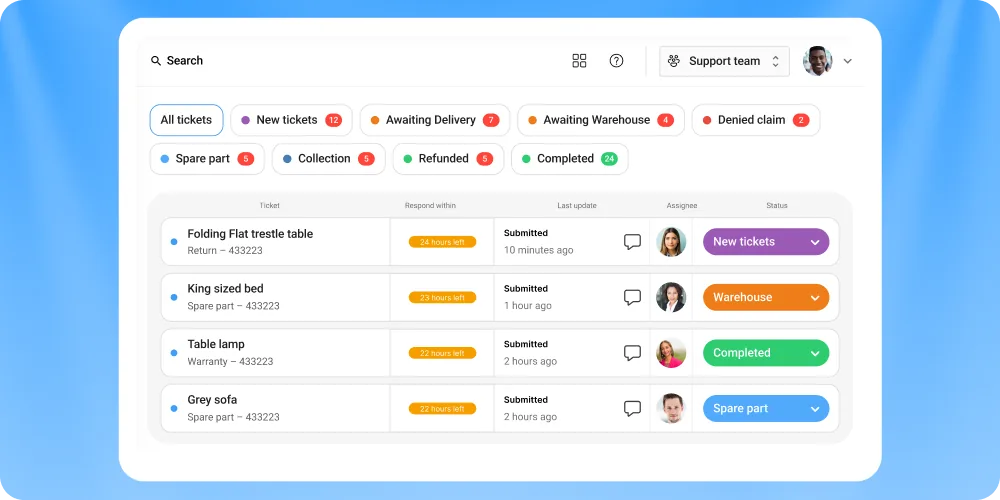
Claimlane is a warranty and returns management platform that goes deeper than standard returns tracking. While most platforms handle the return label and refund, Claimlane manages the full after-sales workflow: claims intake with structured photo evidence, AI-powered defect assessment, resolution routing, repair tracking, spare parts management, and supplier cost recovery.
This makes it the strongest choice for brands where returns aren't just "wrong size" issues but include defective products, warranty claims, and supplier-related quality problems.
Key features:
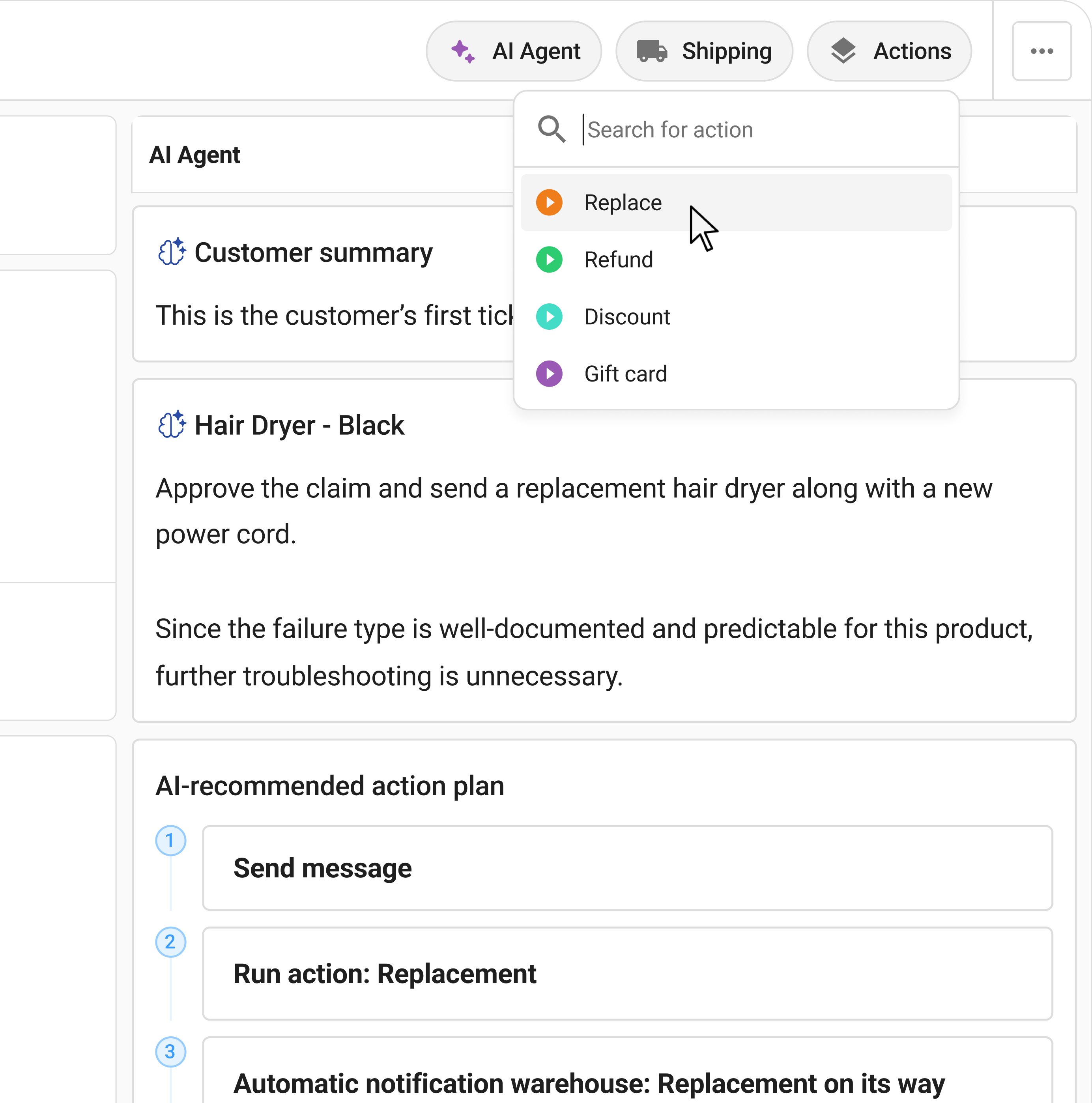
- AI Agent, the first AI agent purpose-built for warranty claims and returns. Analyzes product images and videos, applies warranty rules per product and supplier, and recommends or auto-approves resolutions.
- Self-service portal where customers submit claims with photos, videos, serial numbers, and order details.
- Workflow automation that routes claims by type, product, value, or supplier.
- Supplier forwarding that packages claims with documentation and routes them to suppliers for credit note recovery.
- Analytics on defect rates, supplier performance, claim patterns, and resolution times.
- 75+ integrations including Shopify, WooCommerce, Zendesk, Freshdesk, ERPs, and shipping providers.
- Warranty registration to capture product data at purchase for faster future claims.
Proof points:
- MaxGaming resolved complex RMA cases 77% faster using Claimlane's AI agents across 30,000+ SKUs.
- Davidsen went from 5 agents to 1-2 agents handling claims.
- GrejFreak achieved ROI almost immediately.
- Skechers uses Claimlane for warranty claims processing.
Best for: Brands in furniture, electronics, outdoor gear, baby products, and B2B where warranty claims are a significant portion of after-sales volume.
Pricing: Custom. Book a demo.
2. Loop Returns
Best for: Shopify brands focused on converting returns into exchanges
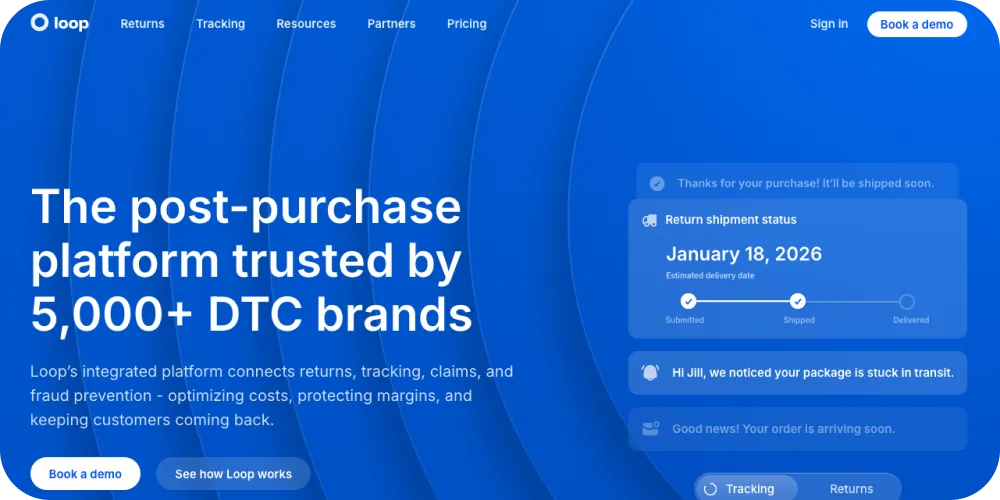
Loop Returns is built around a specific thesis: returns should become exchanges whenever possible. The platform incentivizes customers to choose exchanges or store credit over refunds, helping brands retain revenue.
Loop integrates deeply with Shopify and focuses on the DTC returns experience.
Key features:
- Exchange-first return flow that encourages swaps over refunds
- Bonus credit incentives for choosing exchange
- Shopify-native integration
- Branded returns portal
- Automated refund and exchange processing
- Return reason tracking
Limitations: Loop is primarily a Shopify tool. Warranty claim handling is basic compared to dedicated claims platforms. If your returns include defective products that need image review, supplier forwarding, or repair workflows, Loop will need to be paired with another tool.
Pricing: From $29/month. Scales with return volume.
3. AfterShip Returns
Best for: Multi-carrier brands that need tracking across the full post-purchase journey
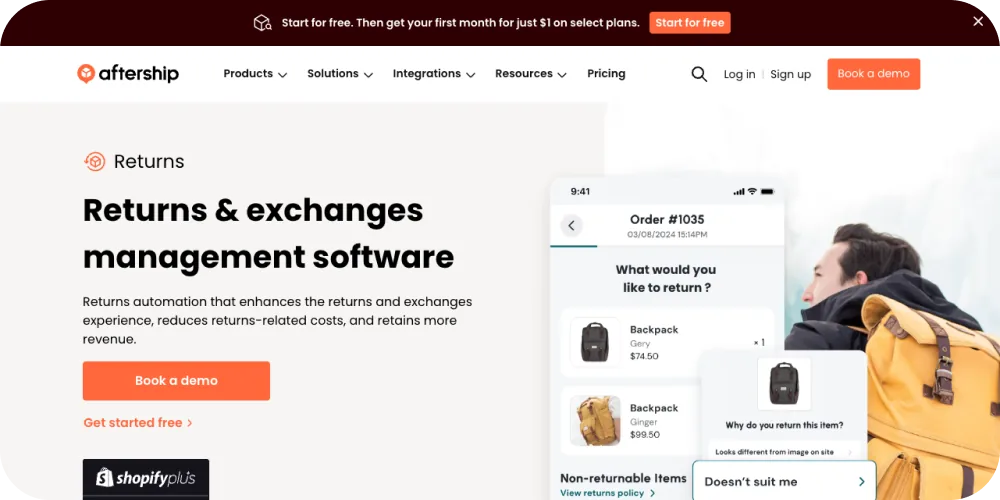
AfterShip started as a shipment tracking tool and expanded into returns. Its strength is carrier coverage: over 1,100 carriers tracked globally. For brands shipping and receiving returns through multiple carriers, AfterShip provides unified tracking visibility.
Key features:
- Returns portal with automation rules
- 1,100+ carrier integrations for tracking
- Branded tracking pages for both outbound and return shipments
- Return label and QR code generation
- Exchange and store credit options
- Multi-platform support (Shopify, WooCommerce, BigCommerce, Magento)
Limitations: AfterShip is broad but not deep on warranty and claims management. It handles standard returns well but doesn't offer AI-powered defect assessment, per-product warranty rules, or structured supplier recovery workflows.
Pricing: Free tier available. Paid plans from $11/month.

4. ParcelLab
Best for: European brands wanting operational post-purchase tracking and returns in one platform
ParcelLab is a post-purchase platform with strong European carrier coverage and an operations-first feature set. It handles outbound parcel tracking, delivery notifications, returns portal, and exchanges, with particular strength in serving brands shipping cross-border within Europe.
Key features:
Outbound parcel tracking with broad European carrier coverage (DHL, DPD, GLS, Hermes, PostNord, and others)
Branded tracking pages and customer notifications
Returns portal with rule-based eligibility
Exchanges and store credit workflows
Operational analytics on delivery performance and return patterns
Multi-language support across European markets
Limitations: ParcelLab does not handle warranty claims, repair workflows, or supplier-attributed claim recovery. Brands with significant warranty volume typically pair ParcelLab with a dedicated claims platform. For brands evaluating alternatives, see the top ParcelLab alternatives breakdown.
Pricing: Custom enterprise pricing.
5. Narvar
Best for: Enterprise brands that want a full post-purchase experience platform
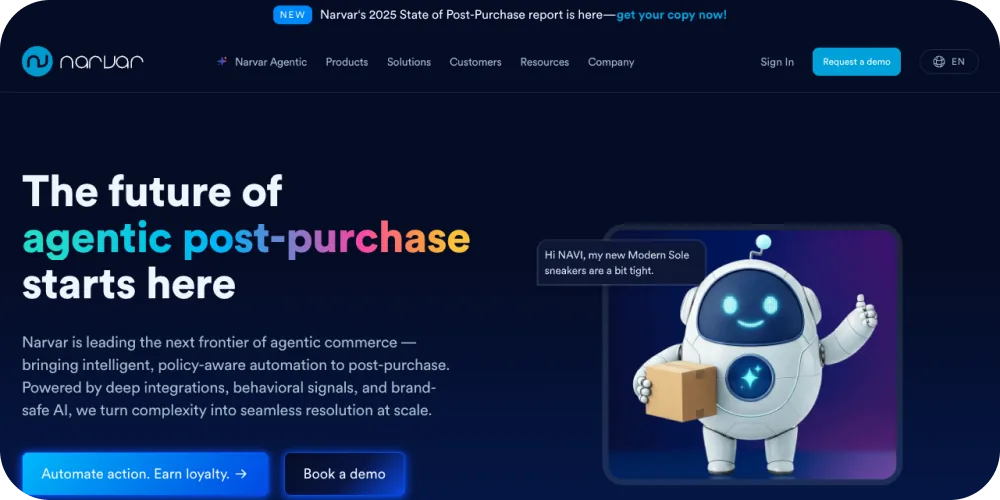
Narvar positions itself as a post-purchase experience platform, covering order tracking, delivery notifications, returns, and exchanges. It's popular with larger retailers and enterprise ecommerce operations.
Key features:
- Branded order tracking and delivery notifications
- Returns and exchanges portal
- Concierge return drop-off network
- Estimated delivery dates
- Analytics on post-purchase experience
- Enterprise integrations
Limitations: Narvar is enterprise-focused with pricing to match. Smaller brands may find it overbuilt for their needs. Warranty-specific features (image analysis, supplier claims, repair tracking) are limited compared to purpose-built claims platforms.
Pricing: Custom enterprise pricing.
6. ReturnGO
Best for: Shopify brands wanting flexible return policy rules
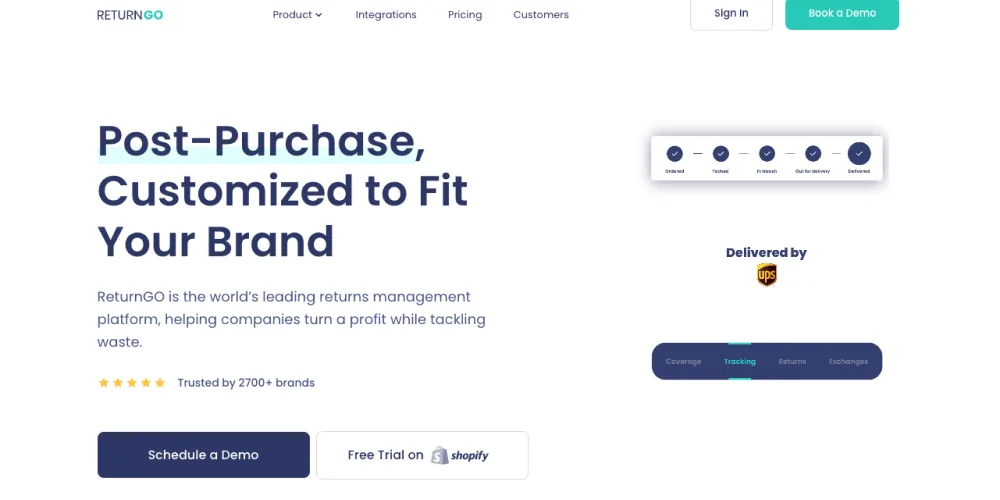
ReturnGO offers a returns management platform with strong policy customization. Brands can set different return rules by product type, collection, customer segment, and order value.
Key features:
- Customizable return policy rules
- Exchange and store credit incentives
- Shopify, WooCommerce, and BigCommerce support
- Return label generation
- Automated resolution workflows
- Return analytics dashboard
Limitations: Similar to Loop, ReturnGO focuses on the return/exchange workflow. Warranty claims with image evidence, supplier forwarding, and repair tracking require additional tools.
Pricing: From $23/month.
7. Happy Returns (PayPal)
Best for: Brands that want to offer in-person return drop-offs
Happy Returns, now owned by PayPal, differentiates through its physical Return Bar network. Customers can drop off returns at participating locations without a box or label. The aggregated shipping model reduces per-return shipping costs.
Key features:
- Return Bar drop-off network (9,000+ locations in the US)
- Box-free, label-free returns
- Aggregated return shipping for lower costs
- Returns portal with exchange options
- PayPal integration for instant refunds
Limitations: The Return Bar network is US-only. International brands or brands with warranty-heavy return profiles will need additional capabilities. For Happy Returns alternatives with stronger warranty features, Claimlane is the most common comparison.
Pricing: Custom. Transaction-based model.

8. ZigZag Global
Best for: International returns and cross-border logistics
ZigZag specializes in international returns management. For brands selling across borders, it provides local return addresses, carrier aggregation, and customs handling that reduce the cost and complexity of cross-border returns.
Key features:
- International returns network across 170+ countries
- Local return addresses in key markets
- Carrier aggregation for cost optimization
- Customs and duties management
- Returns portal
- Analytics on international return patterns
Limitations: ZigZag is logistics-focused. It handles the shipping and routing of returns efficiently but doesn't offer warranty claims management, defect analysis, or supplier recovery. Brands with both international returns and warranty claims often pair ZigZag with Claimlane.
Pricing: Custom.
9. ClickPost: Best for tracking forward and return shipments in one place
ClickPost Returns tracks return shipments on the same 700+ carrier network it uses for outbound tracking, so teams see both directions in one dashboard. It works best for brands that already use ClickPost for outbound tracking.
Custom pricing on request.
Match the tool to your return type mix
The biggest mistake brands make is choosing a returns platform based on return volume alone. The type of returns matters more.
If most returns are size/fit issues: Loop or ReturnGO. The exchange-first approach retains revenue.
If most returns include defective products or warranty claims: Claimlane. The AI-powered defect assessment, supplier forwarding, and repair workflows handle what standard returns tools can't.
If international returns are a major volume: ZigZag for logistics, potentially paired with Claimlane for claims management.
If you need unified tracking across carriers: AfterShip. The carrier coverage is unmatched.
If you want in-person drop-off options: Happy Returns. The Return Bar network reduces shipping costs and improves customer convenience.
Consider the full stack
Most ecommerce brands don't use a single tool for all post-purchase operations. A common stack includes:
- Returns management (Claimlane, Loop, or AfterShip) for the customer-facing return flow
- Helpdesk (Zendesk, Gorgias, or Freshdesk) for customer communication
- Ecommerce platform (Shopify, WooCommerce, BigCommerce) as the order system of record
- ERP (NetSuite, Dynamics 365, SAP) for inventory and finance
The returns platform needs to integrate with all of these. Claimlane offers 75+ integrations to connect with existing tech stacks.
Evaluate AI capabilities
AI in returns management ranges from basic auto-tagging to fully autonomous claim resolution.
- Basic: Automated return reason categorization and routing rules. Most platforms offer this.
- Intermediate: AI-suggested resolutions based on return patterns. Some platforms are adding this.
- Advanced: Image and video analysis of defective products, per-product warranty rule application, and autonomous approval/denial. This is what Claimlane's AI Agent does.
For brands processing warranty claims at scale, the AI capability level is the differentiator. A tool that can look at a photo of a cracked product, identify the defect type, check if the warranty covers it, and approve a replacement without human intervention saves hours per day.
The Case for Specialized vs. All-in-One
Some brands want one tool that does everything. Others prefer best-of-breed tools for each function.
When all-in-one works
- Low return volume (under 100/month)
- Simple return reasons (size, fit, preference)
- Single sales channel
- Small team that can't manage multiple tools
When specialized tools work better
- High return and warranty claim volume
- Products with warranty obligations
- Multiple sales channels (DTC, marketplaces, retail)
- Need for supplier recovery and analytics
- Complex product categories (furniture, electronics, outdoor gear)
Black Diamond, for example, automated warranty and repair workflows with Claimlane because generic returns tools couldn't handle the repair-vs-replace decision tree for outdoor climbing equipment.
Returns Tracking Platform Trends in 2026

AI is moving from hype to production
In 2024, most returns platforms mentioned AI in marketing. In 2026, a few platforms are actually shipping AI features that work. The key distinction: chatbot-style AI that answers FAQs vs. operational AI that makes claims decisions. Claimlane's AI Agent is in the second category.
Exchange incentives are standard
Offering bonus store credit for exchanges (instead of refunds) is now table stakes. Loop pioneered this, and nearly every competitor has followed.
QR code returns are growing
Printerless returns via QR codes at drop-off locations are becoming the default. Customers prefer them, and brands save on label costs. Most platforms now support QR code generation.
Supplier recovery is the new frontier
Brands are realizing that processing a return is only half the job. Recovering costs from suppliers for defective products is the other half. Platforms that offer structured supplier forwarding and recovery tracking (like Claimlane) are increasingly in demand. See also: supplier recovery guide.
Data-driven returns reduction
The best returns platforms don't just process returns. They help prevent them. Returns analytics that identify which products have the highest return rates, which suppliers produce the most defects, and which return reasons are fixable give brands actionable data to reduce future returns.