.webp)
Why gift returns need their own flow
A gift return breaks the usual rule of ecommerce returns: the person returning the item is not the person who paid for it. That single fact changes everything. The recipient has no order number, no account, sometimes no idea where the gift was bought, and almost never wants the buyer to find out it came back.
Run a gift return through a standard returns flow and it stalls fast. The recipient cannot log in, the refund tries to go to the buyer's card, and a thank-you turns into an awkward message. This guide covers what makes gift returns different, how gift receipts work, how to route the money to the right person, and how to keep the flow calm through peak season. For the wider picture, the ecommerce returns guide and the overview of returns for ecommerce brands sit next to this one.
What makes a gift return different from a standard return
Four things change when a return is a gift.
The person changes. The recipient is returning the item, not the buyer. They are a new contact the brand has never seen.
The proof changes. The recipient rarely has an order number or an account. A gift receipt or an order lookup has to stand in.
The money changes. A refund to the original card sends money back to the buyer, which is usually the wrong person. Store credit or an exchange keeps the value with the recipient.
The privacy changes. A gift return should be invisible to the buyer. No "your gift was returned" email. A standard return policy does not account for any of this, which is why a gift return needs its own path.
The gift receipt and what it should show
A gift receipt is the simplest tool for gift returns, and most brands either skip it or build it wrong.
A good gift receipt shows the item, the SKU, the order reference, the store, and the return policy. It hides the price. That last point is the whole reason it exists. The recipient should be able to return or exchange the item without learning what the buyer spent.
The brand can offer a gift receipt at checkout as a tick-box, then deliver it as a printed insert, a QR code on the packing slip, or a link the buyer forwards. A clear return policy template should include a gift-return section so the recipient knows the rules before they start.
Returning a gift without a receipt
Many recipients have nothing. No receipt, no order number, no idea of the exact purchase date. The brand still needs a way to verify the item.
Three checks help. An order lookup by the recipient's name or address can find the purchase if the buyer shipped it directly. A product and serial check confirms the item was genuinely sold by the brand. And a gift-return-without-receipt rule can default to store credit at the current selling price, which protects the brand from refunding more than the item is worth.
The key is to not turn a missing receipt into a dead end. A recipient who cannot return a gift remembers the brand badly, even though they never chose it. Defaulting to store credit rather than a cash refund keeps the value in the brand and keeps the recipient willing to come back.
Who gets the money: routing refunds to the recipient
This is the question that trips up most gift return flows. The original payment came from the buyer's card, so a standard refund goes straight back to the buyer. For a gift, that is almost always wrong.
The recipient is the one giving the item up. They should receive the value. The clean answer is store credit or a gift card issued to the recipient, not a card refund to the buyer. This is also how major retailers handle it, since a card refund would tell the buyer the gift came back and would hand the money to the wrong person.
A cash refund to the buyer only makes sense when the buyer asks for it themselves, for example when a gift is duplicated and the buyer is sorting it out directly. In every other case, routing the resolution to the recipient protects the relationship and supports customer retention after the return.
Gift return policy options
Three outcomes are common for a gift return. Most brands should offer more than one.
| Outcome | How it works | Best for | Trade-off |
|---|---|---|---|
| Store credit to recipient | Value issued as credit or a gift card to the recipient | Most gift returns | Recipient must shop with the brand again |
| Exchange for recipient | Recipient swaps for a size, colour, or different item | Wrong size or fit | Needs stock in the wanted variant |
| Refund to original buyer | Value returned to the buyer's card | Buyer-led cases only | Exposes the return to the buyer |
Store credit and exchange both keep the value in the brand, which is why the exchange and store credit path beats a cash refund for gifts. A restocking fee is usually a poor fit for gift returns, since the recipient did not choose the item and a fee punishes the wrong person.
Building a gift return flow step by step
The flow below works for a recipient with or without a receipt. A self-service portal runs it without an agent.
A prepaid return label keeps the recipient from paying to return a gift they did not ask for. Running the whole path through structured customer service workflows for returns means the gift case never falls back into the standard flow by mistake, which keeps customer effort low for a person who did not choose to be in a returns process at all.
Peak-season gift returns: planning for January
Gift returns are seasonal. The volume spikes in the first weeks of January, after the December gifting peak, and again after other major gifting dates. A flow that copes in March can buckle in January.
Three moves help. Extend the return window for items bought in the gifting period, so a gift bought in late November is still returnable in January. Watch the average return rate for the season and staff for the spike. And keep the self-service path strong, because peak season is exactly when time to resolution slips if every gift return needs an agent.
Keeping the buyer informed without spoiling the gift
Gift returns have a privacy rule that standard returns do not: the buyer should not find out.
That means the return confirmation, the status updates, and the resolution notice all go to the recipient, not the buyer. A brand that sends a "your order was returned" email to the buyer has spoiled a gift and embarrassed two people at once.
The fix is to attach the notification path to the person who started the return. Automatic status emails should route to the recipient's contact details, and the standard customer notification flow should be suppressed for the buyer on gift cases. Handled quietly, a gift return can still strengthen post-purchase loyalty with the recipient.
Gift returns and fraud
Gift returns carry a specific fraud risk, because the verification is looser. Someone could claim a gift return on an item bought elsewhere, or return a gift for credit and keep the item.
The controls are the same ones that protect any return, applied with a lighter touch. A product and serial check confirms the brand sold the item. Issuing store credit rather than cash limits the payout. And pattern checks flag a single person filing many gift returns. The return fraud and return fraud prevention guides cover the wider surface. The balance is important: gift returns should stay easy for the honest recipient, who is the large majority.
Exchanges as the better default for gifts
Many gift returns are not really returns. They are exchanges waiting to happen. The wrong size, a colour that does not suit, a duplicate. The recipient wants the right version, not their money back.
Leading with an exchange serves the recipient and the brand. The recipient gets something they will use. The brand keeps the revenue and avoids a refund. An exchange-first approach presents the exchange option before the credit option, and credit before any refund. For gifts, that order is even more natural than for standard returns, because the recipient never had a payment to get back in the first place.
How Claimlane automates gift returns
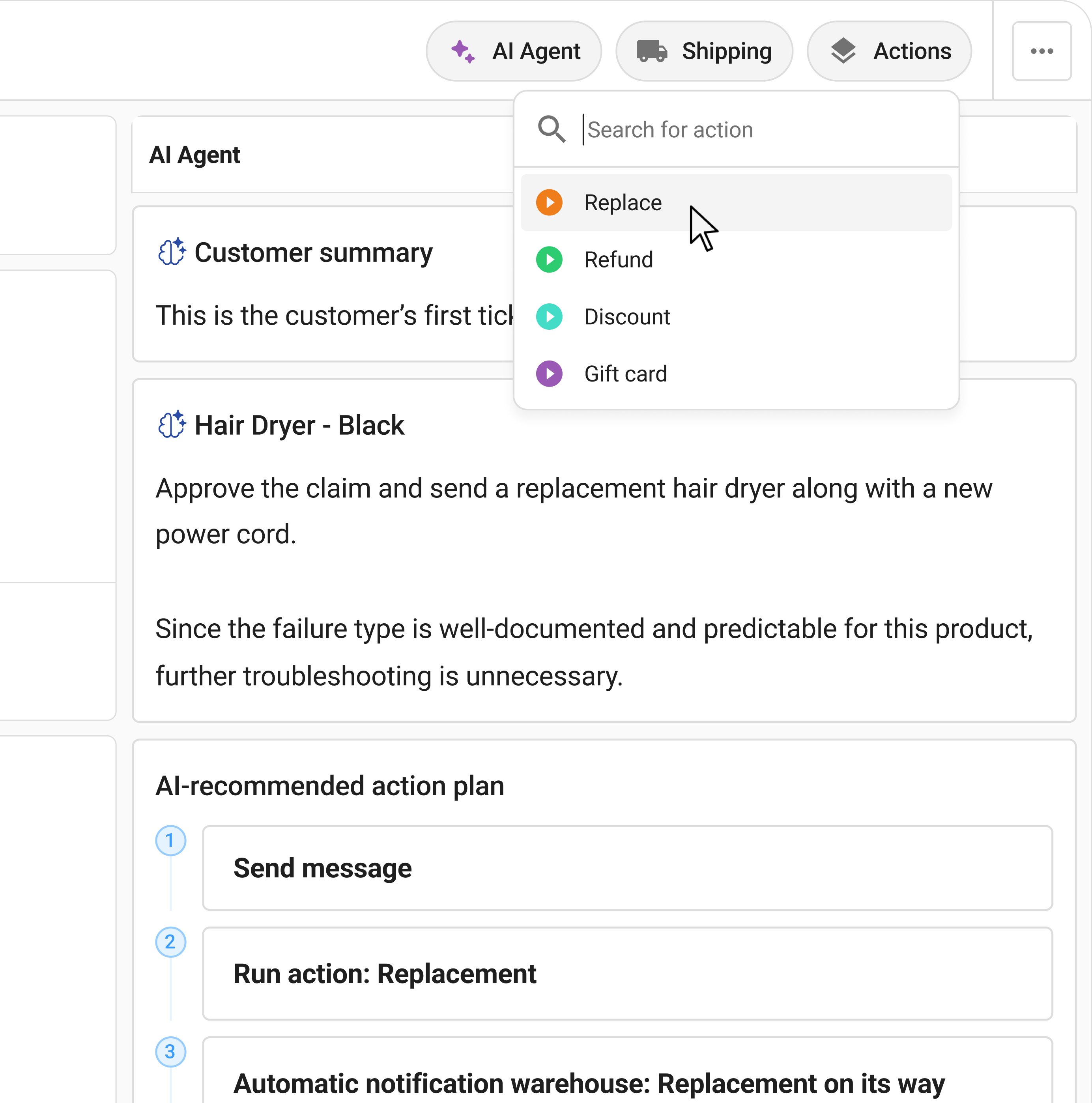
Claimlane treats a gift return as its own workflow, not a variation of the standard one. A recipient enters the portal, marks the case as a gift, and the workflow opens the gift path: order lookup or serial check instead of login, store credit or exchange instead of a card refund, and notifications routed to the recipient.
That structure is what makes gift returns calm at scale. The case is verified, the resolution lands with the right person, and the buyer stays out of the loop. The same returns automation that runs standard returns runs gift returns, and the broader returns management software handles peak-season volume without extra headcount. Claimlane analytics then shows which products drive gift returns, so the brand can act on the pattern. Claimlane is rated 4.8 out of 5 on G2 by brands running returns this way.
CUSTOMER VOICE"Claimlane helps us capture every customer issue, resolve it for the customer, and feed that back to the supply chain to drive continuous improvement."Henry Currer, Head of Operations, Swoon Furniture (case study)
Brands in gift-heavy categories see this most clearly. The baby retailer BabySam built a claim experience that exceeds expectations, and the baby brand Sebra turned claim handling into a value-creating activity. Gifting is constant in baby and nursery, so a clean gift-return flow matters there year round.
Frequently asked questions
For the wider picture on the tools behind this, the returns management system overview covers how gift returns fit a brand's returns setup.
Conclusion
A gift return is a returns case with the buyer removed and a stranger added. The recipient has no account, no order number, and no wish to embarrass the person who bought the gift. A standard returns flow ignores all of that.
The brands that handle gift returns well give them a dedicated flow: a gift receipt, an order lookup for recipients with nothing, store credit or an exchange as the default, notifications routed to the recipient, and an extended window across the gifting season.
To see how Claimlane runs gift returns as their own workflow, book a demo.