.webp)
Why Your Return Policy Matters More Than You Think
A return policy isn't just legal boilerplate buried in a footer link. For ecommerce brands, it's one of the most-read pages on the entire site. Research from Narvar shows that 49% of online shoppers check the return policy before making a purchase. If the policy is unclear, too restrictive, or missing entirely, they leave.
The return policy shapes customer expectations, reduces support tickets, protects the business legally, and directly influences conversion rates. A well-written policy turns returns from a cost center into a trust-building touchpoint.
This guide includes ready-to-use templates for different policy types, real-world examples from ecommerce brands, and guidance on what to include (and what to skip).
What to Include in Every Ecommerce Return Policy
Before getting to templates, here's what every return policy needs to cover. Missing any of these creates confusion, support tickets, and potential legal exposure.
Return window
How many days does the customer have to initiate a return? Common windows are 14, 30, 60, or 90 days. The EU mandates a minimum 14-day cooling-off period for online purchases. Some brands offer 365-day returns as a competitive differentiator.
Eligible products
Which products can be returned and which can't? Common exceptions include:
- Personalized or custom items
- Intimate apparel and swimwear (for hygiene reasons)
- Perishable goods
- Clearance or final-sale items
- Opened software or digital products
Product condition requirements
Does the item need to be unused, in original packaging, with tags attached? Be specific. "Like-new condition" is vague. "Unworn, unwashed, with all original tags attached" is clear.
Refund method
Will the customer receive a refund to the original payment method, store credit, or an exchange? How long does the refund take to process? Most customers expect refunds within 5 to 10 business days after the return is received.
Return shipping
Who pays for return shipping? Options include:
- Brand pays (prepaid return label provided)
- Customer pays
- Brand deducts a flat return shipping fee from the refund
- Free return shipping for defective items, customer pays for change-of-mind returns
Restocking fees
If applicable, state the percentage and which product categories it applies to. As covered in our returns optimization guide, restocking fees need to be disclosed before purchase to be enforceable.
How to initiate a return
Step-by-step instructions. Where does the customer go? Do they log in to a portal, email support, or fill out a form? The easier this process is, the fewer support tickets the brand receives.
Exchange policy
Can customers exchange for a different size, color, or product? Is there a price difference adjustment? Exchanges keep revenue in the business and are often cheaper to process than full returns.
International returns
If the brand ships internationally, the return policy needs to address cross-border returns. Who pays customs duties on returns? Are return windows different? Which carrier should international customers use?
Return Policy Template 1: Standard Ecommerce Return Policy
This template works for most direct-to-consumer brands selling physical products.
[Brand Name] Return Policy
Not happy with your purchase? No problem. Here's how returns work.
Return window
30 days from delivery. Items must be returned within 30 days of the delivery date.
Condition
Items must be unused, unwashed, and in original packaging with all tags attached.
How to start a return
- Visit [Brand URL/returns] and log in with your order email.
- Select the item(s) and choose your return reason.
- Print your prepaid return label and packing slip.
- Pack securely and drop off at any [carrier] location.
Refunds
Processed within 5-7 business days after receipt and inspection. Refunded to original payment method.
Return shipping
Free for domestic customers. International return shipping is the customer's responsibility.
Return Policy Template 2: No Refund Policy (Store Credit Only)
Some brands don't offer cash refunds but provide store credit instead. This is common for brands with high return rates or low-margin products.
[Brand Name] Store Credit Policy
All returns are eligible for store credit. Cash refunds are not available except where required by law.
Return window
21 days from delivery.
Store credit
Issued within 3-5 business days after inspection. Store credit does not expire.
Return shipping
A flat $5.95 return shipping fee will be deducted from your store credit balance.
Defective items
Damaged or wrong items receive a full cash refund. Contact support within 48 hours of delivery.
When a no-refund (store credit) policy works
This approach works well for fashion brands with high return rates, subscription-based businesses, and brands where the average order value is relatively low. It keeps revenue circulating while still giving customers a resolution.
The critical caveat: most consumer protection laws (EU, UK, Australia) require cash refunds for defective products regardless of the stated policy. A blanket "no refunds" policy that doesn't exempt faulty goods is legally risky.
Return Policy Template 3: No Returns, No Refunds (Final Sale)
This template is for brands or product categories where returns are not accepted. It needs to be extremely clear because customers who feel surprised by a no-return policy will file chargebacks.
[Brand Name] Final Sale Policy
All purchases from [Brand Name] are final sale. Returns and refunds are not available.
Why final sale?
[Brief explanation — e.g., our products are made to order or cannot be resold for hygiene reasons.]
Before you buy
Please review sizing guides, product descriptions, and customer reviews carefully before placing your order. If you have questions about fit, materials, or specifications, contact [support email] before purchasing.
Damaged or defective items
If your order arrives damaged or defective, contact [support email] within 7 days of delivery with photos of the issue. Eligible for a replacement or full refund.
Wrong item received
If you received the wrong item, contact [support email] within 7 days. We’ll correct it at no cost to you.
When a no-return policy makes sense
No-return policies work for:
- Custom and personalized products (monogrammed items, custom prints)
- Perishable goods (food, flowers)
- Hygiene-sensitive products (earbuds, undergarments)
- Digital products and software licenses
They don't work for general consumer goods, fashion, or electronics. In those categories, customers expect returns, and blocking them pushes buyers to competitors.
Return Policy Template 4: Tiered Return Policy (Time-Based)
A tiered policy rewards fast returns with better terms and discourages late returns without banning them.
[Brand Name] Return Policy
Returns are welcome. The sooner you return, the more options you have.
Within 14 days of delivery
Full refund to original payment method. Free return shipping.
15 to 30 days after delivery
Full refund as store credit. Customer pays return shipping.
31 to 60 days after delivery
Exchange only. Customer pays return shipping.
After 60 days
Returns are not accepted.
Condition
All returned items must be unused, in original packaging, with tags attached.
Defective items
Defective or damaged items receive a full cash refund within 60 days. Contact [support email] with photos.
How to start a return
Visit [Brand URL/returns] and follow the prompts.
Why tiered policies work
Products returned within 14 days are far more likely to be in resalable condition. A tiered policy creates urgency ("return sooner for a better deal") while still accommodating customers who need more time. It also reduces the volume of returns that arrive in unsellable condition weeks later.
Real-World Return Policy Examples
Here's what successful ecommerce brands are doing with their return policies in 2026.
Example 1: Generous and simple
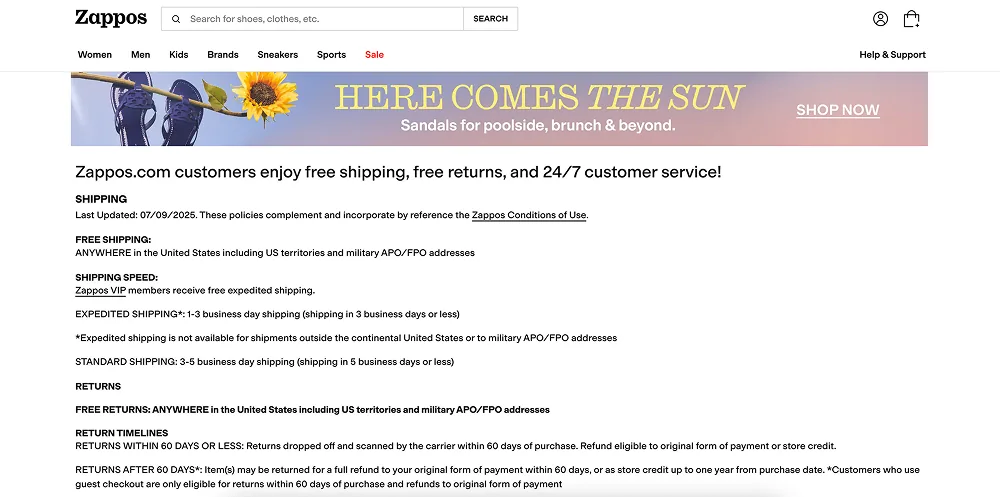
Brands like Zappos and Nordstrom built their reputations partly on liberal return policies. Zappos offers a 365-day return window with free shipping both ways. The result: extremely high customer loyalty and repeat purchase rates that more than offset the return costs.
This approach works when customer lifetime value is high and the brand can absorb return costs through volume.
Example 2: Clear and structured
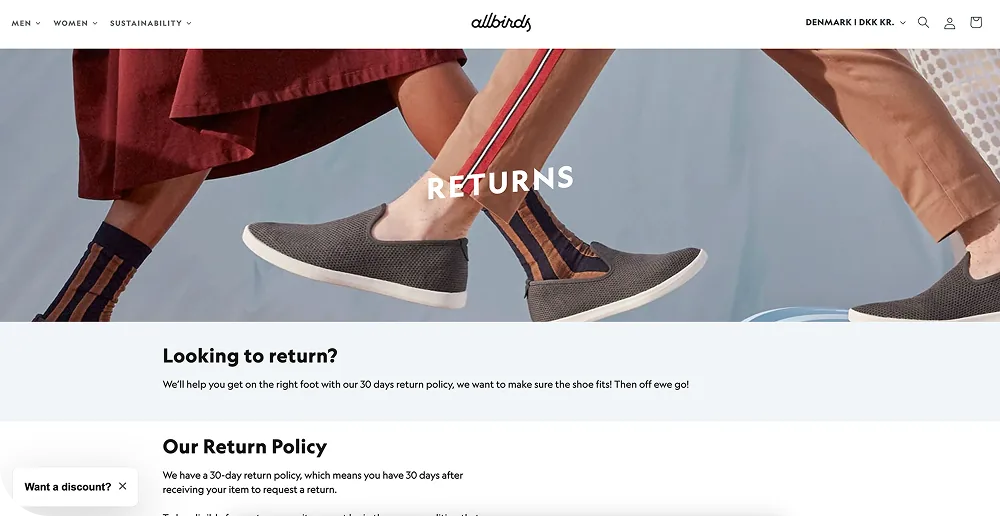
Brands like Allbirds and Everlane offer 30-day return windows with clear condition requirements. The policy is written in plain language, the return process is self-service, and exceptions are stated upfront. These brands balance customer-friendliness with operational efficiency.
Example 3: Strict but fair
Brands selling electronics, furniture, or specialty goods often have shorter return windows (14 to 21 days) with restocking fees for opened items. The policy is strict but fair because it's clearly communicated before purchase and exempts defective products.
Example 4: Automated and self-service
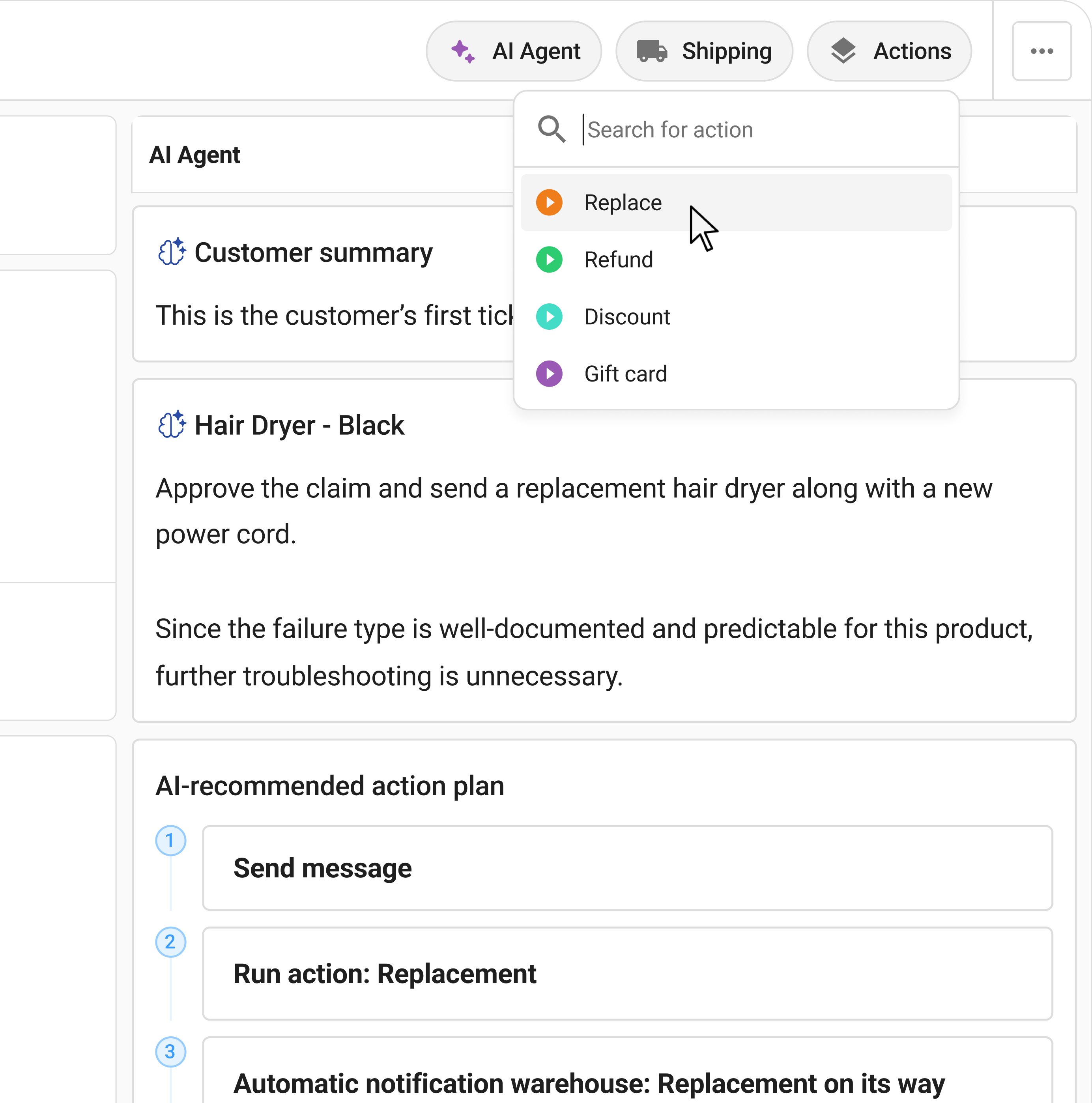
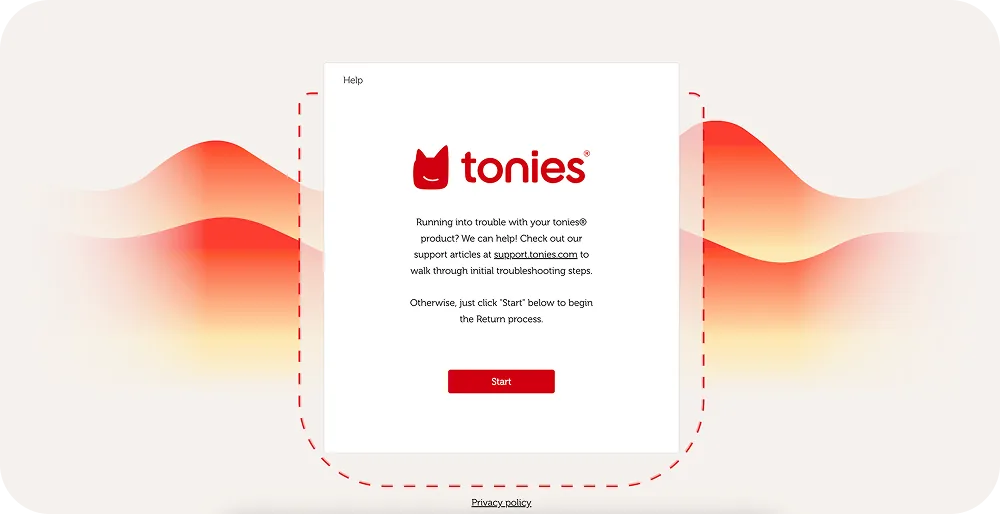
Brands using claims management platforms like Claimlane build their return policy directly into the return portal. Customers select their return reason, the system checks eligibility automatically, and the refund amount (including any deductions) is shown before the customer confirms. This eliminates ambiguity and reduces support contacts.
How to Write a Return Policy That Actually Gets Read
Most return policies are too long, too legal, and too hard to find. Here's how to fix that.
Use plain language
Skip the legalese. Write in the same tone as the rest of the brand's website. If the brand voice is conversational, the return policy should be conversational too.
Instead of: "The purchaser shall be entitled to a full reimbursement of the purchase price, less any applicable deductions, within thirty (30) calendar days of the date of delivery."
Write: "Return within 30 days of delivery for a full refund. Simple."
Make it scannable
Use headers, bullet points, and bold text for key information. Most customers scan for the specific answer they need ("How many days do I have?" or "Do I pay for shipping?"). Make those answers easy to find.
Put it where customers look
Don't bury the return policy three clicks deep. Link to it from:
- The site footer
- Product pages (near the "Add to Cart" button)
- The cart and checkout pages
- Order confirmation emails
- The Help Center or FAQ
Include a visual process overview
A simple three-step or four-step graphic showing the return process (request, ship, refund) helps customers understand what to expect without reading the full policy.
Keep it updated
Return policies should be reviewed at least twice a year. Regulations change, business needs shift, and customer expectations evolve. A policy written in 2023 may not comply with 2026 requirements.
Common Return Policy Mistakes to Avoid
Making the policy impossible to find
If customers can't find the return policy, they assume the worst and don't buy. Or they buy, can't find the policy when they need it, and contact support (costing the brand time and money).
Using vague language
"Reasonable condition" means different things to different people. Be specific about what's acceptable and what's not.
Forgetting legal requirements
EU law requires a 14-day cooling-off period. Australian law requires refunds for faulty goods. California requires return policies to be displayed at the point of sale. Ignoring these creates legal liability.
Not differentiating defective vs. change-of-mind returns
These should have different terms. Defective items deserve full, hassle-free refunds. Change-of-mind returns can have stricter conditions. Treating them the same either over-spends on change-of-mind returns or under-serves customers with legitimate defect claims.
Not updating the policy for international customers
Brands that sell internationally need to account for different consumer protection laws, customs duties on returns, and carrier availability in each market.
Automating Your Return Policy with a Claims Management Platform
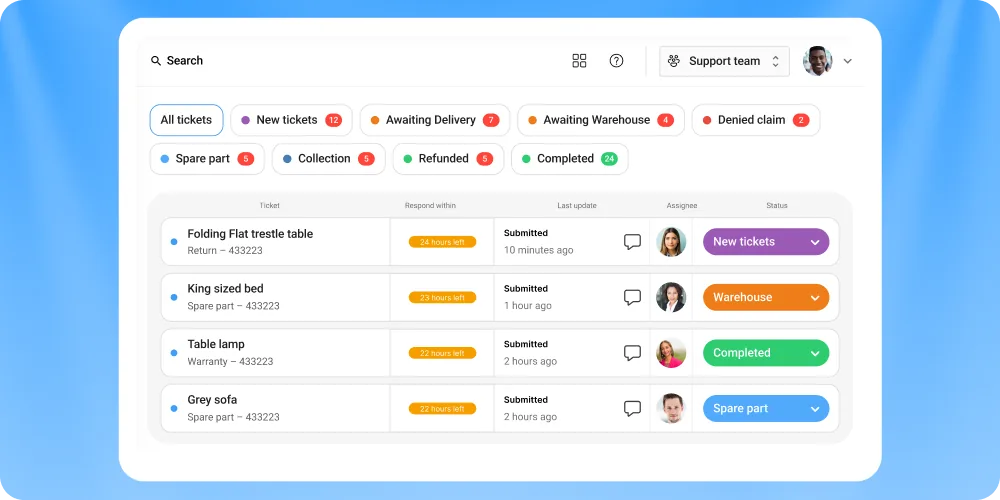
Writing a great return policy is step one. Enforcing it consistently at scale is step two.
Manual return processing breaks down when the brand is handling hundreds or thousands of returns per month. Support agents make inconsistent decisions, exceptions multiply, and fraud slips through.
Claims management platforms like Claimlane let brands turn their return policy into automated rules. When a customer submits a return through the self-service portal, the system automatically:
- Checks if the item is within the return window
- Verifies the product is eligible for return
- Applies the correct refund method (cash, store credit, exchange)
- Deducts any applicable restocking or shipping fees
- Collects photos and evidence for damage claims
- Routes the claim for approval or processes it automatically
The result: faster resolution for customers, lower support costs for the brand, and consistent policy enforcement across every return.
Shipping Policy and Return Policy: Should They Be Separate?
Many ecommerce brands combine their shipping and return policies on one page. This works if the page is well-organized with clear sections. It breaks down if the combined page becomes a wall of text.
The best approach: keep them on the same page but with clearly labeled sections and anchor links so customers can jump directly to the information they need. Use the same plain language and scannable formatting for both.
Key shipping policy elements to include alongside the return policy:
- Shipping methods and estimated delivery times
- Shipping costs (or free shipping thresholds)
- Order processing time
- International shipping availability and costs
- Tracking information
For more on how to communicate with customers during the post-purchase journey, including returns, see Claimlane's guide on customer notifications.