.webp)
Introduction: the part of dropshipping that hits the P&L hardest
Dropshipping margin is thin by design. The product cost, the shipping cost and the support cost together leave less room than retail. The variable that decides whether the model works profitably is what happens to a defective or wrong-item return: does the brand swallow the cost or claw it back from the supplier? Most dropshippers default to the first answer. The brands that scale profitably default to the second.
This guide covers the operational mechanics of dropshipping returns from a margin-defence angle. Return-policy design, return-to-supplier flows, multi-supplier complexity, serial and lot tracking, supplier scorecards. The framing connects to the broader pattern in supplier management ecommerce and the recovery mechanics in supplier recovery how to get credit notes faster.
Why dropshipping returns are structurally different
Dropshipping returns are reverse-logistics flows where the brand handles the customer relationship but the product itself never sat in the brand's warehouse. The return decision involves the customer, the brand and the supplier, with cost and credit flowing across all three.
Three structural differences separate dropshipping returns from owned-inventory returns.
The physical return path runs to the supplier, not the brand. The brand might not have a warehouse to send returns to, or the return-to-brand path makes the cost worse than a write-off. The right path is usually return-to-supplier or returnless refund, never default return-to-brand-warehouse. The broader path picture is in reverse logistics and reverse logistics software platforms.
The credit flow involves three parties. The customer gets refunded by the brand. The brand gets credit (or does not) from the supplier. The mismatch between those two events is where margin leaks. Mechanics in supplier chargebacks.
The supplier mix is wider than typical retail. A dropshipping operation can run twenty or fifty suppliers across categories. Each supplier has different defect terms, different turnaround times, different evidence requirements. Coordinating that scales badly without an orchestrator. The deeper read is in retailer challenges supplier claims.
The supplier-recovery problem most dropshippers ignore
The number that matters: how much of the defect-driven return cost gets recovered from suppliers. Dropshippers without structured recovery typically write off 70-90% of supplier-driven defect cost. With structured recovery, that number flips: most defect cost gets clawed back as credit memos, returns of value, or replacement units shipped at supplier expense.
The gap is process, not negotiation. Suppliers accept defect claims when the evidence is structured (photo, serial or lot ID, defect code, order data) and submitted inside their published terms window. They reject loose claims. The mechanics are in supplier quality issue reporting guide, quality issue reporting tool returns and quality issue reporting tools supplier feedback.
The second variable is timing. Suppliers reject older claims more easily; the window for clean evidence is short. Recovery cycles that run weekly land better than monthly batches. The discipline is the same one that holds at peak season for general retail.
Return-policy design for dropshipping
The return policy is the contract between the brand and the customer. It also sets the operational frame for the supplier conversation. Three policy decisions carry most of the operational weight.
Return window length. Long windows on dropshipped items raise both fraud risk and supplier-recovery risk (claims aged past supplier terms get rejected). Most operationally healthy dropshippers run a 30-day window for change of mind and a separate, longer window for defective items aligned with the supplier's terms. The policy templates are in return policy templates ecommerce and ecommerce return policy strategies.
Return-shipping cost. On dropshipping, return-shipping economics are different. The customer-to-supplier shipping leg can cost more than the recoverable value. The right rule: customer pays for change-of-mind returns; brand or supplier covers defect returns; some categories run returnless on low-value defect items. Decision logic in returnless refunds.
Restocking fees and exchange defaults. Restocking fees on dropshipping should match what the supplier charges, not be invented by the brand. Exchange-first reduces refund volume; pattern in exchange first revenue retention and exchange policies ecommerce stores.
The template view for dropship operations on Shopify sits naturally on top of the patterns in shopify return policies templates and the bigger picture in shopify returns.
Return-to-supplier vs return-to-brand-warehouse: the disposition decision
The key operational question on every dropshipping return: where does the item physically go? Three answers, each with different cost.
The critical design point: returnless refunds on dropshipping still trigger supplier-recovery on defect. The brand refunds the customer and books the defect against the supplier in parallel. Skipping the supplier side of returnless is the most common dropshipping margin leak. Documented in ecommerce refund automation tools.
Multi-supplier complexity: when basic returns apps stop being enough
The complexity threshold is honest about itself. Two questions tell the brand whether basic returns tooling is enough or whether an orchestrator is needed.
- More than 5 suppliers contribute material defect volume?
- Any product category requires serial or lot tracking for recovery?
The broader category context is in best returns software ecommerce and the warranty-side comparison in best warranty management software.
Serial and lot tracking on dropshipped items
Electronics, appliances, durable goods and many home categories ship with serialised identifiers. Lot codes show up on packaging for consumables, cosmetics, food and certain apparel. Tracking these unlocks two things on the recovery side.
Individual-unit traceability for warranty events. The serial connects the claim to the manufacture date, the supplier, the lot, the warranty period and the policy. The mechanics live in serial number tracking software and serialized product defect tracking.
Lot-level recall and quality detection. A spike in defect claims tied to a specific lot points to a manufacturing issue. Catching that early lets the brand pause the SKU or the lot and request supplier action before more returns hit. Pattern in product recall management and warranty analytics product quality.
The AI-side mechanics on lot and serial detection are in AI predictive spare parts inventory and the broader AI supplier quality scoring.
Defect codes and supplier scorecards
Structured defect codes turn returns into a sourcing input. Each defect claim attaches to a supplier, a SKU, a defect category and a lot or serial when applicable. Roll those up by supplier over a rolling 90-day window and the scorecard writes itself.
The scorecard does three things. It tells sourcing which suppliers to scale, hold or replace. It tells finance how much credit memo pipeline is in flight. It tells operations which suppliers need a quality review meeting. The pattern is documented in AI supplier management and the data-quality discipline in retail returns data silos.
The supplier-recovery flow paid for the platform in the first ninety days. Every defect that used to get written off now has a credit memo attached to it.
GrejFreak's full case study covers the recovery-first pattern: see GrejFreak. The B2B variant of the same playbook runs at F. Engel where multi-supplier coordination across workwear and PPE categories drives the recovery rate.
Wrong-item and picking-error attribution
Wrong-item returns on dropshipping are not the same as on owned inventory. The picking error happened at the supplier or the supplier's 3PL, not the brand's warehouse. The cost should sit with the responsible party.
The operational rule: wrong-item returns get coded against the supplier or the supplier's 3PL with photo evidence at intake. The structured packet routes to the supplier portal via Forward to supplier. Suppliers carrying repeated picking-error claims either tighten their process or get replaced. The 3PL context is in 3pl returns management, best 3pl software and 3rd party logistics companies.
Customer expectations versus supplier reality
The friction point on every dropshipping return: the customer experience expectation versus the supplier-side timing reality. Customers expect a 5-day refund. Suppliers process credit memos on a 30-day cycle. The brand bridges the gap or loses on both ends.
The bridge is structured comms plus decoupled refund logic. The brand refunds the customer fast (often before supplier credit lands), books the recovery against the supplier in parallel, and tracks the gap on the dashboard. Pattern in ecommerce refund automation tools and notify customers returns process.
The broader D2C ecommerce platform implications are covered in D2C ecommerce platforms and returns and the cross-border dimension in cross border returns platforms.
Common dropshipping returns mistakes
Four patterns kill margin on dropshipping returns.
Defaulting every return to return-to-brand-warehouse. This is the move that makes dropshipping unprofitable. Items sit at a 3PL, the brand pays storage, supplier recovery times out.
Writing off defect cost rather than booking it against the supplier. Most often happens because the photo and serial evidence are not captured at intake.
Using a single return policy across heterogeneous suppliers. Suppliers have different terms; one policy cannot honour all of them. The right move is supplier-specific rule sets inside the workflow.
No scorecard, no consequences. Suppliers that ship defective product without commercial pressure to fix the source ship more next quarter. Pattern context in supplier management ecommerce and retailer challenges supplier claims.
Reviewers highlight supplier-recovery automation, defect-coded routing and configurable warranty terms across multi-supplier operations.
Claimlane scores 4.8/5 on G2 across returns and warranty categories.
Tools that handle dropshipping returns at scale
The right stack has three layers.
Customer-facing returns layer. Shopify, Loop, ReturnGO handle the shopper experience: the portal, the label, the refund. They handle step one of the dropshipping return well.
Supplier and claims orchestration layer. Multi-supplier routing, defect-coded credit memos, scorecards, returnless rules. This is where Claimlane sits. Compare context in reverse logistics software platforms, best claims management software and warranty management software.
Fulfilment and logistics layer. 3PLs, carrier portals, freight networks. Covered in 3pl returns management.
The brand's choice is which orchestrator covers the middle layer. Pure customer-returns apps stop at step one; the supplier loop sits outside their scope. Reading the integration footprint matters: product/integrations on Claimlane covers the connectors needed to plug into Shopify, ERP, and shipping providers.
Where Claimlane fits in the dropshipping stack
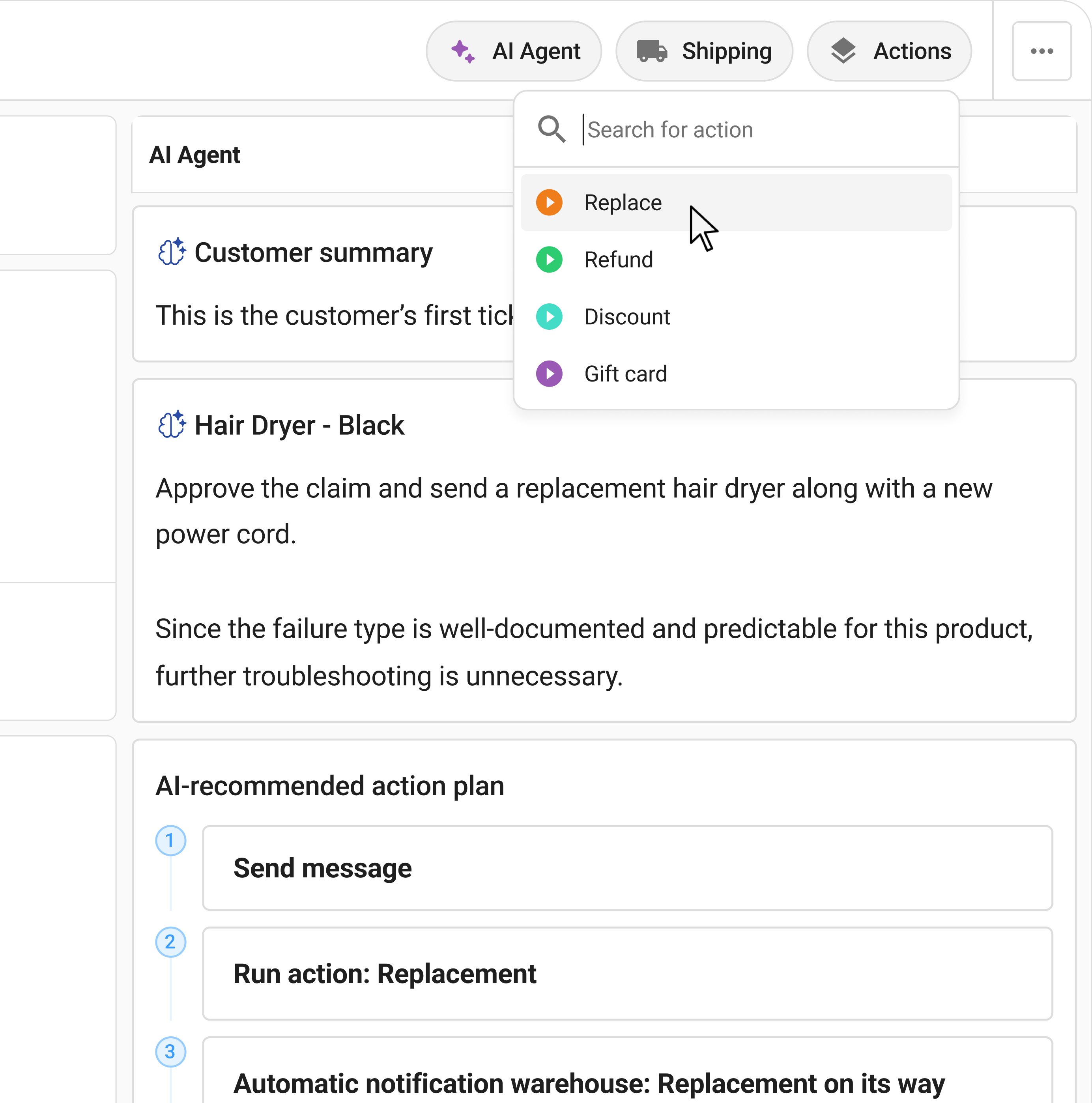
Claimlane runs the supplier and claims orchestration layer for dropshipping operations. Returns come in through the customer-facing portal (Shopify, Loop). Claimlane's Workflows route each return based on the disposition decision (return-to-supplier, returnless, return-to-warehouse). Forward to supplier pushes the structured defect packet to the right supplier portal. Analytics feeds the supplier scorecard and the recovery pipeline view.
The pattern works for dropship-only operations and hybrid models (some inventory, some dropship). The hybrid case shows up in hybrid B2C/B2B claims management and the broader returns for ecommerce brands view.
See how Claimlane turns dropship returns into recovered supplier credits. Book a 30-minute walkthrough.
FAQ
Conclusion: dropshipping pays off in the supplier loop
Dropshipping returns are a supplier-recovery problem dressed as a customer-service problem. The customer-facing layer matters; the brand cannot afford a bad portal or a slow refund. But the margin lives one layer behind, in whether the defect-driven cost gets clawed back from suppliers or written off.
The practical move is structured intake (photo, serial, defect code), supplier-specific workflows, weekly recovery batches, and a scorecard that drives sourcing decisions. Brands that build this layer flip the dropshipping margin profile from break-even to durable. Brands that do not, scale revenue and lose margin in parallel.
See how Claimlane turns dropship returns into recovered supplier credits. Book a 30-minute walkthrough.