.webp)
Most ecommerce and retail brands still manage warranty claims through email threads, spreadsheets, and disconnected helpdesk tickets. The result: slow resolution times, lost claims, frustrated customers, and zero visibility into product quality issues. Claims management software fixes that by giving operations and customer service teams a single system to receive, route, investigate, and resolve claims. This guide compares the best claims management software in 2026 with honest feature breakdowns, pricing, and pros/cons so the right platform becomes obvious.
- Claims management software replaces email and spreadsheets with structured workflows that cut resolution time from weeks to hours.
- The best platforms handle warranty claims, returns, repairs, and supplier recovery from one dashboard.
- AI-powered claims triage is the biggest differentiator in 2026, with platforms now auto-classifying defect types from customer photos.
- Claimlane is the top pick for brands that need warranty, returns, and repair claims handled in a single platform with built-in AI and supplier forwarding.
Claims Management Software Comparison Table
This guide is written by the team behind Claimlane, a warranty and returns management platform used by brands like Davidsen, MaxGaming, Black Diamond, and Skechers.
Claimlane is rated 4.8 out of 5 on G2 based on verified customer reviews, with consistent praise for ease of use, fast implementation, and responsive support.
G2 reviewers highlight how Claimlane reduces claim handling time by structuring every step, from customer photo submission through supplier recovery. The platform's focus on warranty and returns claims means features are built specifically for post-purchase operations.
Claimlane: The #1 Claims Management Platform
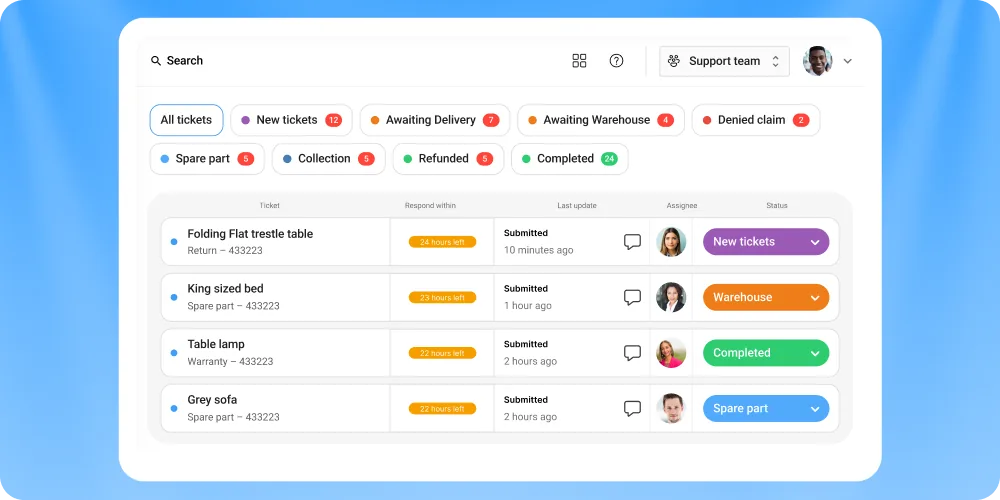
Claimlane is a purpose-built warranty and returns management platform. Unlike generic helpdesks that treat a warranty claim the same as a password reset ticket, Claimlane is designed from the ground up for post-purchase operations: warranty claims, product returns, repair tracking, spare parts fulfillment, and supplier recovery.
Why People Choose Claimlane
- Single platform for warranty, returns, and repairs. No need to stitch together a helpdesk, a returns portal, and a spreadsheet for warranty tracking. Claimlane handles warranty claims, returns, repairs, and spare parts from one system.
- AI Agent that actually understands claims. Claimlane's AI Agent, the first AI agent purpose-built for warranty claims and returns, analyzes product images and videos, applies warranty rules per product and supplier, and recommends or auto-approves resolutions. MaxGaming resolved complex RMA cases 77% faster using it.
- Supplier claim forwarding built in. Claims involving a manufacturing defect get forwarded directly to the supplier with all evidence attached.
- 75+ integrations. Connects to Shopify, WooCommerce, Business Central, Zendesk, and shipping providers through native integrations.
- Analytics on defect patterns, supplier performance, and claim trends** that operations teams can act on.
Pros and Cons
Pros:
- Purpose-built for warranty and returns claims, not a repurposed helpdesk
- AI Agent reduces manual claim review time significantly (MaxGaming case study)
- Self-service portal eliminates back-and-forth emails (Cult case study)
- Supplier forwarding recovers costs that would otherwise be absorbed
- Workflow automation routes claims based on product, defect type, and warranty status
- Fast implementation: most brands go live within 1-2 weeks
Cons:
- Custom pricing means no self-serve plan for very small stores
- Best suited for brands with meaningful claim volume
- Enterprise features like advanced warranty registration require higher-tier plans
Core Features
Self-Service Claims Portal
Customers submit claims through a branded portal that collects photos, videos, serial numbers, and order details upfront. No phone calls, no email threads. The portal validates submissions before they reach the support team. Read more about the self-service portal.
AI-Powered Claims Triage
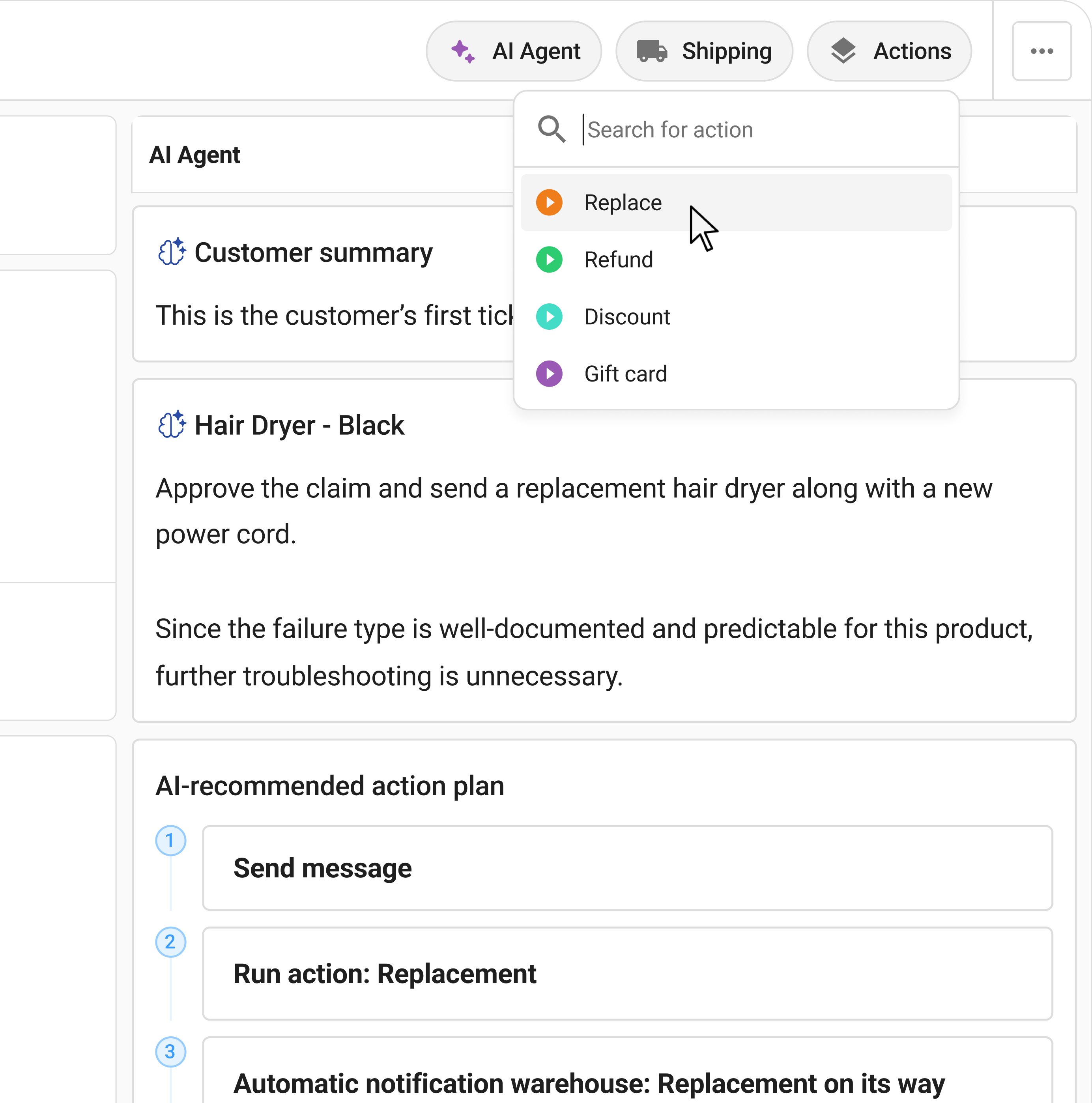
Claimlane's AI Agent is the first AI agent purpose-built for warranty claims and returns. It analyzes product images and videos, applies warranty rules per product and supplier, and recommends or auto-approves resolutions. For MaxGaming, Scandinavia's largest gaming e-commerce with 30,000+ SKUs, the AI Agent reviews images, checks business rules, and recommends actions so support agents no longer need months of product training.
Automated Workflows
Claims get routed automatically based on product type, defect category, warranty status, claim value, and customer history. Workflow rules can trigger auto-approvals, escalations, or supplier notifications without manual intervention.
Supplier Claim Forwarding
When a claim involves a manufacturing defect, Claimlane forwards it to the supplier with all evidence, photos, and claim history attached. Suppliers respond within the same system. This also supports supplier chargebacks and cost recovery.
Claims Analytics
The analytics dashboard tracks claim volume by product, defect type, supplier, resolution method, and time to resolution. This data identifies recurring quality issues, holds suppliers accountable, and reduces future claim rates.
Pricing
Claimlane offers custom pricing based on claim volume, number of users, and feature requirements. Brands can book a demo to get a quote, or check the pricing page for plan details.
Product in Action
Try Claimlane's interactive demo to see how claims flow from customer submission through resolution.
Suggested screenshots:
- Screenshot of the Claimlane self-service portal showing a customer submitting a warranty claim with photo upload and serial number field
- Screenshot of the AI Agent analyzing a product image and recommending a resolution action with confidence score
- Screenshot of the claims analytics dashboard showing defect patterns by product category and supplier performance metrics
Watch the webinar on automating warranty repair cases with AI agents for a full product walkthrough.
Other Claims Management Tools

Zendesk
Zendesk is the most widely used customer support platform. It handles claims as support tickets within its broader helpdesk system.
Key features: Omnichannel ticketing (email, chat, phone, social), macro and automation rules, 1,500+ integration marketplace, reporting dashboards.
Pros: Massive ecosystem, strong knowledge base tools, scales from small teams to enterprise.
Cons: Not built for warranty or returns claims specifically. A warranty claim looks identical to a billing question. No native claim evidence collection. No supplier forwarding. Pricing adds up with add-ons.
Pricing: From $55/agent/month (Suite Team). Enterprise starts at $115/agent/month.
Best for: Teams that primarily handle general support and want claims as one ticket type among many. For brands with serious claims volume, pair with Claimlane through Claimlane's Zendesk integration.
Freshdesk
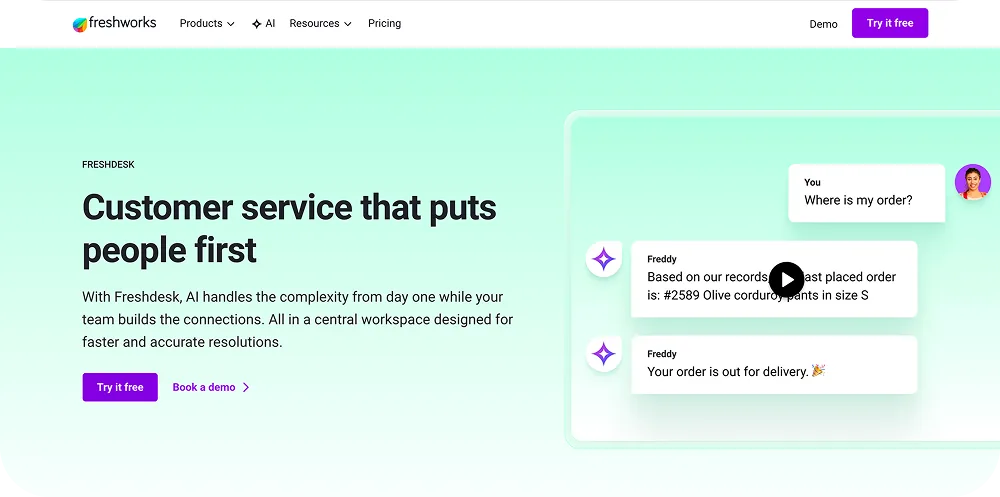
Freshdesk by Freshworks is an affordable multi-channel helpdesk.
Key features: Email, chat, phone, and social ticketing. Automation rules and SLA management. Basic analytics.
Pros: Very affordable ($15/agent/month). Free tier for small teams. Clean interface. Decent integration options.
Cons: Generic ticketing, no warranty-specific workflows. No product defect classification. No supplier claim management. Limited claims analytics.
Pricing: Free plan available. Paid from $15/agent/month.
Best for: Small teams on a tight budget needing basic claim ticketing alongside general support.

ServiceNow
ServiceNow is an enterprise platform with field service and customer service modules.
Key features: Advanced workflow engine. Field service management for on-site repairs. AI-powered classification (enterprise tier). Asset management.
Pros: Extremely powerful workflow automation. Handles complex multi-step claims. Strong enterprise security.
Cons: Overkill for most ecommerce brands. Implementation takes months. Enterprise-only pricing. Not designed for B2C warranty claims.
Pricing: Enterprise quotes only. Expect $100+/user/month.
Best for: Large enterprises with complex field service and IT asset claims.
Loop Returns
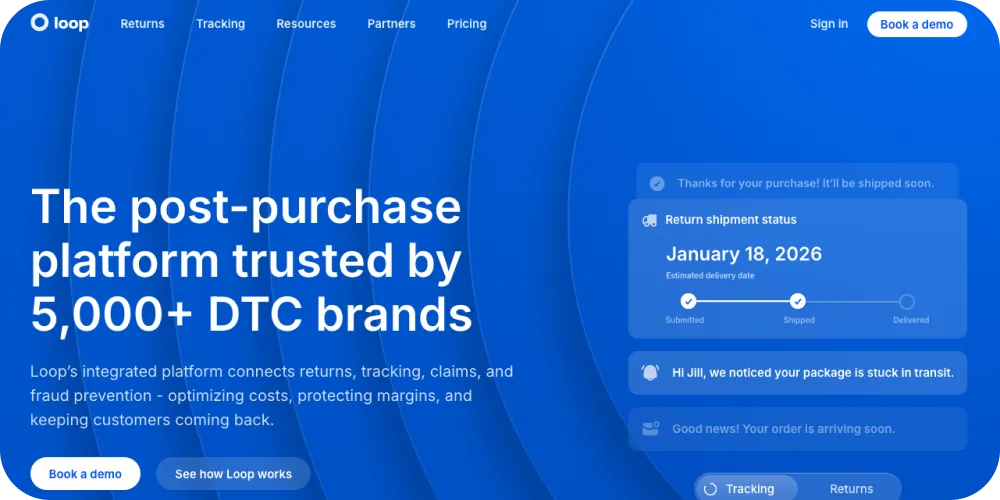
Loop Returns is a Shopify-focused returns platform emphasizing exchanges over refunds.
Key features: Shopify-native returns portal. Exchange-first flow. Automated return labels. Return reason analytics.
Pros: Strong Shopify integration. Exchange-first approach retains revenue. Clean customer-facing portal.
Cons: No warranty claims management. No repair or spare parts tracking. No supplier forwarding. Shopify-only. No AI claims triage.
Pricing: From $155/month.
Best for: Shopify-only brands focused on return and exchange management who don't need warranty handling.
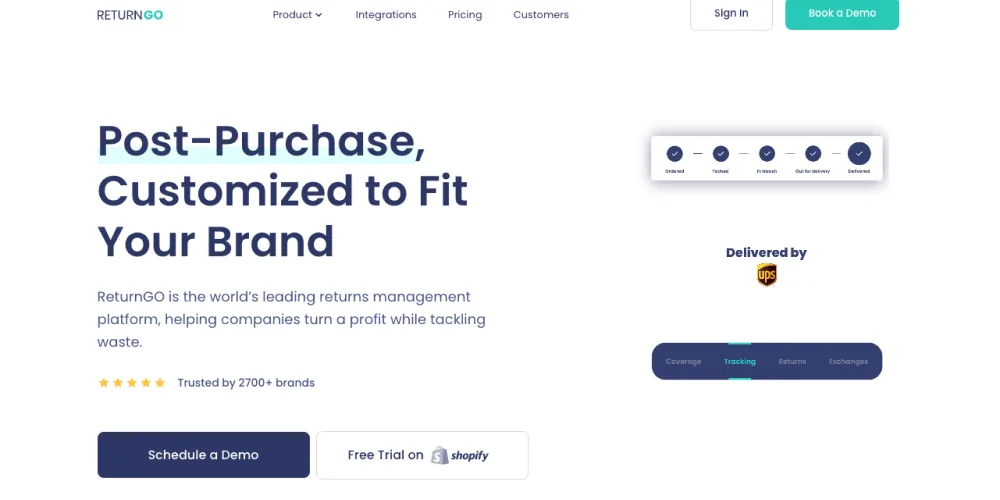
ReturnGo
ReturnGo is a returns and exchange automation platform with flexible rules.
Key features: Customizable return policies. Multi-language/multi-currency. Automated exchanges and store credit.
Pros: Flexible return policy rules. Multiple ecommerce platform support. Reasonable mid-market pricing.
Cons: Warranty claims are not a core use case. No defect classification or AI image analysis. No supplier forwarding. Analytics focused on returns only.
Pricing: From $82/month.
Best for: Brands needing flexible return rules across multiple platforms without significant warranty claim volume.
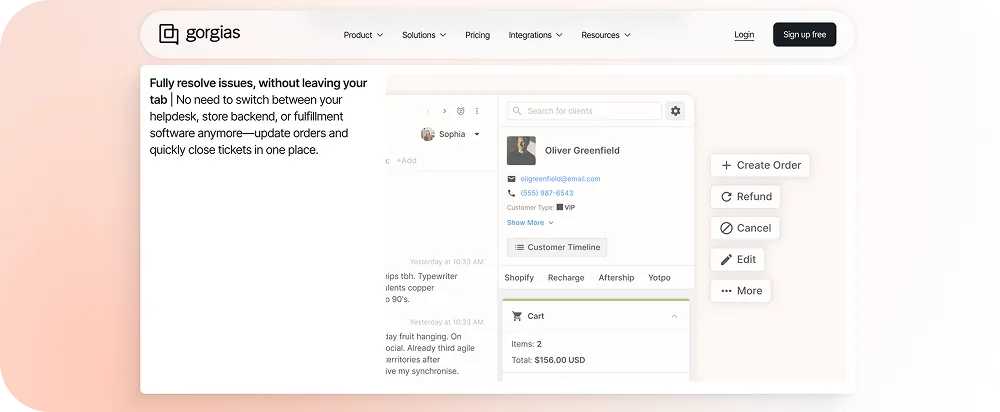
Gorgias
Gorgias is an ecommerce-focused helpdesk with deep Shopify integration.
Key features: Shopify order data inside tickets. Automated responses by order status. Revenue attribution. Social and chat support.
Pros: Excellent Shopify integration. Order context without tab-switching. Affordable. Good for pre and post-sale support. Check Gorgias integrations for ecosystem options.
Cons: General helpdesk, not a claims system. No warranty tracking, repair workflows, or supplier chargebacks. No structured evidence collection.
Pricing: From $10/month (Starter). Advanced from $60/month.
Best for: Small Shopify brands wanting ecommerce customer service with order context.

Salesforce Service Cloud
Salesforce Service Cloud is the enterprise CRM giant's service platform.
Key features: Full CRM integration. Einstein AI for classification. Knowledge base. Field service module (add-on). Check Salesforce integrations for the ecosystem.
Pros: Deep CRM integration. AI through Einstein. Highly customizable. Massive partner ecosystem.
Cons: Extremely complex configuration. Requires Salesforce expertise. Expensive with modules. Not built for product-specific warranty or returns claims.
Pricing: From $25/user/month (Essentials). Enterprise from $165/user/month.
Best for: Enterprises already on Salesforce wanting claims in their CRM.
How to Choose Claims Management Software
The right platform depends on claim types, volume, and team structure.
Claim Types Supported
Some platforms only handle returns. Others cover warranty claims, repairs, spare parts, and supplier recovery. Map current claim types before evaluating.
Evidence Collection
Warranty and damage claims require photos, videos, serial numbers, and order verification. Look for platforms with structured evidence collection, not just free-text email fields. Claimlane's self-service portal handles this automatically.
AI and Automation in Claims Management Software
In 2026, AI-powered claims triage separates the leaders from the rest. Platforms like Claimlane use AI to analyze product images, classify defect types, and recommend resolutions. This matters most for high-volume operations.
Supplier Integration
If claims involve manufacturing defects, the platform should support supplier forwarding and cost recovery. Without this, brands absorb costs that should go back to suppliers.
Integration With Existing Systems
The platform must connect to ecommerce platforms (Shopify, WooCommerce), ERP systems (Business Central, NetSuite), and helpdesks. Check integration capabilities before committing.
Analytics and Reporting
Claims data should drive product quality improvements. Look for analytics on defect patterns, supplier performance, resolution times, and returns KPIs.
FAQ: Claims Management Software
Final Verdict: The Best Claims Management Software
For brands that handle warranty claims, returns, and repairs, Claimlane is the clear leader. It's the only platform purpose-built for post-purchase claims with AI-powered triage, supplier forwarding, and structured evidence collection in one system.
Generic helpdesks like Zendesk and Freshdesk work for basic ticketing. Returns-only tools like Loop and ReturnGo handle exchanges well. Enterprise platforms like ServiceNow and Salesforce cover complex workflows. But none of them combine warranty claims, returns, repairs, and supplier recovery the way Claimlane does.
Claimlane is rated 4.8/5 on G2. Book a demo to see it in action.