.webp)
Freshdesk is one of the most popular helpdesk platforms in ecommerce. It handles tickets, organizes conversations, and keeps support teams from drowning in emails. But Freshdesk alone doesn't cover everything an ecommerce brand needs. Shipping updates, return requests, warranty claims, CRM data, and order lookups all live in different systems.
The right integrations connect those systems to Freshdesk so support agents don't spend half their day switching tabs. This guide covers the best Freshdesk integrations for ecommerce in 2026, organized by what they actually solve.
Why Freshdesk Integrations Matter for Ecommerce
A helpdesk without integrations is a ticket inbox. That's it. Support agents still need to log into Shopify to check orders, open a separate tool to process returns, and dig through email to find shipping updates.
With the right integrations, all of that context lives inside Freshdesk. Agents see order details, initiate returns, track shipments, and manage warranty claims without leaving the helpdesk. The result: faster resolution times, fewer errors, and happier customers.
For brands processing hundreds of tickets daily, integrations aren't a nice-to-have. They're the difference between a support team that scales and one that burns out.
Returns and Warranty Management Integrations
Returns and warranty claims generate a huge share of ecommerce support tickets. Handling them inside Freshdesk requires purpose-built tools.
Claimlane
Best for: Warranty claims, returns, and repair management
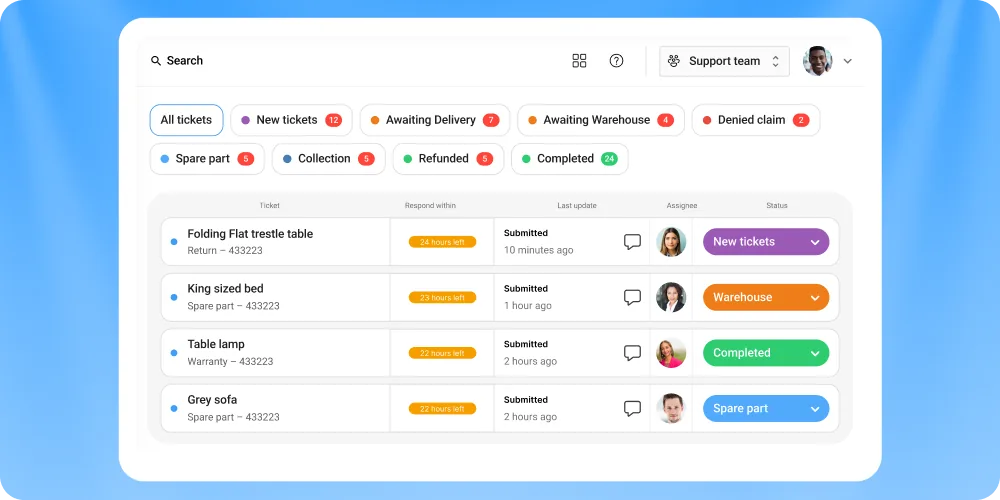
Claimlane is a warranty and returns management platform that centralizes claims handling for brands and retailers. It connects to Freshdesk so that warranty claims, returns, and repair requests flow into structured workflows instead of sitting in unstructured email threads.
Key features when integrated with Freshdesk:
- Self-service claims portal where customers submit claims with photos, videos, serial numbers, and order details. This reduces the number of tickets agents need to handle manually.
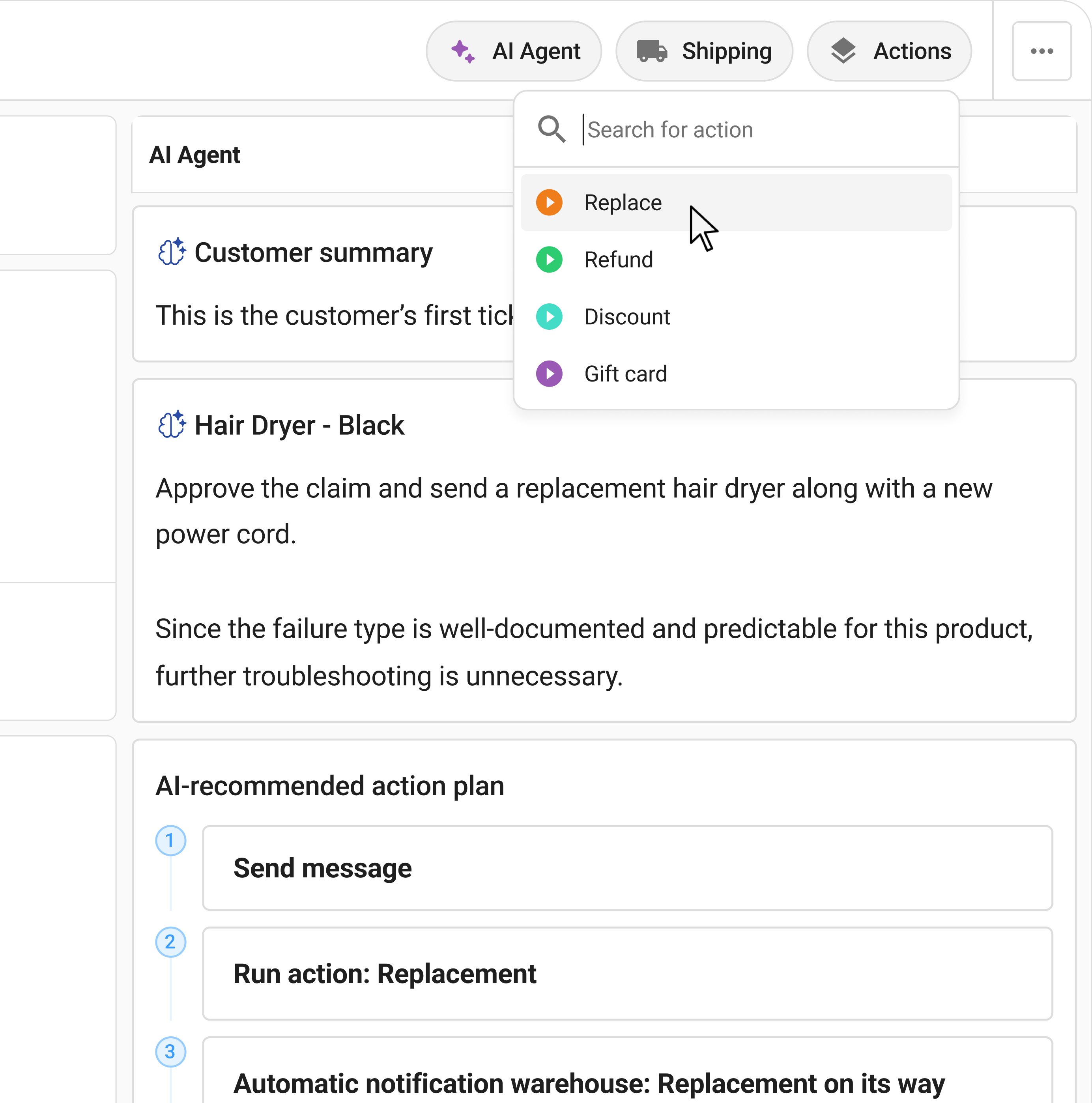
- AI Agent, the first AI agent purpose-built for warranty claims and returns. It analyzes product images and videos, applies warranty rules per product and supplier, and recommends or auto-approves resolutions.
- Automated workflows that route claims by type, product, or supplier. Defective items follow a different path than size exchanges.
- Supplier forwarding that packages claims with documentation and sends them to the right supplier contact.
- Analytics on claim patterns, defect rates, and supplier performance.
Claimlane offers 75+ integrations including Shopify, WooCommerce, Zendesk, ERP systems, and shipping providers. For brands that handle both B2B and B2C claims, it supports retailer-to-brand claim flows alongside consumer-facing returns.
MaxGaming, the largest gaming e-commerce company in Scandinavia, resolved complex RMA cases 77% faster using Claimlane's AI agents. Davidsen went from 5 agents handling claims to 1-2 agents.
Pricing: Custom pricing based on volume. Book a demo.
Best for: Ecommerce brands with significant warranty claim or return volumes that need structured workflows, not just ticket tagging.
Loop Returns
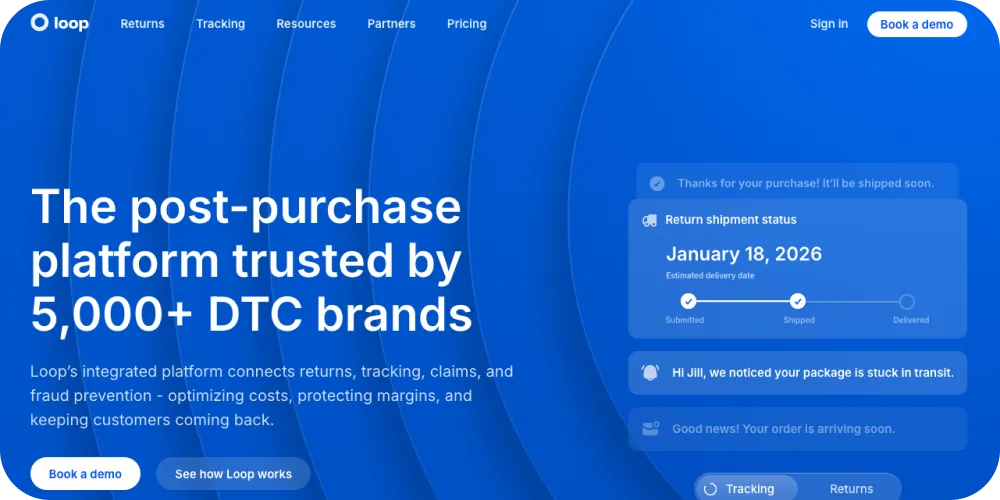
Loop Returns focuses on automating ecommerce returns for Shopify merchants. It offers a branded returns portal where customers can initiate exchanges, refunds, or store credit.
Key features:
- Self-service return portal
- Exchange incentives (bonus credit for choosing exchanges over refunds)
- Automated return label generation
- Shopify-native
Limitation: Primarily Shopify-focused. Limited warranty and repair workflow support compared to dedicated claims platforms.
AfterShip Returns
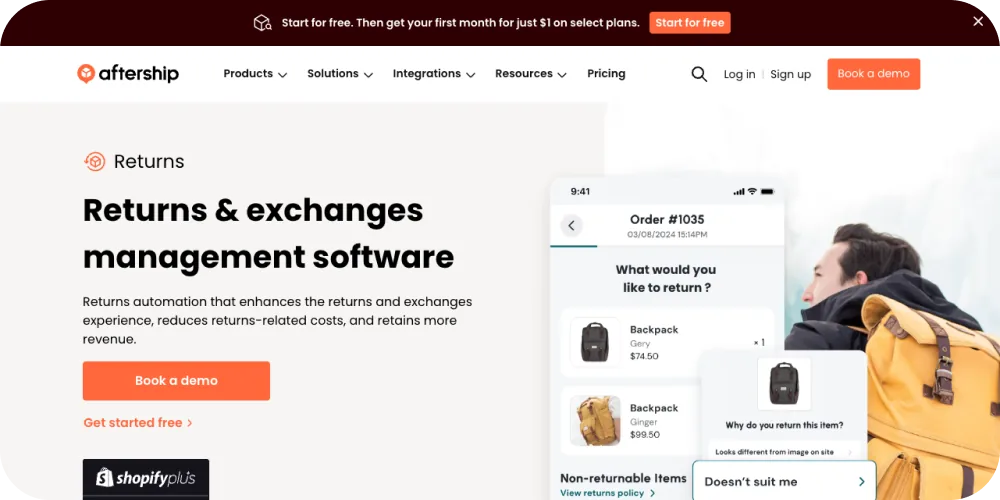
AfterShip started as a shipment tracking tool and expanded into returns management. The Freshdesk integration syncs return request data so agents can see return status alongside shipping information.
Key features:
- Return request management with branded portal
- Exchange and refund automation
- Integration with 1,100+ carriers
- Proactive return notifications
Limitation: Stronger on logistics tracking than on warranty claims or repair workflows.
Ecommerce Platform Integrations
Connecting Freshdesk to the ecommerce platform is usually the first integration brands set up.

Shopify
The native Freshdesk-Shopify integration pulls order data directly into support tickets. Agents see order history, shipping status, and customer details without leaving Freshdesk.
What it enables:
- View order details from the ticket sidebar
- Process refunds directly from Freshdesk
- Look up customer purchase history
- Trigger workflows based on order events
For brands also using Shopify's newer features like Agentic Storefronts (selling inside ChatGPT and Gemini), having order data flow into Freshdesk is critical for handling post-purchase requests from any channel.
WooCommerce
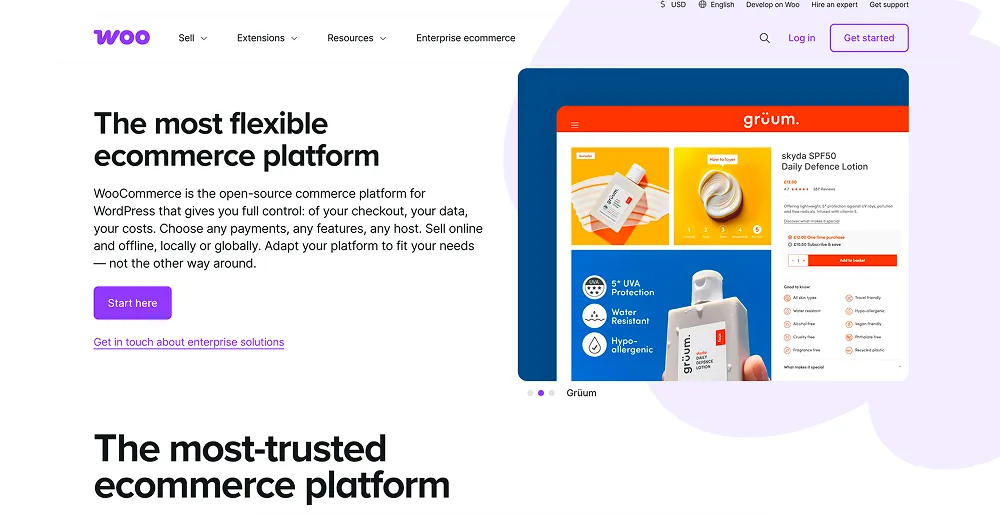
The WooCommerce integration works similarly to Shopify, pulling order and customer data into Freshdesk. This is essential for brands running WordPress-based stores that need order-level context in their support tickets.
BigCommerce
BigCommerce's Freshdesk integration follows the same pattern: order data synced to tickets, customer history visible, refund actions available. Useful for mid-market brands on BigCommerce that need more from their helpdesk than basic email management.
CRM Integrations
For brands that track customer relationships beyond support tickets, CRM integrations add valuable context.

HubSpot
The HubSpot-Freshdesk integration syncs customer data between the CRM and helpdesk. Support agents see marketing engagement, sales pipeline status, and contact properties alongside ticket details.
Why it matters for ecommerce:
- Identify high-value customers when they submit tickets
- Track support interactions as CRM activities
- Trigger marketing automation based on support events (e.g., send a win-back campaign after a resolved complaint)

Salesforce
Salesforce's Freshdesk integration is more complex but powerful for enterprise ecommerce brands. It syncs contacts, accounts, and cases between platforms. For brands with large sales and support organizations, this integration prevents data silos.
Zoho CRM
A lighter-weight CRM option that integrates natively with Freshdesk (both are Freshworks ecosystem products). Good for smaller ecommerce operations that want CRM and helpdesk in the same family.
Shipping and Logistics Integrations
AfterShip Tracking
AfterShip's tracking integration (separate from their returns product) adds real-time shipment tracking to Freshdesk tickets. Agents see where a package is without opening a carrier website.
- Tracks 1,100+ carriers
- Estimated delivery dates inside tickets
- Proactive alerts when shipments are delayed
"Where is my order?" tickets account for a significant portion of support volume. Having tracking data in Freshdesk helps agents answer these faster or, better yet, automate responses entirely.
ShipStation
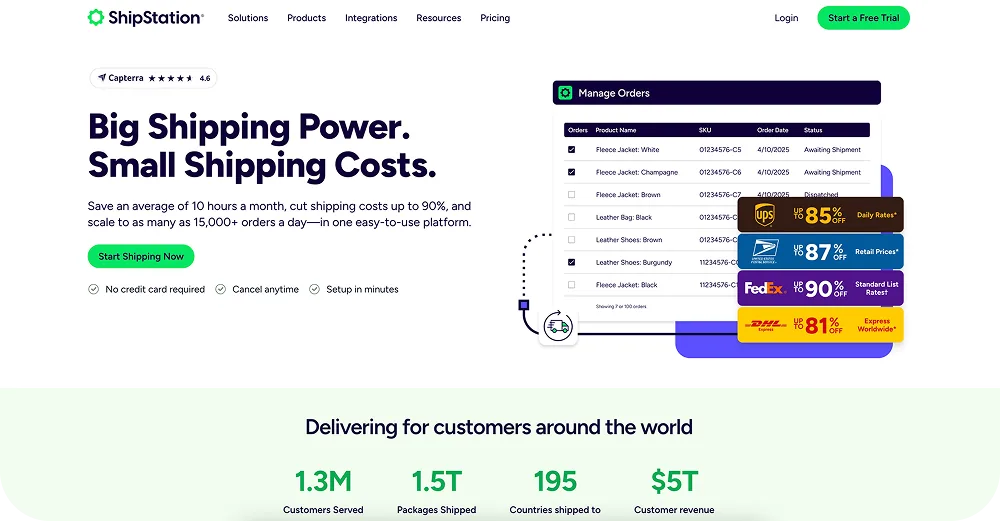
ShipStation connects order fulfillment to Freshdesk. Agents can see which orders have shipped, which are pending, and generate shipping labels or tracking links from the ticket view.
EasyPost
For brands managing multi-carrier shipping, EasyPost's integration provides rate comparison and label generation inside the helpdesk workflow.
Automation and Workflow Integrations
Zapier
Zapier connects Freshdesk to 5,000+ apps through no-code automations. For ecommerce, common Zapier workflows include:
- Creating a Freshdesk ticket when an order is flagged in Shopify
- Updating a CRM record when a ticket is resolved
- Sending Slack notifications when high-priority tickets arrive
- Syncing Freshdesk ticket data to Google Sheets for reporting
Zapier is the bridge for tools that don't have native Freshdesk integrations.
Make (formerly Integromat)
Make offers similar automation capabilities to Zapier with more complex workflow builders. It's better suited for brands that need multi-step automations with conditional logic.
Communication Integrations
Slack
The Freshdesk-Slack integration notifies teams about new tickets, escalations, and resolved cases. For ecommerce operations teams that coordinate across support, logistics, and product, Slack notifications keep everyone aligned.
WhatsApp Business
Freshdesk's WhatsApp integration lets brands manage customer conversations from WhatsApp directly inside Freshdesk. For ecommerce brands with international customers, this is increasingly important.
Analytics and Reporting Integrations
Google Analytics
Connecting Freshdesk to Google Analytics helps brands correlate support ticket volume with site behavior. A spike in return-related tickets after a product launch, for example, could indicate a product quality issue worth investigating.
Power BI / Tableau
For brands that run advanced analytics, exporting Freshdesk data to visualization tools like Power BI or Tableau enables cross-functional reporting. Combining support data with returns analytics gives a complete picture of post-purchase operations.
How to Choose the Right Freshdesk Integrations

Not every integration is worth setting up. Here's a framework:
Start with the Highest-Volume Ticket Types
Look at what generates the most tickets. For most ecommerce brands, it's:
- Order status inquiries (shipping integration)
- Return requests (returns management integration)
- Warranty claims (warranty management integration)
- Product questions (knowledge base)
Integrate the tools that address the top 2-3 ticket categories first.
Prioritize Agent Efficiency
Every tab switch costs time. If an agent needs to check three systems to resolve one ticket, that's a problem. Prioritize integrations that bring data into Freshdesk rather than sending agents elsewhere.
Consider the Full Customer Journey
The best ecommerce support stacks cover the complete post-purchase experience: order tracking, returns, warranty claims, repairs, and customer communication. Gaps in this chain create friction for both customers and agents.
Check for Two-Way Sync
One-way data pulls are helpful. Two-way sync is better. An integration that pulls order data into Freshdesk is good. One that also pushes ticket resolution data back to the ecommerce platform (for analytics) is better.
Comparison: Top Freshdesk Integrations for Ecommerce
Freshdesk vs. Specialized Tools: When Integrations Aren't Enough
Freshdesk is a great general-purpose helpdesk, but some ecommerce functions are better handled by specialized tools that integrate with Freshdesk rather than trying to make Freshdesk do everything.
Returns and warranty claims are a good example. Freshdesk can tag tickets as "return request" or "warranty claim," but it can't analyze product images, apply per-product warranty rules, or automate repair-vs-replace decisions. That's where a dedicated returns management system adds value.
Similarly, ecommerce analytics specific to returns (return rates by product, by channel, by reason code) require tools built for that purpose. Freshdesk's native reporting covers ticket metrics, not return-specific operational data.
The best approach: use Freshdesk as the central communication hub and integrate specialized tools for returns, warranties, shipping, and analytics. This gives agents one interface while each operational function runs on purpose-built software.
Setting Up Freshdesk Integrations: Practical Tips
Start Small
Don't activate 10 integrations at once. Start with the ecommerce platform integration (Shopify or WooCommerce) and the highest-impact operational tool (usually returns management). Add more once the team is comfortable.
Map the Agent Workflow First
Before integrating, document how agents currently handle the top 5 ticket types. Identify where they switch tools. Those switching points are where integrations add the most value.
Test with Real Tickets
After setting up an integration, run a week of real tickets through the new workflow. Track resolution times before and after. If the integration doesn't measurably improve speed, reconsider it.
Train the Team
An integration that agents don't know how to use is wasted. Run a short training session for each new integration. Show agents exactly where new data appears and how to use it.