.webp)
Customer service in ecommerce is a different animal than general customer support. Agents need order data at their fingertips. Return requests need automated workflows. Warranty claims need image review. "Where is my order?" needs a fast, preferably automated answer. And all of this needs to work across email, chat, social media, and now AI shopping channels.
General-purpose helpdesks can handle some of this. But the best ecommerce customer service software is built specifically for the realities of online retail. This guide compares the top options in 2026.
What Makes Customer Service Software "Ecommerce-Ready"?
Not every helpdesk works well for ecommerce. Here's what separates ecommerce-ready software from generic support tools:
- Order data integration. Agents need to see order details, shipping status, and purchase history inside the ticket, not in a separate tab.
- Returns and exchange workflows. The ability to initiate returns, generate labels, and process refunds directly from the support tool.
- Warranty claim handling. For brands selling products with warranties, the software needs to support image uploads, defect assessment, and resolution routing.
- Multi-channel support. Email, live chat, social media DMs, WhatsApp, and increasingly, AI shopping channel inquiries.
- Automation. Rules-based ticket routing, auto-responses for common questions, and AI-powered resolution for repetitive tasks.
- Ecommerce platform integrations. Native connections to Shopify, WooCommerce, BigCommerce, and Magento.
Gorgias, Zendesk, Freshdesk vs Claimlane, Loop, Narvar: how the stack fits together
The leading ecommerce support stacks pair a helpdesk (which handles the customer conversation) with one or more post-purchase platforms (which handle the operational side of returns, warranty, and tracking). Gorgias, Zendesk, Freshdesk, and Intercom sit in the first category. Claimlane, Loop, and Narvar sit in the second.
| Platform | Category | What it handles | AI capability | Pricing starts at |
|---|---|---|---|---|
| Gorgias | Helpdesk (Shopify-native) | Customer conversations, ticket routing, refund and order actions inside the helpdesk | Macros + intent detection | $10/month |
| Zendesk | Helpdesk (enterprise) | Multi-channel ticketing, workflows, large app marketplace | AI routing + suggested responses | $19/agent/month |
| Freshdesk | Helpdesk (mid-market) | Multi-channel ticketing with strong free tier | Freddy AI suggestions | Free / $15/agent/month |
| Intercom | Helpdesk + AI agent | Messenger-based support, autonomous AI ticket resolution | Fin AI agent (autonomous resolution) | $39/seat/month |
| Claimlane | Returns + claims module (plugs into helpdesks) | Returns, warranty claims, repairs, spare parts, supplier recovery | AI Agent for claim triage (image and video analysis) | $800/month |
| Loop Returns | Returns module (Shopify DTC) | Exchange-first returns, store credit incentives | Basic automation | $155/month + volume |
| Narvar | Post-purchase CX module | Branded tracking, delivery notifications, returns CX | Limited | Enterprise (~$20K+/yr) |
Picking one helpdesk and one or two post-purchase platforms is the standard 2026 setup. The helpdesk owns the inbox. The post-purchase platforms own the operational workflows behind returns, warranty claims, tracking, and customer status updates. The two layers integrate so agents see everything in one view.
The Best Ecommerce Customer Service Software
1. Claimlane
Best for: Warranty claims, returns management, and after-sales operations
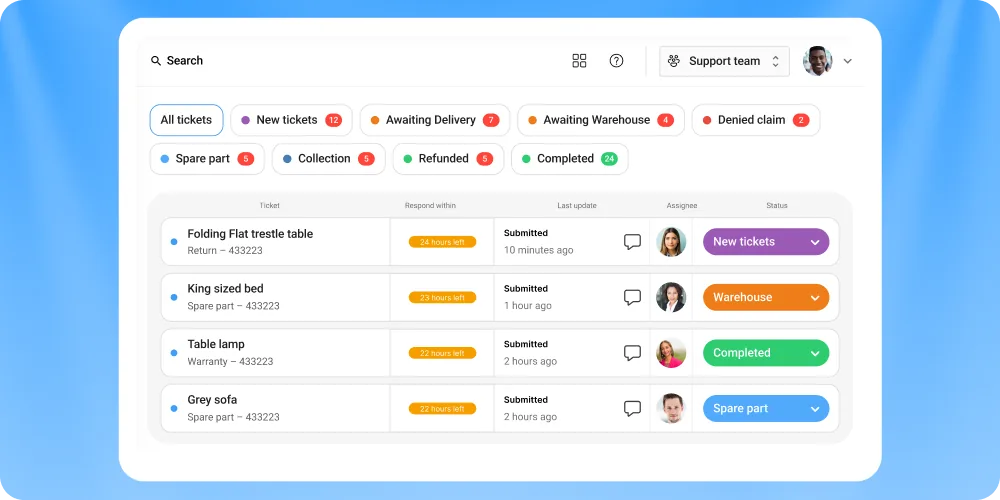
Claimlane isn't a traditional helpdesk. It's a warranty and returns management platform purpose-built for the post-purchase side of ecommerce. While helpdesks handle the conversation, Claimlane handles the operational workflow behind warranty claims, returns, repairs, replacements, and spare parts.
Why it belongs on this list: For brands where a significant portion of customer service tickets are about returns, defective products, or warranty claims, a helpdesk alone isn't enough. Claimlane sits alongside (or integrates with) a helpdesk to handle the complex operational workflows that generic ticketing can't.
Key features:
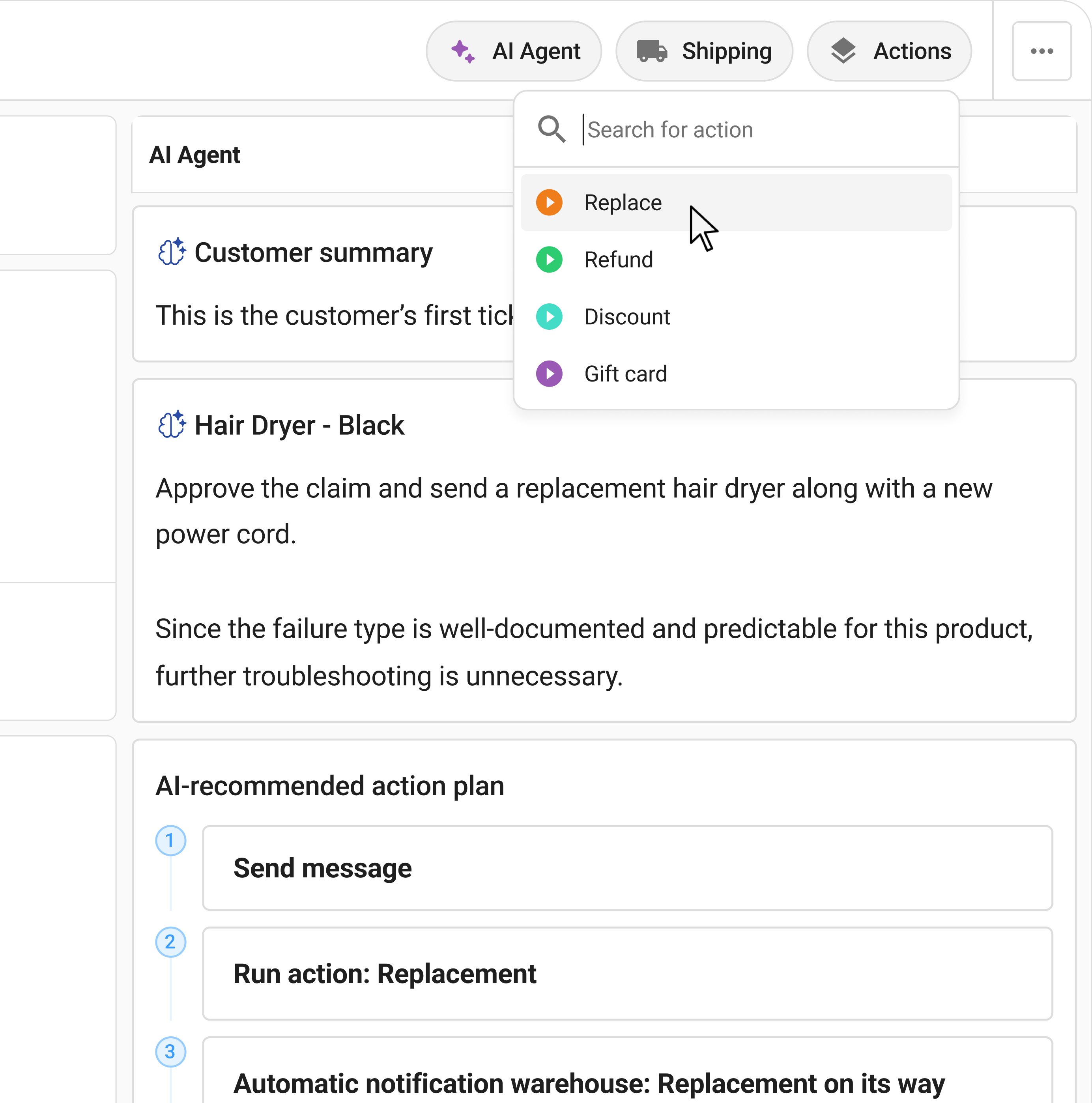
- AI Agent, the first AI agent purpose-built for warranty claims and returns. Analyzes product images and videos, applies warranty rules per product and supplier, and recommends or auto-approves resolutions.
- Self-service claims portal where customers submit claims with photos, videos, serial numbers, and order details.
- Automated workflows that route claims by type, product category, or supplier.
- Supplier forwarding that packages claims with documentation and sends them to the correct supplier.
- Analytics on defect rates, claim patterns, and supplier performance.
- 75+ integrations including Shopify, WooCommerce, Zendesk, Freshdesk, ERP systems, and shipping providers.
Proof points: MaxGaming resolved complex RMA cases 77% faster using Claimlane's AI agents. Davidsen went from 5 agents to 1-2. Skechers uses Claimlane for warranty claims processing.
Pricing: Custom pricing. Book a demo.
Best for: Ecommerce brands with high warranty claim or return volumes, especially in furniture, electronics, outdoor gear, and baby products.

2. Zendesk
Best for: Large ecommerce brands with complex multi-channel support needs
Zendesk is the enterprise standard for customer service software. Its strength is customization: workflows, automations, and integrations can be configured for nearly any use case. For ecommerce, the Shopify and WooCommerce integrations bring order data into tickets.
Key features:
- Omnichannel ticketing (email, chat, phone, social, messaging)
- Extensive app marketplace with 1,000+ integrations
- AI-powered ticket routing and suggested responses
- Advanced reporting and custom dashboards
- Knowledge base and community forums
Limitation: Zendesk is powerful but complex. Smaller teams may find the setup and maintenance overhead too high. For Zendesk alternatives focused on ecommerce, brands often look at Gorgias or Freshdesk. For warranty-specific needs, Zendesk vs. Claimlane is a common comparison.
Pricing: From $19/agent/month. Enterprise plans significantly higher.
3. Gorgias
Best for: Shopify-native ecommerce brands that want deep store integration
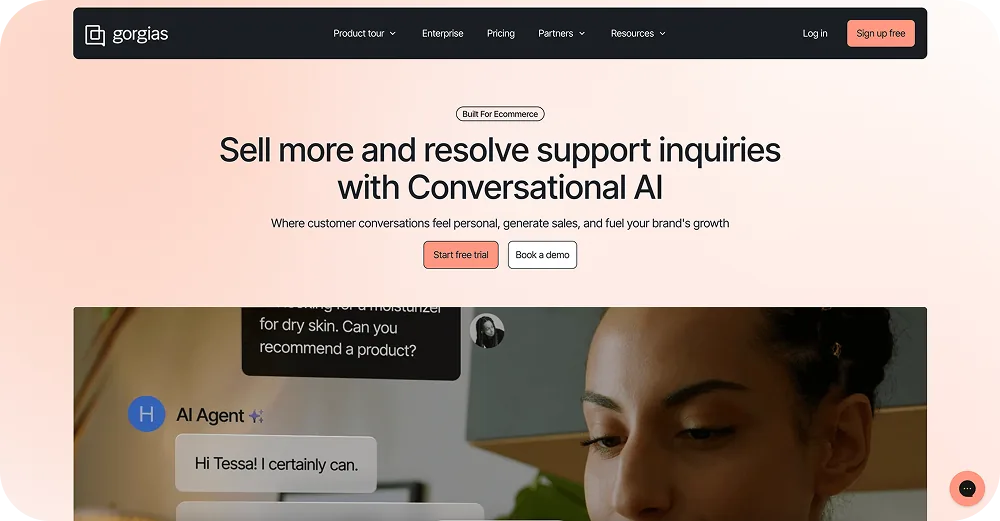
Gorgias is built specifically for ecommerce. It integrates deeply with Shopify, pulling order data, customer history, and product information directly into the ticket view. Agents can refund, cancel, or edit orders without leaving the helpdesk.
Key features:
- Shopify, BigCommerce, and WooCommerce integrations
- Revenue-focused features (product recommendations in chat)
- Macro-based automation for common ticket types
- Social media and SMS support
- AI-powered intent detection
Limitation: Gorgias excels at general ecommerce support but has limited warranty claim and repair workflow capabilities. For brands with complex after-sales operations, pairing Gorgias with a dedicated claims platform like Claimlane fills the gap. See: Gorgias alternative.
Pricing: From $10/month (50 tickets). Scales with ticket volume.
4. Freshdesk
Best for: Growing ecommerce brands that want a balance of features and affordability
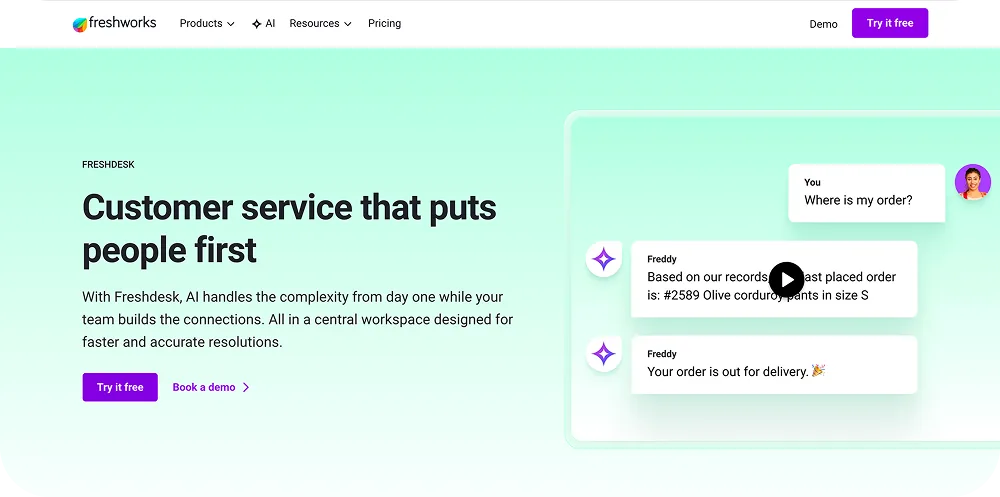
Freshdesk offers a solid helpdesk with good ecommerce integrations at a lower price point than Zendesk. Its Shopify and WooCommerce integrations pull order data into tickets, and the automation features handle common routing and response tasks.
Key features:
- Multi-channel support (email, chat, phone, social, WhatsApp)
- Ticket automation and SLA management
- Knowledge base
- Marketplace with integrations for ecommerce tools
- Freddy AI for ticket suggestions and auto-responses
For a deep look at how to extend Freshdesk for ecommerce, see the best Freshdesk integrations guide.
Pricing: Free tier for up to 10 agents. Paid plans from $15/agent/month.
5. Help Scout
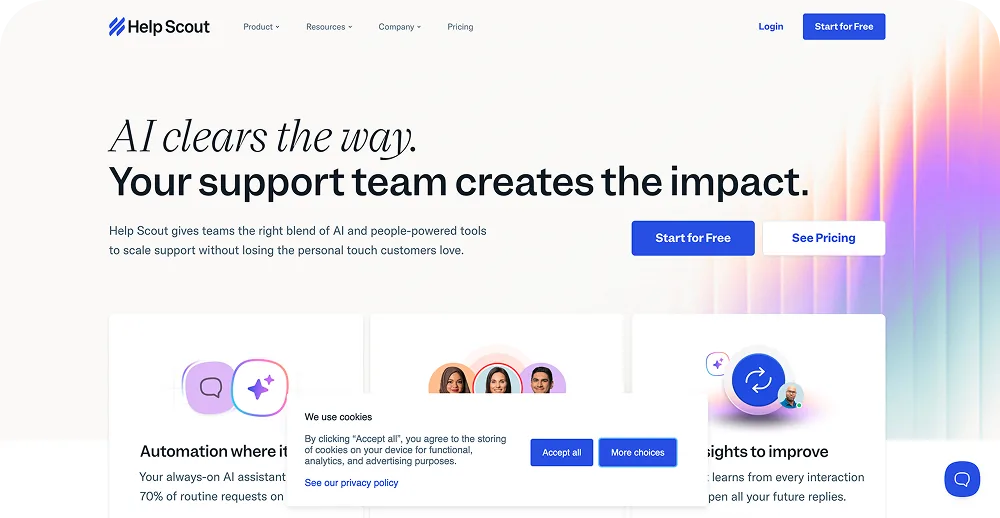
Best for: Small to mid-size ecommerce brands that prioritize simplicity
Help Scout offers a clean, email-first helpdesk that feels more like a shared inbox than a ticketing system. For smaller ecommerce teams that don't need enterprise complexity, it's a strong choice.
Key features:
- Shared inbox with collision detection
- Beacon (embedded help widget)
- Customer profiles with order data
- Saved replies and automation
- Knowledge base
Limitation: Less ecommerce-specific than Gorgias. Doesn't have native deep Shopify integration for order actions.
Pricing: From $55/month (up to 100 contacts).
6. Intercom
Best for: Brands investing heavily in AI-powered customer service
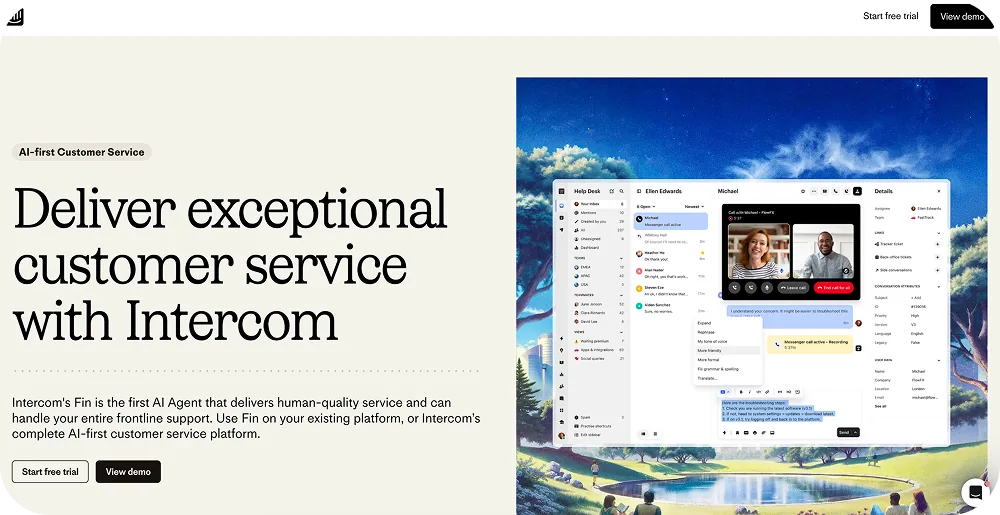
Intercom has made a significant bet on AI, with its Fin AI agent handling customer conversations autonomously. For ecommerce brands that want to automate a large percentage of support interactions, Intercom's AI capabilities are among the most advanced.
Key features:
- Fin AI agent for autonomous ticket resolution
- Messenger-based support (chat, email, social)
- Product tours and onboarding flows
- Advanced customer segmentation
- Integrations with Shopify and other platforms
Limitation: Premium pricing. The AI features require training and configuration to work well for ecommerce-specific queries.
Pricing: From $39/seat/month. AI resolution pricing is additional.

7. Re:amaze
Best for: Multi-brand ecommerce operations
Re:amaze supports multiple storefronts from a single helpdesk, making it a good fit for ecommerce companies running several brands. It integrates with Shopify, BigCommerce, and WooCommerce.
Key features:
- Multi-store management
- Live view of customer site activity
- FAQ and chatbot features
- Order management from the helpdesk
- Automated workflows
Pricing: From $29/team member/month.
8. HubSpot Service Hub
Best for: Brands already using HubSpot CRM who want unified support and marketing data
HubSpot Service Hub adds ticketing and customer service capabilities to the HubSpot CRM. For brands already tracking customer relationships in HubSpot, adding Service Hub keeps all data in one platform. For more details, see the best HubSpot integrations for ecommerce guide.
Key features:
- Ticketing integrated with CRM
- Knowledge base
- Customer feedback surveys
- Conversation routing
- Service analytics
Pricing: Free tier available. Professional plans from $90/month.
How Claimlane plugs into a helpdesk stack
Helpdesks (Gorgias, Zendesk, Freshdesk, Intercom) handle the conversation. They route tickets, auto-respond to common questions, and pull order data into the ticket view. What they do not do well is process warranty claims, run repair workflows, manage spare parts, or recover costs from suppliers when a manufacturing defect drives the return.
That's where Claimlane fits in. It runs alongside the helpdesk as the returns and claims module, handling everything operational that the helpdesk pushes over. The typical setup looks like this:
The customer reaches out through the helpdesk (Gorgias chat, Zendesk email, Intercom messenger, etc.) about a defective product or return.
The helpdesk recognizes the ticket type (return, warranty claim) and routes the customer to the Claimlane self-service portal, either through a help center link, a chat macro, or an automated workflow.
The customer submits the claim with structured intake: photos, videos, serial number, order details. Claimlane's AI Agent reviews the evidence, applies warranty rules, and either approves the resolution automatically or routes it to a human reviewer.
Once resolved, Claimlane writes the outcome back to the helpdesk ticket so the agent sees the full case history without leaving their tool.
If the defect was supplier-attributed, Claimlane packages the claim with documentation and forwards it to the supplier for credit note recovery.
The result: helpdesk agents handle conversations. Claimlane handles operations. Each tool does what it's best at, and the two systems share data so the customer experience stays continuous.
For brands evaluating this stack pattern: see Gorgias integrations for ecommerce, best Zendesk integrations, and best Freshdesk integrations for the integration patterns each helpdesk supports.
Comparison Table: Best Ecommerce Customer Service Software
How to Choose the Right Customer Service Software
Consider Your Primary Ticket Types
If most tickets are "where is my order?" questions, shipping integration and automation are the priority. If most tickets are warranty claims and defective product reports, a dedicated claims platform paired with a helpdesk is the better setup.
Match Software to Team Size
- 1-5 agents: Help Scout, Freshdesk (free tier), or Gorgias
- 5-20 agents: Gorgias, Freshdesk, or Zendesk + Claimlane
- 20+ agents: Zendesk or Intercom + Claimlane
Evaluate AI Capabilities
AI in customer service ranges from basic auto-suggestions to fully autonomous resolution. For general ticket handling, Intercom's Fin is currently the most capable. For warranty claims and returns specifically, Claimlane's AI Agent is purpose-built for that use case.
Check Ecommerce Integration Depth
A Shopify integration that just shows order data is table stakes. Look for integrations that let agents take action: process refunds, generate return labels, update orders, and initiate claims without switching tools.
Plan for Post-Purchase Operations
Most helpdesks focus on the conversation. But ecommerce customer service increasingly means managing operational workflows (returns, repairs, replacements) alongside conversations. The best stacks combine a helpdesk for communication with a specialized tool for post-purchase operations.
The Role of AI in Ecommerce Customer Service
AI is reshaping how ecommerce brands handle support. But the type of AI matters.
Conversational AI (Chatbots and AI Agents)
Tools like Intercom's Fin and Gorgias's AI handle general customer conversations. They can answer product questions, provide order status updates, and route tickets to the right team. These work well for high-volume, low-complexity queries.
Operational AI (Claims and Returns)
Claimlane's AI Agent represents a different category. Instead of handling conversations, it handles operational decisions: analyzing product damage from photos, applying warranty rules, and approving or denying claims. This type of AI removes the need for agents to have deep product knowledge for every claim.
The most effective ecommerce support stacks in 2026 use both types: conversational AI for the front end and operational AI for the back end of claims processing.