.webp)
What this list covers
PrestaShop powers a different kind of ecommerce. Most stores running it sell across multiple European markets, hold their own catalogues, and care about extending the back office instead of replacing it. The integration question is not "which fancy SaaS plugs in" but "which module respects how PrestaShop already works."
This list ranks 11 PrestaShop integrations against one filter: does it move a real metric for stores running it in 2026? Each section covers what the module actually does, the data direction, pricing, and where it falls short. For a wider view, see the best ecommerce integrations roundup.
- The best PrestaShop integrations sit close to the back office: shipping, ERP, returns, warranty, and supplier flows.
- Stores running across multiple markets need integrations with multi-currency, multi-language, and country-specific tax handling.
- The integration most stores under-invest in is post-purchase: returns and warranty data feeding the customer record and the supplier file.
- Brands using Claimlane plug PrestaShop into a dedicated returns and warranty platform so the back office stops being a manual relay.
At-a-glance comparison
| Module | Best for | Data direction | Starting price |
|---|---|---|---|
| Claimlane | Returns and warranty across markets | Two-way (API + webhooks) | Custom |
| PrestaShop Checkout | Native PSP for EU stores | Two-way | Free + fees |
| Stripe | Payments across regions | Two-way | Per-transaction |
| Mondial Relay | EU parcel shipping | Outbound | From €15/mo |
| DPD / Colissimo | Carrier label generation | Outbound | From €9/mo |
| Akeneo PIM | Multi-channel product data | Inbound | Custom |
| Microsoft Dynamics | ERP order + finance sync | Two-way | Custom |
| Mailchimp | Email automation | Two-way | Free tier |
| Yotpo | Reviews and loyalty | Two-way | Free tier |
| Sendinblue (Brevo) | Transactional email + SMS | Outbound | Free tier |
| Zapier | Custom workflow connections | Two-way | Free tier |
Why trust this list
The team behind this list runs aftersales operations and warranty management for more than 200 brands. PrestaShop stores sit in that book, including stores running multi-market catalogues across France, Germany, Italy, and the Nordics. The picks below come out of which modules show up in stacks that work in production.
1. Claimlane: returns and warranty across markets
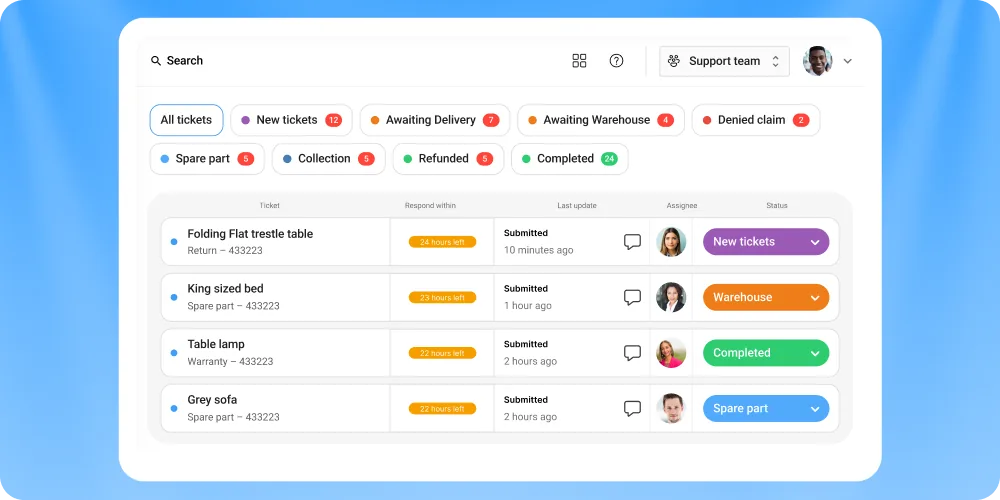
PrestaShop covers the catalogue and the order. It does not cover what happens when the customer wants to return, claim, or repair. Claimlane closes that gap with one platform for returns, warranty, repairs, replacements, and spare parts. The integration syncs orders, customers, and SKUs from PrestaShop and pushes case status, refund triggers, and supplier handoff back.
The value shows up most for stores running across multiple EU markets. One claim flow, one supplier portal, one analytics view. The pattern is the same one used in warranty management best practices and the warranty registration product page.
Why people choose Claimlane
Stores stop running spreadsheets for claims and start running them on a real system. The customer files through the self-service portal, the case routes by rule, and the resolution writes back to the PrestaShop order. No agent flipping between three tabs.
Pros and cons
- Multi-market, multi-language case routing
- B2B and B2C claims on one platform
- Native API plus webhooks for PrestaShop sync
- Analytics dashboards by store, category, supplier
- Best fit for stores with 100+ cases a month
- Implementation is API-led, not module-store install
Core features
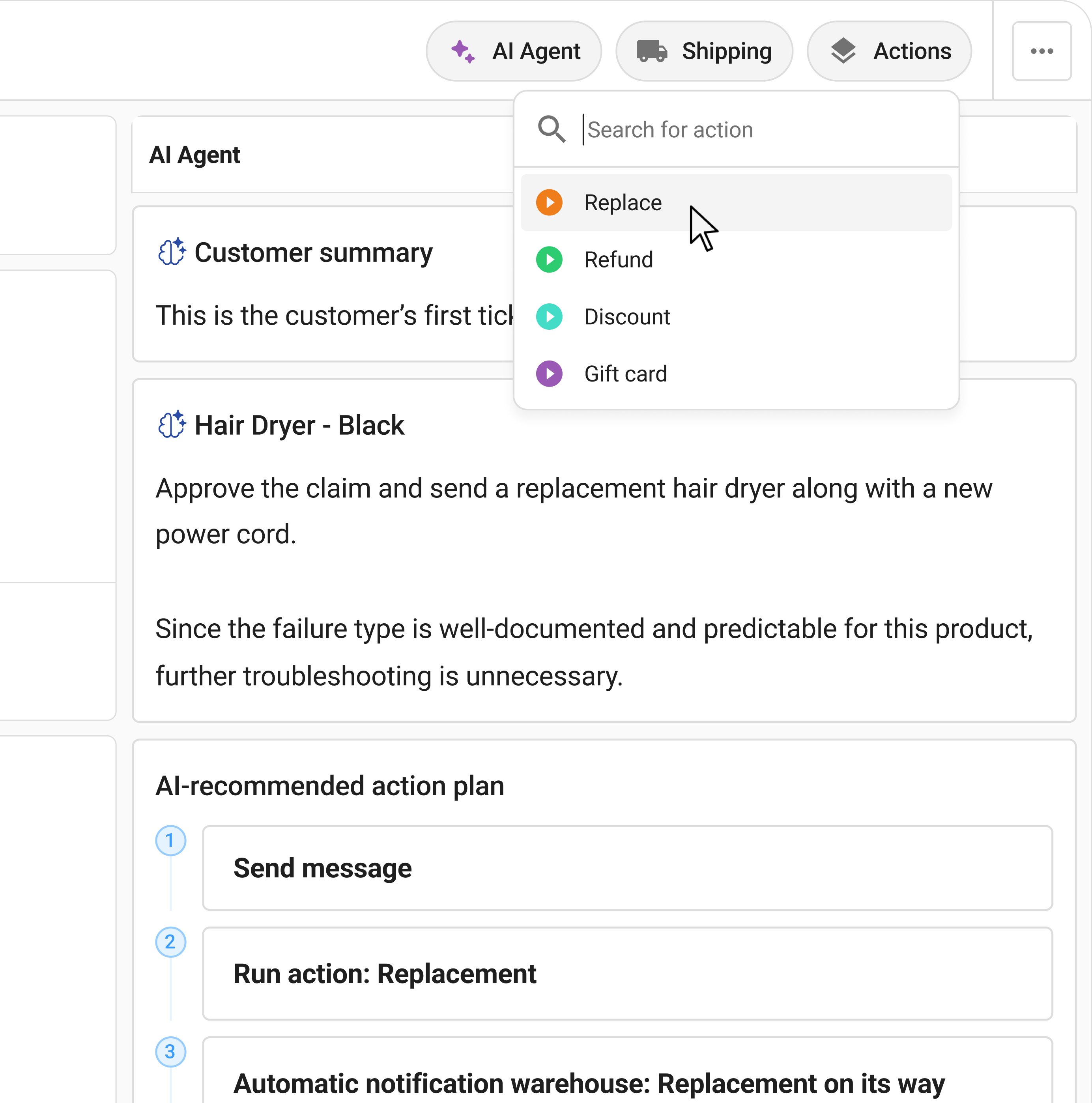
Claimlane handles the full case lifecycle: warranty registration, claims, repairs, replacements, forward-to-supplier, and workflow automation. Claimlane's AI Agent, the first AI agent purpose-built for warranty claims and returns, sits behind the case and recommends outcomes from photos, serials, and rules. For the broader pattern, see thinking in workflows for warranty resolution.
Pricing
Custom, based on claim volume and integrations. Stores running across multiple markets typically see payback inside the first quarter. Compare against angling direct's warranty process for a public benchmark.
Product in action
See how Cult runs returns and warranty on Claimlane in this Cult case study. For a walkthrough of the case flow and the supplier portal, watch the interactive demo.
"Three markets, one claims flow. The team stopped writing different process docs for every country."— Cult, design fashion brand
2. PrestaShop Checkout
PrestaShop's own checkout is the native PSP. It covers card payments, Apple Pay, and SEPA across EU markets. The advantage is single-vendor billing and direct integration with the back office.
Where it falls short
PrestaShop Checkout is solid for payments. It does not handle refund automation across cases or supplier credit notes. Stores often pair it with a dedicated returns platform to close that loop, similar to the pattern in ecommerce refund automation tools.

3. Stripe
Stripe handles payments across more regions than PrestaShop Checkout, including markets where SCA is stricter. Stores running across UK, US, and EU often pick Stripe for that coverage. Pair it with the broader ERP returns integrations to keep finance aligned with case outcomes.
4. Mondial Relay
For EU stores, Mondial Relay is the cheapest way to ship to pickup points. The PrestaShop module handles label generation, tracking, and return labels. For best practice on the return label side, see how prepaid return labels work and return labels best practices.
The weakness is post-shipment. The module does not track case outcomes after the parcel reaches the store. Stores running warranty claims need that link, which is where a dedicated platform helps.
5. DPD / Colissimo
For home delivery, DPD and Colissimo cover most of Europe. The PrestaShop modules generate labels and push tracking back into the order record. The pattern is consistent across how to handle damaged-in-transit claims and the broader ecommerce logistics complete guide.
6. Akeneo PIM
Stores running multi-channel sell on PrestaShop, marketplaces, and wholesale. Akeneo centralises the product information. The PrestaShop connector pulls the catalogue with attributes, translations, and media. For the wider product data picture, see supplier quality issue reporting guide.
7. Microsoft Dynamics
For stores running ERP, Dynamics covers finance, inventory, and order management. The PrestaShop connector keeps order and customer data in sync. Returns and warranty cases need a separate platform: see Dynamics 365 warranty management and ERP vs returns management software for the build vs integrate decision.

8. Mailchimp
For stores that already use Mailchimp, the PrestaShop integration syncs customers, orders, and abandoned carts. Pair with the in-batch best Mailchimp integrations piece for the wider stack and the post-purchase experience customer loyalty read.

9. Yotpo
Yotpo handles reviews and loyalty. The PrestaShop module pulls orders and pushes review requests. Stores running aftersales tie review prompts to case closure, so the customer answers after a positive resolution. The cross-link reads alongside customer retention after returns.
10. Sendinblue / Brevo
Brevo (formerly Sendinblue) covers transactional email and SMS. For stores not running Mailchimp, it is the default lower-cost option. Pair with automatic status emails on the case side so the customer hears about updates without asking.
11. Zapier
When there is no native connector, Zapier covers the gap. Stores use it to push PrestaShop events into ERPs, supplier portals, and bespoke databases. It is slower than a webhook and breaks more often, but it covers edge cases that direct modules miss.
How to choose a PrestaShop integration
Three filters tighten the list fast.
1. Pick by the metric you are trying to move
Revenue per visitor, repeat purchase rate, return rate, supplier credit recovery rate. Each metric maps to a different category of module. The returns and warranty KPIs piece covers the metric-first pattern.
2. Check for multi-market support
Most PrestaShop stores sell across borders. Modules that do not handle multi-currency, multi-language, or country-specific tax create more work than they save.
3. Plan for the post-purchase window
The biggest integration gap most stores carry is the returns and warranty feed. Without it, the back office relays cases by email. The pattern is covered in reducing customer effort in claims and returns.
How PrestaShop integrations affect operations
The value of an integration shows up in three places: time saved in the back office, fewer mistakes between systems, and faster case closure for the customer. The returns and warranty KPIs framework covers the metric grouping.
For stores serving B2B and B2C from the same catalogue, the case work splits two ways. The B2B warranty claims piece covers the operational split.
"B2B and B2C cases used to live in different inboxes. Now they live in one place, and the team stopped guessing what is open."— F. Engels, B2B distributor (case study)
Frequently asked questions
Conclusion
PrestaShop is the back office. The integrations decide how far it scales. For stores running across markets in 2026, the highest-leverage pairings are payment, shipping, ERP, and returns and warranty. The last category is the one most stores still run on email and spreadsheets, and the one that pays the fastest when it moves to a dedicated platform.
To see how Claimlane sits next to PrestaShop and handles the full claim and warranty lifecycle, book a demo or watch the live setup on the interactive demo.