.webp)
What this list covers
Recharge handles the billing engine and the subscription record. It does not decide why a customer paused, when a product failed, or whether to refund. That work lives in other tools, and the integrations decide how cleanly those tools talk to Recharge.
This list ranks 10 Recharge integrations against one filter: does pairing it with Recharge actually move retention or recovery for a subscription brand in 2026? Each section covers the use case, the data direction, pricing, and where it falls short. For a wider view, see the best Shopify tools roundup, since most Recharge brands run on Shopify.
At-a-glance comparison
| Integration | Best for | Data direction | Starting price |
|---|---|---|---|
| Claimlane | Returns and warranty for subscriptions | Two-way (API + webhooks) | Custom |
| Shopify | Order and customer data | Two-way | Per-plan |
| Klaviyo | Lifecycle email and flows | Two-way | Free tier |
| Postscript | SMS win-back and renewal nudges | Two-way | $25/mo |
| Attentive | SMS for higher-volume brands | Two-way | Custom |
| Gorgias | Subscription support context | Two-way | $10/mo |
| Smile.io | Loyalty for subscribers | Two-way | Free tier |
| Yotpo | Reviews tied to renewal | Two-way | Free tier |
| Stay AI | Churn prevention flows | Two-way | Custom |
| Zapier | Custom workflow connections | Two-way | Free tier |
Why trust this list
The team behind this list runs aftersales operations for more than 200 brands, including subscription companies. The integrations below are the ones that show up in the stacks where Recharge survives a product defect or a price increase. The ones that look good on paper but never get used in practice are out.
1. Claimlane: returns and warranty for subscription products
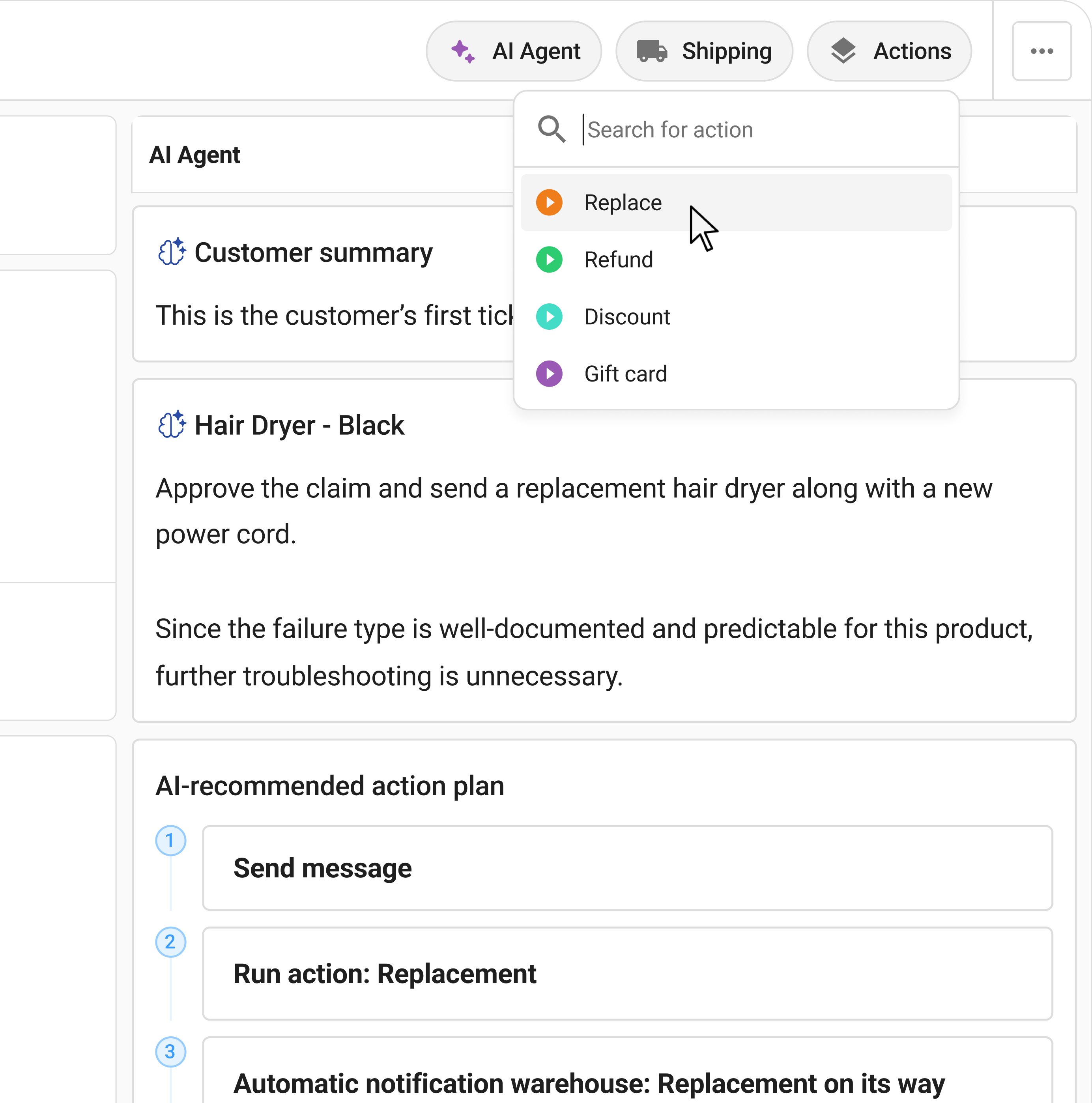
Subscription churn does not always start with the price. Often it starts with a product that arrived broken, a missing shipment, or a warranty case that never closed. Recharge sees the pause, not the cause. Claimlane fixes that by feeding case data into Recharge so a pause caused by a defect can be turned back into an active subscription after the resolution.
The integration covers full case data: photos uploaded, fault category, repair vs replace decision, refund triggered. The Recharge subscription record carries that context, so win-back is smart instead of generic. Pair with the in-batch piece on returns and warranty KPIs for the metric grouping.
Why people choose Claimlane
Subscription brands stop running two systems for the same customer. The chat, the case, and the subscription state agree with each other. Customers do not get win-back offers while their case is still open. Operations stops chasing status across tools.
Pros and cons
- Native API + webhooks for Recharge sync
- One case across portal, chat, and email
- Analytics layer ties case data to subscription stage
- Multi-market and B2B support
- Not built for brands with under 100 cases a month
- Implementation is API-led, not single-click install
Core features
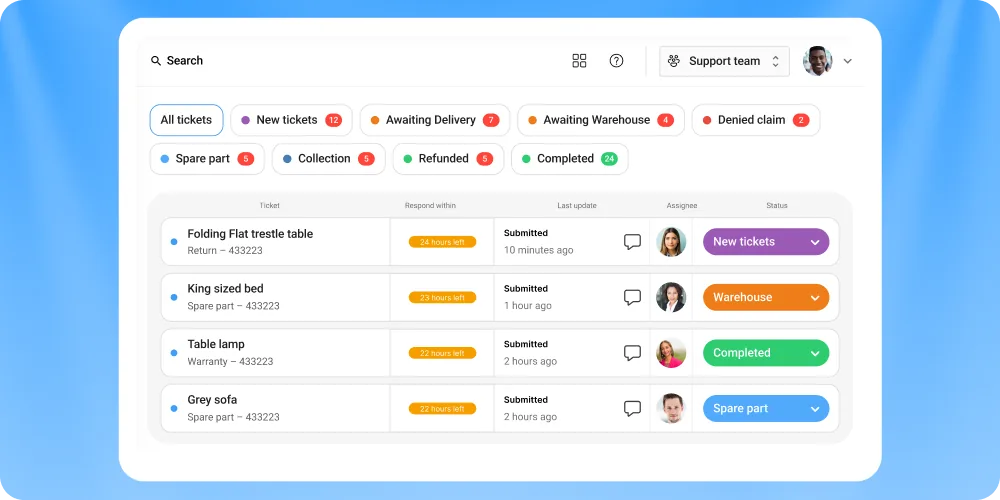
Claimlane handles warranty registration, claims, repairs, replacements, returns, and spare parts in one platform. The self-service portal handles customer submissions. The workflow engine routes by product, supplier, and rule. The forward-to-supplier layer recovers credit notes. Claimlane's AI Agent, the first AI agent purpose-built for warranty claims and returns, sits inside the case and recommends outcomes from photos, serials, and rules.
Pricing
Custom, based on claim volume and integrations. Subscription brands typically see payback inside the first quarter once the case-to-subscription link reduces involuntary churn.
Product in action
For a live walkthrough of the case flow and the subscription win-back link, watch the interactive demo.
“"Warranty cases used to live in a different tool from the customer record. One platform fixed the gap and the cycle time dropped."— Skechers, global footwear brand

2. Shopify
Most Recharge brands run on Shopify. The native connection between the two is the single most important integration. Customer record, order history, and subscription state in one place. Pair with the broader Shopify returns view and the returns management system on Shopify piece for the wider picture.
Where it falls short
Shopify subscriptions still relies on Recharge for the billing logic. Refund triggers, dunning, and pause flows live in Recharge, not Shopify. The integration is mature but does not handle case data, which is where the returns and warranty layer comes in.

3. Klaviyo
Klaviyo and Recharge cover the same customer in different states. Klaviyo handles the email and SMS, Recharge handles the subscription. The integration pushes pause, churn, and renewal events into Klaviyo flows. Pair with the best Klaviyo integrations piece for the wider stack.
The gap most teams miss is post-purchase data. When a customer pauses because of a defect, Klaviyo should not send a win-back until the case closes. That requires the returns layer to feed Klaviyo and Recharge simultaneously, the pattern in the in-batch best Mailchimp integrations piece.
4. Postscript
Postscript is SMS for ecommerce. The Recharge integration triggers SMS on subscription events: renewal failure, pause, upcoming charge. Higher open rates than email, especially for renewal reminders.
The weakness is over-sending. Recharge events fire often. Without coordination with email tools, customers get hit on both channels with the same message. Pair with automatic status emails on the case side so the customer hears the right thing at the right time.
5. Attentive
Attentive is Postscript's enterprise counterpart. Higher volume, broader compliance coverage, custom messaging journeys. The Recharge integration covers the same event triggers but adds segmentation depth that small-volume tools cannot match. Compare against the broader post-purchase software and post-purchase experience customer loyalty reads.

6. Gorgias
Gorgias is the helpdesk most subscription brands run on Shopify. The Recharge integration pulls subscription state into the support ticket: active, paused, churned. Support agents see the context before opening the ticket. Compare against Gorgias integrations and Gorgias alternatives.
The gap is again case data. Gorgias sees the ticket. It does not see the warranty case or the supplier handoff. Subscription brands running both layers see the full picture, the pattern in customer service workflows for returns.

7. Smile.io
Loyalty programmes inside subscriptions are not redundant. Subscribers earn points faster, and the points tied to renewal milestones drive longer LTV. Smile's Recharge integration handles the link. Pair with the customer lifetime value returns piece for the LTV side.

8. Yotpo
Yotpo handles reviews and loyalty in one app. Subscription brands tie review prompts to the second or third renewal, not the first order. The Recharge integration pushes the right event at the right time. Cross-link with customer retention after returns.
Review prompts after a positive resolution perform better than blind asks. Pair with the in-batch reducing customer effort in claims and returns piece for the survey design.
9. Stay AI
Stay AI sits on top of Recharge with churn prevention logic. Smart pause offers, dunning recovery, and predictive churn flagging. The integration is native and the data direction is two-way. Compare against the broader customer service automation software.
The weakness is again case data. Stay AI sees the cancellation reason if the customer types it. It does not see the open warranty case that drove the cancellation in the first place. That gap is what the returns layer fills.
10. Zapier
When there is no native connector, Zapier covers the gap. Subscription brands use it to push Recharge events into ERPs, supplier portals, and bespoke databases. The pattern is consistent with the rest of the stack.
How to choose a Recharge integration
Three filters tighten the list fast.
1. Map every integration to a churn driver
Generic "better email" or "better support" is not a churn driver. Specific drivers are: failed payment, product defect, missing shipment, perceived price increase, customer life change. Each driver maps to a different tool.
2. Watch the event flood
Recharge fires a lot of events. Without coordination, customers get notified four times for the same action. Pick tools that respect channel hierarchy, the pattern in omnichannel customer service platforms.
3. Cover the post-purchase failure case
This is the integration most subscription brands skip. When the product fails, the next 72 hours decide whether the customer comes back. Pair Recharge with a real returns and warranty platform so the case closure feeds Recharge directly.
How integrations affect subscription metrics
The metrics that move when integrations are right: involuntary churn, voluntary churn, recovery rate, LTV, and CES. The right pairings move all five. The returns and warranty KPIs piece covers the dashboard layout. The companion piece on AI in reverse logistics covers the AI side of case handling.
For subscription brands shipping physical products, the cost of an unresolved case compounds because it cancels the next charge too. A 90-day case on an annual sub is one lost order. On a monthly sub, it can be three. The pattern is covered in hidden costs of returns and claims.
"Customers do not stay subscribed to a brand that takes three weeks to fix a broken product. We moved the case work to one platform and renewals stabilised."— Onyx Cookware, premium DTC cookware brand (case study)
Frequently asked questions
Conclusion
Recharge runs the billing. The integrations decide how well the rest of the customer experience keeps up. For subscription brands in 2026, the highest-leverage pairings are commerce platform, email and SMS, support, loyalty, and returns and warranty. The last one is the integration most teams skip, and the one that costs the most when a broken product causes a pause that a generic win-back cannot solve.
To see how Claimlane feeds Recharge with case data and reduces involuntary churn caused by defects, book a demo or explore the live setup on the interactive demo.