.webp)
Most ecommerce brands measure returns as a cost. Shipping, processing, restocking, refunds. Every return shows up as a negative line on the P&L.
But the bigger number is the one that never shows up on any report: the lifetime value lost when a customer has a bad returns experience and never buys again.
Research consistently shows that customers who have a smooth return experience spend more over time than customers who never return anything. The return is not the end of the relationship. It is a test of the relationship. Brands that pass the test earn repeat purchases, higher order values, and longer customer lifespans.
This guide connects the data between returns experience and customer lifetime value, and shows how brands can turn the returns process from a cost center into a retention driver.
- Customers who return and have a positive experience are 2-3x more likely to repurchase than those who have a negative one.
- Speed matters most: resolution within 48 hours correlates with the highest post-return repurchase rates.
- Self-service portals, automated status updates, and fast resolution protect CLV by reducing customer effort during the return.
- Claimlane's analytics connect claims data to retention outcomes so brands can measure the ROI of returns experience improvements.
The Data: Returns Experience and Repurchase Behavior
Several studies have quantified the link between returns experience and future spending:
- 92% of consumers say they will buy again from a retailer if the return process is easy (Narvar consumer survey).
- 67% of shoppers check the return policy before purchasing, making it a conversion factor as well as a retention factor.
- Customers who return and repurchase have 40% higher lifetime value on average than one-time buyers who never return.
- A negative return experience causes 30-40% of affected customers to never purchase from the brand again.
The implication is clear: the cost of a single return is small compared to the lifetime value at risk if the experience is poor.
Why Returns Are a CLV Inflection Point
A return is one of the few post-purchase moments where the customer is actively engaged with the brand. They are paying attention. They are forming an opinion. And that opinion will determine whether they come back.
The Trust Test
Buying online requires trust. Returning online tests it. If the brand makes the return easy, fast, and transparent, the customer's trust is reinforced. If the brand makes it difficult, slow, or opaque, the trust is broken.
This is why brands that invest in their returns experience see returns as a retention tool, not just a cost line. The customer effort required during a return is the single strongest predictor of whether the customer will buy again.
The Warranty Claim Amplifier
For warranty claims specifically, the stakes are even higher. A customer filing a warranty claim already feels that the product failed them. If the claims process is slow, confusing, or adversarial, the brand loses the customer permanently.
Brands that resolve warranty claims quickly and fairly often see these customers become their most loyal advocates. The product may have failed, but the brand did not.
What Drives Post-Return Repurchase
Three factors determine whether a customer buys again after a return:
1. Speed of Resolution
Resolution time is the dominant factor. Customers who receive their refund or replacement within 48 hours have significantly higher repurchase rates than those who wait a week or more.
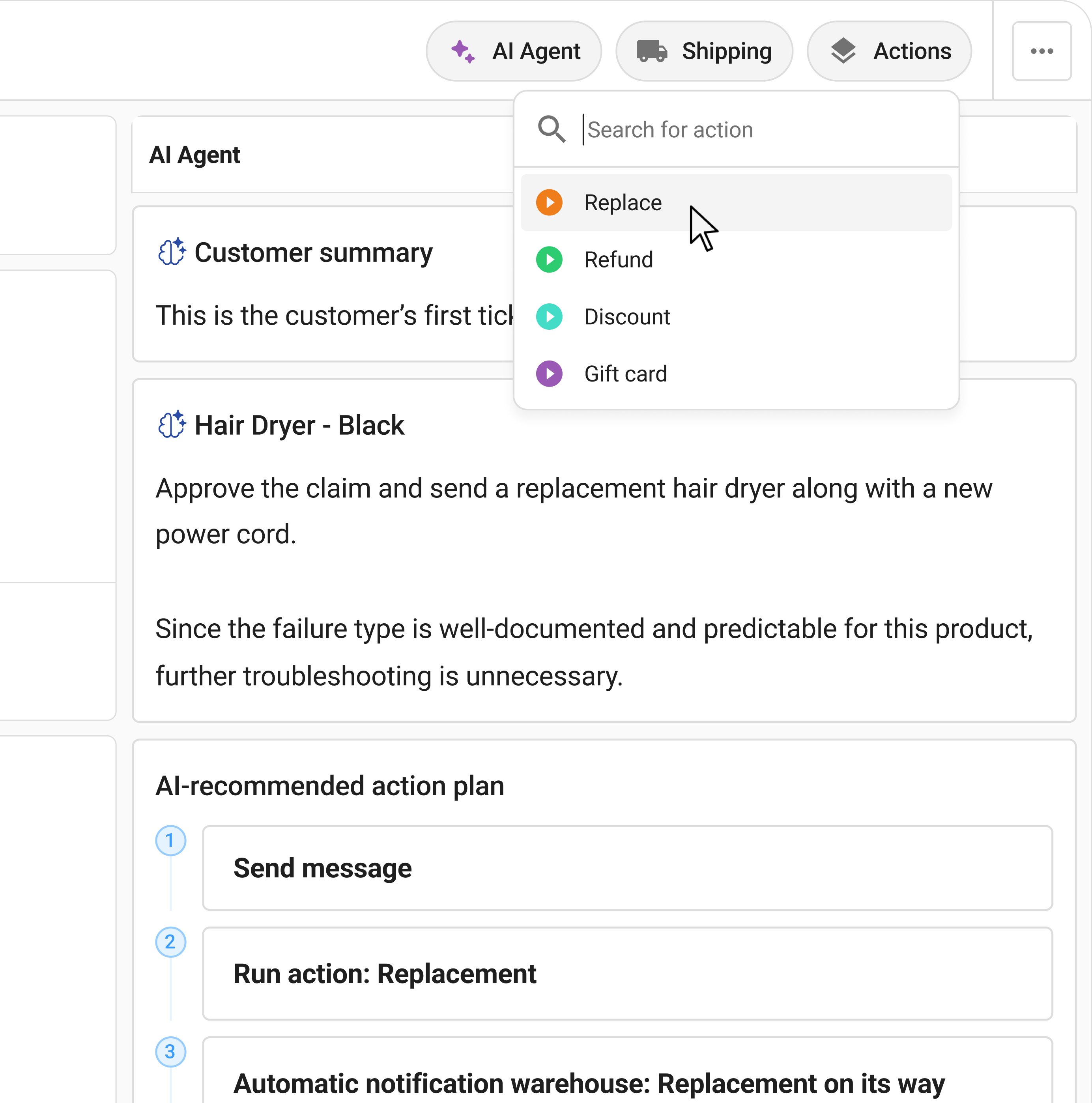
Manual ERP-based processes typically take 1-3 weeks to resolve a return or claim. Claimlane's workflow automation and AI Agent resolve most claims within hours, with many auto-approved on submission.
2. Transparency
Automated status emails at each stage of the process keep customers informed without them needing to ask. The absence of proactive communication is what drives "where is my refund?" contacts, which are expensive to handle and signal a poor experience.
3. Ease of Submission
A self-service portal where customers can submit claims with photos and order details in under 3 minutes removes the friction that causes frustration. Every email exchange, phone call, or form re-submission adds friction and reduces the chance of repurchase.
Calculating the CLV Impact of Returns
Here is a simplified framework for quantifying the relationship:
Step 1: Segment Customers by Return Outcome
- Group A: Returned, fast resolution, repurchased
- Group B: Returned, slow resolution, did not repurchase
- Group C: Never returned
Step 2: Calculate Average CLV per Group
Typically, Group A has the highest CLV because these customers have tested the brand and been satisfied. Group C is moderate. Group B is the lowest.
Step 3: Calculate the Cost of Moving Customers from B to A
The cost is the investment in a better returns process: self-service portal, AI assessment, faster resolution. Compare this to the CLV difference between Groups A and B, multiplied by the number of customers in Group B.
For most brands processing 100+ returns per month, the ROI is positive within the first quarter.
Claimlane's analytics dashboard can segment claims by resolution time and correlate with repurchase data from the ecommerce platform, giving brands the exact numbers for this calculation.
Exchange-First Strategies: Retaining Revenue
One of the most effective CLV strategies is offering exchanges instead of refunds whenever possible. An exchange keeps the revenue in the business and gives the customer a product they actually want.
Store credit is another retention-friendly option. It guarantees the customer will return and creates a positive association with the brand's flexibility.
Claimlane's resolution workflows support refund, replacement, exchange, store credit, and repair paths. The workflow engine can be configured to suggest exchange or store credit first, with refund as a fallback.
Warranty Claims and Customer Loyalty
Warranty claims represent a unique opportunity. The customer is not returning a product because they changed their mind. They are coming to the brand with a problem. How the brand responds defines the relationship.
The Repair Path
When a brand offers repair as an option and completes the repair quickly, customers often report higher satisfaction than if the product had never broken. This counterintuitive finding, known as the service recovery paradox, means that a well-handled warranty claim can actually increase CLV.
Supplier Accountability
When claims data identifies supplier quality issues, the brand can fix the root cause and prevent the same defect from affecting future customers. This reduces future claim volume and protects CLV at scale.
Claimlane's forward-to-supplier feature ensures that supplier defects are documented and recovered, so the brand does not absorb the cost of problems it did not create.
"We learned that our best customers are the ones who returned something and came back. The return experience became a loyalty driver, not just a cost to manage."
— Benny Kristiansen, Head of Ecommerce, Sebra
Returns Analytics for CLV Optimization
To connect returns data to CLV, brands need to track:
- Resolution time per claim type (target: under 48 hours)
- Repurchase rate within 90 days post-return
- Average order value of post-return purchases vs first purchase
- Customer satisfaction (NPS or CSAT) after claim resolution
- Churn rate by resolution outcome (approved, rejected, slow)
Claimlane's analytics captures resolution time and claim outcome data. When connected to the ecommerce platform through integrations, brands can build the full picture from claim to repurchase.
For details on which analytics events to instrument, see the guide on returns analytics events to track.
The Cost of Getting Returns Wrong
The financial impact of a poor returns experience compounds over time:
- Immediate: Lost customer who will not repurchase (CLV = $0 from this point)
- Short-term: Negative word of mouth reduces acquisition (1 negative experience shared with 9-15 people on average)
- Medium-term: Higher return rates as frustrated customers lose trust in product quality
- Long-term: Brand reputation damage that increases customer acquisition costs
The brands that treat returns as a customer experience investment rather than a cost center consistently outperform on CLV, repeat purchase rate, and customer satisfaction.
How Claimlane Protects Customer Lifetime Value
Claimlane addresses every factor that influences post-return CLV:
- Speed: AI Agent assesses and auto-approves claims in seconds. Most claims resolve same-day.
- Transparency: Automated status emails keep customers informed without agent effort.
- Ease: Self-service portal lets customers submit claims in under 3 minutes.
- Resolution options: Refund, exchange, store credit, repair, spare parts, all through one workflow engine.
- Analytics: Connects claims data to business outcomes for data-driven optimization.
Claimlane is rated 4.8/5 on G2.